


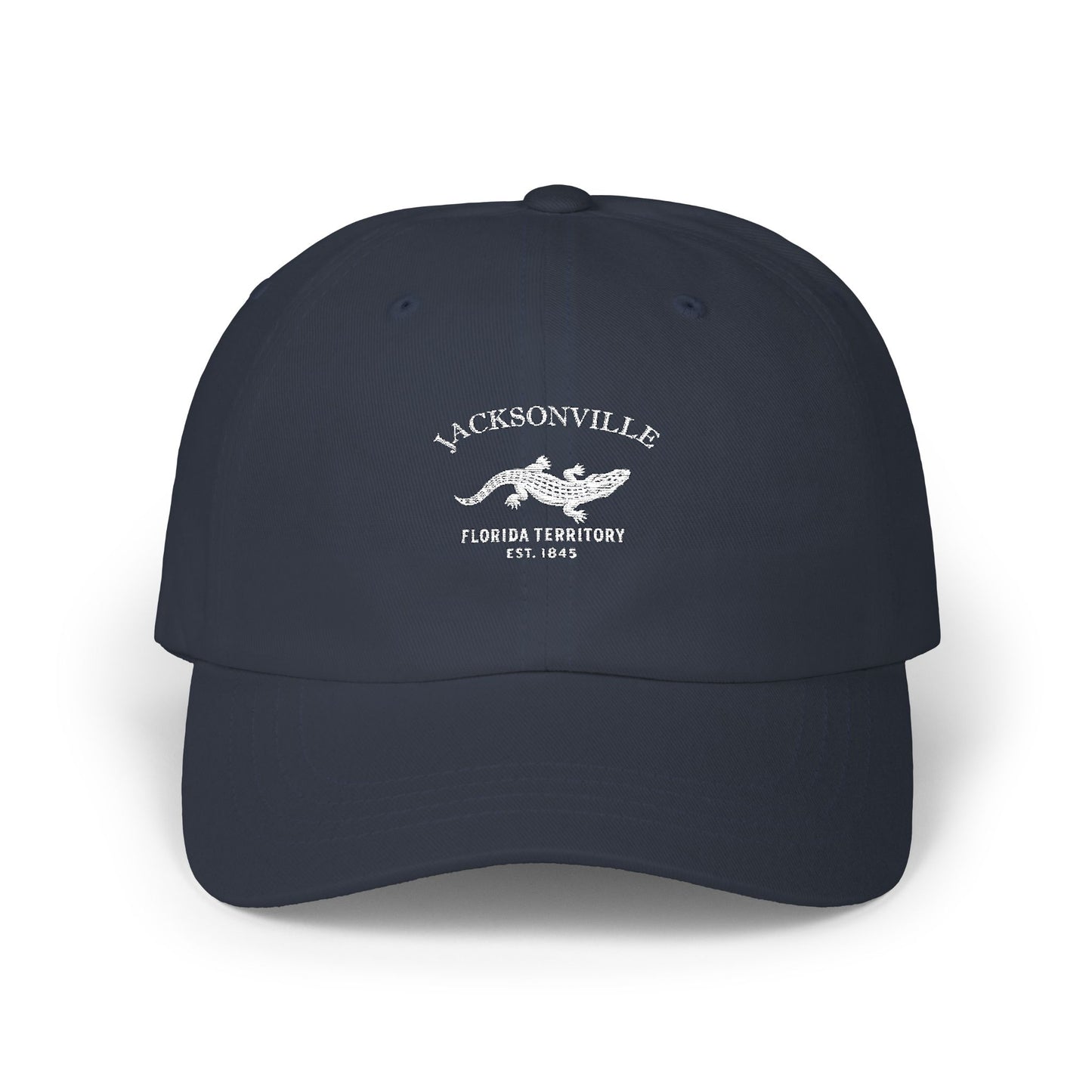
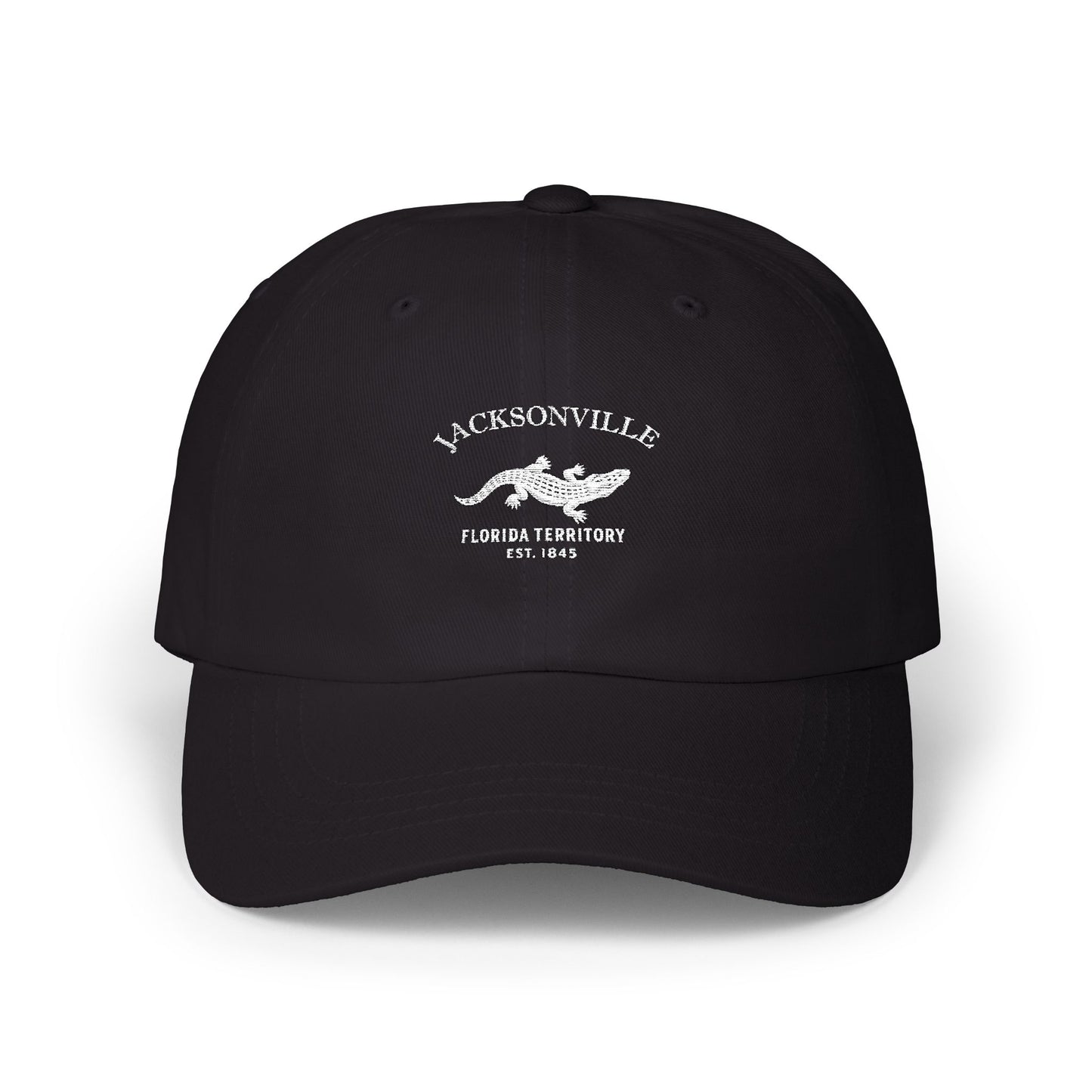
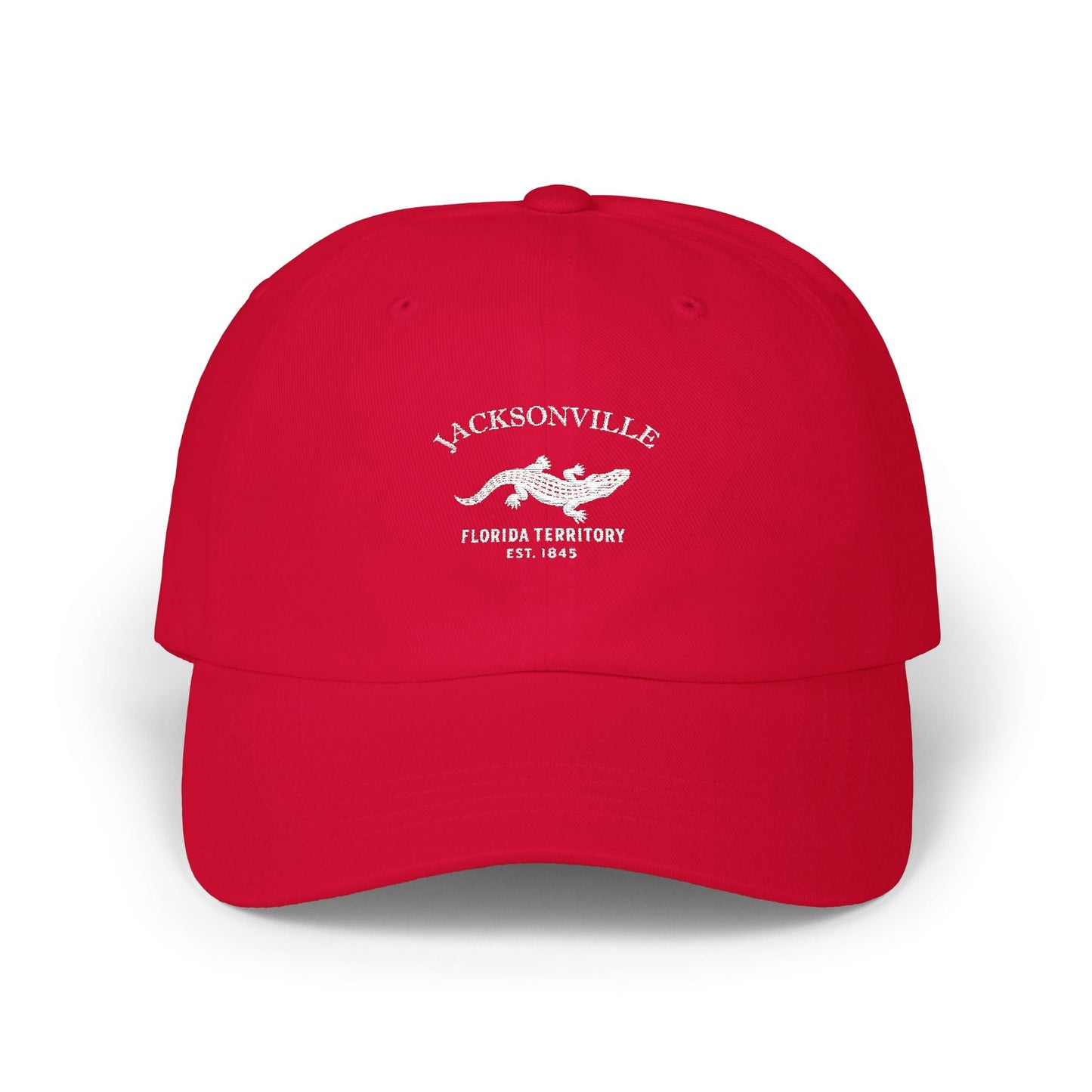
Today Jacksonville is the largest city by land area in the contiguous United States and home to one of the nation's largest urban park systems — barrier-island beaches, 80,000 acres of parks, and a downtown of Prairie School towers along a north-flowing river. Our retro Jacksonville, FL collection draws on that layered story: the Great Fire and the rebuild, the silent-film years, the alligator and the river, the River City pride that travels with everyone who has ever called it home.
Hollywood before Hollywood. Between 1908 and 1922 more than thirty silent-film studios set up along the river, and Jacksonville called itself the Winter Film Capital of the World. The mild winters and river light drew the cameras south years before California claimed them; Norman Studios, in the Arlington neighborhood, survives today as a National Historic Landmark. A few blocks away, the LaVilla district became known as the Harlem of the South — a center of Black business, jazz, and blues, and the boyhood home of writer and civil-rights leader James Weldon Johnson.
Why People Visit Jacksonville, FL
Jacksonville rewards travelers who like a city that surprises them: Prairie School architecture in the Deep South, a river that flows north to the sea, miles of Atlantic beach, and a deep Navy heritage at Mayport and NAS Jacksonville. It is a lived-in River City, not a postcard — and that is the appeal.
