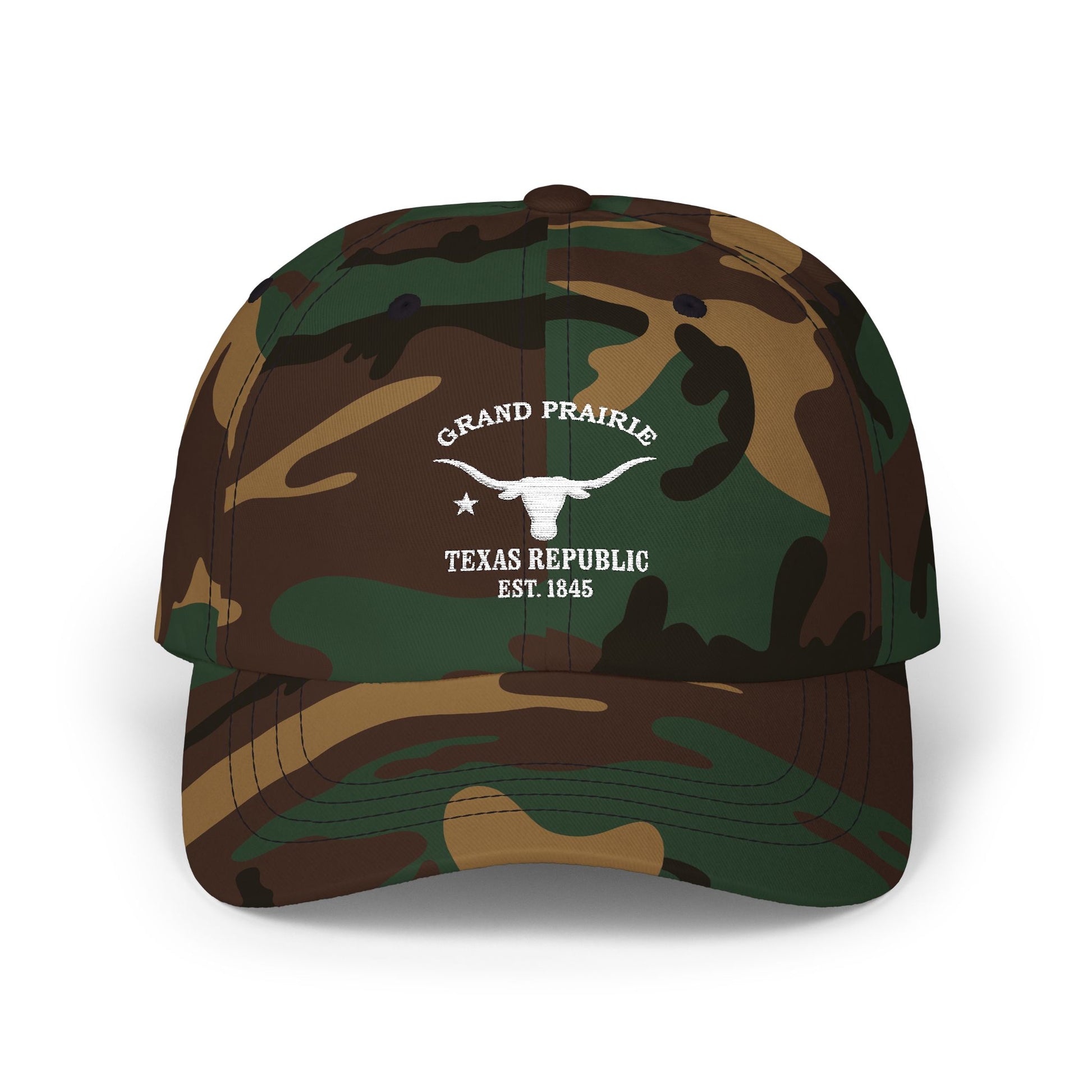
The land here was Peters' Colony prairie before the Civil War, a stretch of the great Texas grassland crossed by trading paths between Dallas and Fort Worth. In 1863 the settler Alexander McRae Dechman founded the community first known as Dechman; when the Texas & Pacific Railroad arrived in 1876 it became a depot town, and in 1877 it was renamed Grand Prairie for the grassland it sat on. The town incorporated in 1909, a farming and ranching crossroads on the rail line at the heart of what would become the Dallas-Fort Worth Metroplex.
The twentieth century turned Grand Prairie into an aviation town. In 1941 a great aircraft plant opened on the prairie, and through World War II it built P-51 Mustang fighters and B-24 Liberator bombers; the successor plants kept the city in the aerospace business for decades, building Cold War jets and missiles. After the war the prairie filled with subdivisions and shopping centers as the Metroplex grew around it, and in 1996 Lone Star Park opened its grandstand, bringing thoroughbred racing to the city — it hosted the Breeders' Cup in 2004. Farms to fighter planes to finish lines: the prairie kept reinventing what ran across it.
Why People Visit Grand Prairie Texas
People come to Grand Prairie for its easy central location in the Metroplex and its mix of prairie, lakes, and live racing — plus a deep aviation heritage most visitors never expect from a DFW suburb. It is flat, friendly, and right in the middle of everything: the grassland city between Dallas and Fort Worth.
