


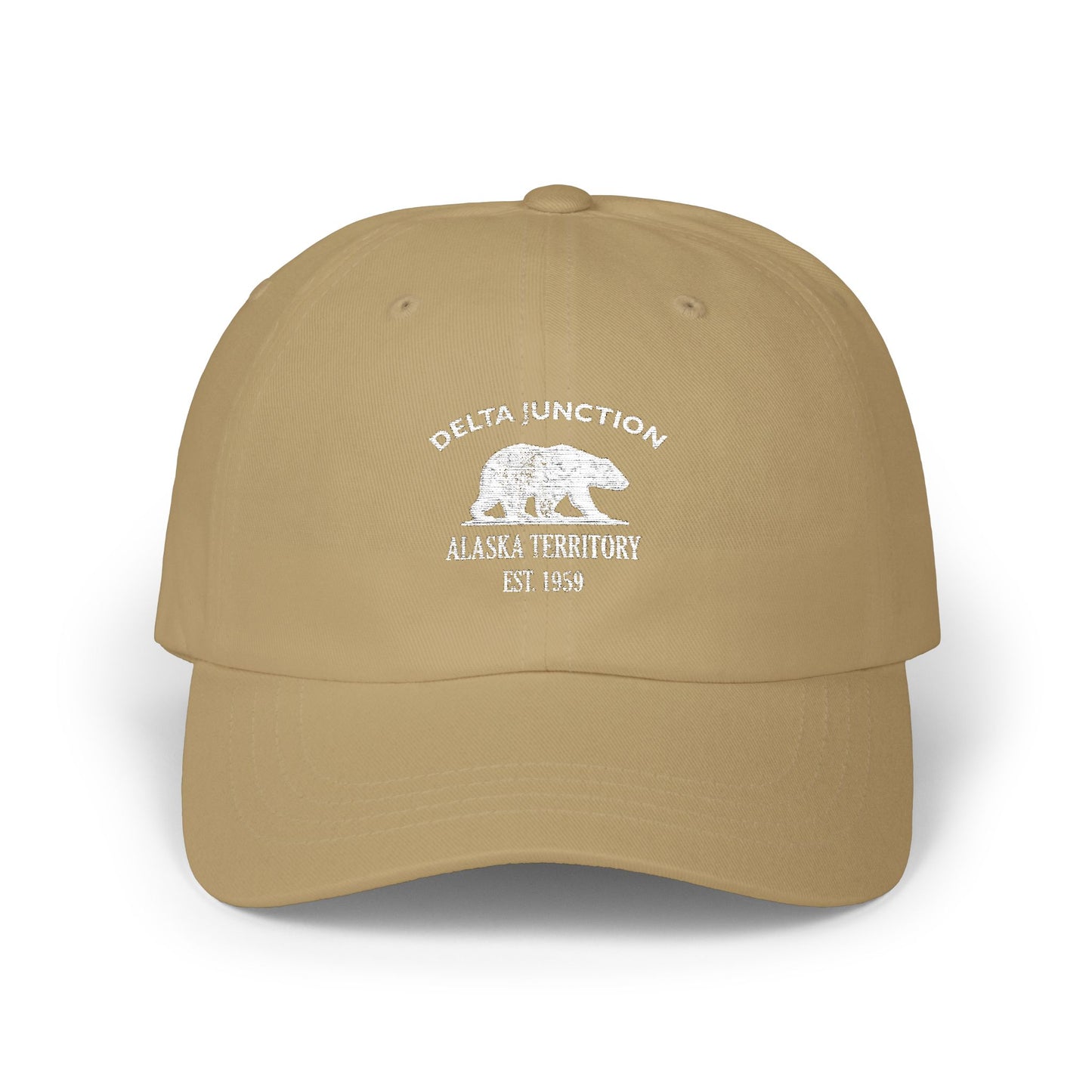
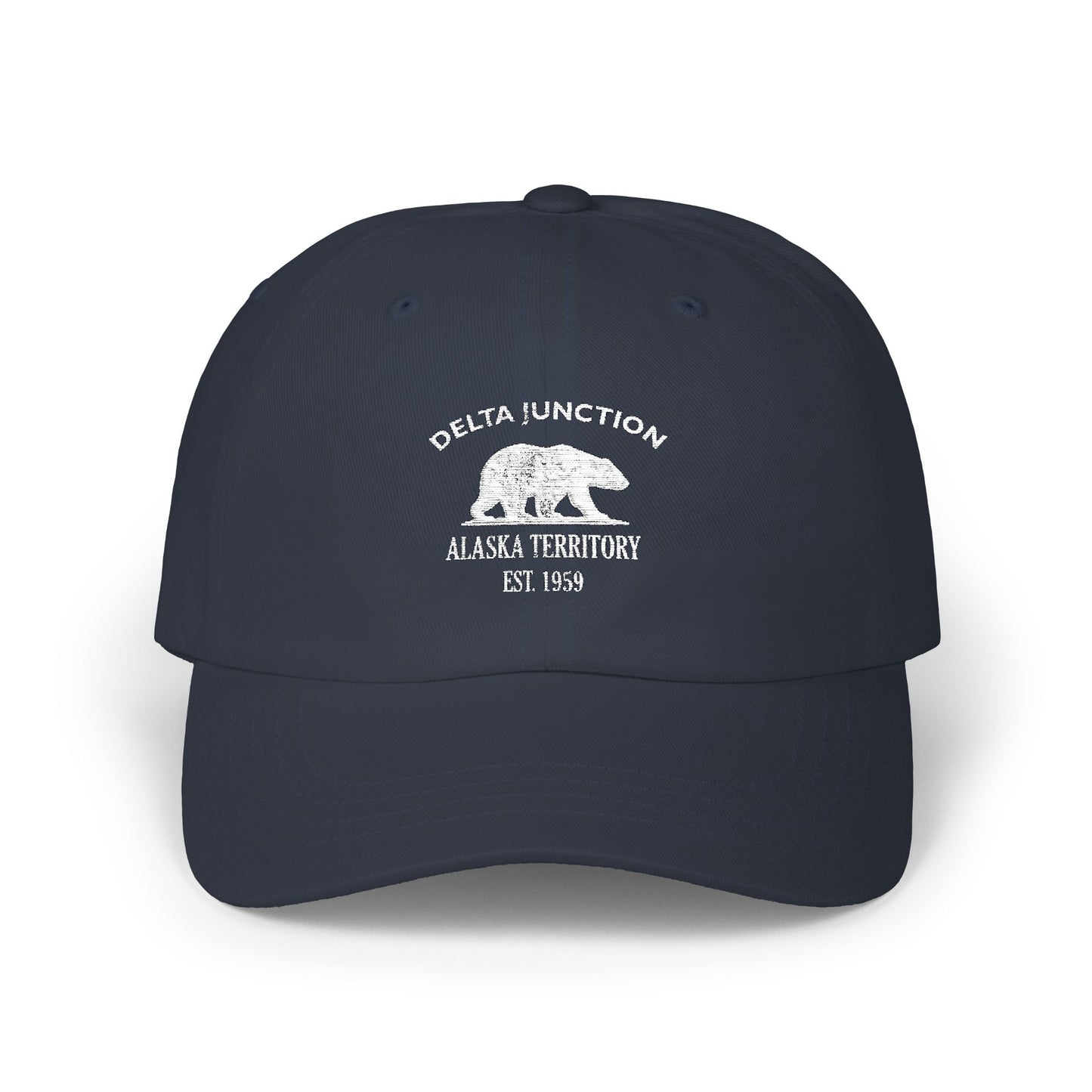
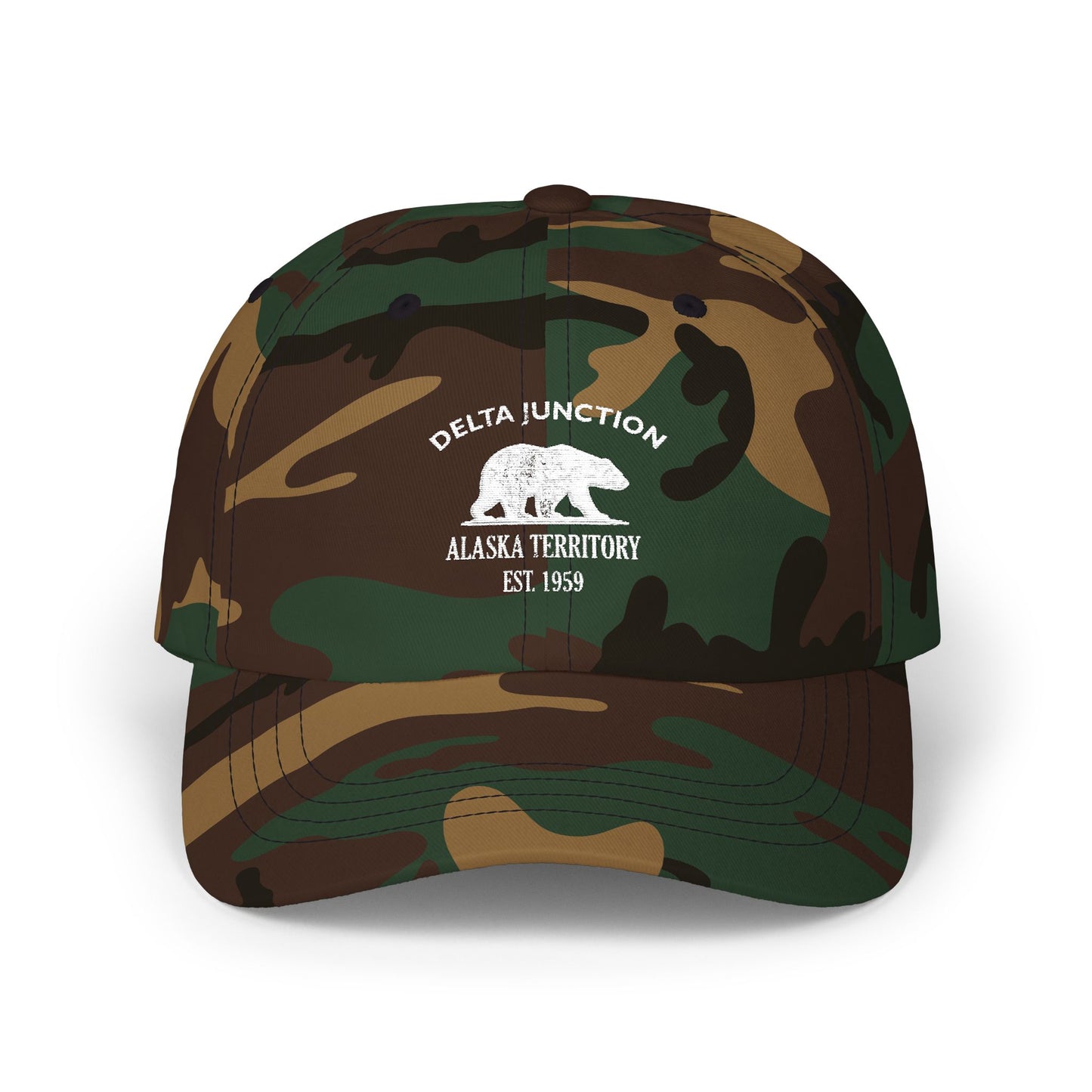
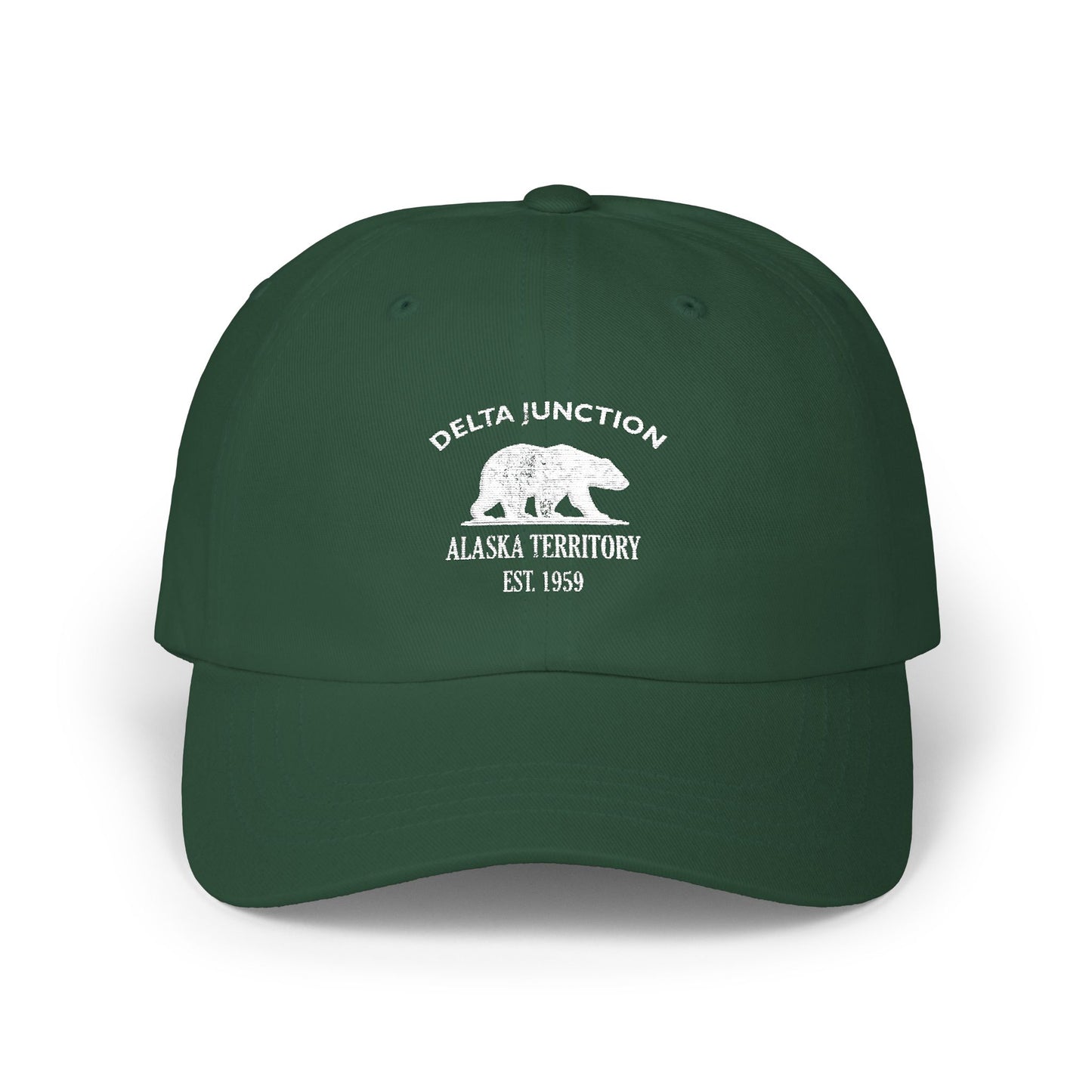
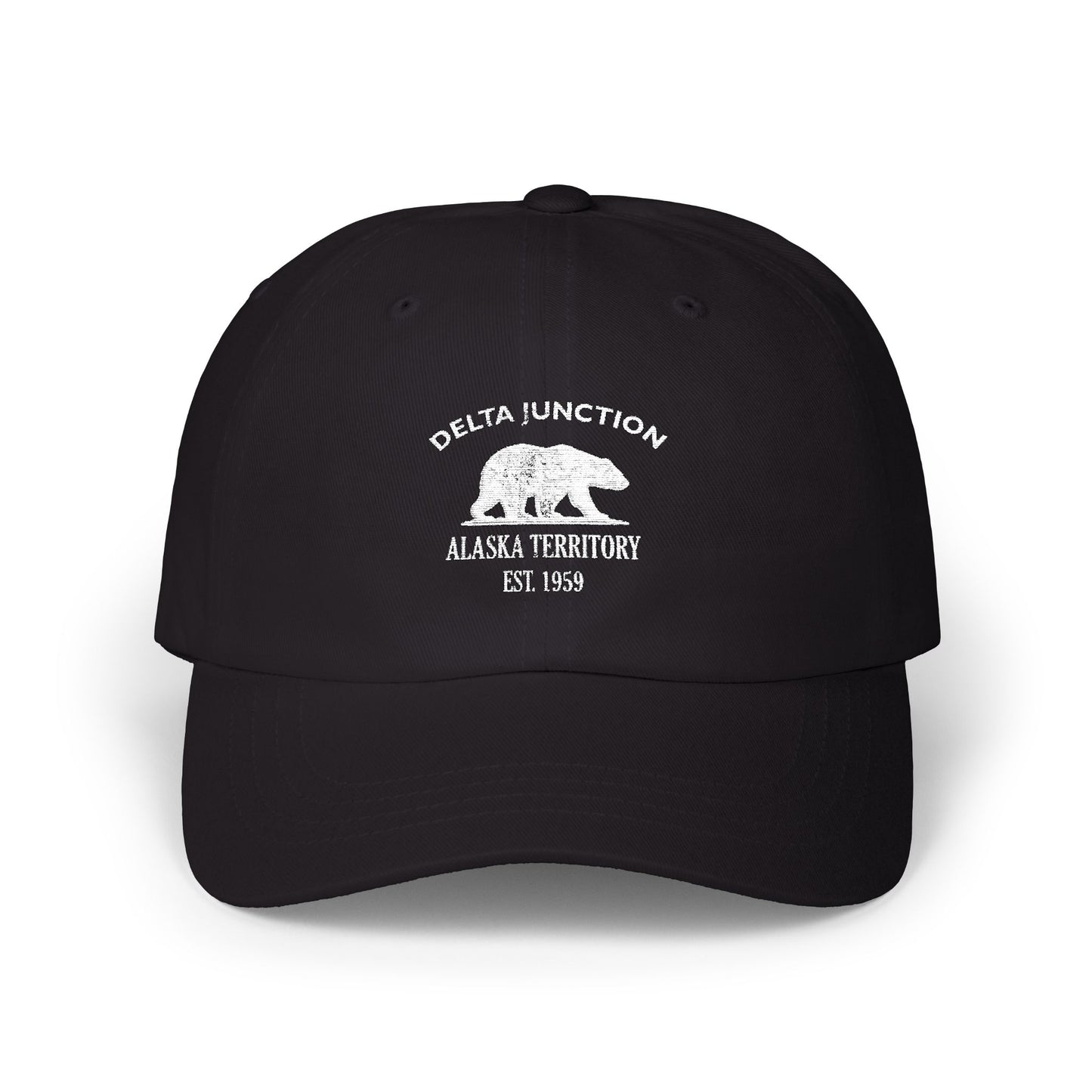
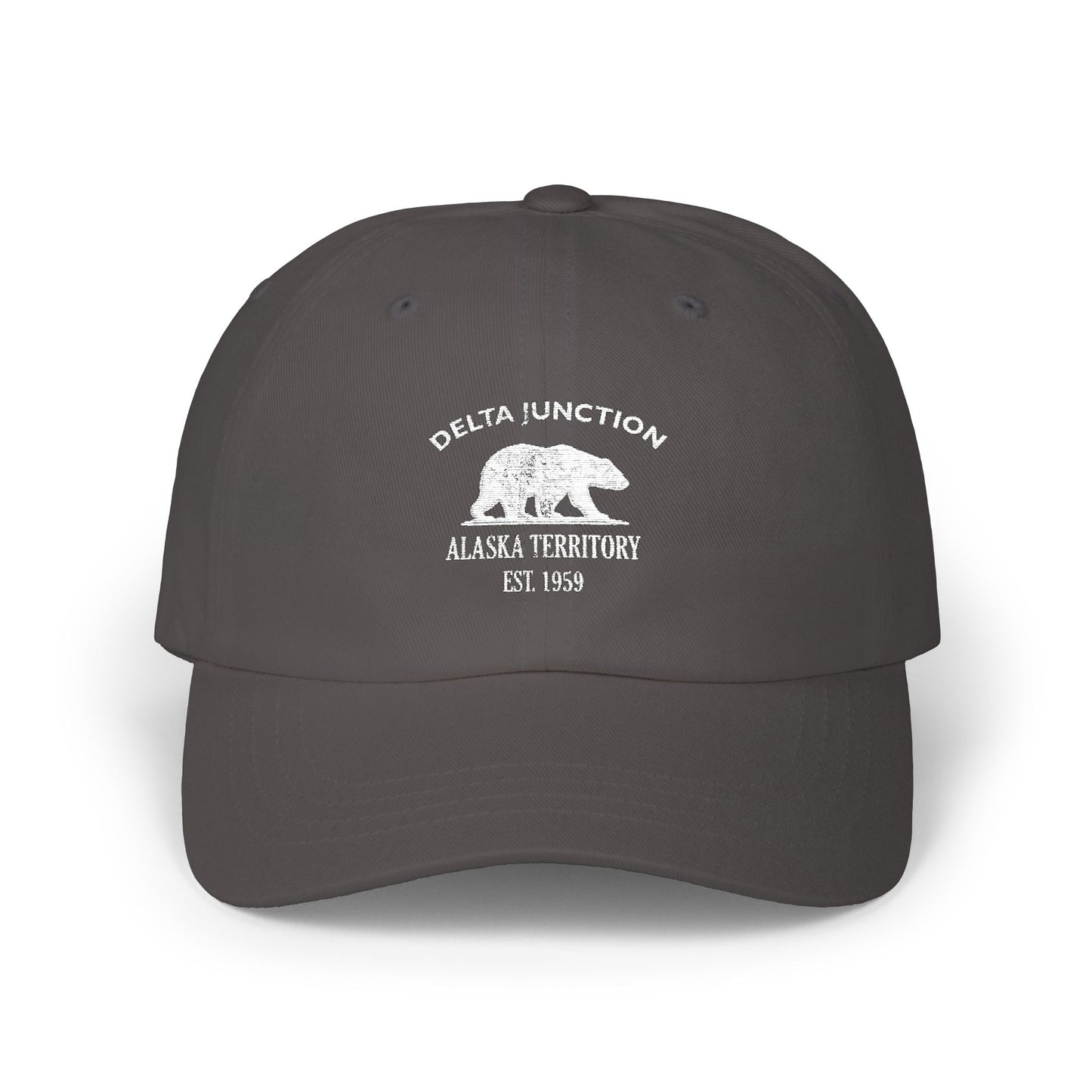

Our Delta Junction logo carries Alaska's distressed bear over "1959," the year of statehood and the shared emblem of every Merlin Classics Alaska town. The bear is the Last Frontier in shorthand — wilderness, toughness, the wide Interior — printed black-and-white with the worn look of a crate stamp or an outfitter's brand. What makes this one Delta Junction is the place behind it: the end of the Alaska Highway, the buffalo herd, the Tanana Valley under three ranges. On a tee or a cap it reads less like a souvenir and more like a piece of the Interior — worn plain.
What made the town was the road. In 1942 the Alaska Highway was pushed through as a wartime supply route, and Delta Junction became its terminus — Milepost 1422, where the new highway met the older Richardson Highway running up from Valdez. A construction camp turned into a community; Fort Greely was established nearby in the 1950s; and the fertile valley grew into one of Alaska's few real farming districts, raising barley and hay alongside the bison. Delta Junction incorporated as a city in 1960. Today it's still the place where the Alaska Highway ends and the certificates get signed, a small Interior town that earns its travelers.
Why People Visit Delta Junction Alaska
People come to Delta Junction to finish the Alaska Highway — to stand at Milepost 1422 and earn the certificate — and to find the bison, the roadhouses, and the wide Tanana Valley while they're here. It feels remote, friendly, and distinctly Interior Alaska: the end of the longest road on the continent, with a buffalo herd to prove it.
