


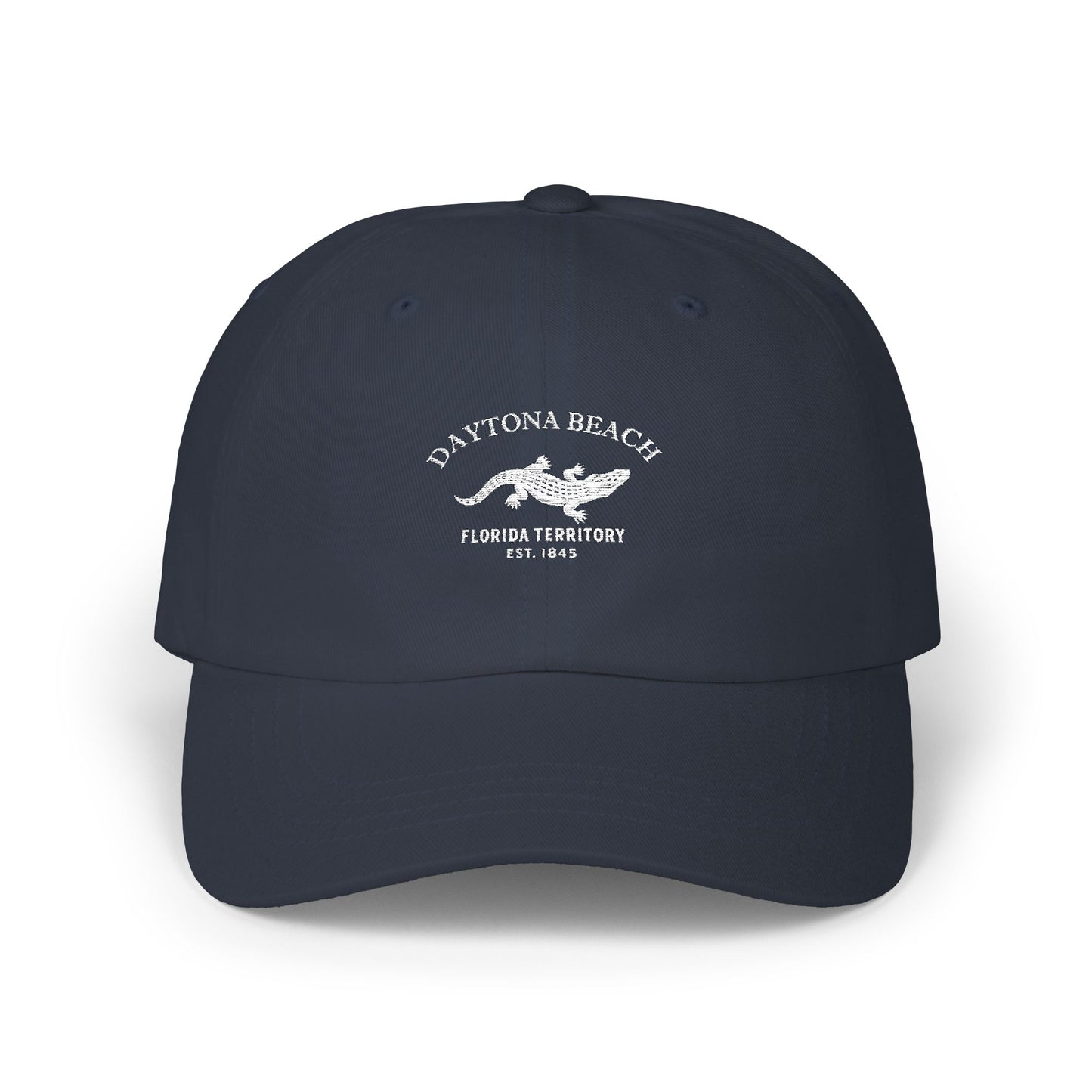
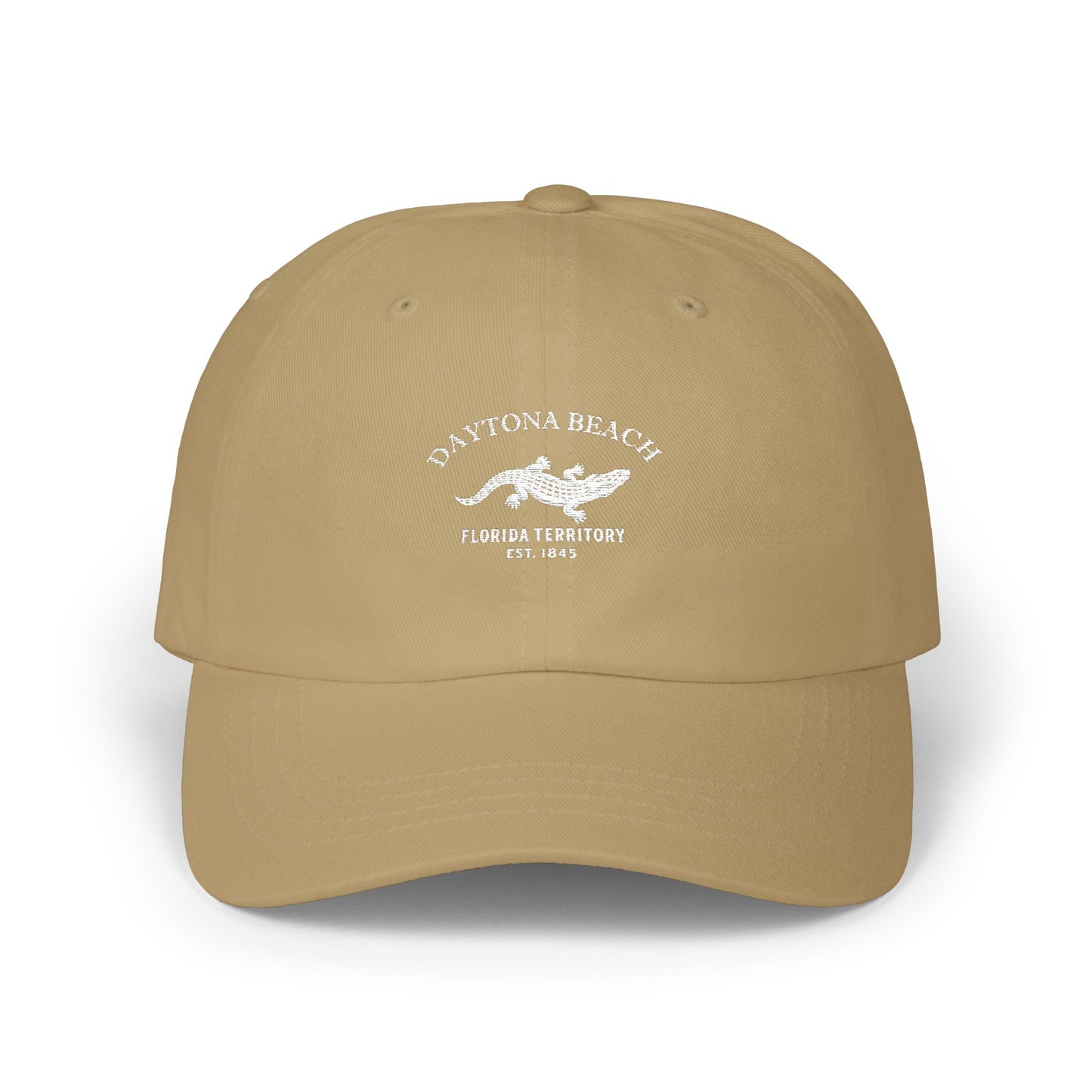
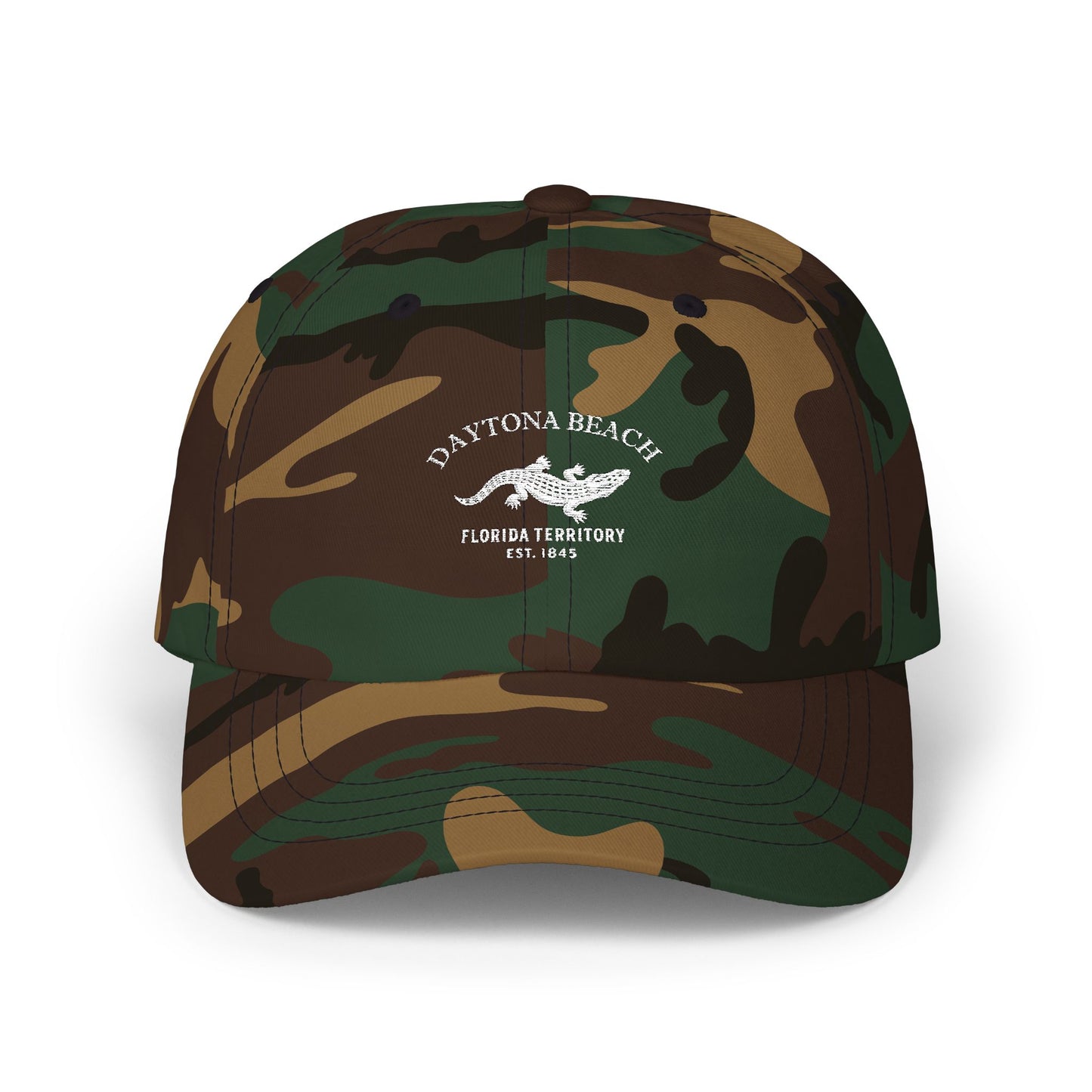
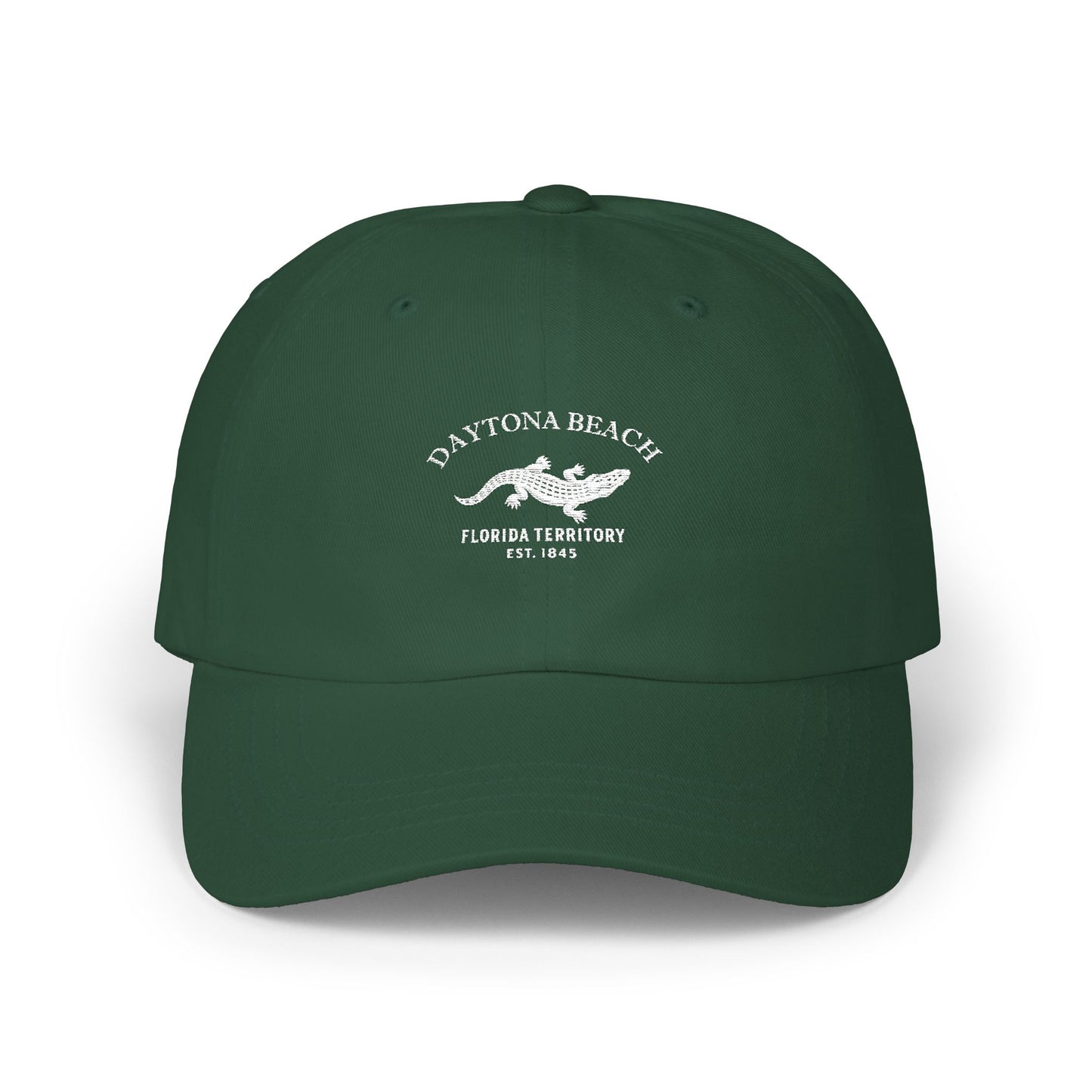
Off the sand, Daytona kept the easy rhythm of a classic Florida beach resort: the boardwalk and Main Street Pier, the coquina-rock Bandshell built on the oceanfront in 1937, the long Atlantic "Fun Coast," and the Ponce de Leon Inlet Lighthouse standing watch to the south. It's the vintage-postcard Florida of wide beaches, sea air, and summer afternoons by the water.
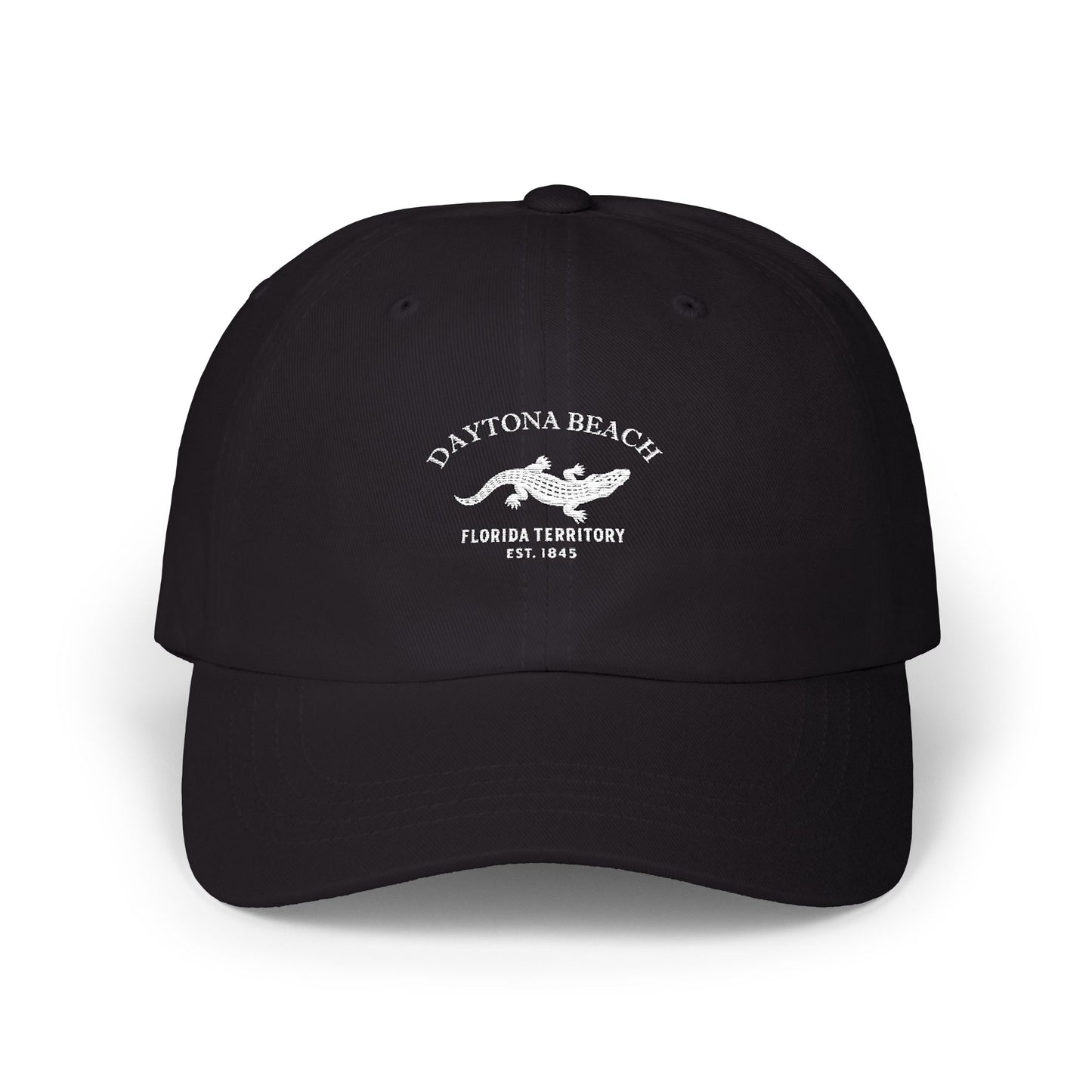
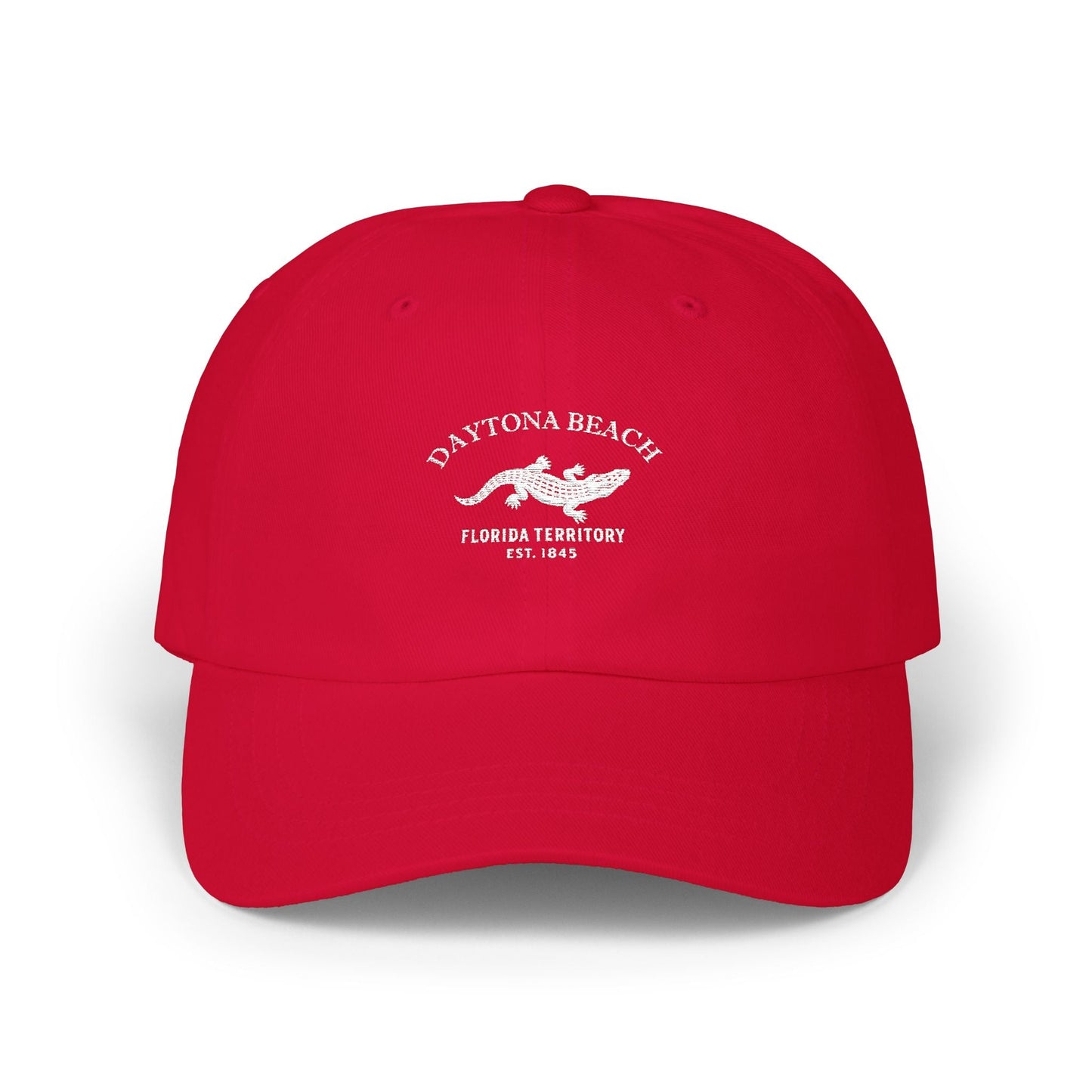
Our Daytona Beach logo carries Florida's alligator over "Florida Territory · Est. 1845," the year Florida joined the Union as the twenty-seventh state — the shared emblem of every Merlin Classics Florida place. Printed black-and-white with the worn look of an old crate stamp or woodcut, the gator reads as wild, sun-bleached Florida. What makes this one Daytona is the story behind it — the most famous beach, and the birthplace of speed.
Why People Visit Daytona Beach
Daytona Beach offers iconic Florida seaside fun with a layer of vintage-speed history beneath the sand. Visitors split their time between the beach, the boardwalk, the river parks, and the area's world-famous racing heritage. It's lively, nostalgic, and welcoming — a Fun Coast classic that pairs natural beauty with easy beach-town culture.
