


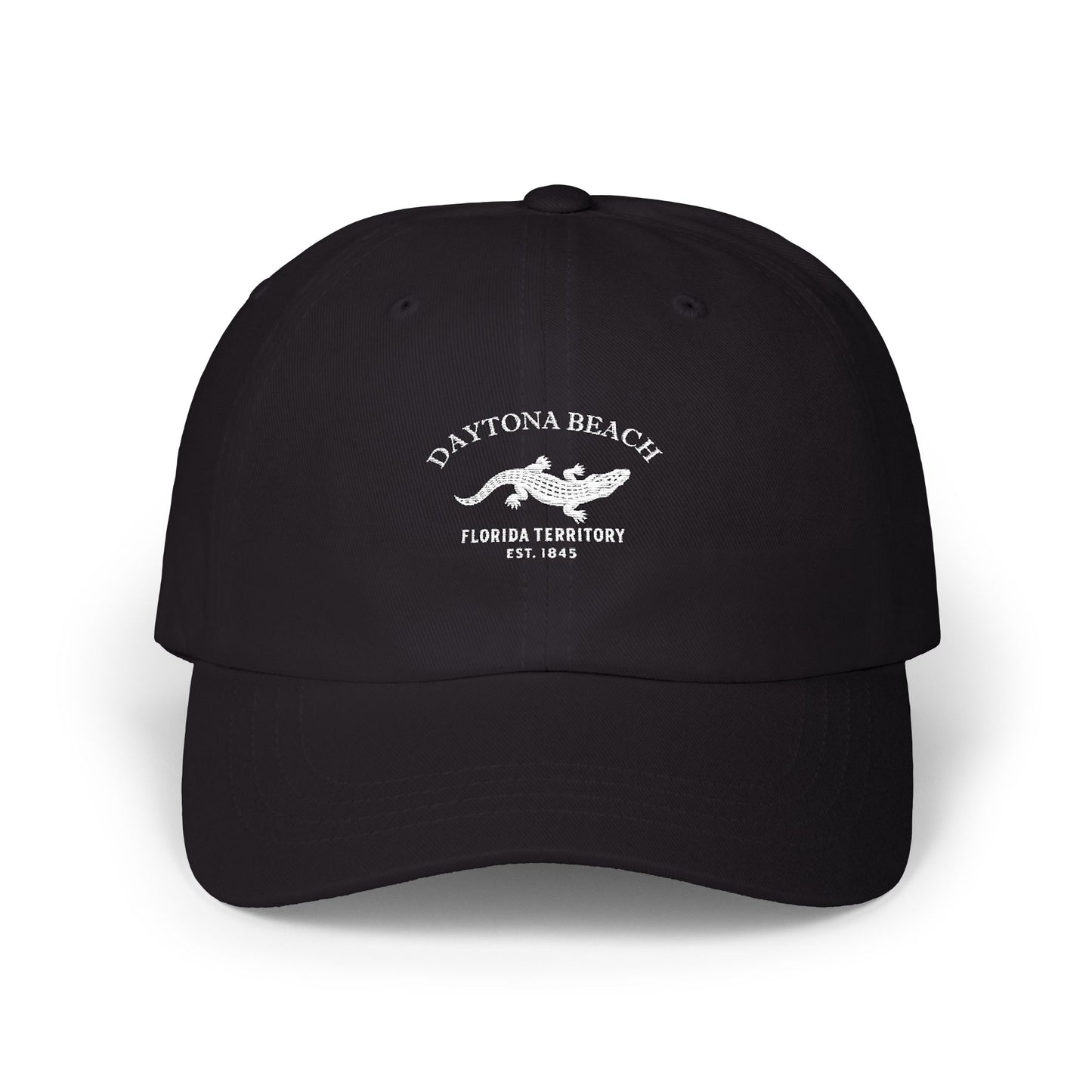
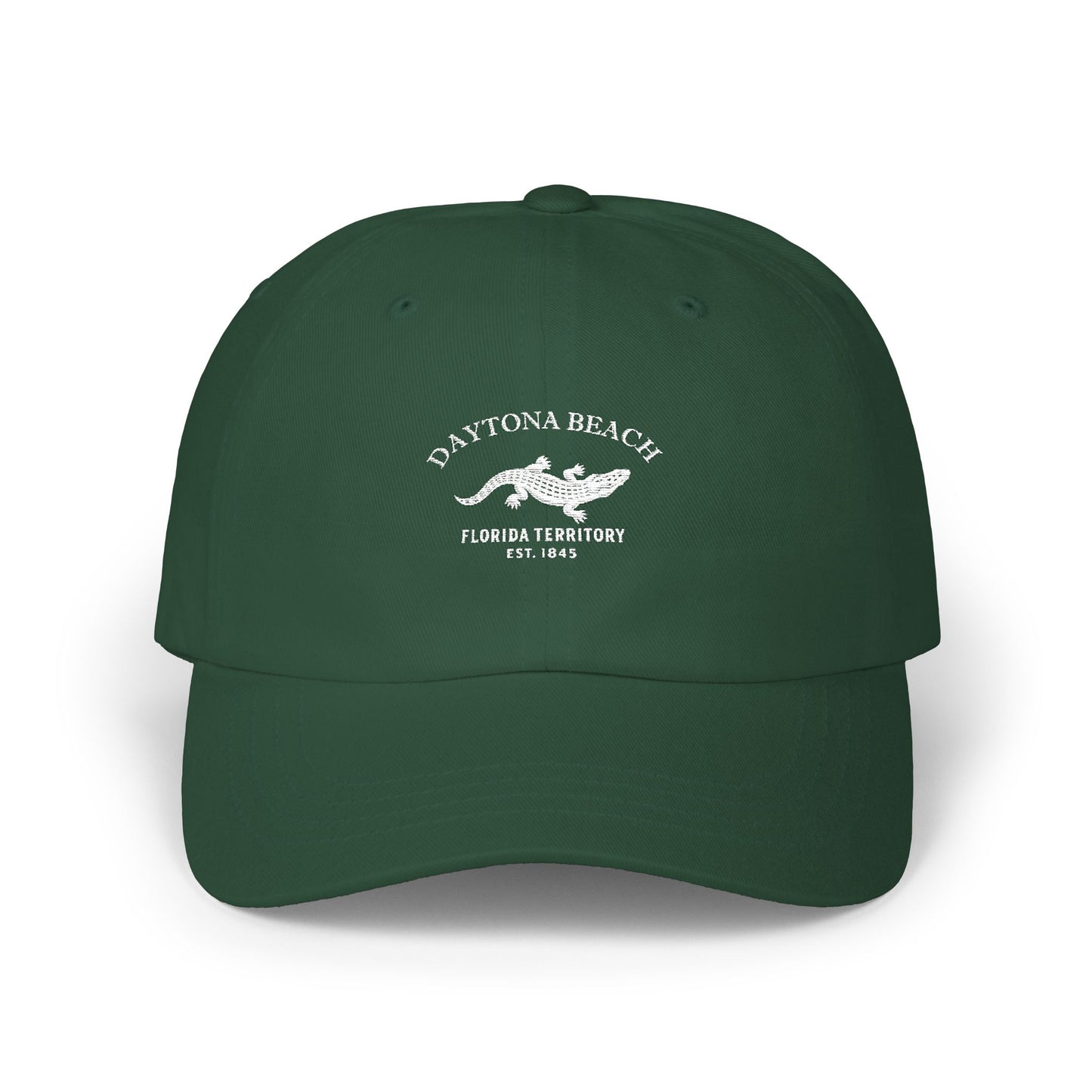

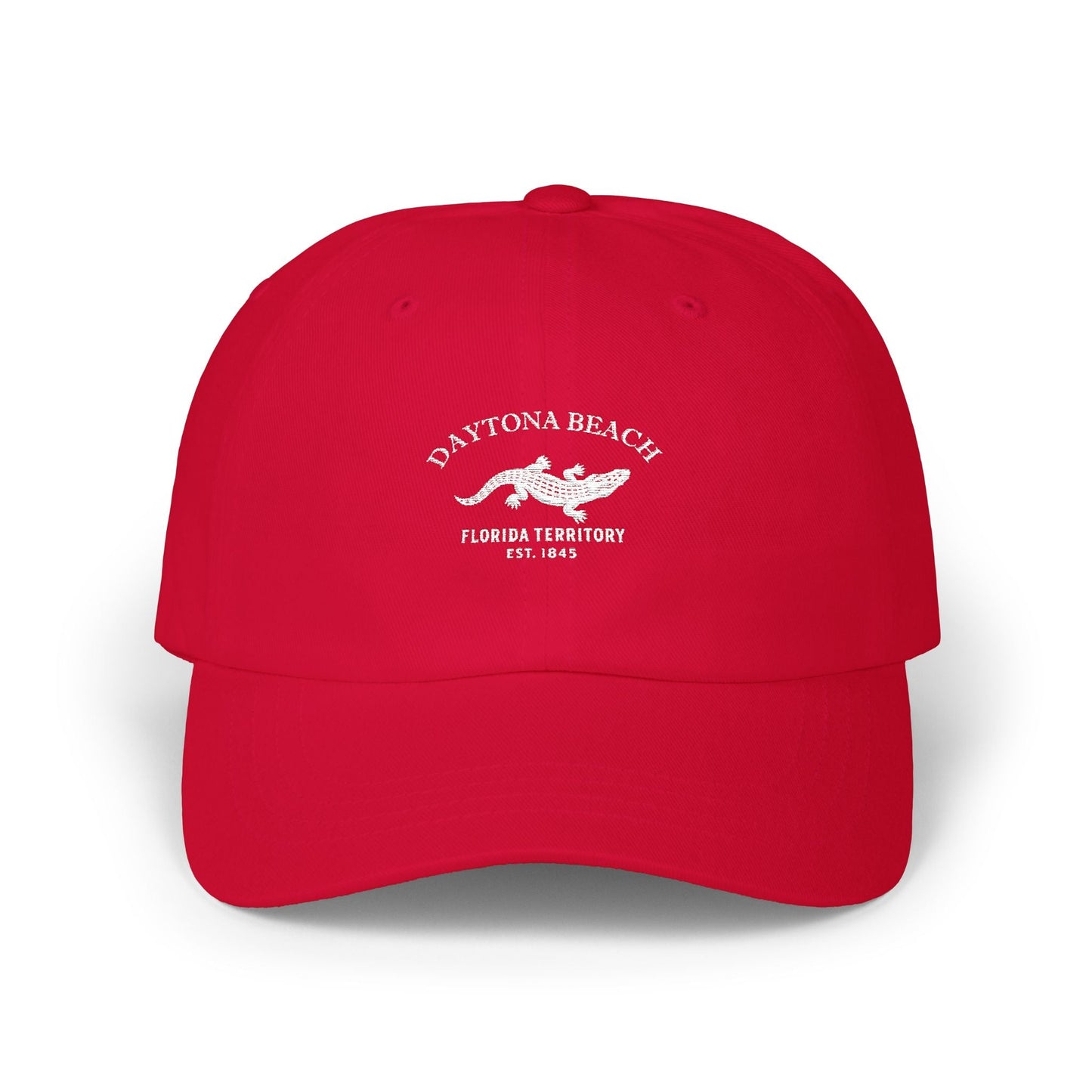
Today Daytona Beach is known the world over for its beach and its motorsports fame, while keeping the resort-town character that built it. Our Daytona designs gather that identity — the alligator-and-1845 emblem, the vintage beach-racing heritage, and the most-famous-beach romance — into wearable form. Daytona Beach, Florida — the World's Most Famous Beach, where in 1903 daredevils first turned hard-packed sand into the Birthplace of Speed.
The town began in the 1870s, when Mathias Day laid out a community on the former Williams Orange Plantation along the Halifax River. Henry Flagler's railroad reached the coast in the 1890s, and the resort grew; in 1926 Daytona, Daytona Beach, and Seabreeze consolidated into the City of Daytona Beach. Through it all the draw was the same: a uniquely wide, flat, hard-packed beach — firm enough that, to this day, you can still drive a car on the sand.
Why People Visit Daytona Beach
Daytona Beach offers iconic Florida seaside fun with a layer of vintage-speed history beneath the sand. Visitors split their time between the beach, the boardwalk, the river parks, and the area's world-famous racing heritage. It's lively, nostalgic, and welcoming — a Fun Coast classic that pairs natural beauty with easy beach-town culture.
