


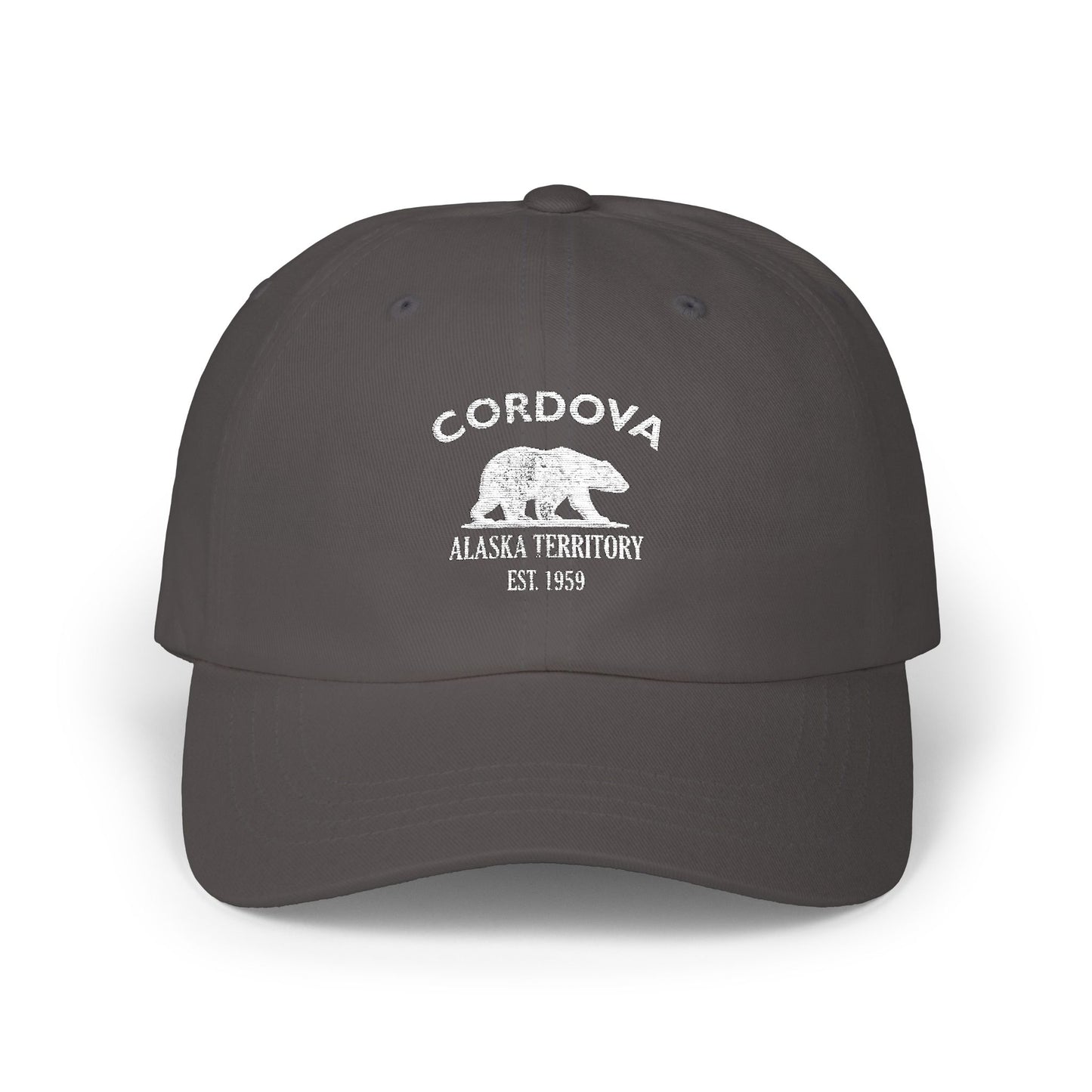
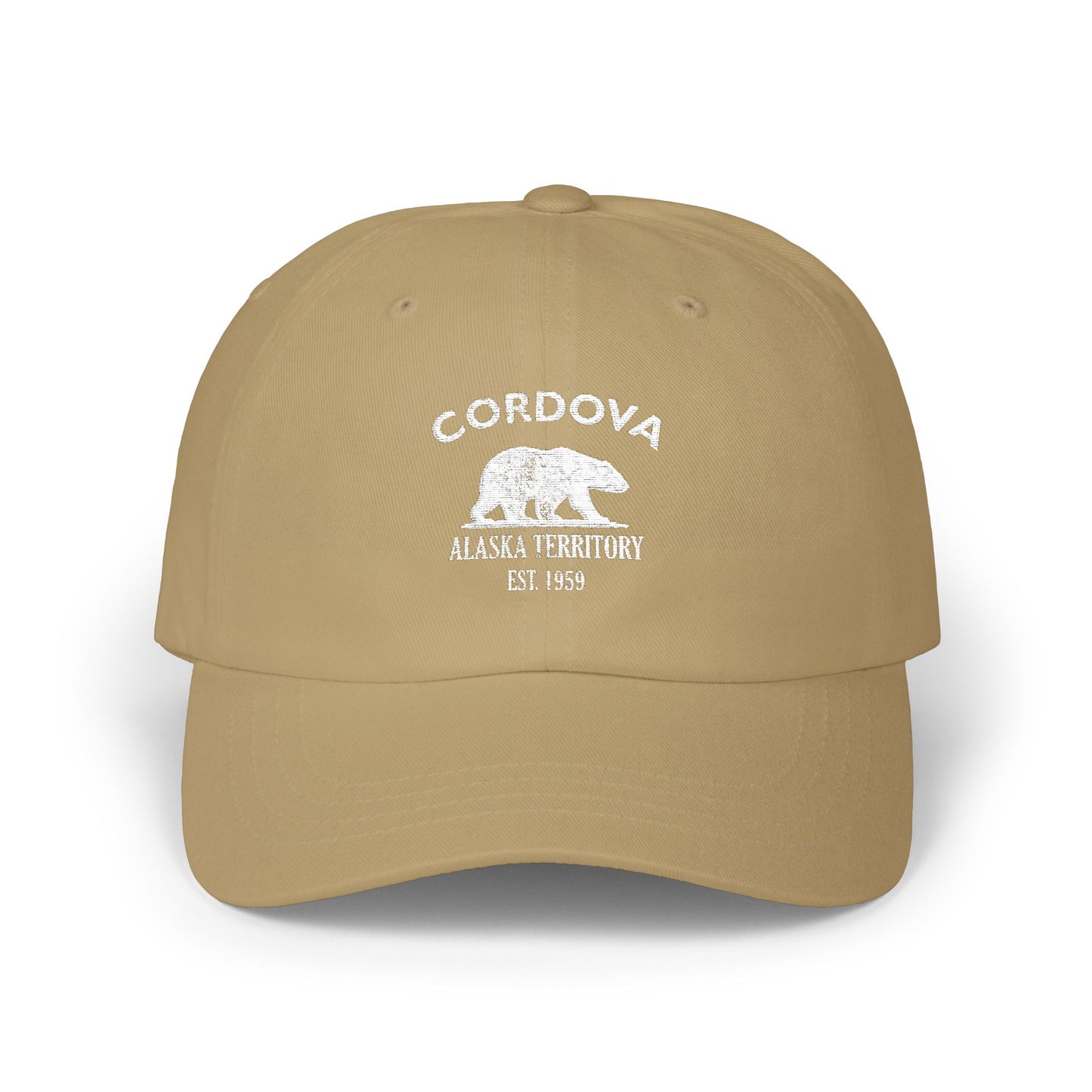
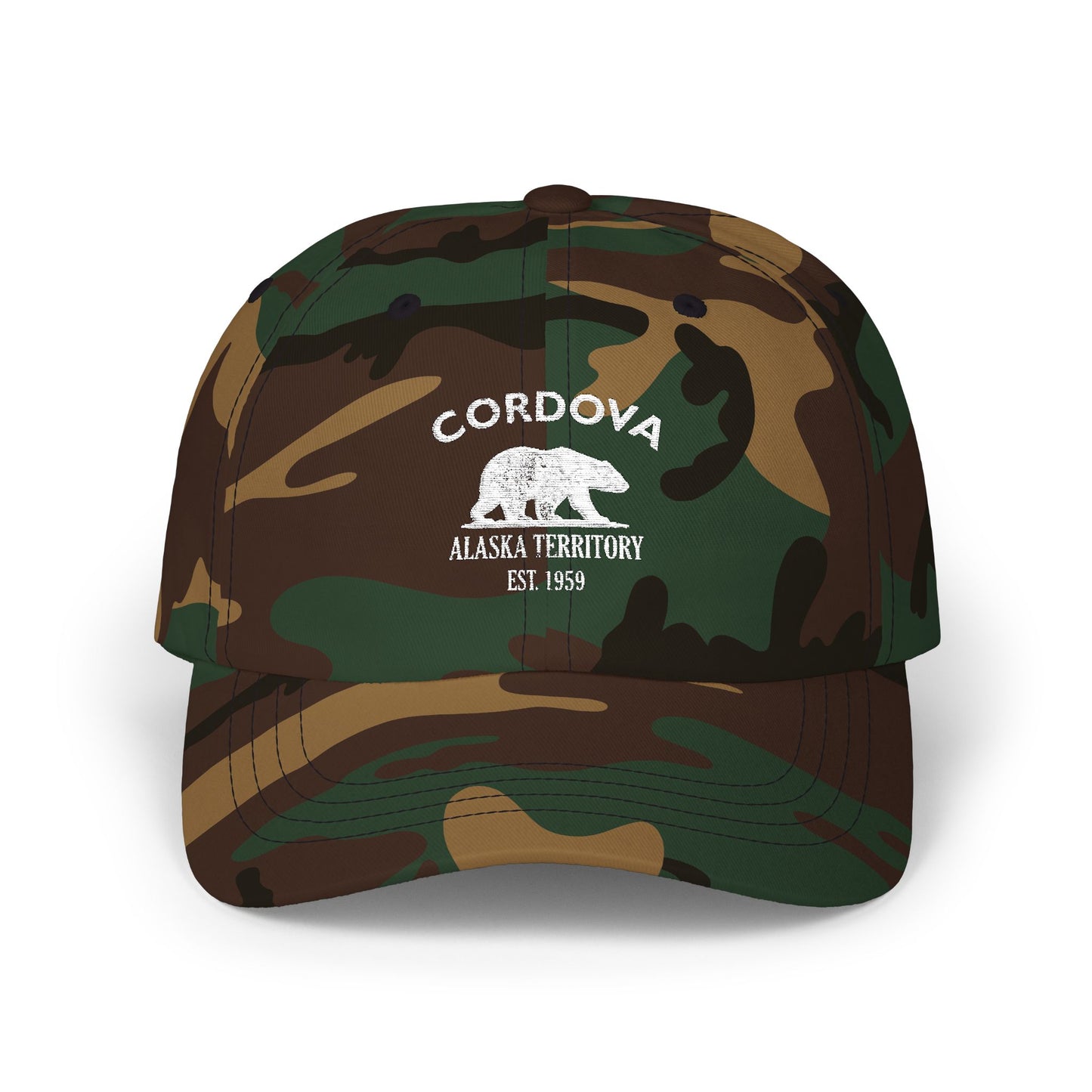
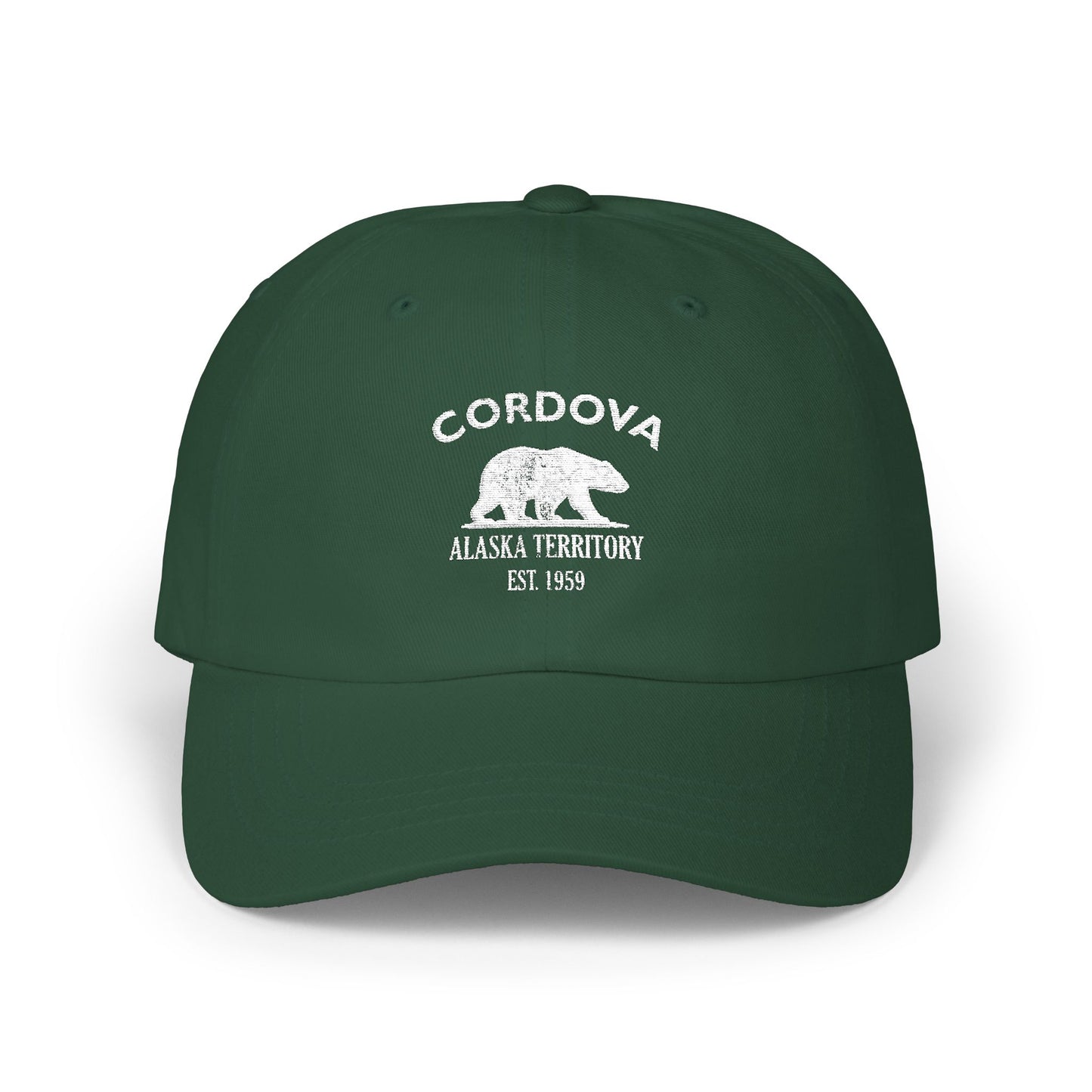
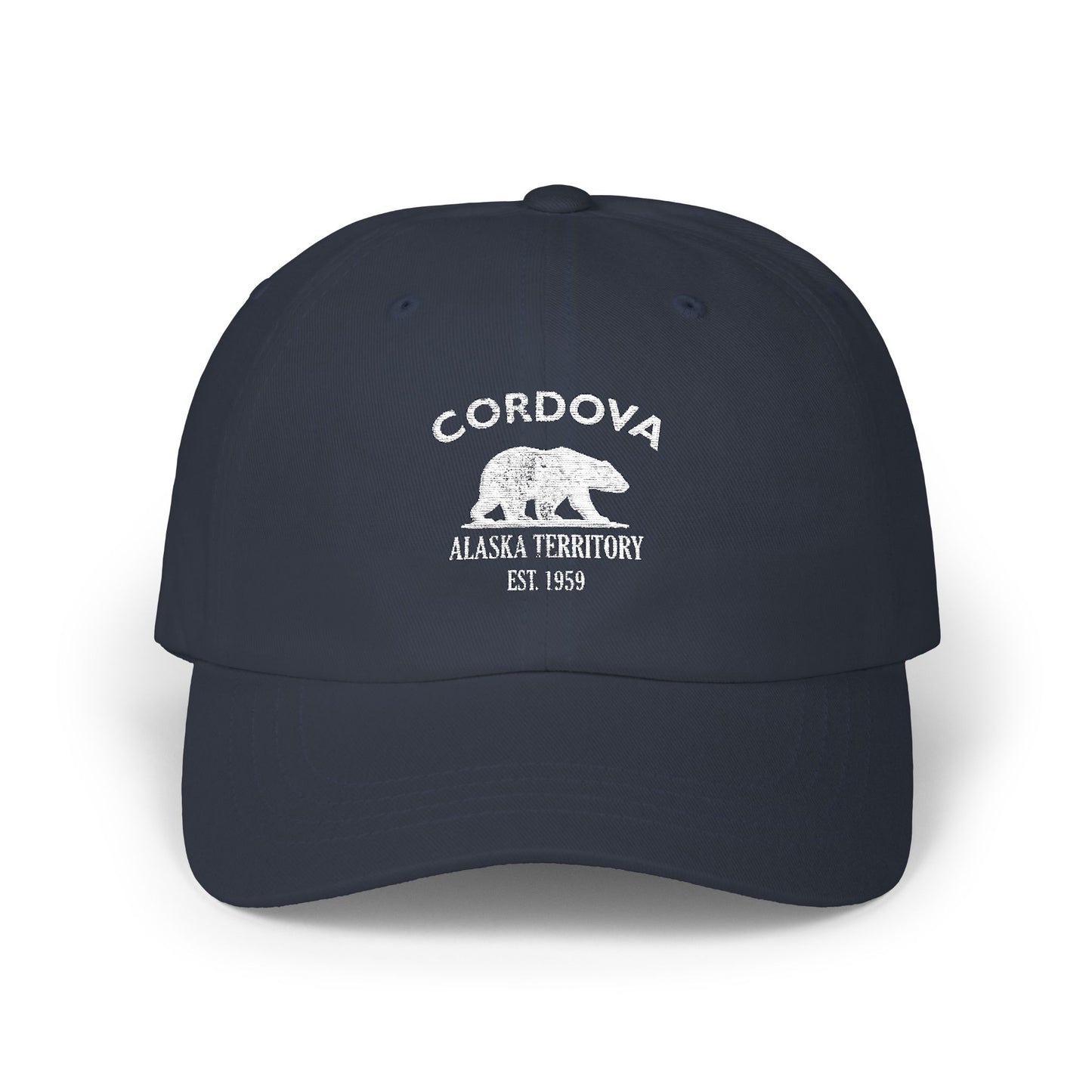
Our Cordova retro logo uses Alaska’s distressed bear motif, symbolizing toughness, wilderness, and endurance. The bear reflects survival in harsh conditions, while “1959” ties the design to Alaska’s statehood. Its black-and-white styling is rugged and authentic, resembling crate stamps or outfitter branding. The motif bridges Cordova’s dual story: Indigenous heritage and industrial boomtown. On merchandise, it conveys toughness and authenticity, retro vintage in tone. The bear emblem honors Cordova’s layered identity, reflecting resilience, heritage, and pride. Retro in style, the design perfectly represents Alaska’s frontier spirit, making it a timeless emblem of endurance, adaptability, and heritage.
Cordova’s stories include legends of salmon runs so vast they seemed endless, myths of spirits guiding fishermen, and memories of copper trains rumbling through mountains. Families recall canneries buzzing with workers, parades celebrating salmon, and rebuilding after earthquakes. Myths of hidden mines add to lore, alongside tales of resilience in storms. These stories illustrate Cordova’s layered identity: Indigenous heritage, copper boomtown, and fishing hub. Fact and myth blend to show resilience, adaptability, and pride. Cordova’s lore reflects Alaska’s story: endurance, heritage, and resourcefulness, ensuring survival and pride continued across turbulent decades of change and challenge.
Why People Visit Cordova Alaska
Cordova blends maritime life with expansive wetlands and mountain scenery. Visitors enjoy museums, harbors, and wildlife lookouts. It is hardworking, scenic, and close to wild country. Travelers find year round appeal in parks, paths, and public spaces. The setting combines natural beauty with accessible neighborhoods and landmarks.
