




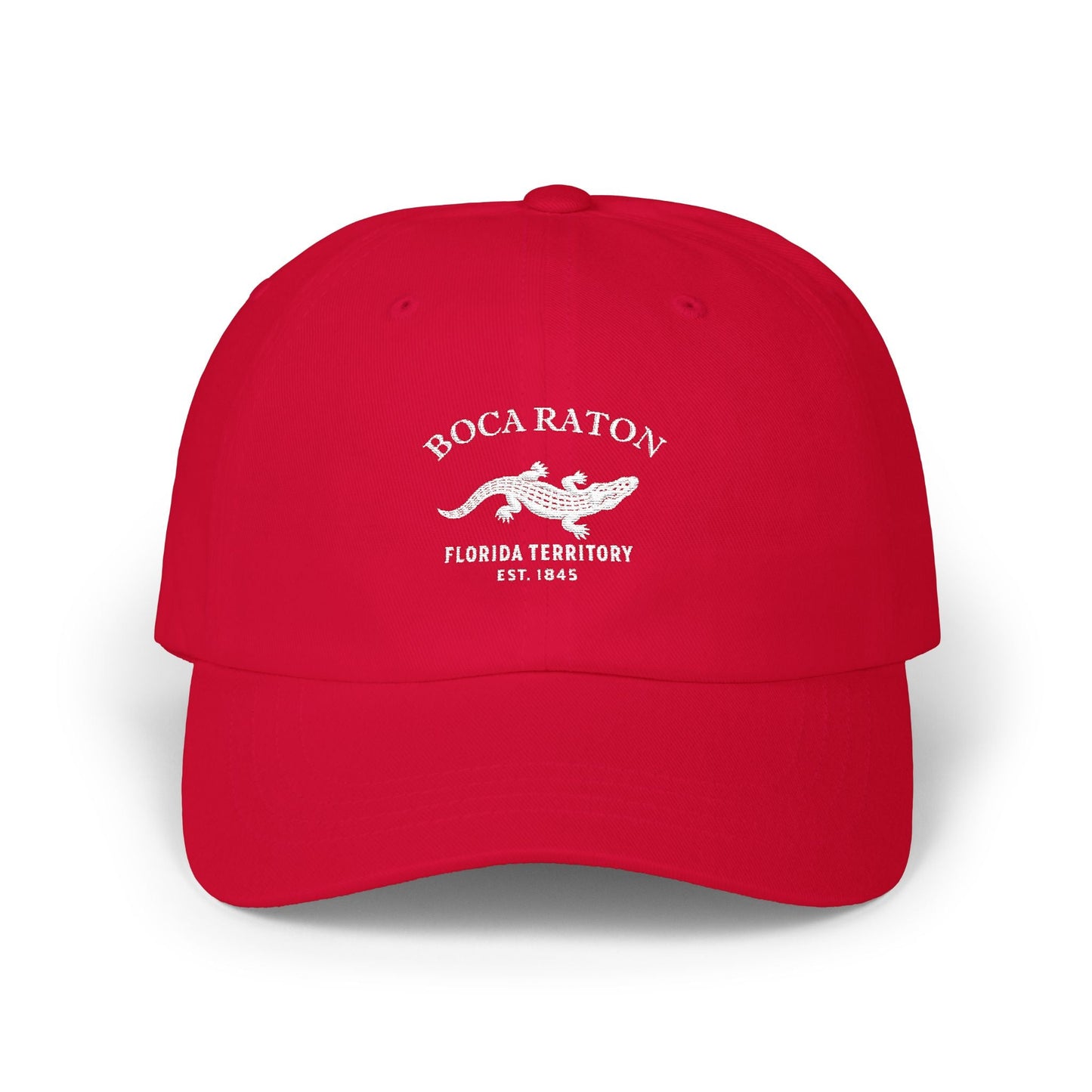
Through all of it, Boca Raton became a magnet for the Northeast. Families from New York, New Jersey, Connecticut, and beyond moved south or wintered here, until the city's character became as much transplanted-Northeast as native-Florida — a connection that ties Boca, in its own way, back to our New England roots. Today it's an affluent coast of beaches, golf, the arts at Mizner Park, and a hundred years of Mediterranean Revival style, with the Cloister Inn marking its centenary in 2026.
Mizner was hired as Town Planner in May 1925 with a vision of a Mediterranean dream city — barrel-tile roofs, stucco walls, wrought iron, courtyards, and a grand twenty-lane boulevard called El Camino Real. He formed the Mizner Development Corporation and sold five million dollars of stock in less than a week to a who's-who of the age — among them Harold Vanderbilt, Rodman Wanamaker, Irving Berlin, and Elizabeth Arden. Ground broke on the Cloister Inn that August, and on February 6, 1926, its doors opened: a hundred rooms, vaulted ceilings, and fourteen-karat gold-leaf columns, billed as the most expensive hundred-room hotel ever built.
Why People Visit Boca Raton
Boca Raton rewards visitors who want South Florida with a century of style behind it — Addison Mizner's Mediterranean Revival architecture, a beautiful stretch of Atlantic beach, the arts and dining of Mizner Park, and a genuinely surprising history that runs from a secret WWII radar school to the birthplace of the personal computer. People come for the beaches and the resort glamour, for the Boca Raton Museum of Art, and for an easy, refined coastal day with deep roots.
