


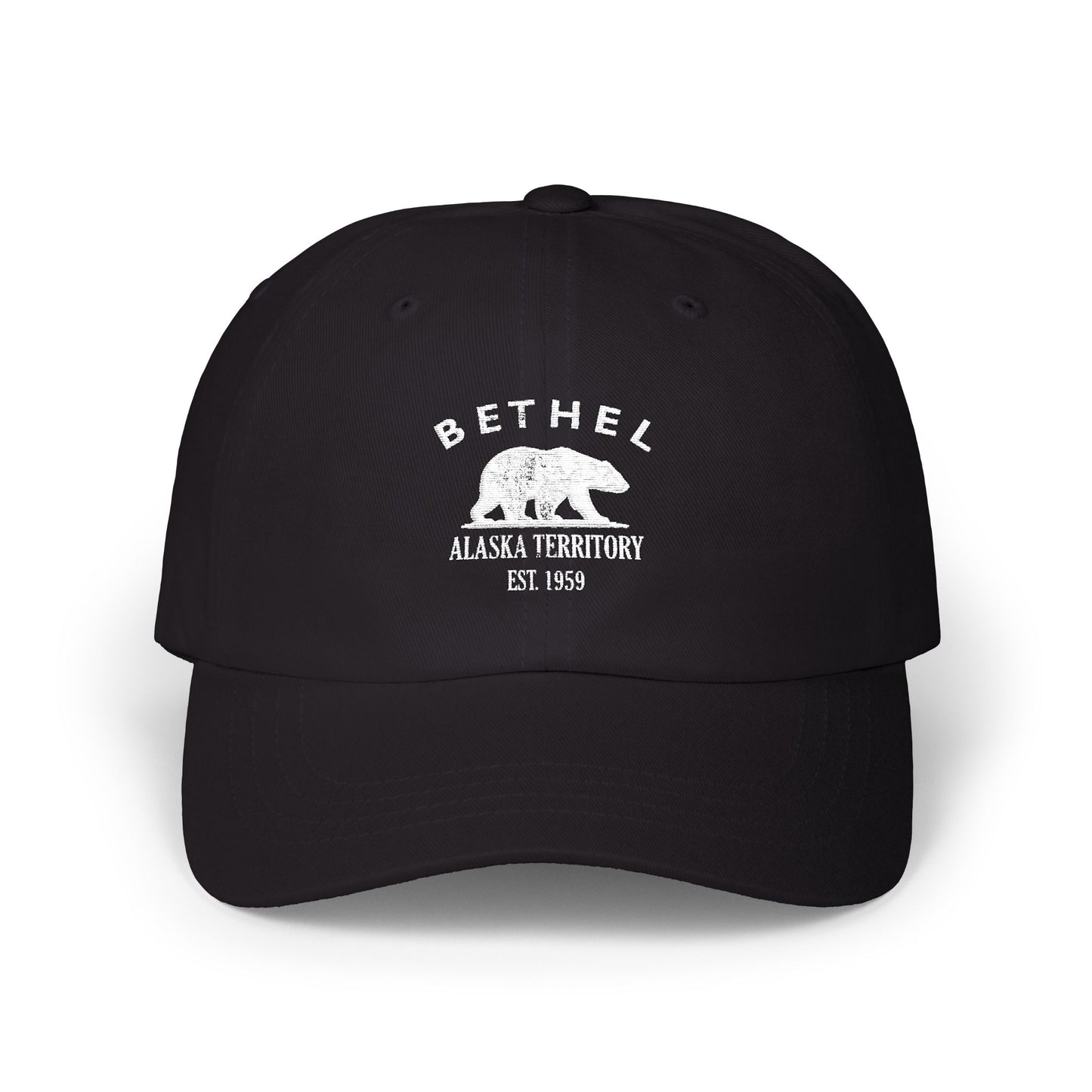
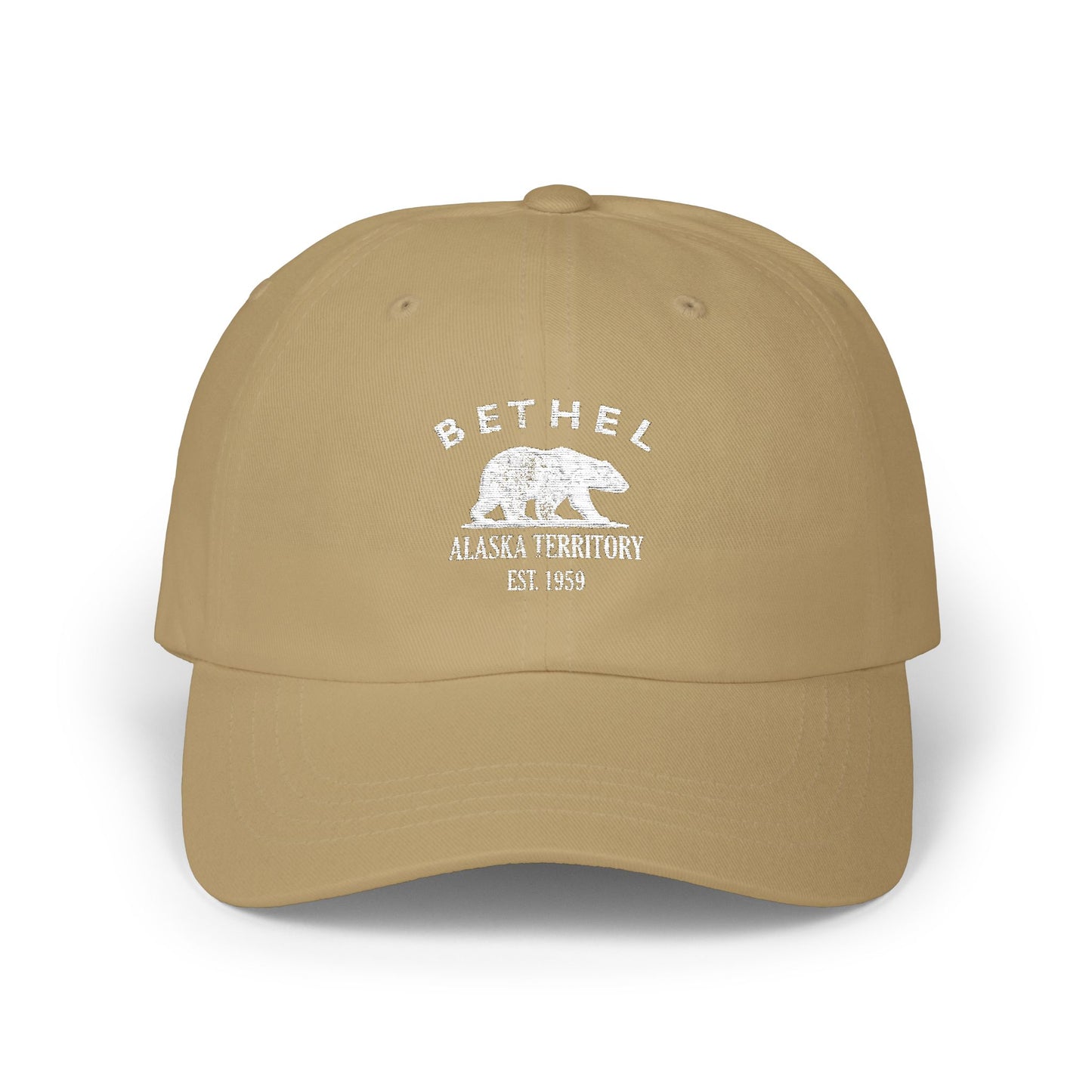
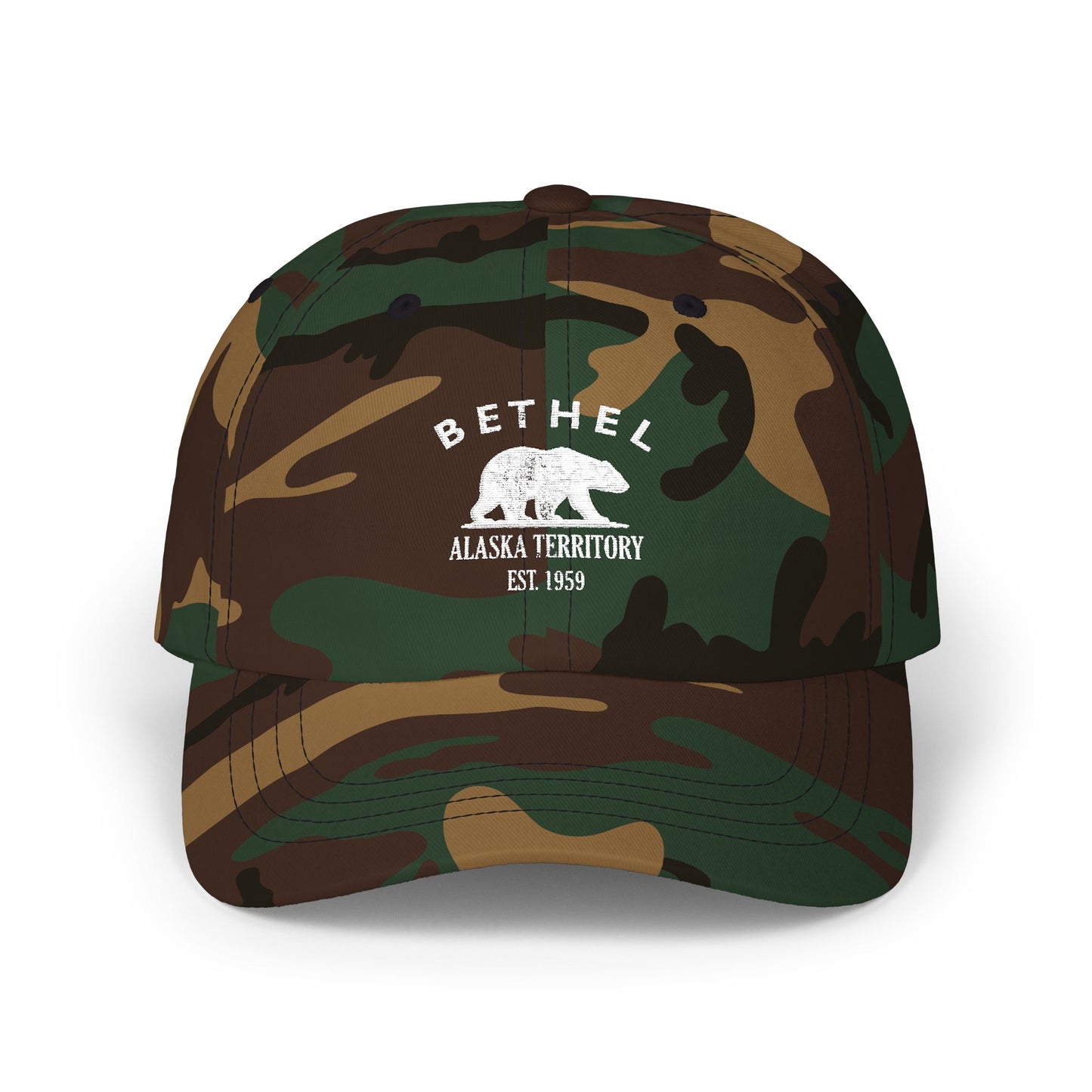
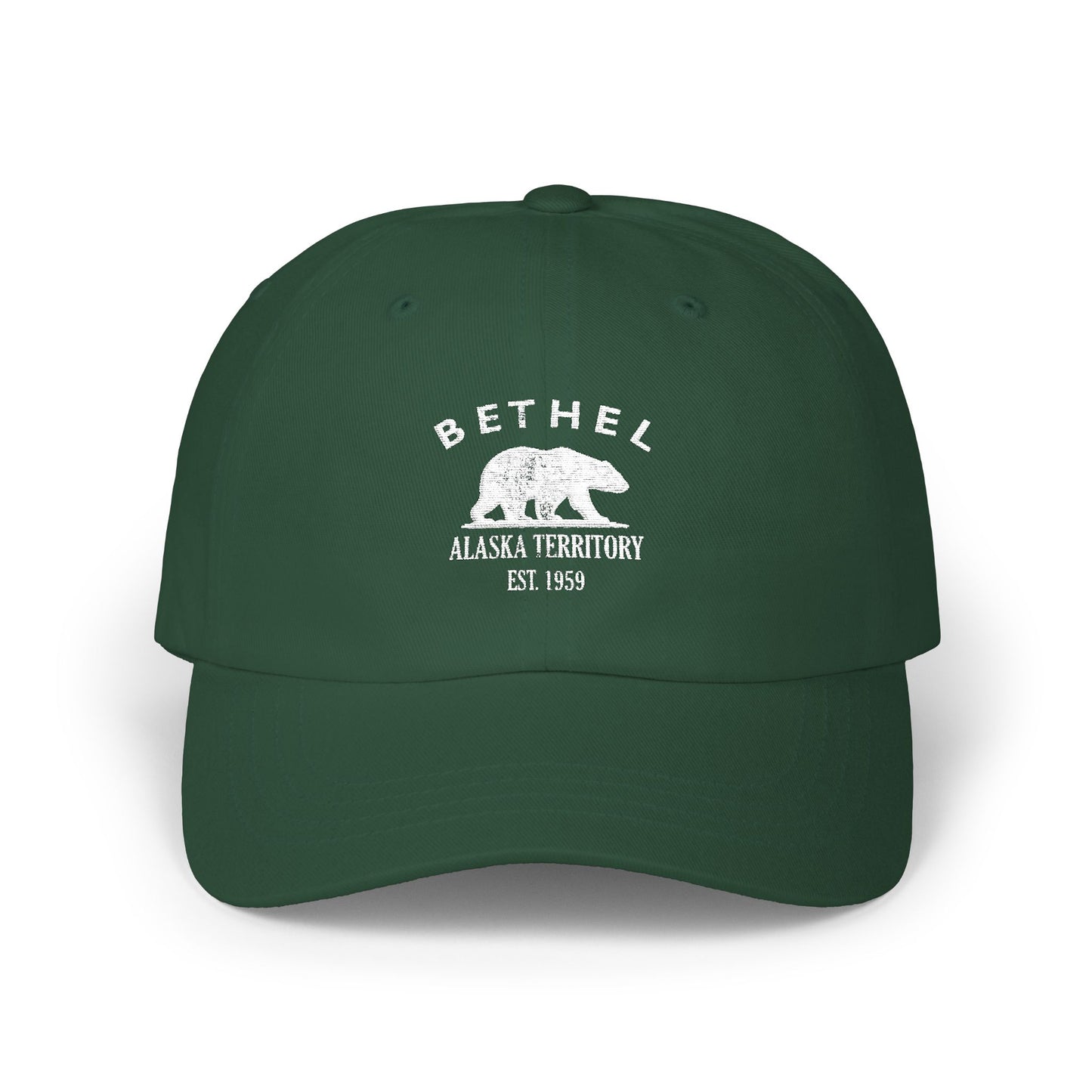
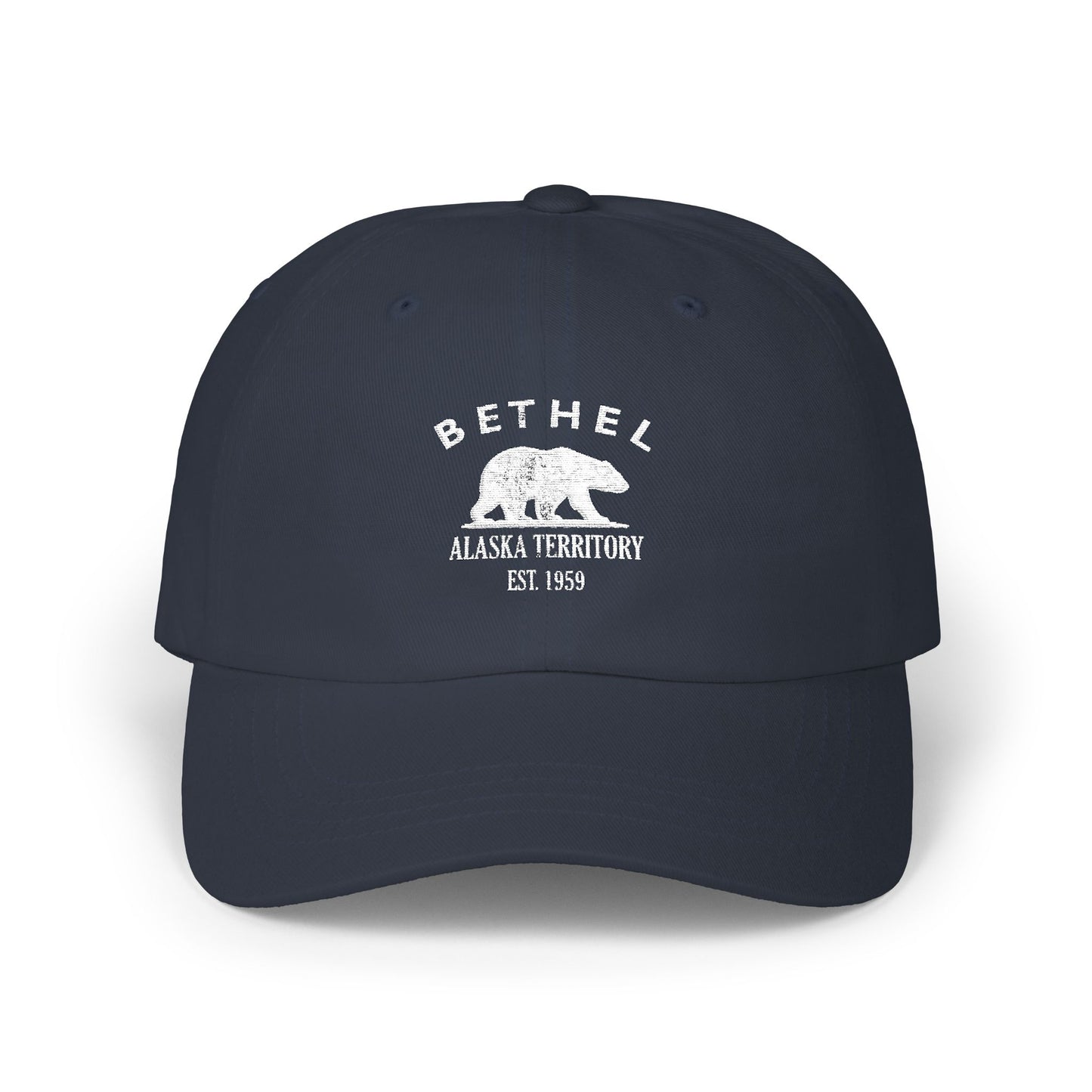
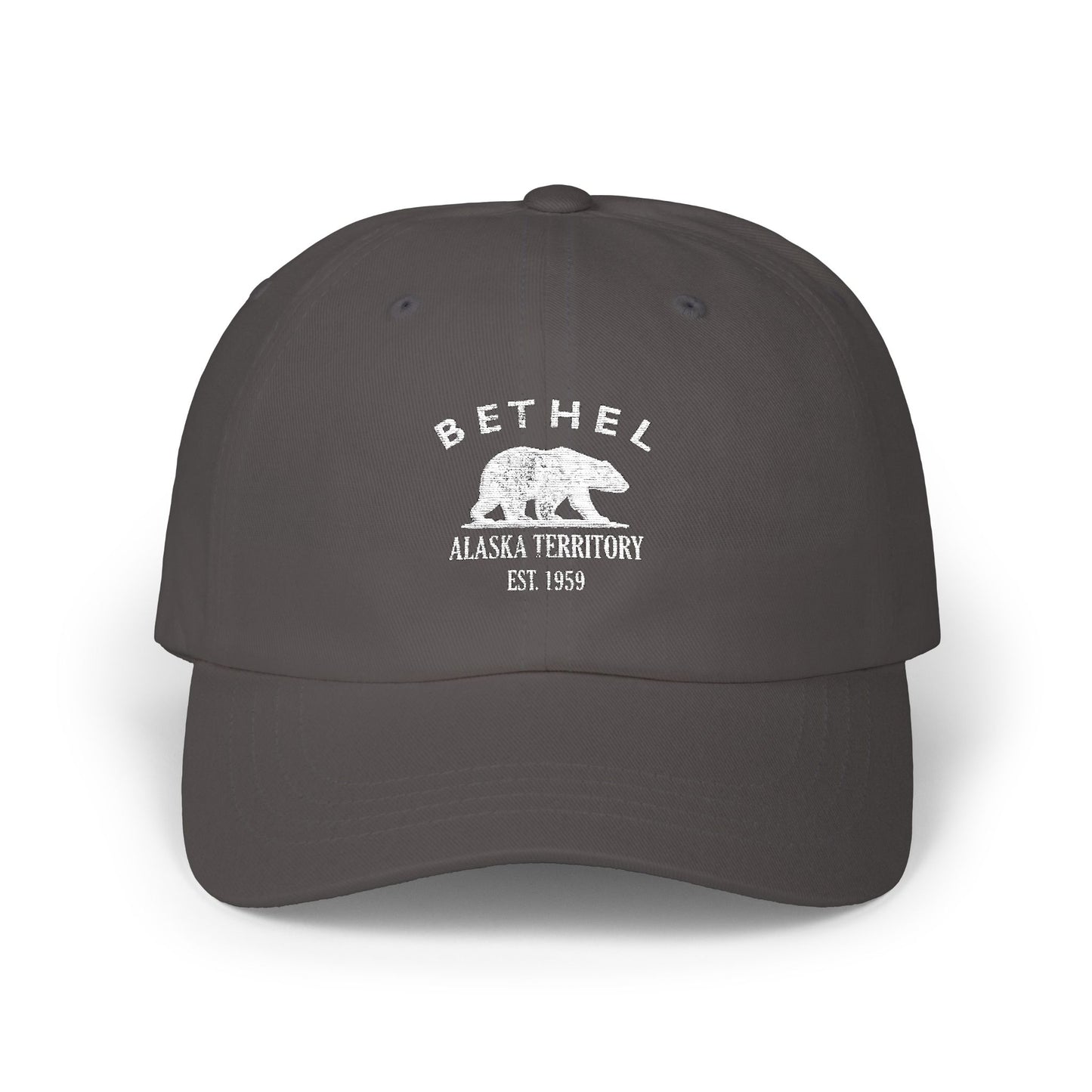
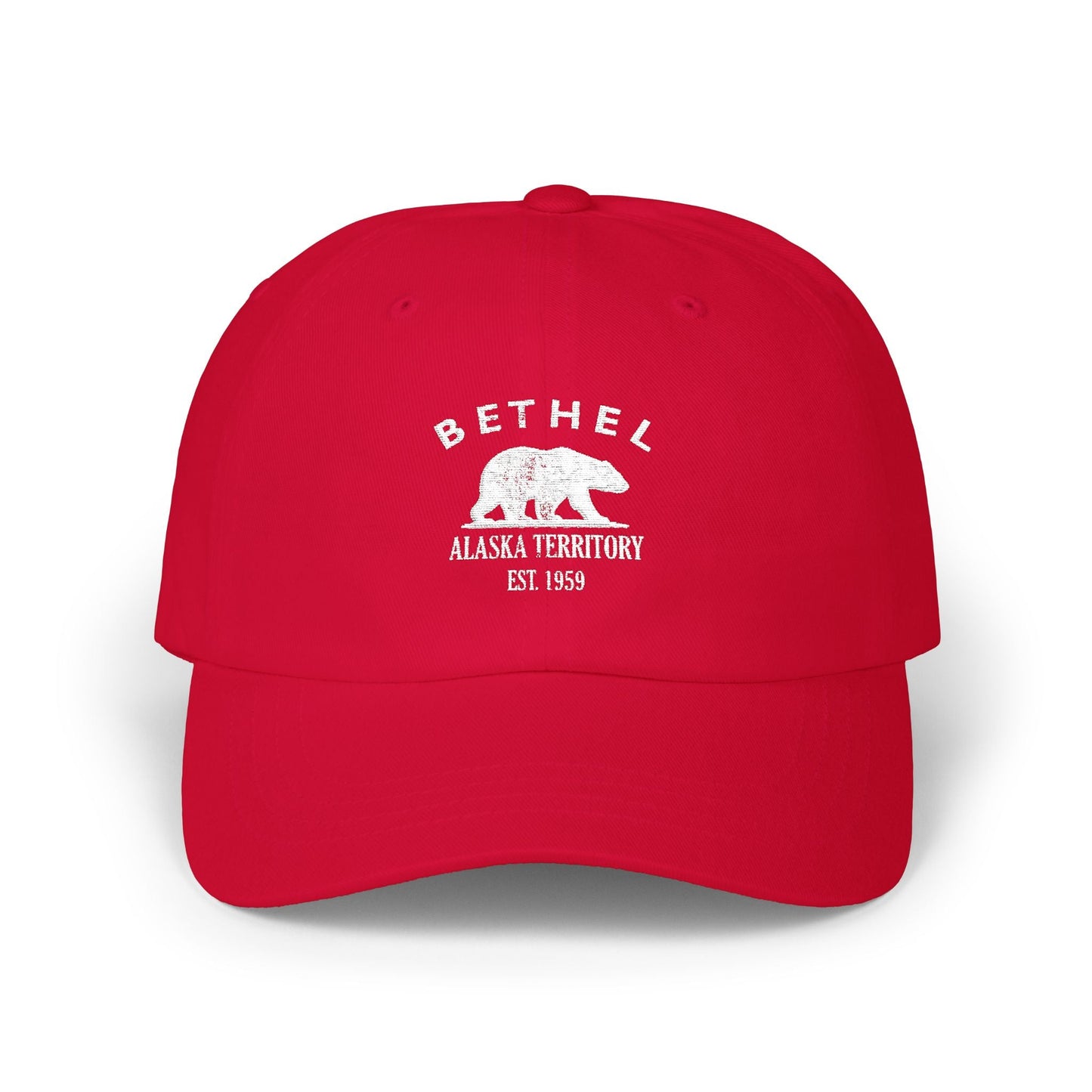
Today Bethel is celebrated as a hub of western Alaska, balancing subsistence heritage and modern identity. Its story reflects resilience, adaptability, and cultural pride. Our Bethel designs celebrate this layered heritage, pairing the bear motif with vintage styling. They invite you to explore the Bethel collection and carry forward a reminder of Alaska’s endurance. Retro in tone, the logo reflects toughness and authenticity. Bethel’s emblem honors Indigenous heritage and missionary legacy, making it a vintage symbol of Alaska’s cultural continuity. Explore the collection and share in Bethel’s story of resilience, heritage, and survival.
Bethel was established in the late nineteenth century as a Moravian mission along the Kuskokwim River, but Yup’ik peoples had lived there for centuries. The mission introduced schools and churches, while Native traditions of fishing and hunting continued. Its founding identity reflects both Indigenous heritage and missionary influence, where cultural continuity endured alongside outside change. Bethel’s origins highlight Alaska’s duality: Native resilience and adaptation to colonial presence. It became a community defined by subsistence traditions, missionary influence, and resilience, balancing cultural pride and hardship in one of Alaska’s most challenging riverine environments.
Why People Visit Bethel Alaska
Bethel blends living culture with delta landscapes. Visitors enjoy museums, boardwalks, and river scenes. It is authentic, windswept, and centered on the Kuskokwim. Travelers find year round appeal in parks, paths, and public spaces. The setting combines natural beauty with accessible neighborhoods and landmarks. History and everyday culture sit side by side in a welcoming way.
