


They named it yellow. When the railroad reached the high plains of the Texas Panhandle in 1887, the cattle town that sprang up took the Spanish word for yellow — amarillo — for the wildflowers, or the soil. The Yellow City grew into one of the busiest cattle-shipping points on earth, then a marquee stop on Route 66 halfway between Chicago and the coast, with the second-largest canyon in the country cut into the plains just to the south. Cattle, canyon, and the Mother Road — this is Amarillo, and this page tells its story.
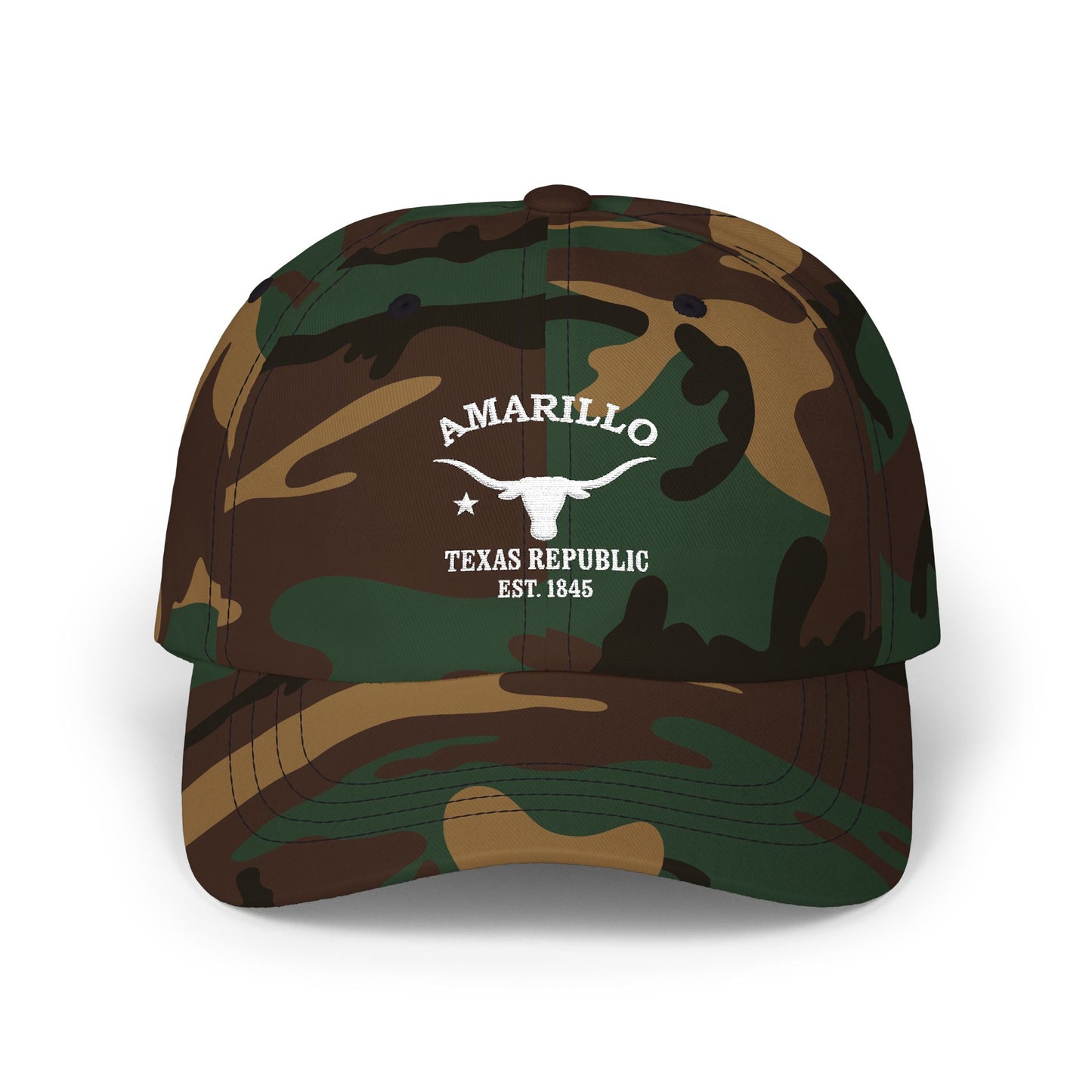
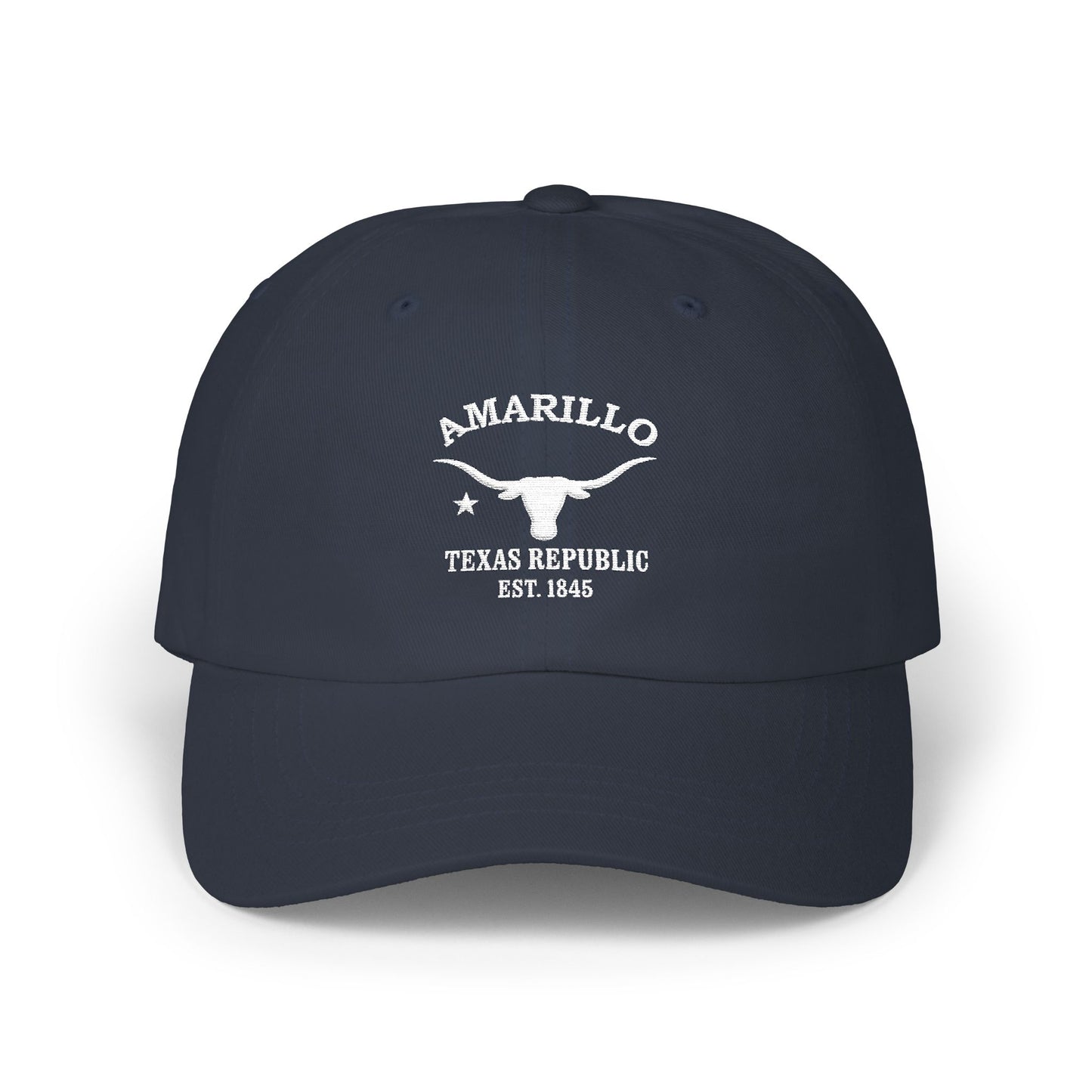
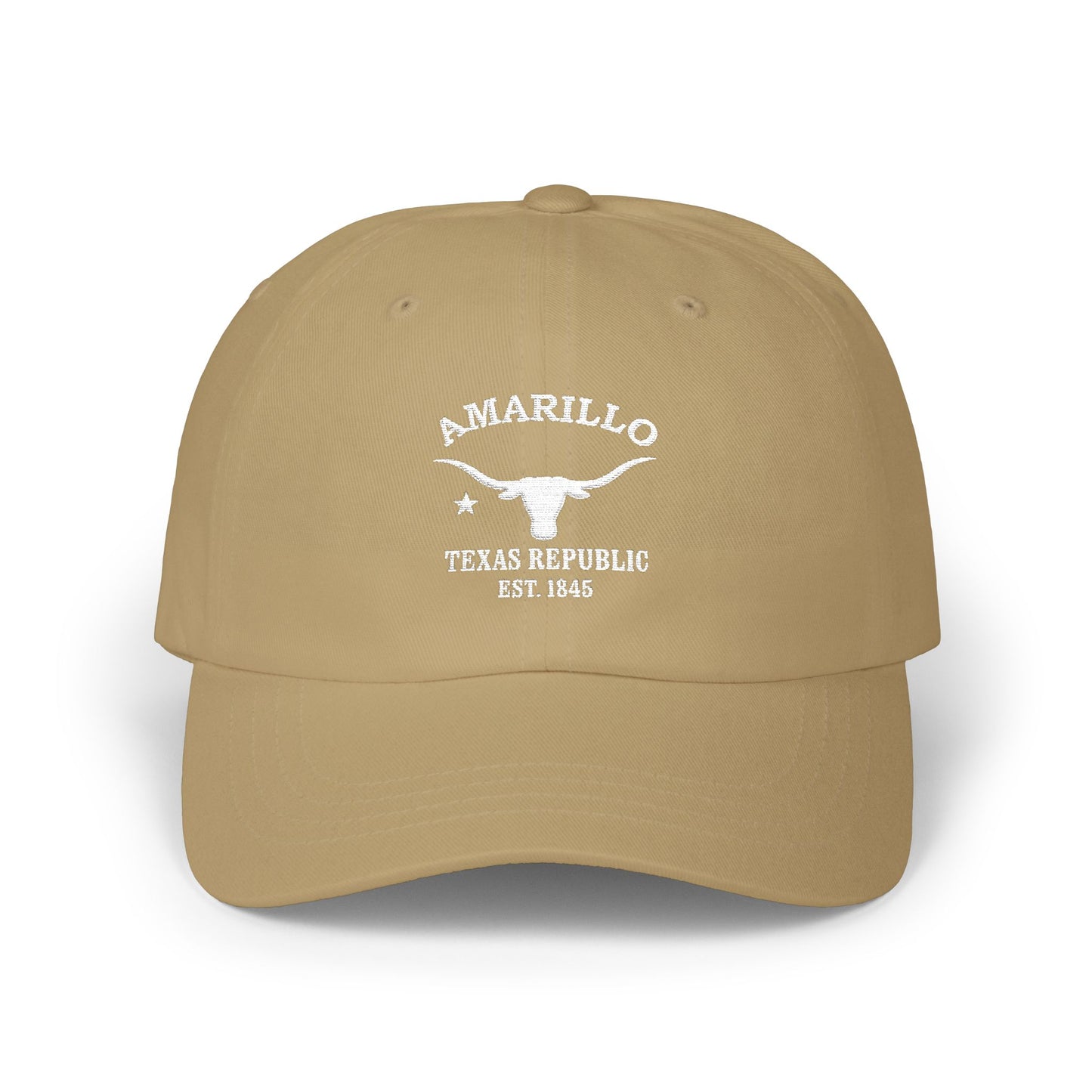
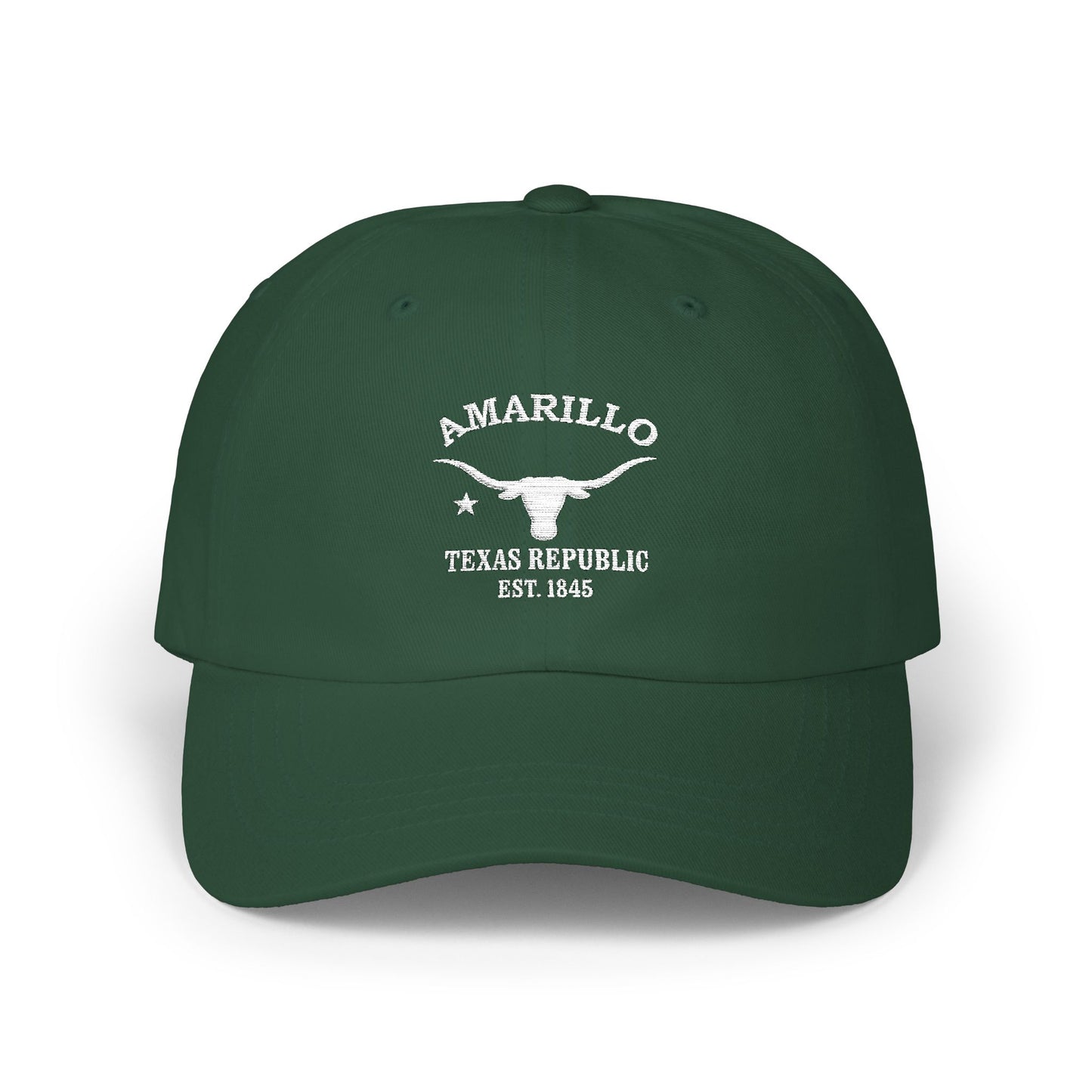
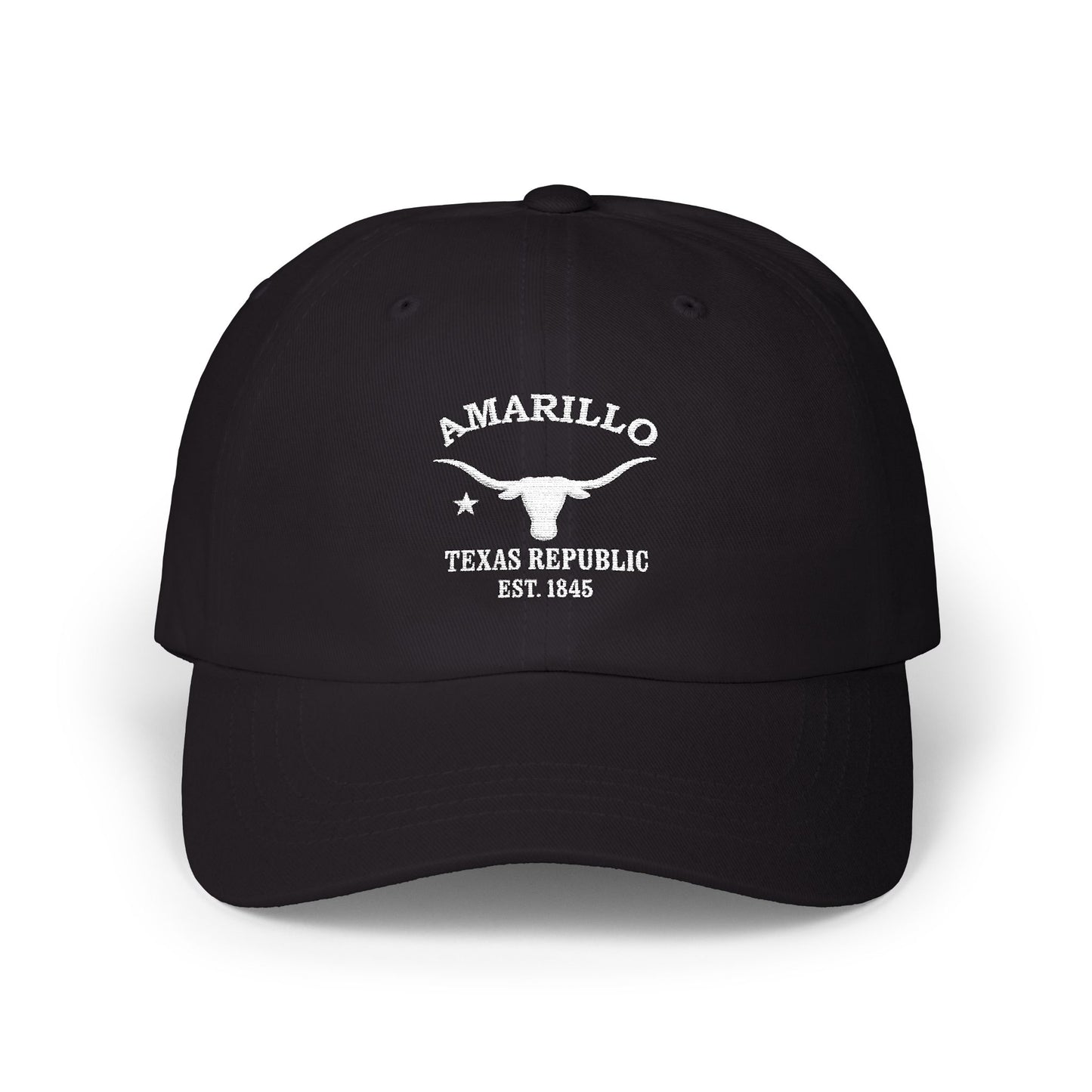
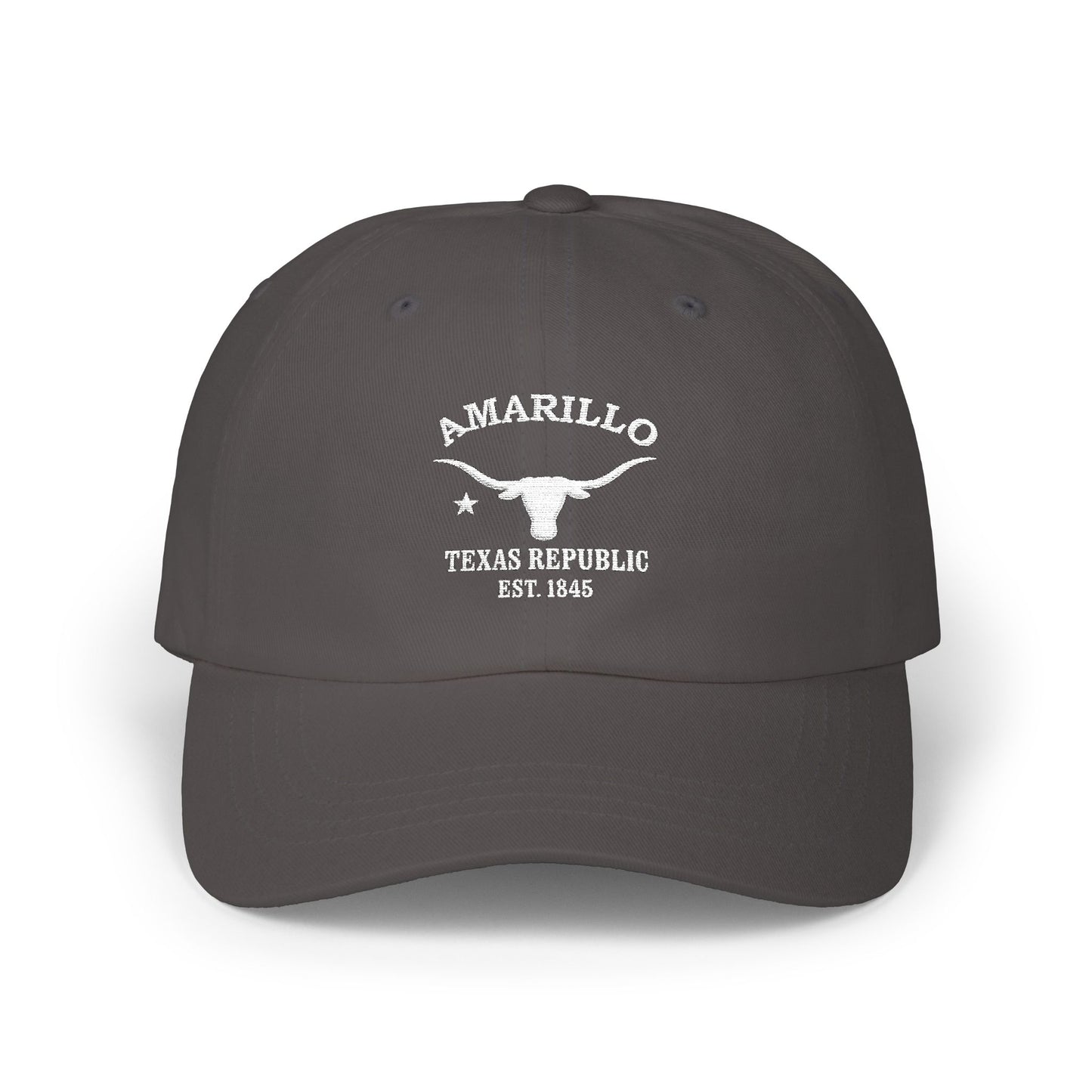
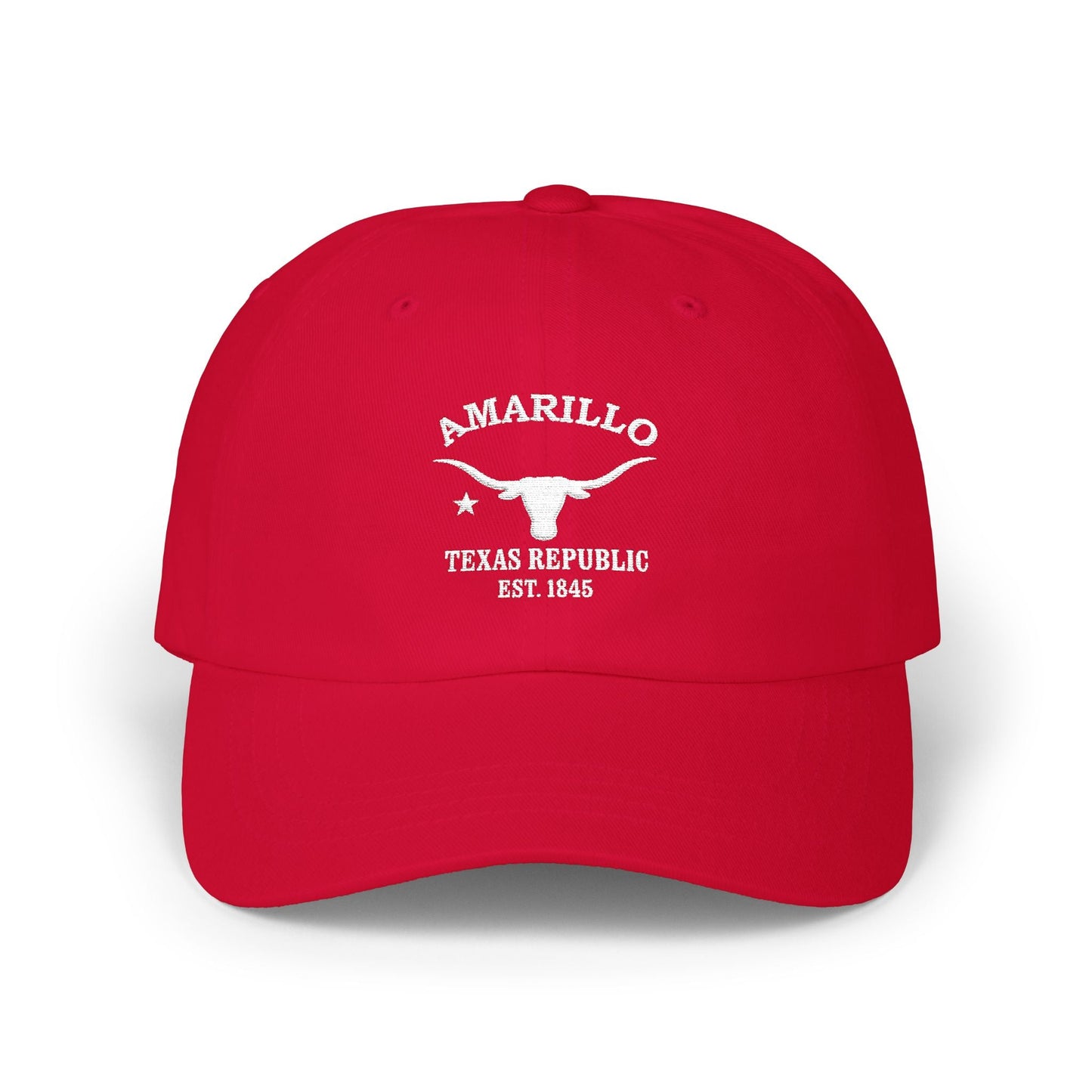
Our Amarillo logo carries a Texas longhorn — the cattle breed that built the open range — and a Lone Star over "1845," the year of statehood and the shared emblem of every Merlin Classics Texas place. Printed black-and-white with the worn look of a branding iron or an old highway shield, the longhorn and star read as Texas in shorthand: cattle country, the Lone Star, the wide Panhandle horizon. What makes this one Amarillo is the place behind it — the Yellow City, the cattle trains, the Quarter-Horse country, and the Mother Road running through the middle of it all.
Why People Visit Amarillo Texas
Amarillo draws visitors with a mix of Western heritage, natural wonder, and Mother Road Americana. Travelers find it both a marquee stop along historic Route 66 and the gateway to Palo Duro Canyon, with deep cattle-ranching and Quarter-Horse traditions and the wide, plainspoken character of the high plains. It is proud, practical, and unmistakably Texan.
