


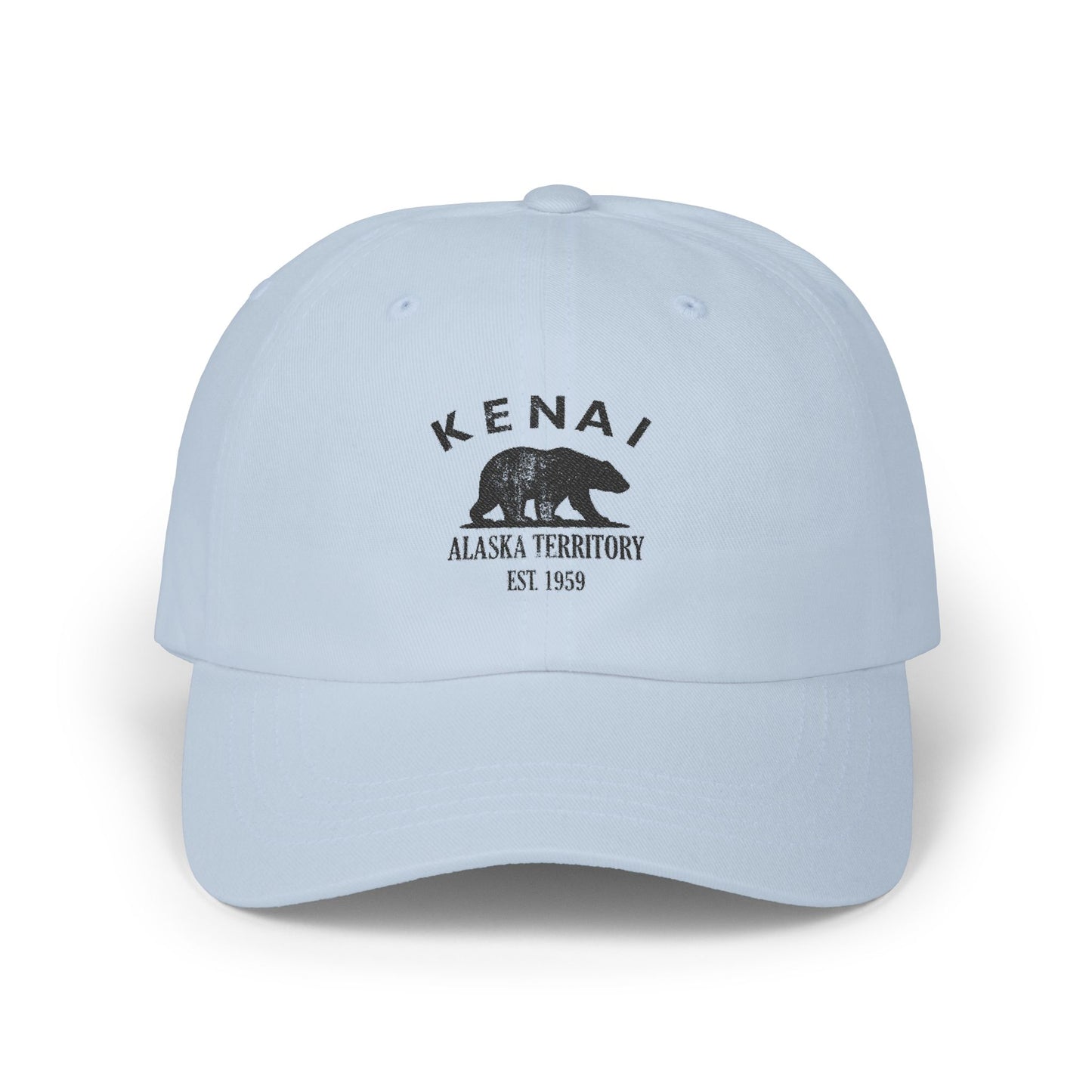

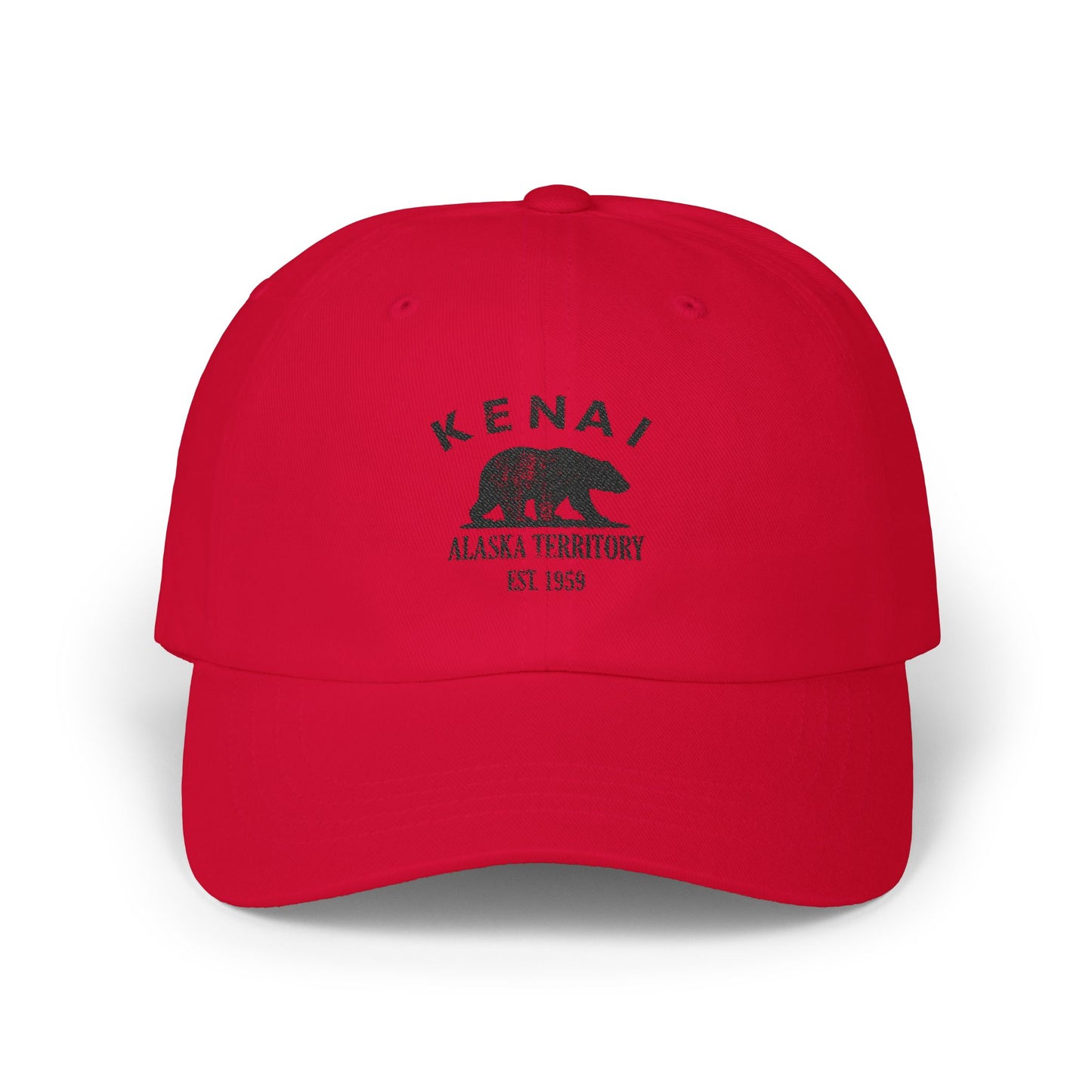
Our Kenai logo carries Alaska's bear over “Alaska Territory · Est. 1959,” the year Alaska became the forty-ninth state — the shared emblem of every Merlin Classics Alaska place. Printed in a distressed black-and-white that reads like an old outfitter's stamp, the bear is the Last Frontier in shorthand: rugged, wild, and at home in the cold. What makes this one Kenai is the country behind it — the Russian bluff, the king-salmon river, and the long view across Cook Inlet to the volcanoes.
The Dena'ina Athabascans were here first, in a village called Shk'ituk't at the river mouth, living on the salmon that still run past the bluff. Russian fur traders arrived in 1791 and built Fort St. Nicholas — the second permanent Russian settlement in all of Alaska — and called the people they traded with the “Kenaitze,” the Kenai people. The Russians swapped glass beads for sea-otter pelts they carried on to China, and a fur trade ran for decades out of this small bluff. When the United States bought Alaska in 1867, the Army raised Fort Kenay on the bluff in 1869; it lasted barely a year, but the name stuck, and the Russian faith stayed.
Why People Visit Kenai
Kenai pairs deep history with wide-open Alaska — a living Russian-era church, a salmon river that sets the summer's rhythm, and the long view across Cook Inlet to the mountains. It's accessible, working, and real: a Last-Frontier town that kept its old bones.
