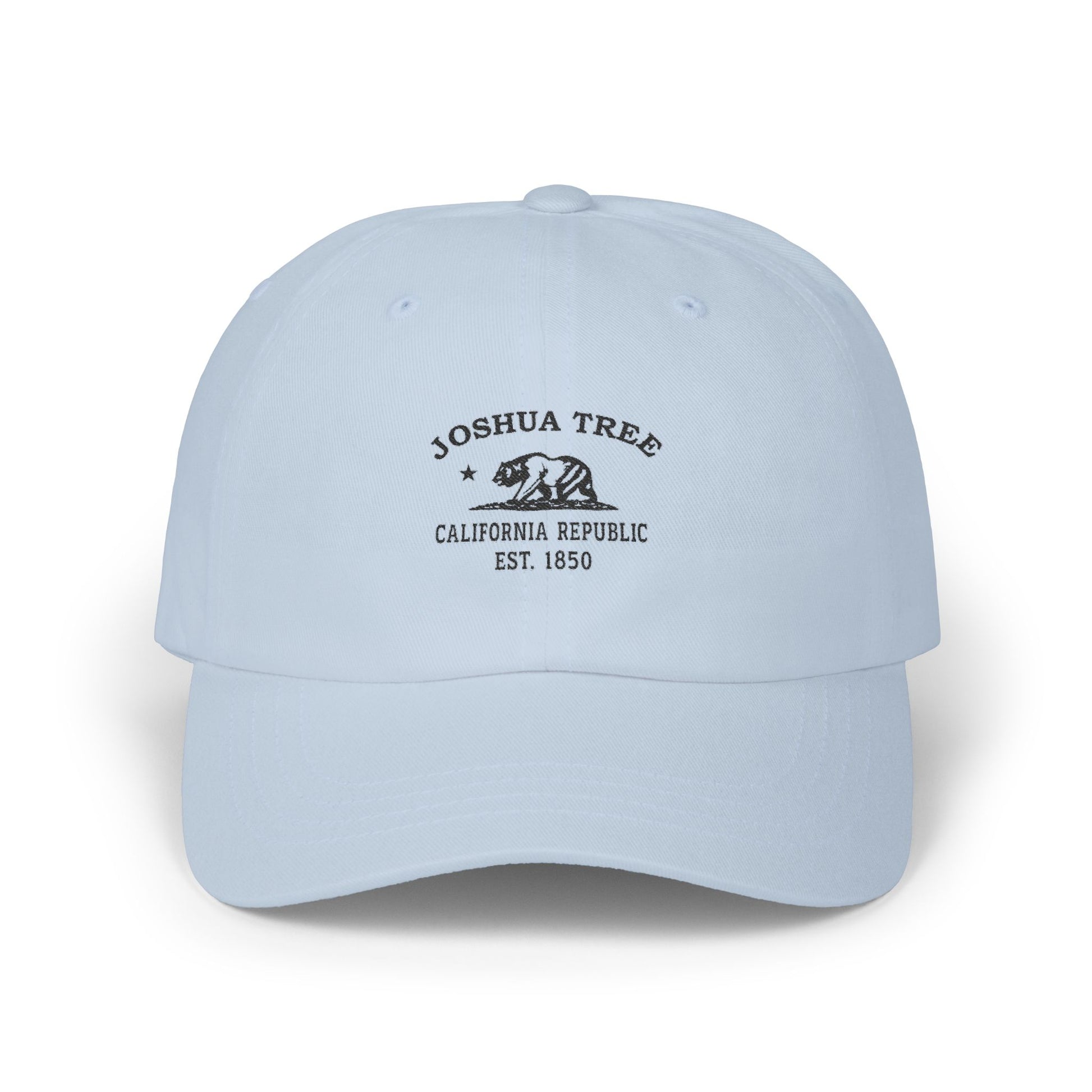
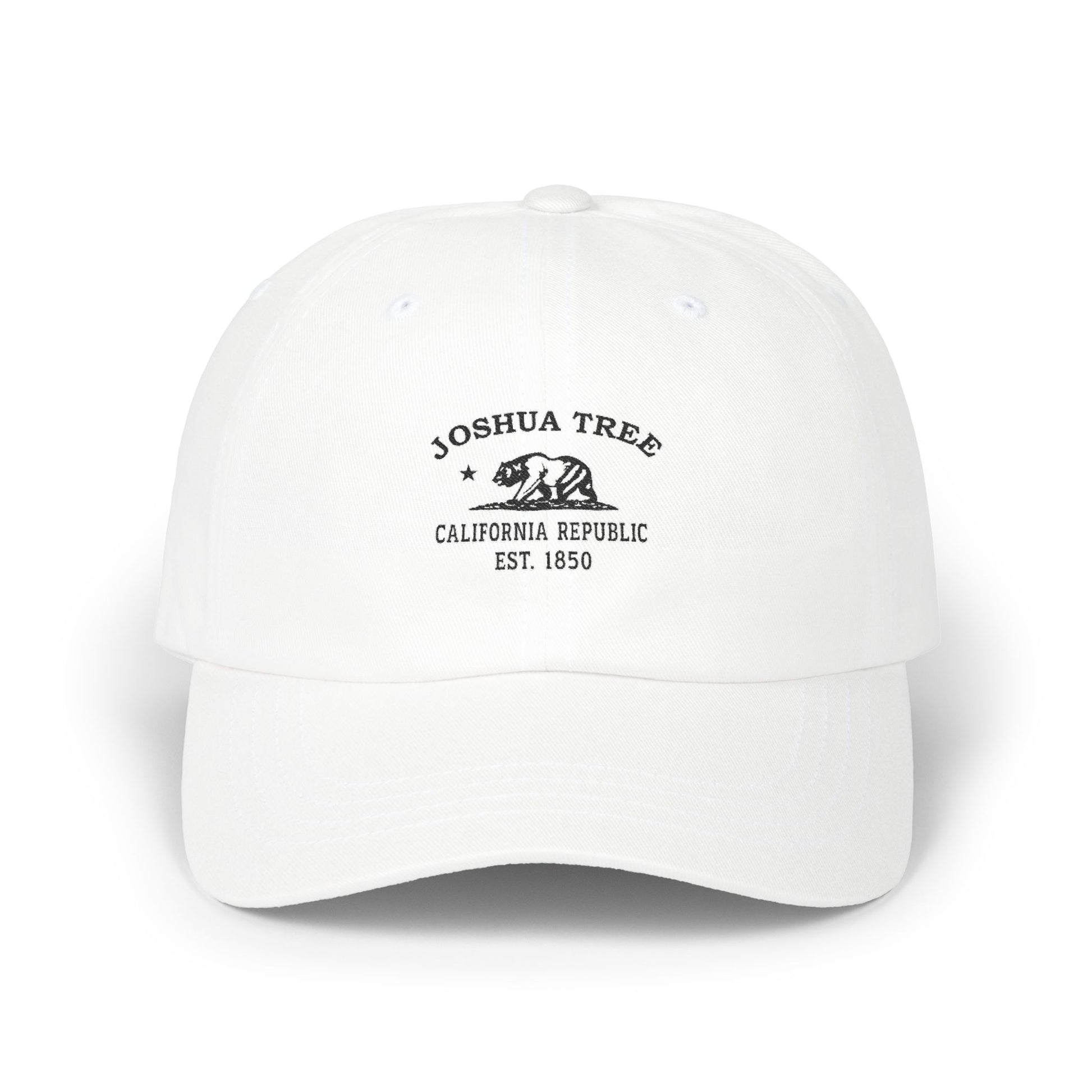
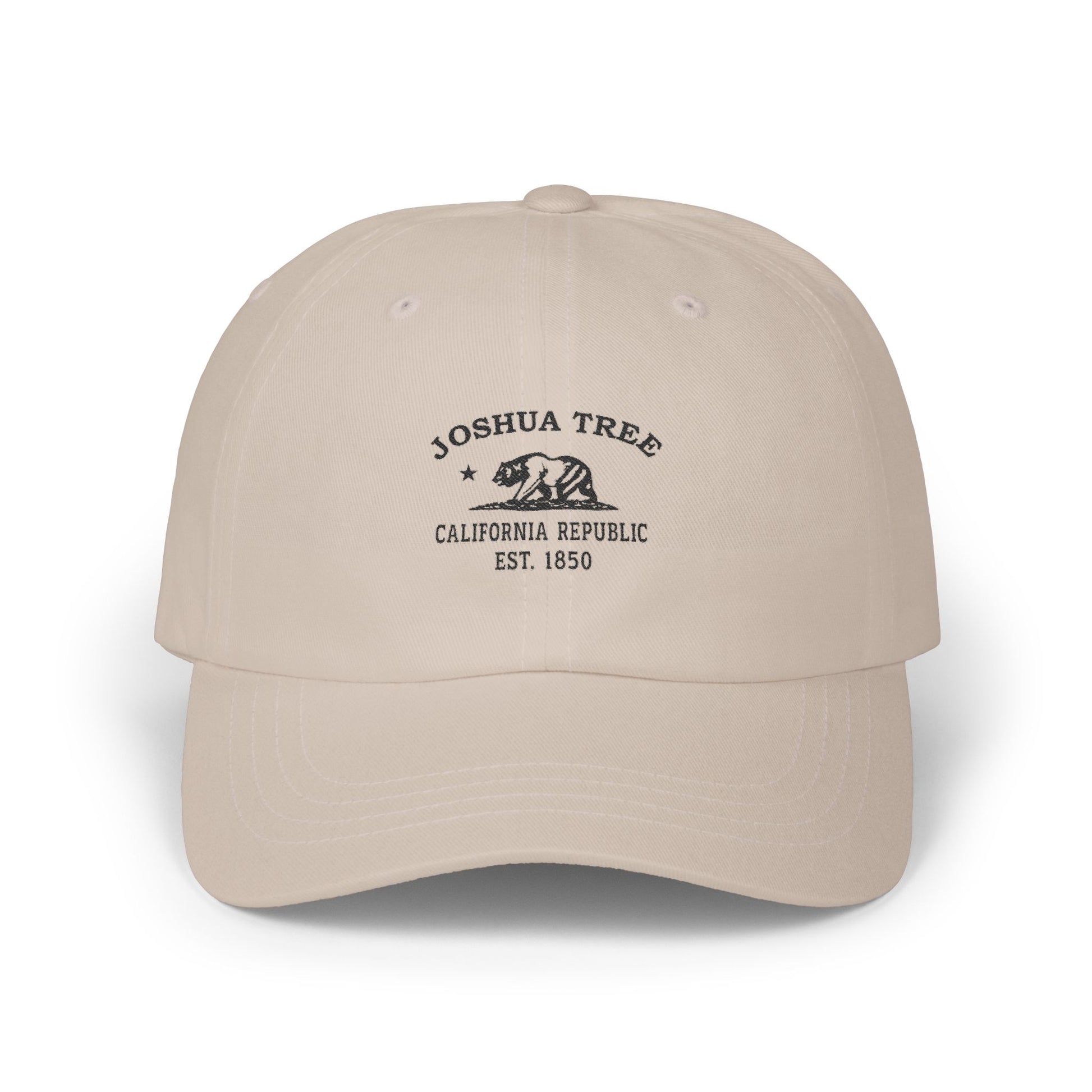
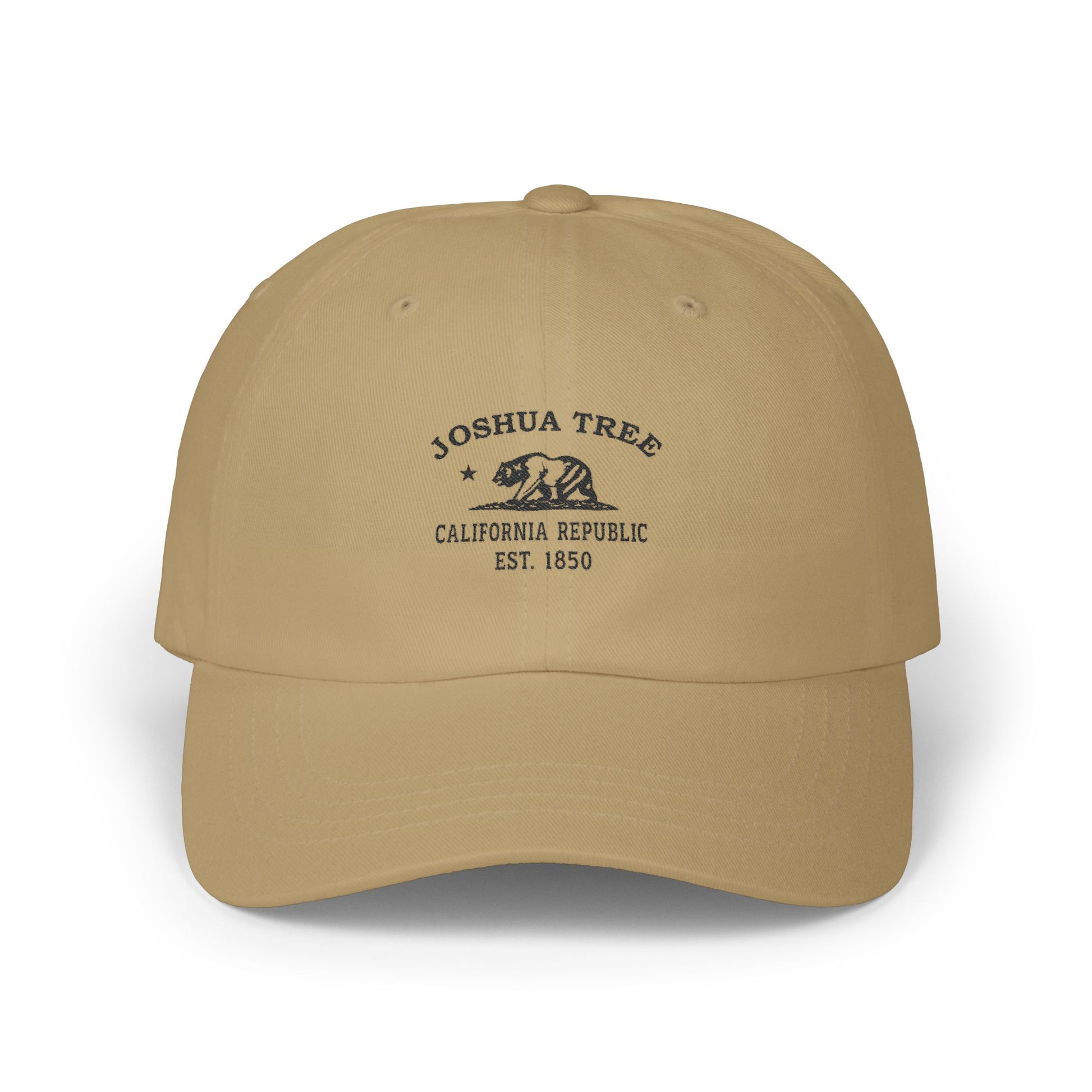
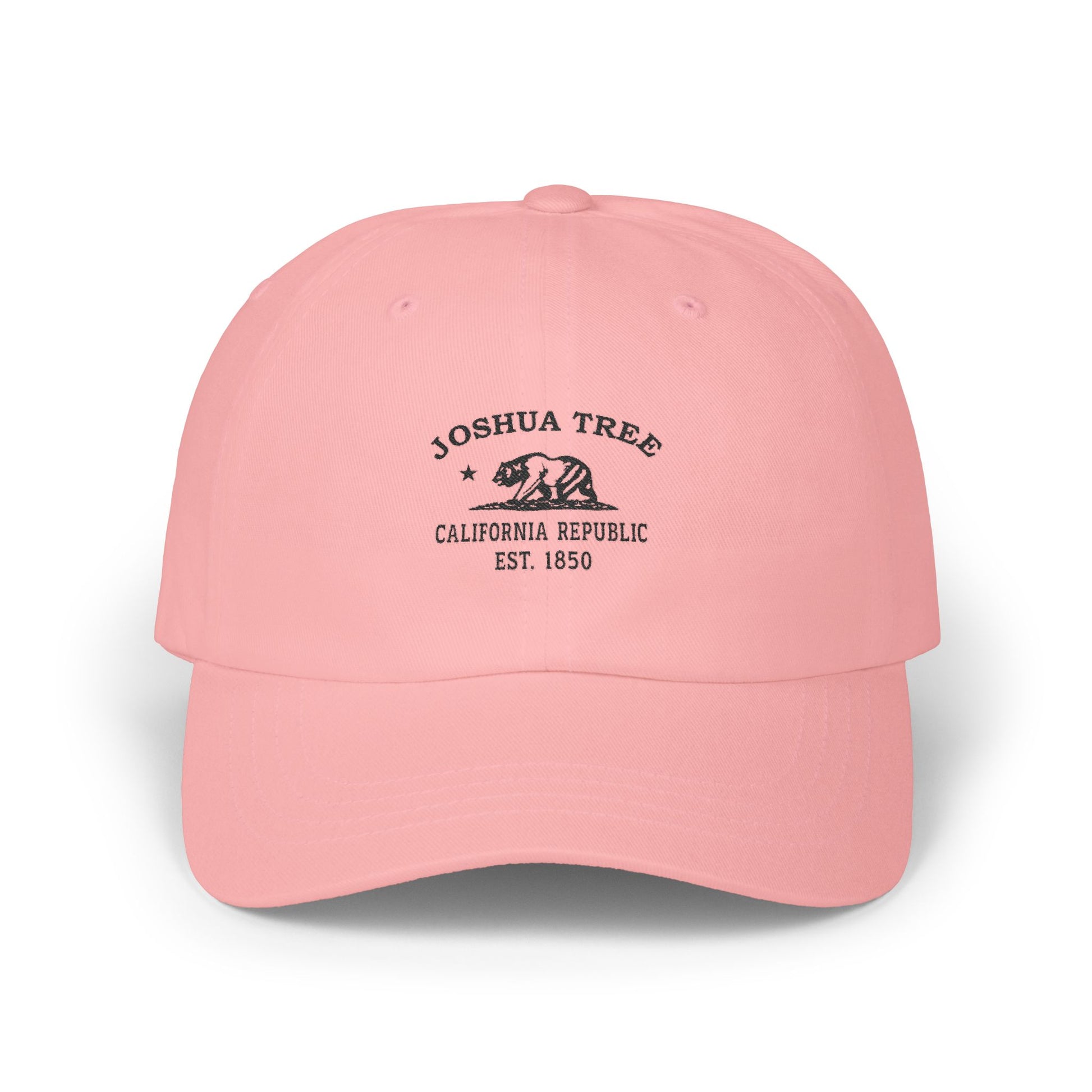
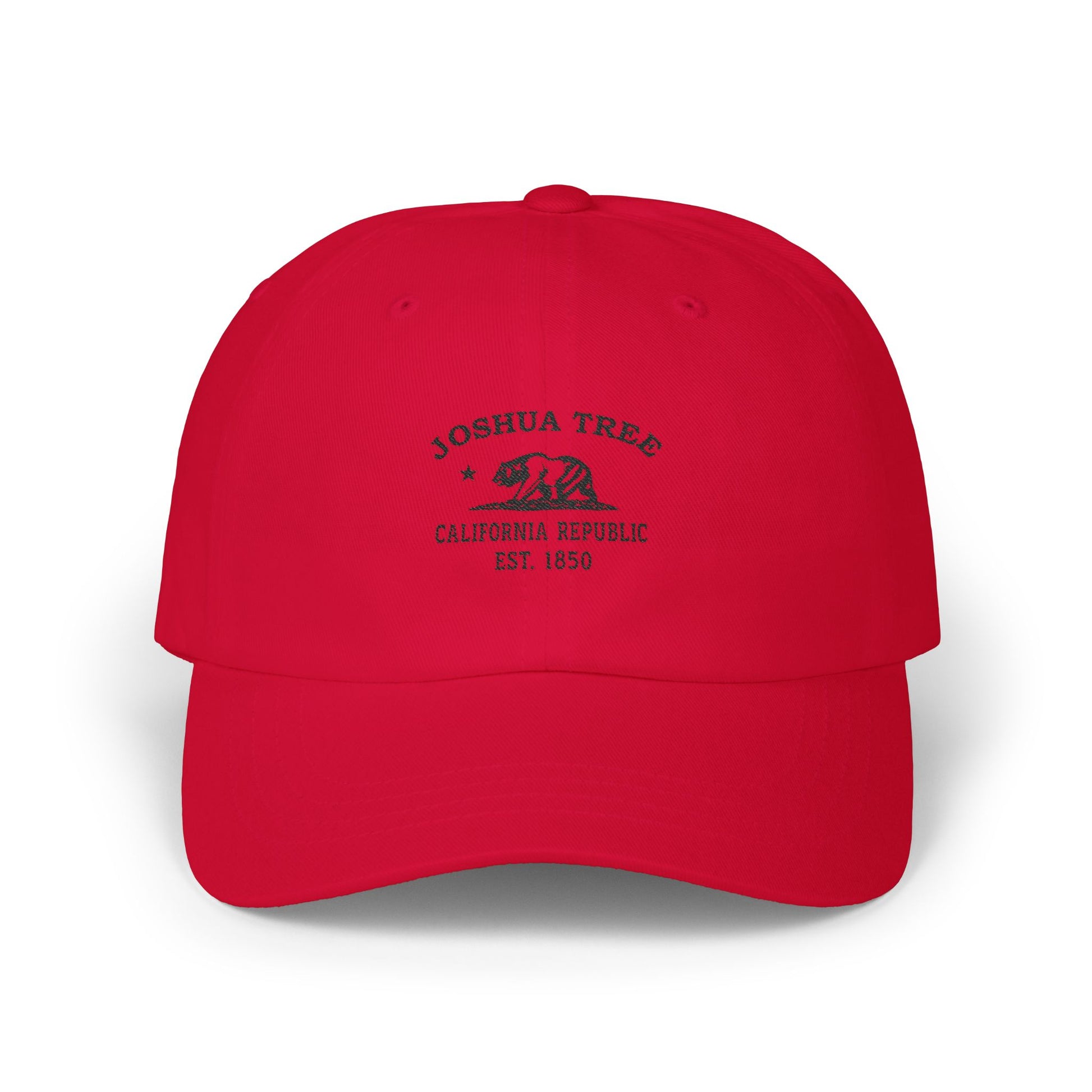
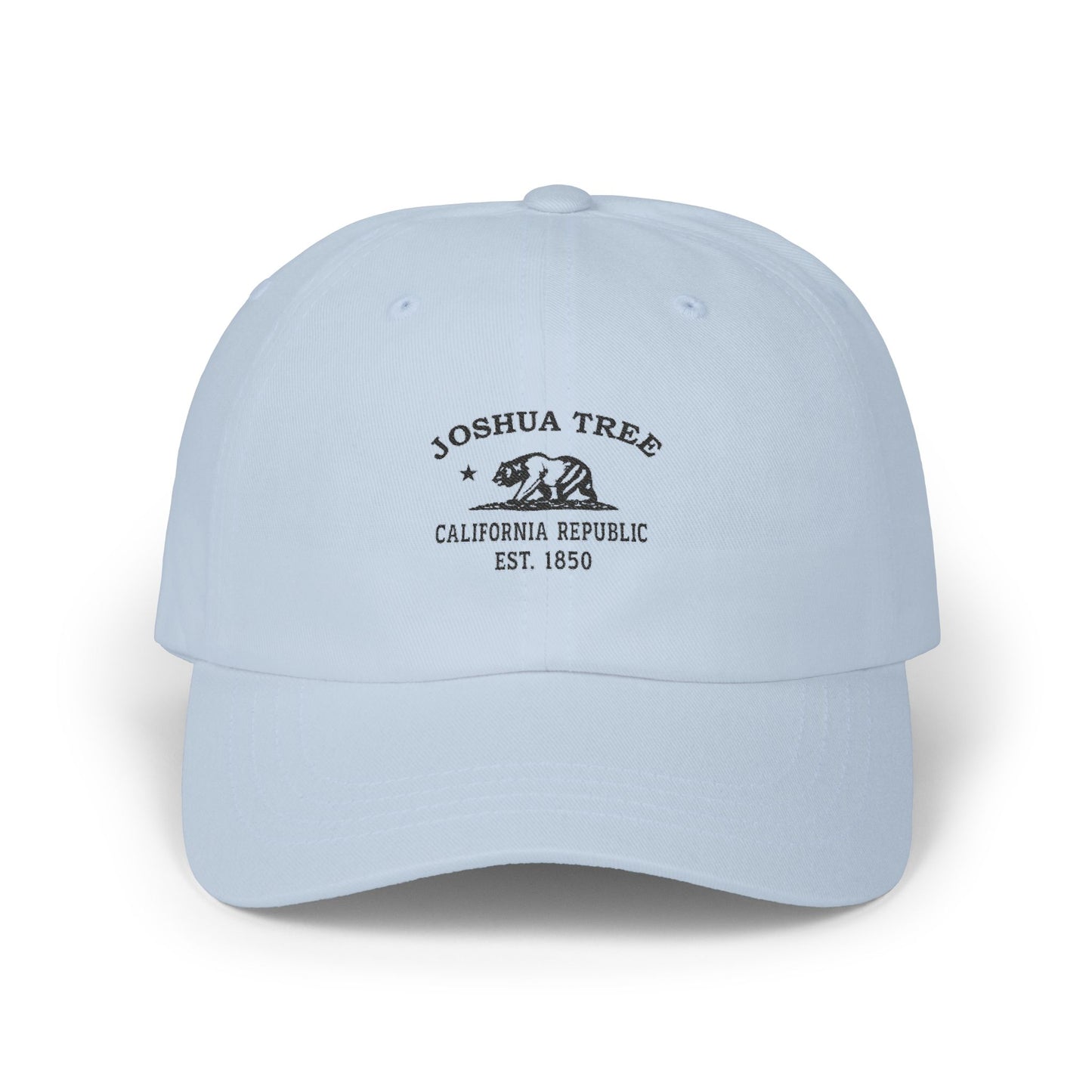
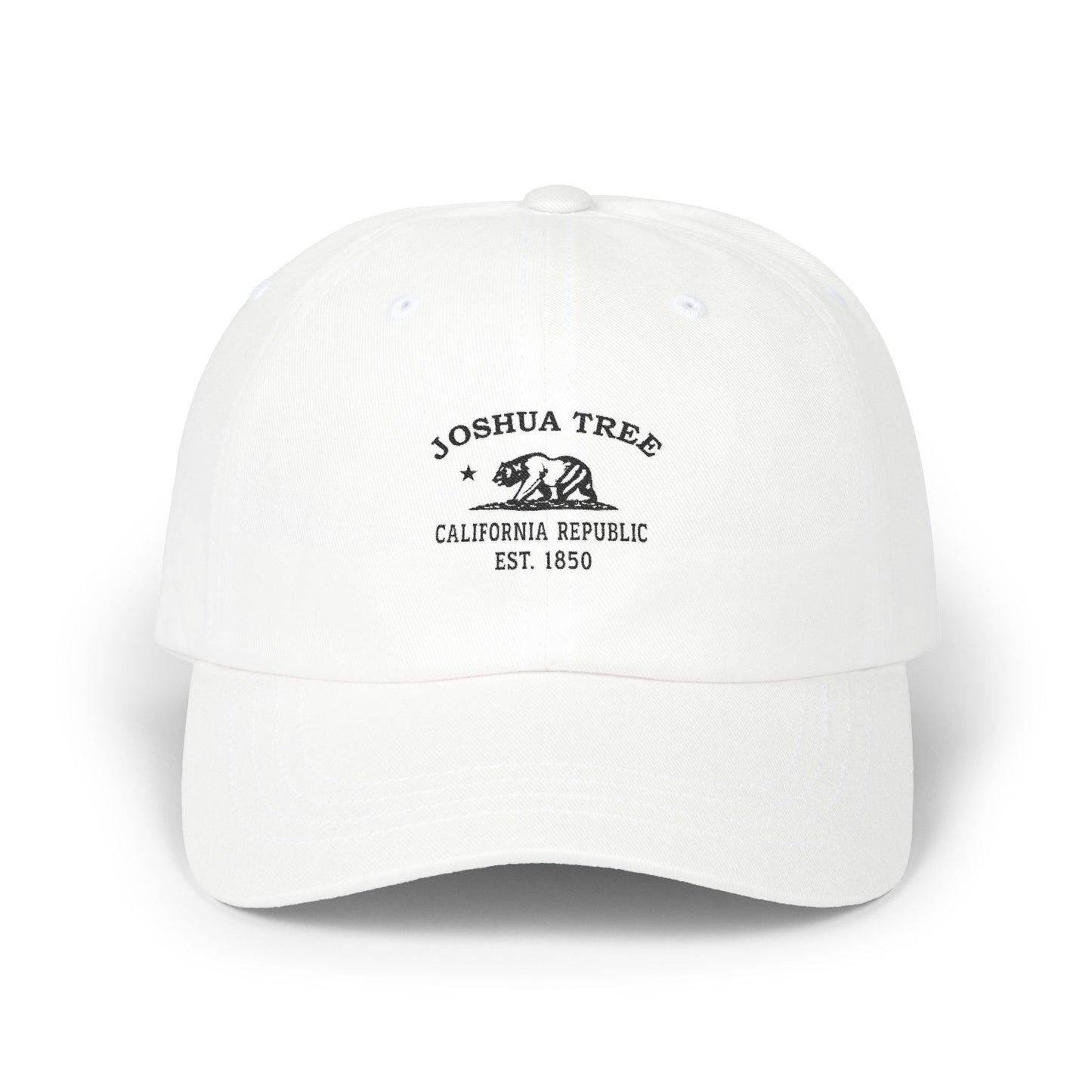
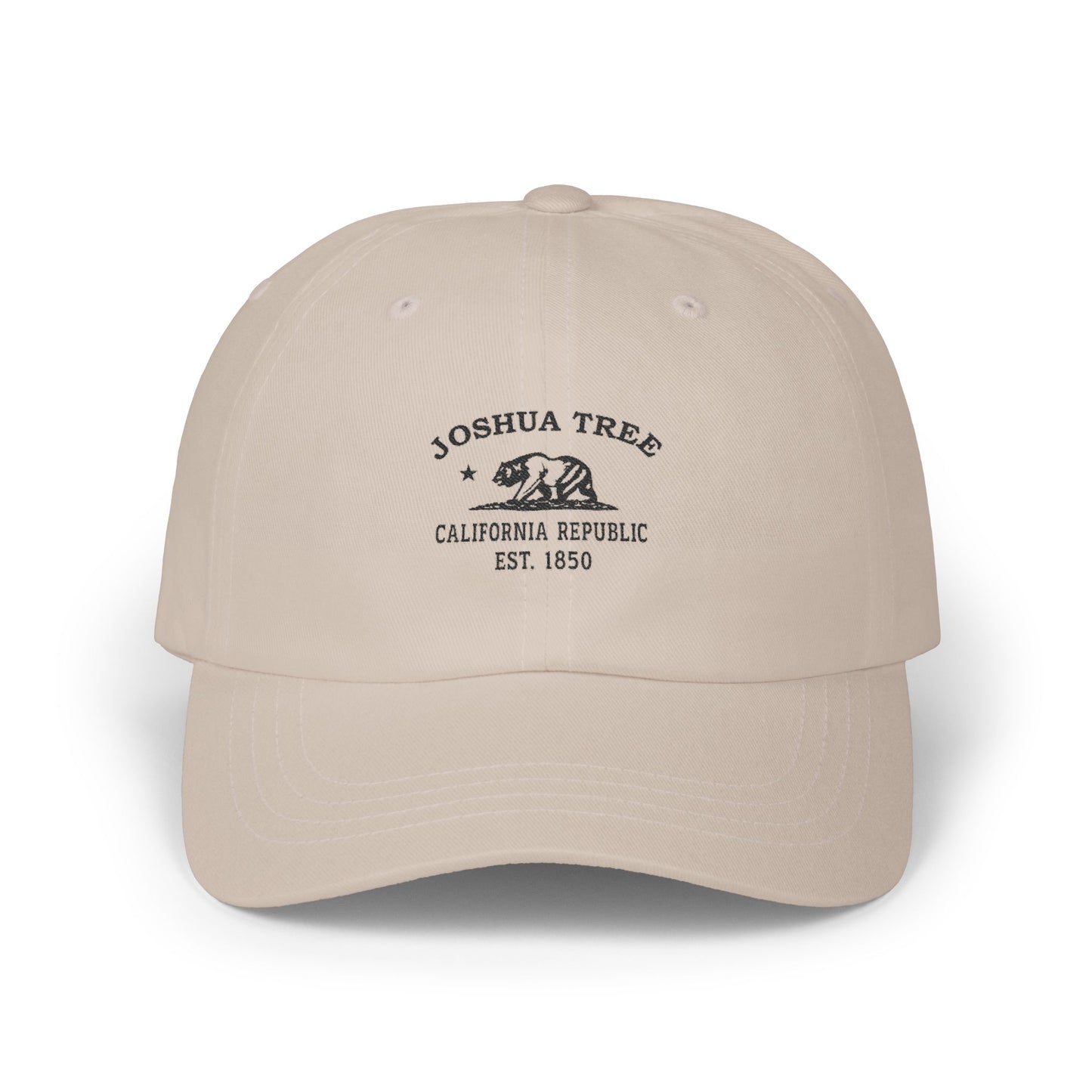
Our Joshua Tree logo carries California’s bear and star over “California Republic · Est. 1850,” the year of statehood and the shared emblem of every Merlin Classics California place. The bear and the lone star are the state in shorthand — independence, the Republic, the frontier — printed black-and-white with the worn look of an old crate label or a WPA poster. What makes this one Joshua Tree is everything behind it: the two deserts, the spiky trees, the piled boulders, and the dark, star-thick sky.
The town’s namesake is Yucca brevifolia, a tree-sized member of the agave family that grows only in the Mojave and crowds the horizon here with its shaggy, upraised arms. The name comes from Mormon pioneers who crossed the desert in the mid-1800s: the tree’s outstretched branches reminded them of the biblical Joshua raising his arms to the sky, and the name stuck. Each one is slow — decades to mature — and depends entirely on a single pollinator, the yucca moth, which carries its pollen from bloom to bloom and lays its eggs in the flowers, so neither the tree nor the moth can live without the other. Strange, spiky, and unmistakable, the Joshua tree is the silhouette the whole town is named for.
Why People Visit Joshua Tree
People come for the strangeness: trees out of a storybook, boulders made for scrambling, and a night sky so dark the Milky Way throws shadows. Pair the park with the town’s desert-arts scene and you have a high-desert getaway unlike anywhere else in California.
