


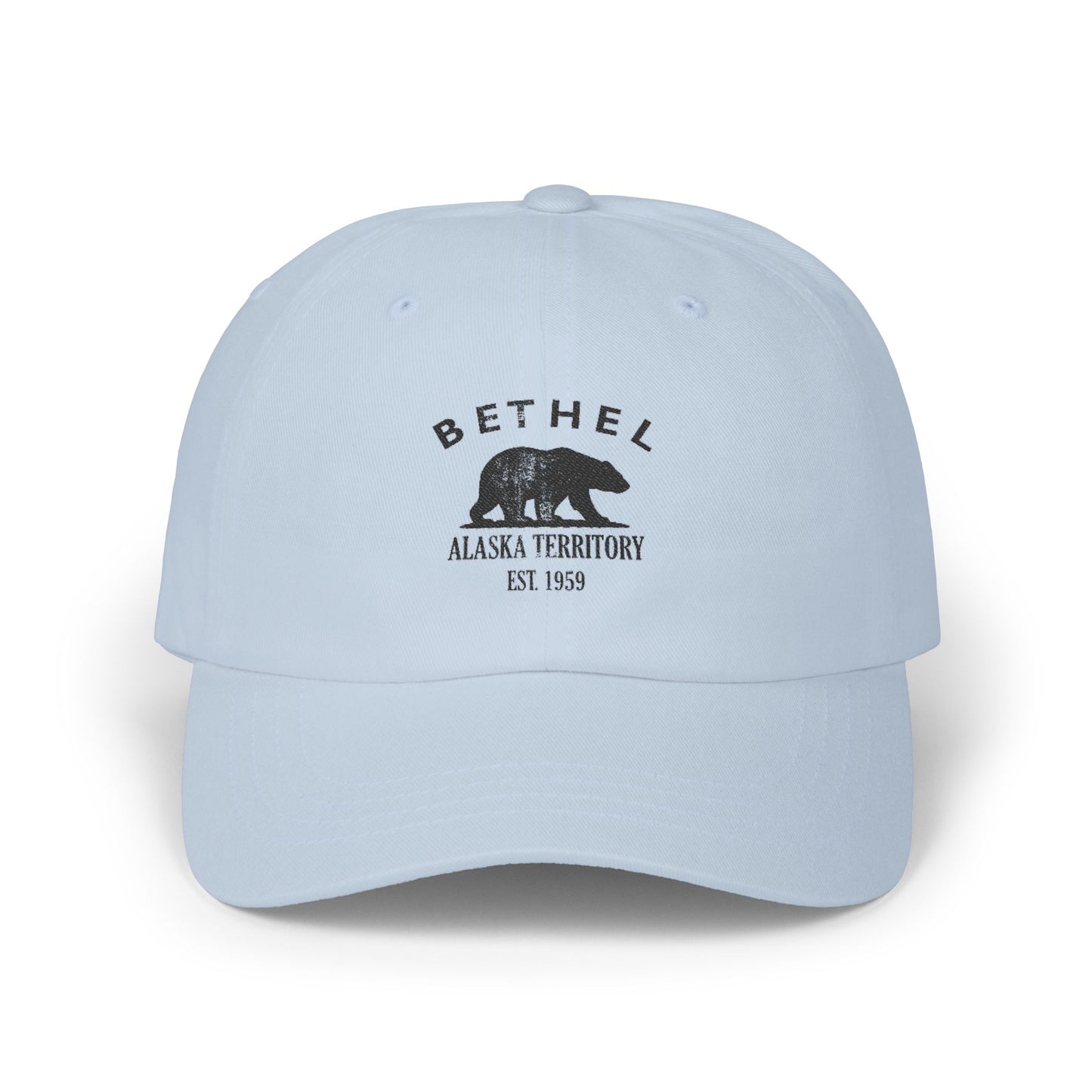
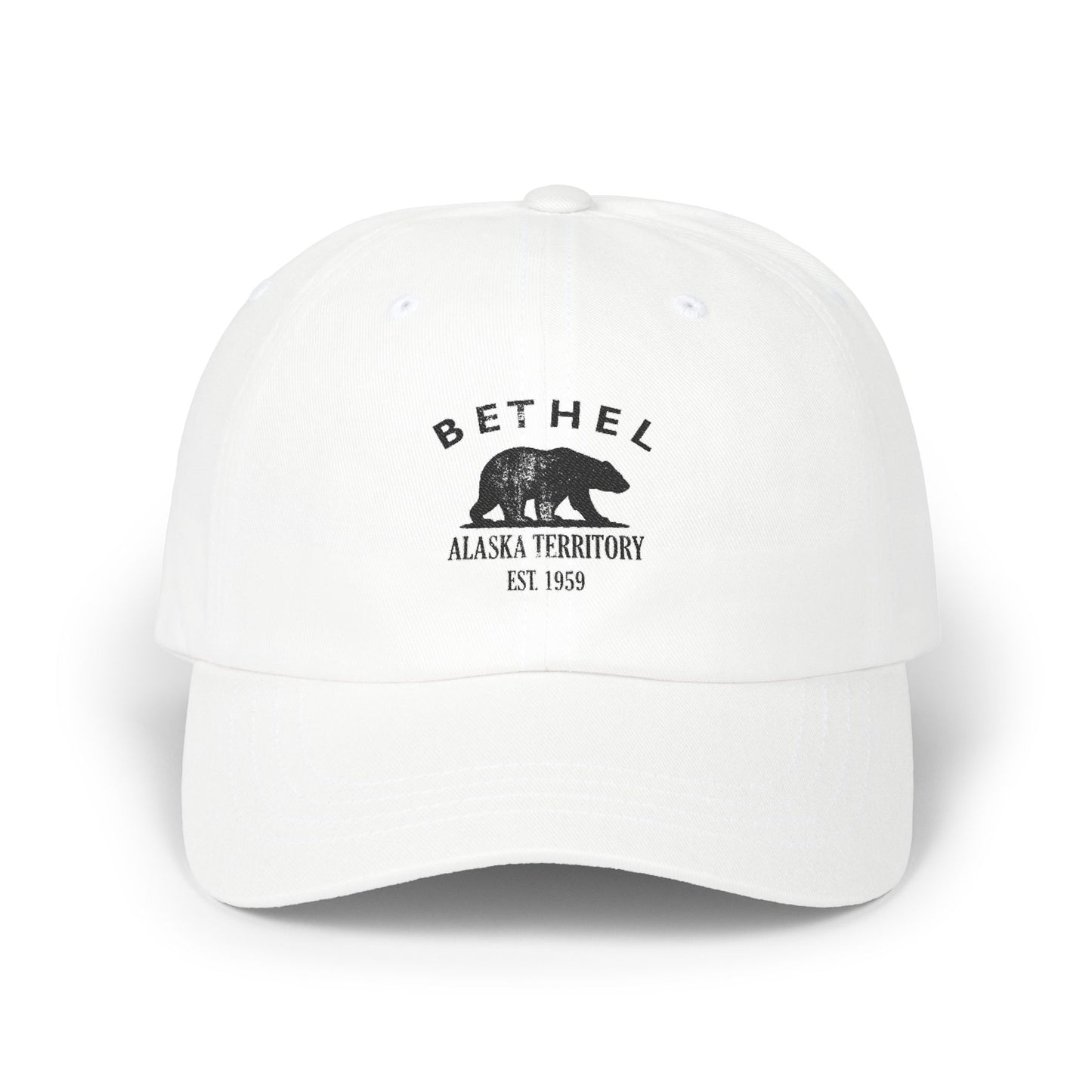
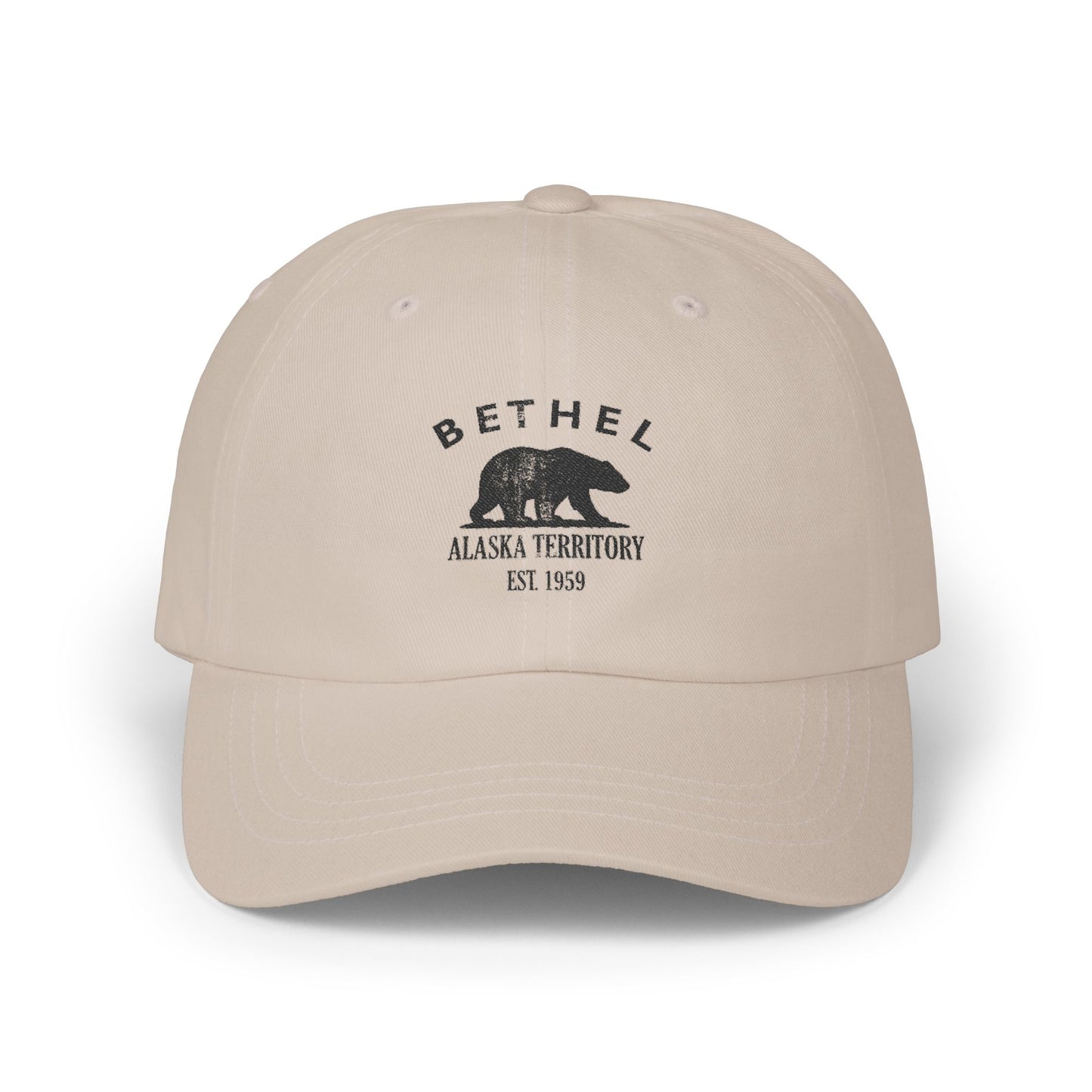
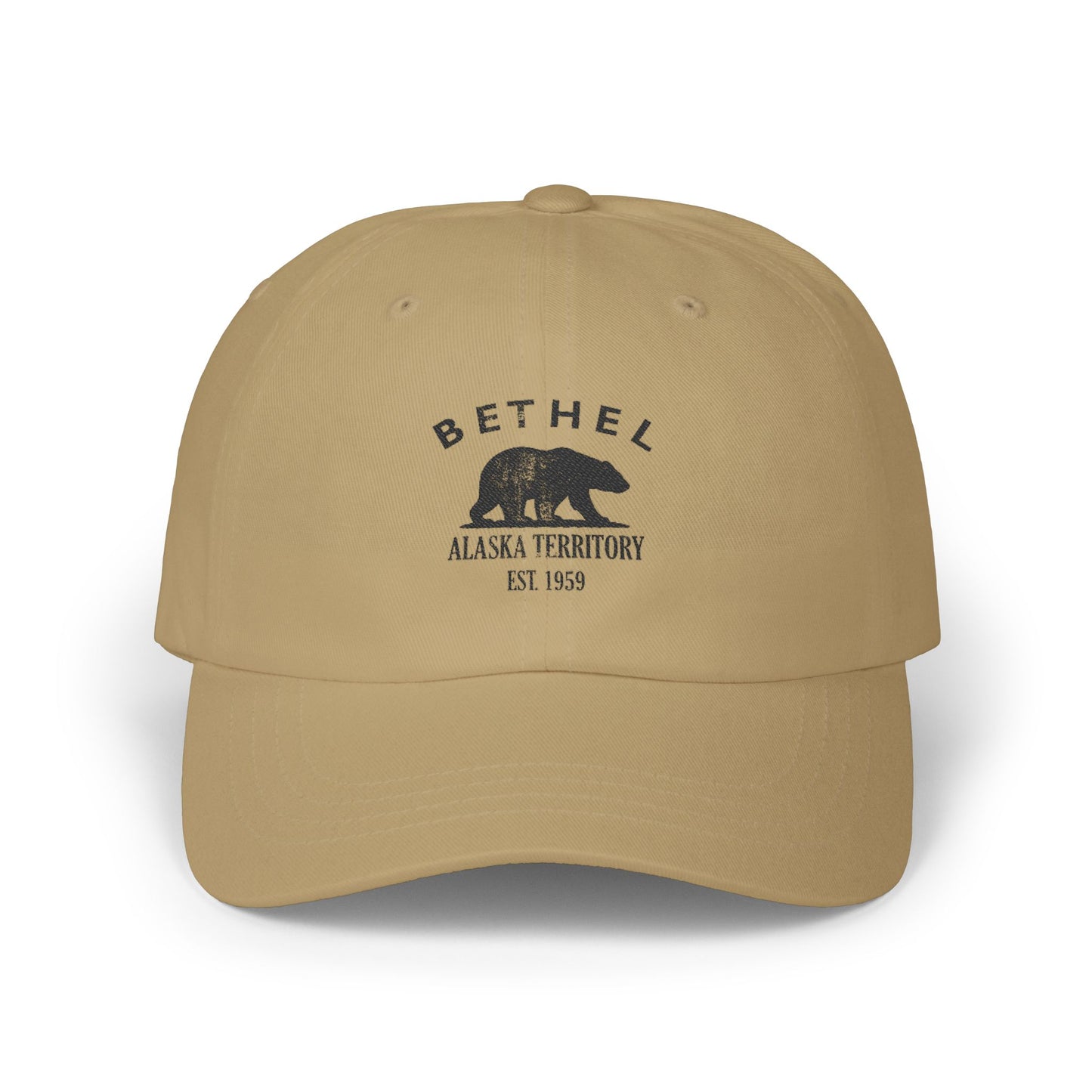
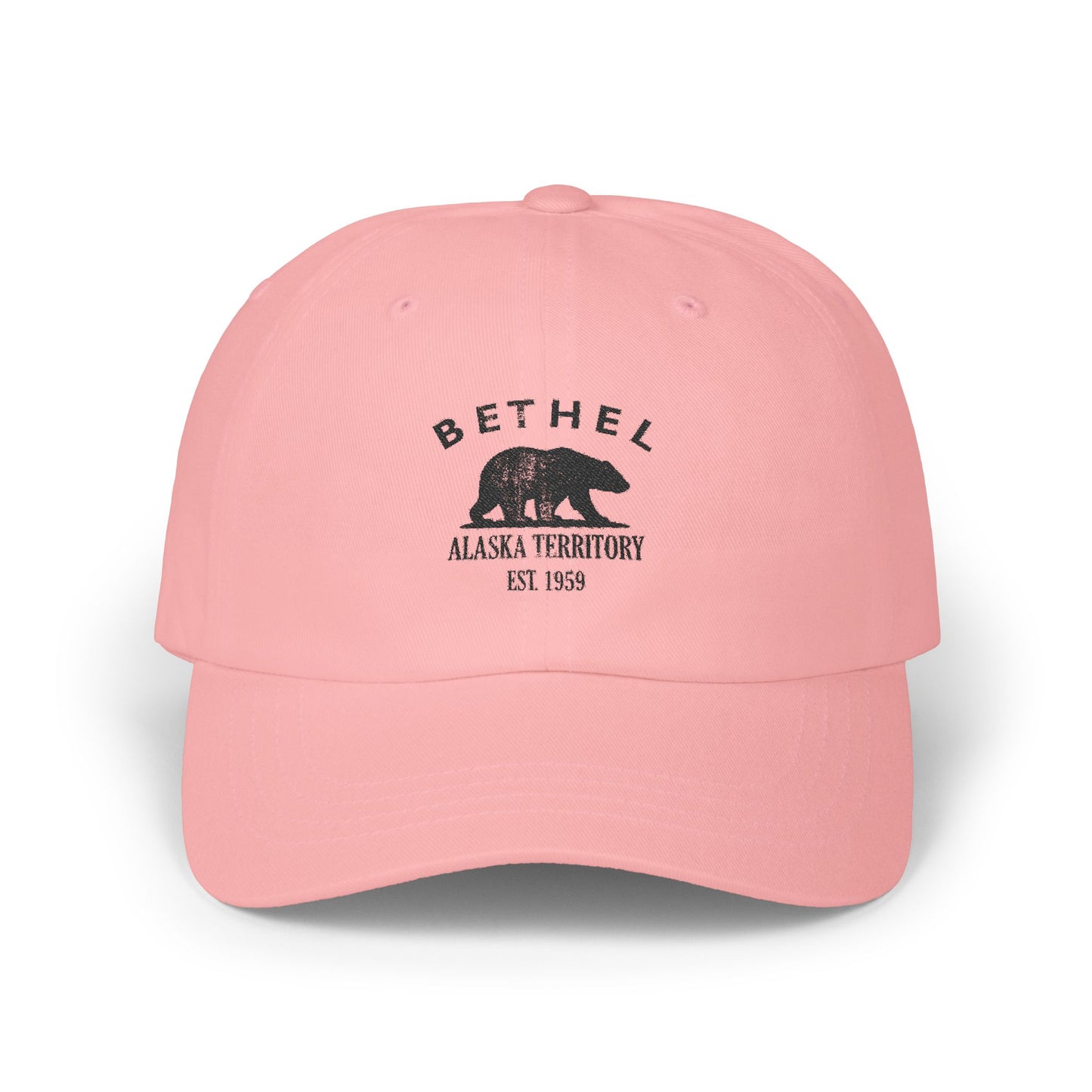
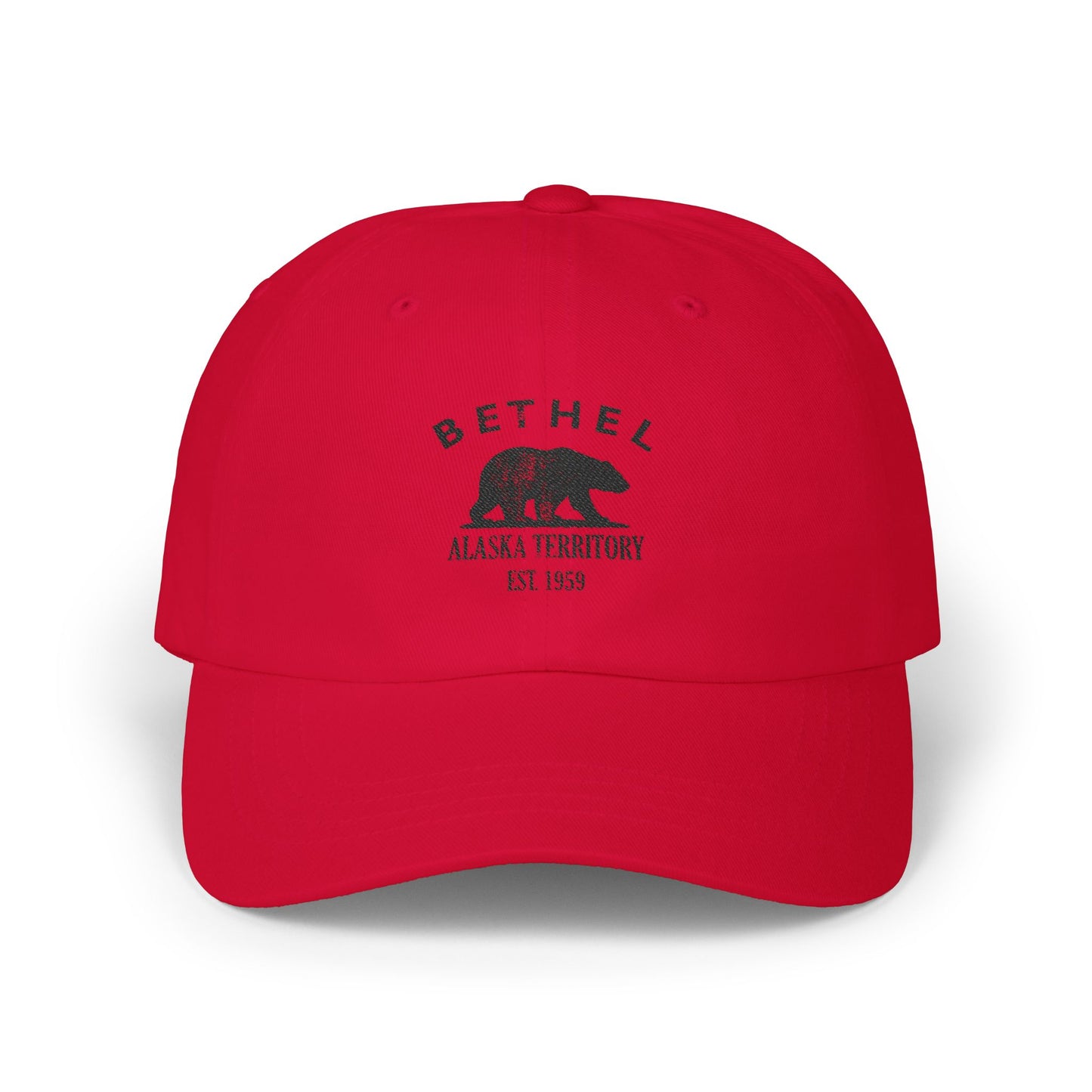
Our Bethel logo carries the distressed bear and the "Alaska Territory — Est. 1959" banner, the shared retro emblem of our Alaska towns; 1959 marks the year Alaska became a state — Alaska's birthday, not Bethel's, which began as a Yup'ik settlement long before and incorporated as a city in 1957. Rendered in worn black-and-white, like an old outfitter's stamp or a crate label, it ties Bethel to every other Alaska town we make. The bear is far-north wilderness, plain and rugged. What makes this one Bethel is the story behind it — the river, the delta, and the firsts the rest of the state learned from.
Bethel is the largest community in western Alaska — the eighth-largest city in the state, home to roughly six thousand people — and the hub of the Yukon-Kuskokwim Delta, one of the largest river deltas on earth. The delta is a vast, flat sweep of tundra, lakes, and braided channels, a globally important waterfowl nursery protected as the Yukon Delta National Wildlife Refuge, where the Kuskokwim runs its last fifty miles toward the Bering Sea. People have lived here for thousands of years. The Central Yup'ik name for the place is Mamterilleq, "Place of the Smokehouse," and the delta remains a heartland of Yup'ik life, language, and subsistence — salmon on the river in summer, a country measured by season and weather rather than by miles of pavement, some four hundred miles by air from Anchorage with no road between.
Why People Visit Bethel
People come to Bethel for the real thing: a remote, fly-in delta town that is the heart of Yup'ik western Alaska, where the Kuskokwim is the main road and the seasons set the pace. It rewards travelers who want the far north on its own terms — river, tundra, the long northern light, and a community that has lived well here for generations.
