


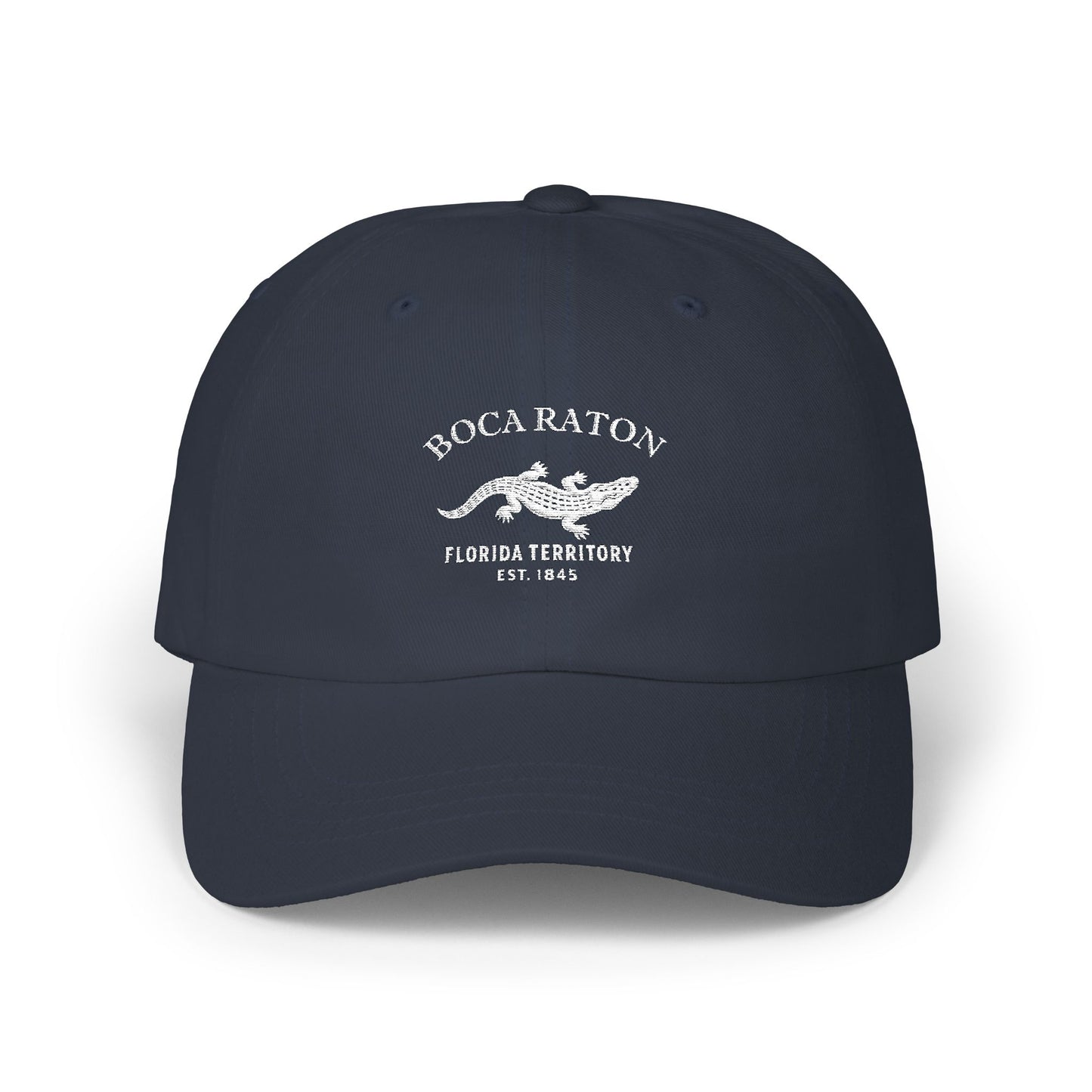


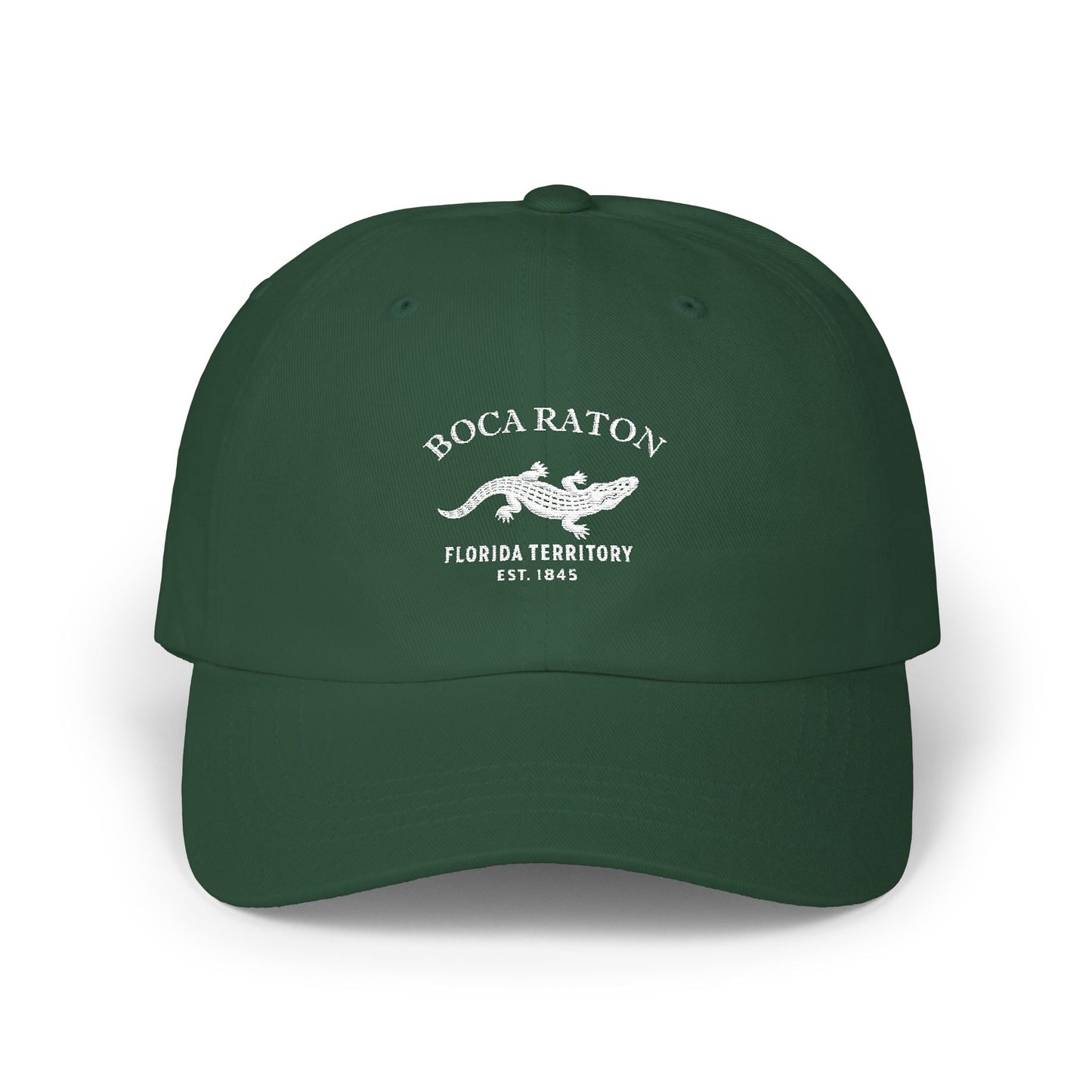

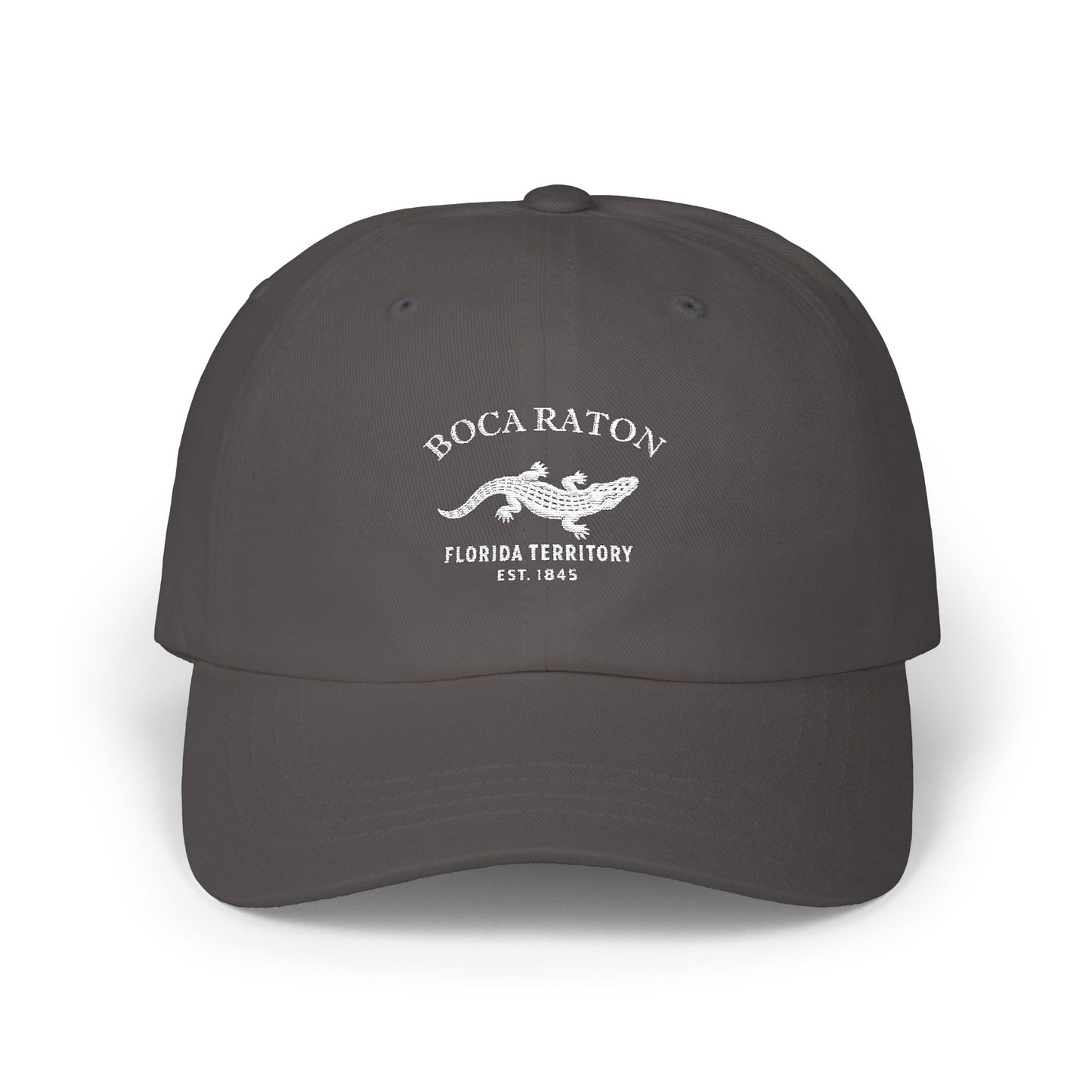

In the early 1900s, farming dominated Boca Raton, particularly pineapple cultivation. By the 1920s, developers envisioned a resort city, but hurricanes halted progress. The 1950s and 1960s marked suburban expansion, with schools, churches, and neighborhoods growing as families moved south. Tourism increased, with beaches and resorts attracting visitors. This timeline reflects resilience: rebuilding after storms, embracing suburban optimism, and balancing growth with environment. Boca Raton’s mid-century decades highlight Florida’s adaptability, showing how towns transformed from frontier settlements into suburban hubs, rooted in persistence, optimism, and cultural pride along the Atlantic coast.
Today Boca Raton is known for its beaches, suburban neighborhoods, and business presence, but its resilience remains central. Its history reflects Indigenous heritage, frontier challenges, and suburban growth. Our Boca Raton designs celebrate this layered identity, pairing the alligator motif with vintage styling. They invite you to explore the Boca Raton collection and carry forward a reminder of Florida’s resilience. Retro in tone, the design reflects authenticity and pride. Boca Raton’s logo honors both heritage and progress, making it a vintage emblem of Florida identity. Explore the collection and share in Boca’s story of endurance.
Why People Visit Boca Raton Florida
Boca Raton blends coastal recreation with museums and plazas. Visitors enjoy beaches, gardens, and easy retail access. It is refined yet approachable for families and weekend travelers. Travelers find year round appeal in parks, paths, and public spaces. The setting combines natural beauty with accessible neighborhoods and landmarks. History and everyday culture sit side by side in a welcoming way.
