Skip to product information
1 of 4

Napa California Holiday Ornament - The 1976 Bottle

Napa California Holiday Ornament - The 1976 Bottle

Regular price $28.00 USD
Regular price Sale price $28.00 USD
Sale
Free U.S. Shipping
Size
Shape
Quantity


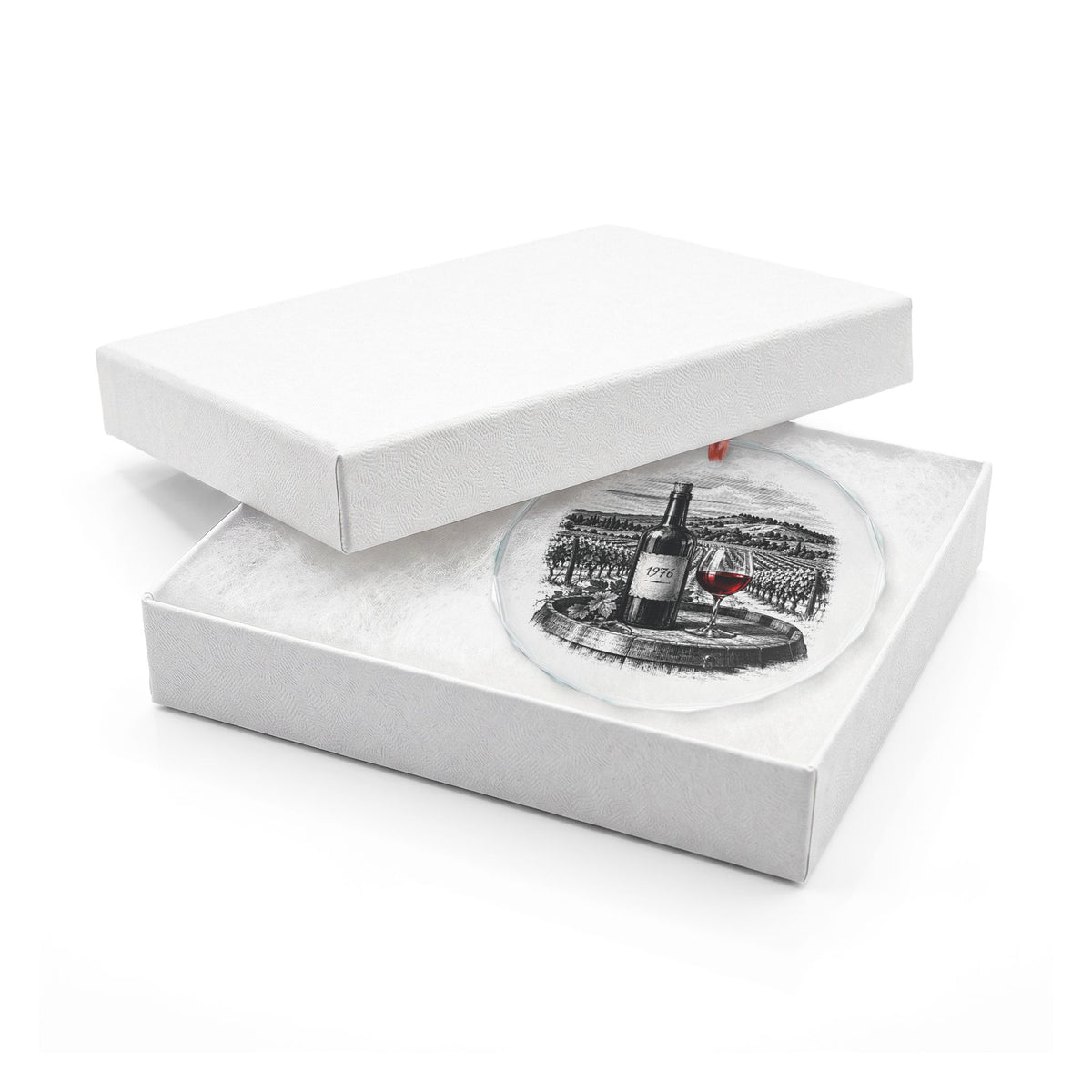
A corked bottle labeled 1976 and a glass of red, on a barrel top with the vineyard rows behind. The year Napa beat France blind.

In May 1976 a Paris wine merchant staged a blind tasting of top French wines against unknown Californians, with French judges. A Napa cabernet took first among the reds and a Napa chardonnay first among the whites, and the judges, when the labels came off, could not believe what they had done. The valley has not been the same since.

Every winery in Napa tells a version of the story. The bottles from that tasting sit in a museum in Washington now, which is about as official as a wine upset can get.

Underdog stories age well. This one is on its fiftieth vintage, and the glass of red is the only color it needs.

The Judgment of Paris, the 1976 wine tasting, put Napa Valley wine and Napa cabernet on the map for good. This wine bottle ornament is a Napa Christmas ornament and one of the best wine gifts for a wine lover, a Napa Valley gift and piece of Napa Valley history for Christmas in Napa or anywhere else.

Every Napa ornament ships ready to give. Hang it on the tree, in a window, off a lamp, or send one to the person who misses Napa most.

3-inch faceted crystal glass ornament, white-backed print, line-drawn in 1880s engraving style, your choice of white or gold gift box.


QUICK FACTS — NAPA CA CRYSTAL ORNAMENT — THE 1976 BOTTLE

Town: Napa, California

Founded: 1847

Known for: America’s premier wine region; the Judgment of Paris (1976); Charles Krug, California’s first commercial winery (1861)

Art: The 1976 Bottle, original Merlin Classics engraving

Blank: 3-inch (76 mm) round clear crystal glass ornament, faceted gem-cut edge

Print: white-backed for contrast; red ribbon hanger

Packaging: white or gold gift box, chosen at checkout

Made to order in the USA


View full details

Wear Local. Feed Local. Stay Classic.

Product FAQs

How does your sizing work?

Every item is made to order, so please check the size chart on this page before you buy. Women's fitted tees run small; size up for a looser fit. Caps are one size with an adjustable strap.

How are items made and when will they arrive?

We make each item to order using premium blanks, embroidery and soft-hand prints. Production takes 2-5 business days (weekends and holidays excluded), then 4-10 days in transit via USPS, UPS or FedEx to U.S. addresses; most orders arrive within 6-15 business days. You'll get a tracking link the moment it ships. Any current shipping offer is shown in the bar at the top of every page and applies automatically at checkout, no code needed.

How do I send a gift?

Enter the recipient's address as the shipping address and your own as the billing address at checkout. Nothing ships with a price; the package includes a plain packing slip. Tracking goes to your email, not theirs. For birthdays and holidays, order two weeks ahead to be safe.

What's the return policy?

Made-to-order items can't be returned or exchanged for size or color, so please use the size chart and photos before ordering. If anything arrives defective, misprinted or damaged, send a photo and your order number within 30 days and we'll replace it or refund you.

How do I care for my item?

Apparel: wash cold, inside out, with like colors; no bleach; tumble dry low or hang dry. Embroidered pieces: iron inside out to protect the stitching. Caps: spot clean. Printed glasses and water bottles: hand wash only, no dishwasher, so the artwork lasts. Mugs and engraved glasses are dishwasher safe. Any item-specific care notes are in the description above.

Who makes this?

Merlin Classics is a small Connecticut brand making original retro designs for the towns people love. Every piece is printed, embroidered or engraved to order in the USA, and the business supports hunger relief in the communities our collections celebrate.

What’s with the name? Long before the vines, this was the homeland of the Wappo and Patwin peoples — the name Napa itself comes from a Patwin word whose exact meaning is still debated — and, as across California, colonization took a devastating toll on them; their descendants remain part of the valley’s story today. The Mexican rancho era carved the land into grants like Rancho Entre Napa, and in 1847 a twenty-one-year-old settler named Nathan Coombs laid out “Nappa City” at the confluence of the Napa River and Napa Creek — the uppermost point a boat could navigate, which made it a natural landing. The steamboat Dolphin reached town in 1850, and Napa incorporated in 1872.

Napa was settled by a contract too — just signed in glasses instead of ink. On May 24, 1976, in Paris, wine merchant Steven Spurrier poured California wines against the great châteaux of France in a blind tasting before a panel of French judges — and when the scores came back, a Napa Valley cabernet and a Napa Valley chardonnay stood first. The Judgment of Paris, the papers called it. The judges were stunned, the wine world was rearranged overnight, and a quiet farm valley in Northern California became the most famous wine country in America. Napa has been pouring with that kind of confidence ever since.

Why People Visit Napa California

  • Drive Highway 29, the historic Wine Road that runs north out of the city of Napa up the western edge of the valley past the founding-era estates between Yountville and St. Helena.
  • Drive the Silverado Trail, the quieter parallel route a few miles up the eastern hillside, with the long-view back across the valley floor toward the Mayacamas.
  • Drive past the 1861 stone winery on Highway 29 in St. Helena — founded by Charles Krug and among the oldest commercial wineries in California, still pressing grapes more than a century and a half later.
  • Browse the Oxbow district on the downtown riverbend — the market halls, oyster bars, and coffee roasters of Napa’s eating-city era, a few steps from the river walk.
  • See the exterior of the 1884 Rhine House on Highway 29 in St. Helena — the German-style mansion that is one of the valley's signature architectural landmarks.
  • See the Napa Valley Opera House on Main Street in downtown Napa — the restored 1879 performing-arts landmark in the heart of the riverfront district.
  • Walk the Napa River Walk and the downtown riverfront — promenades, plazas, and bridges along the river through the historic heart of the city.
  • Hike Skyline Wilderness Park on the southeastern edge of the city — 850 acres of oak woodlands, lake loops, and hilltop views back across the valley.
  • Drive north to Calistoga at the head of the valley for the mineral hot springs, the geyser country, and the long view south down the length of Napa Valley.
  • Drive northeast to Lake Berryessa for the boating, the fishing, and the high-country views east of the valley floor.
  • Climb (or drive partway up) Mount St. Helena, the 4,343-foot peak that closes the head of the valley — Robert Louis Stevenson State Park preserves the trail and the slopes where Stevenson honeymooned in 1880.
  • Plan a visit during harvest season (August through October) for the crush, the cellar work, and the late-October press — the peak of the valley's working rhythm.

Napa California Merlin Classics retro vintage logo featuring California bear and star motif