Skip to product information
1 of 4

Lanai Hawaii Holiday Ornament - Axis Deer Antler

Lanai Hawaii Holiday Ornament - Axis Deer Antler

Regular price $28.00 USD
Regular price Sale price $28.00 USD
Sale
Free U.S. Shipping
Size
Shape
Quantity


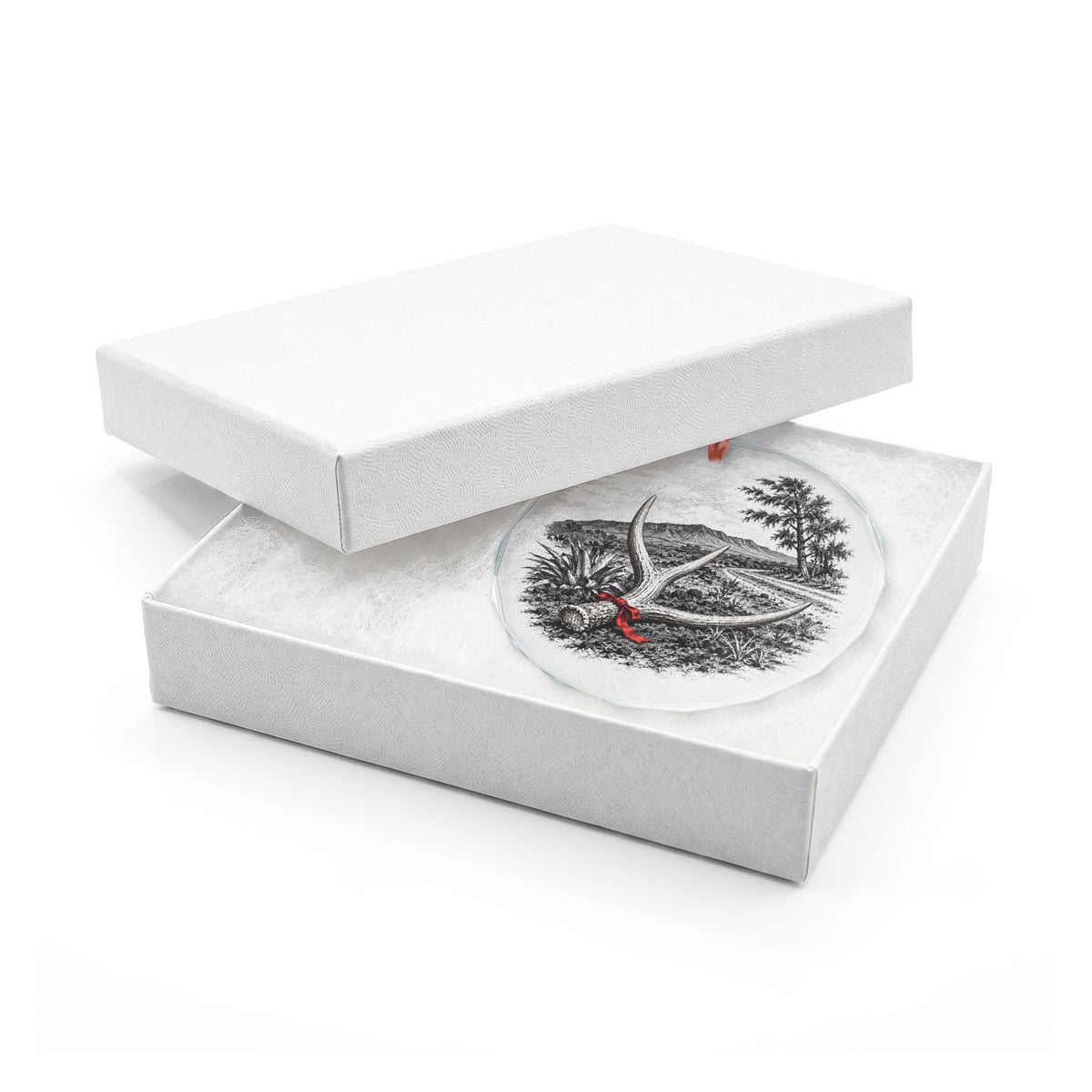
A single shed axis-deer antler on red volcanic dirt beside a pineapple stub and a Cook pine. On Lānaʻi the deer outnumber the people ten to one.

Axis deer came to Hawaii in 1868 as a gift to the king, and reached Lānaʻi in 1920. With no predators and no winter they thrived. The island has about 3,000 people and somewhere past 20,000 deer, and shed antlers turn up on every ranch road and hunting trail. The pineapple fields that once covered the island are gone; the deer are not.

Hunting the deer is part of island life and feeds a good share of the families here. A found antler is a small trophy and a common one, which is exactly why locals recognize it.

The pineapple is the island's past. The antler is its present, and the people who live here know which one they see every morning.

Axis deer outnumber people on Lānaʻi, and an axis deer antler found on a ranch road is the island's own souvenir. This antler ornament is a deer ornament and Hawaiʻi ornament for anyone who knows Lānaʻi City and the Pineapple Island, a Lānaʻi gift with a shed antler on the glass.

Every Lanai ornament ships ready to give. Hang it on the tree, in a window, off a lamp, or send one to the person who misses Lanai most.

3-inch faceted crystal glass ornament, white-backed print, line-drawn in 1880s engraving style, your choice of white or gold gift box.


QUICK FACTS — LĀNAʻI HI CRYSTAL ORNAMENT — AXIS DEER ANTLER

Town: Lānaʻi, Hawaiʻi

Founded: Lānaʻi City 1922

Known for: The Pineapple Isle; James Dole’s 1922 plantation town around Dole Park; the 1923 Hotel Lanai; Hulopoʻe Bay

Art: Axis Deer Antler, original Merlin Classics engraving

Blank: 3-inch (76 mm) round clear crystal glass ornament, faceted gem-cut edge

Print: white-backed for contrast; red ribbon hanger

Packaging: white or gold gift box, chosen at checkout

Made to order in the USA


View full details

Wear Local. Feed Local. Stay Classic.

Product FAQs

How does your sizing work?

Every item is made to order, so please check the size chart on this page before you buy. Women's fitted tees run small; size up for a looser fit. Caps are one size with an adjustable strap.

How are items made and when will they arrive?

We make each item to order using premium blanks, embroidery and soft-hand prints. Production takes 2-5 business days (weekends and holidays excluded), then 4-10 days in transit via USPS, UPS or FedEx to U.S. addresses; most orders arrive within 6-15 business days. You'll get a tracking link the moment it ships. Any current shipping offer is shown in the bar at the top of every page and applies automatically at checkout, no code needed.

How do I send a gift?

Enter the recipient's address as the shipping address and your own as the billing address at checkout. Nothing ships with a price; the package includes a plain packing slip. Tracking goes to your email, not theirs. For birthdays and holidays, order two weeks ahead to be safe.

What's the return policy?

Made-to-order items can't be returned or exchanged for size or color, so please use the size chart and photos before ordering. If anything arrives defective, misprinted or damaged, send a photo and your order number within 30 days and we'll replace it or refund you.

How do I care for my item?

Apparel: wash cold, inside out, with like colors; no bleach; tumble dry low or hang dry. Embroidered pieces: iron inside out to protect the stitching. Caps: spot clean. Printed glasses and water bottles: hand wash only, no dishwasher, so the artwork lasts. Mugs and engraved glasses are dishwasher safe. Any item-specific care notes are in the description above.

Who makes this?

Merlin Classics is a small Connecticut brand making original retro designs for the towns people love. Every piece is printed, embroidered or engraved to order in the USA, and the business supports hunger relief in the communities our collections celebrate.

What the plantation left behind is its own kind of beauty. Around the town and along the high spine of the island stand thousands of Cook pines, planted by the New Zealand naturalist and ranch manager George Munro to comb moisture from the fog and feed the island's springs. His name lives on in the Munro Trail, the narrow ridge road that climbs through the pines to Lānaʻihale, at 3,370 feet the island's high point, with the neighbor islands laid out in every direction. From there the land falls away to the red badlands of Keahiakawelo and the empty roads that make Lānaʻi feel like the island the world forgot.

A plantation that size needed a town, and from 1923 Dole laid out Lānaʻi City — a planned company town of tidy cottages on a cool central plateau, gathered around the green rectangle of Dole Park. Workers came from the Philippines, Japan, China, Korea, Portugal, and Puerto Rico, and out of that mix grew the close, multicultural community that still defines the island. The fruit rolled down to Kaumalapaʻu Harbor, built in the 1920s, and shipped to the Honolulu canneries. Castle & Cooke took over in 1961, but cheaper pineapple from overseas slowly undercut the island; the last big harvest came in 1992, and the fields went quiet.

Why People Visit Lānaʻi

Lānaʻi offers the rarest thing in Hawaiʻi: an island that still feels empty. It pairs a deep heritage — ancient fishing villages, a storied red-rock landscape, and the golden plantation past — with near-solitary beaches, pine-shaded uplands, and a single small town. It is quiet, scenic, and unhurried, made for travelers who want an island to themselves.

Lānaʻi Hawaiʻi Merlin Classics retro vintage logo — Hawaiian hibiscus, Hawaiian Kingdom Est. 1795