


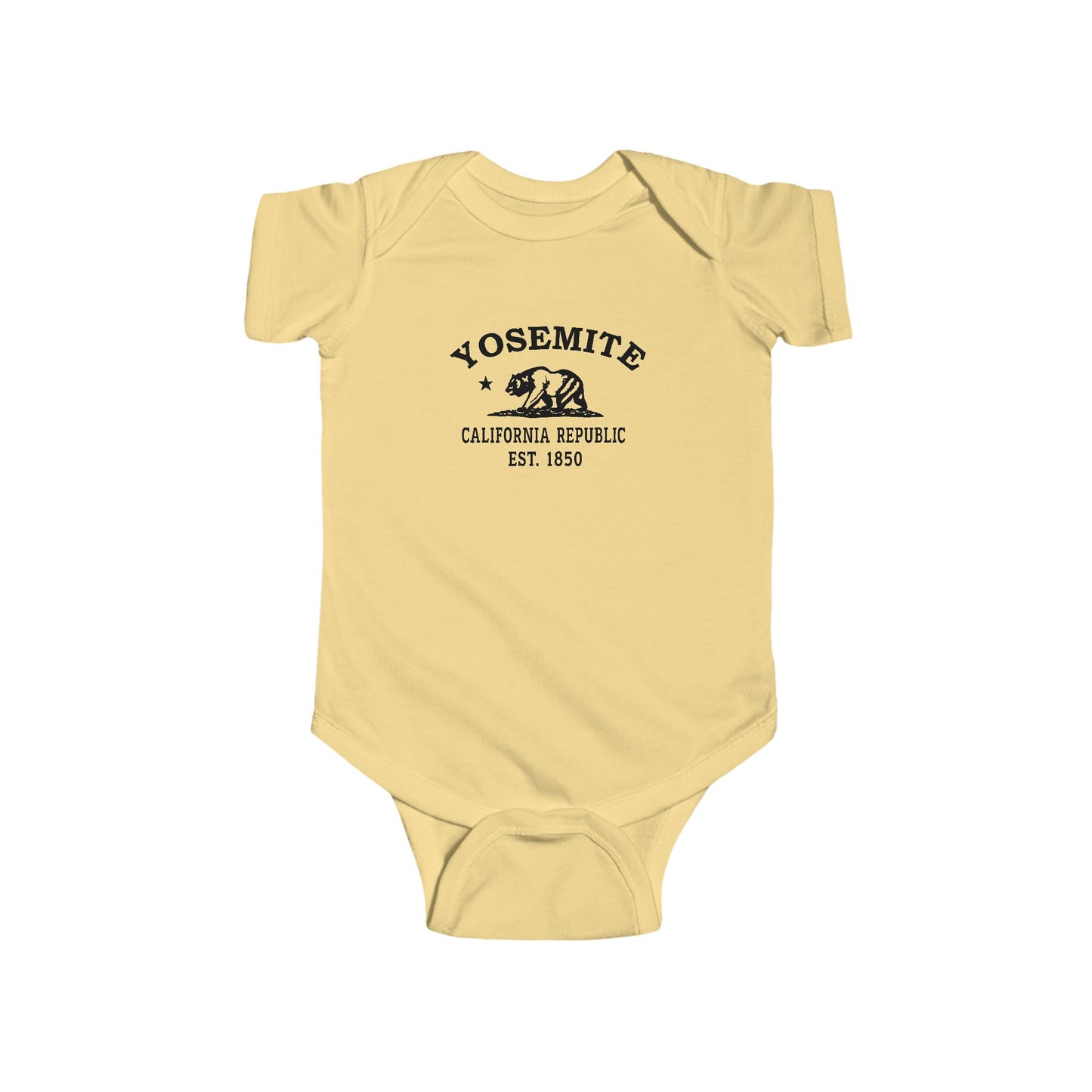
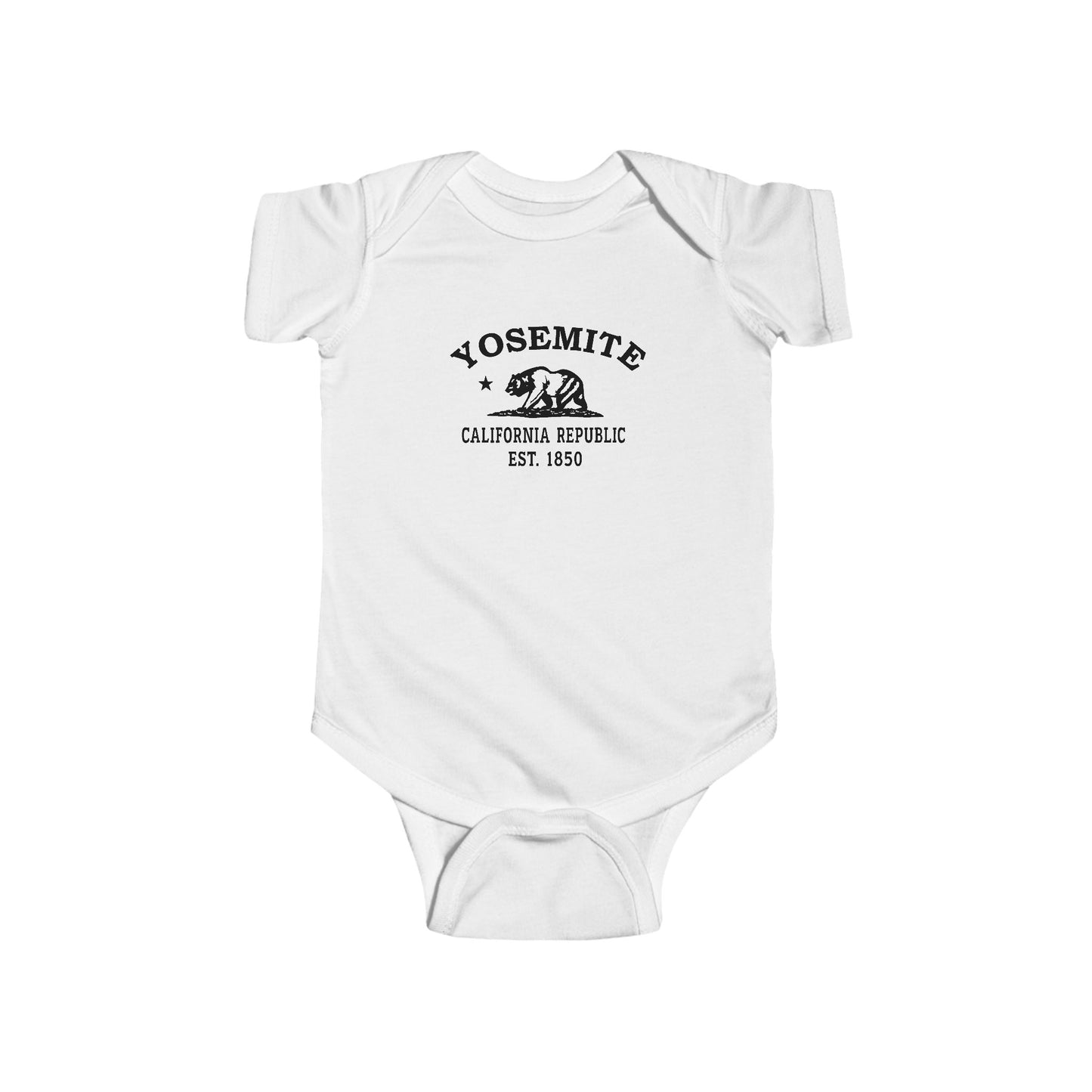
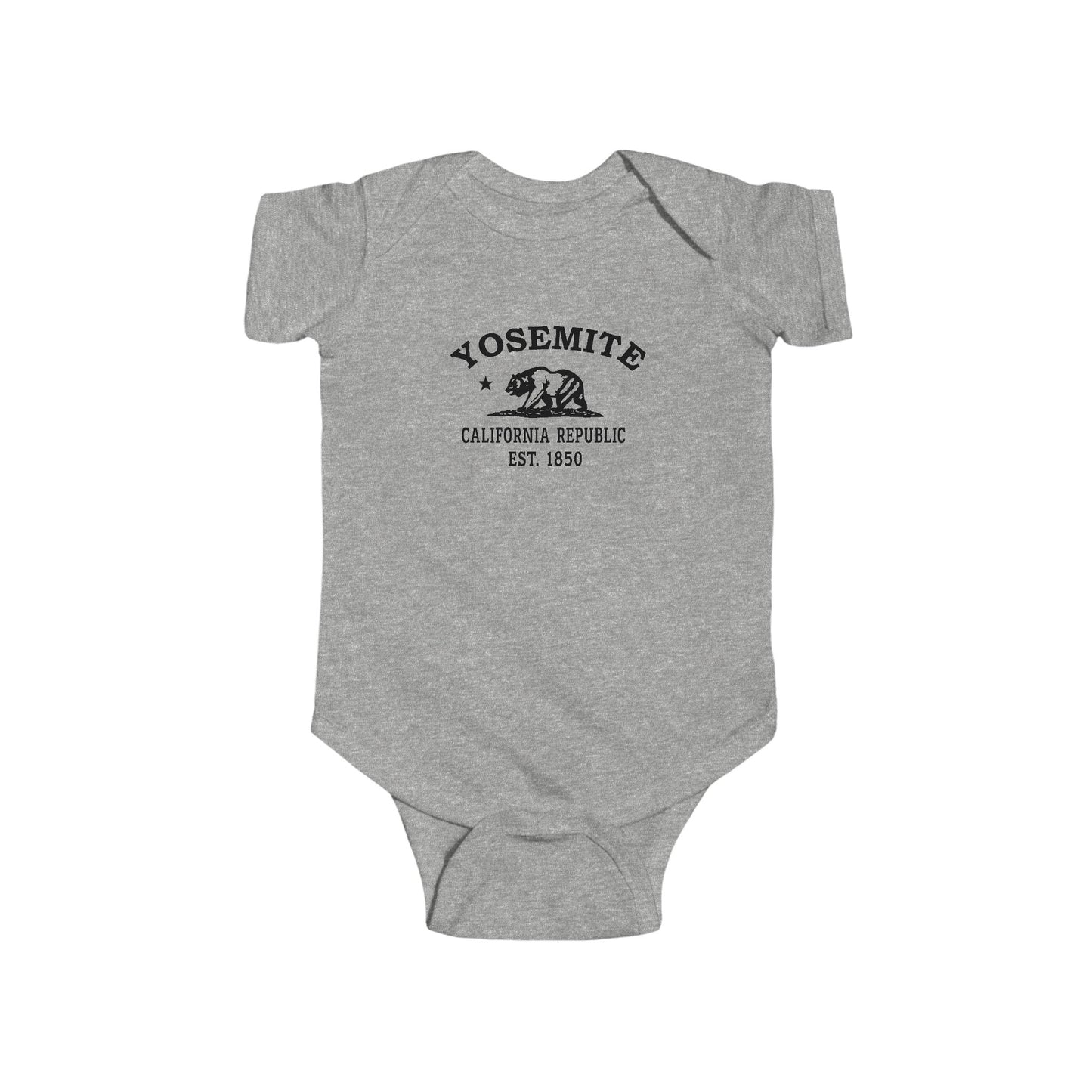
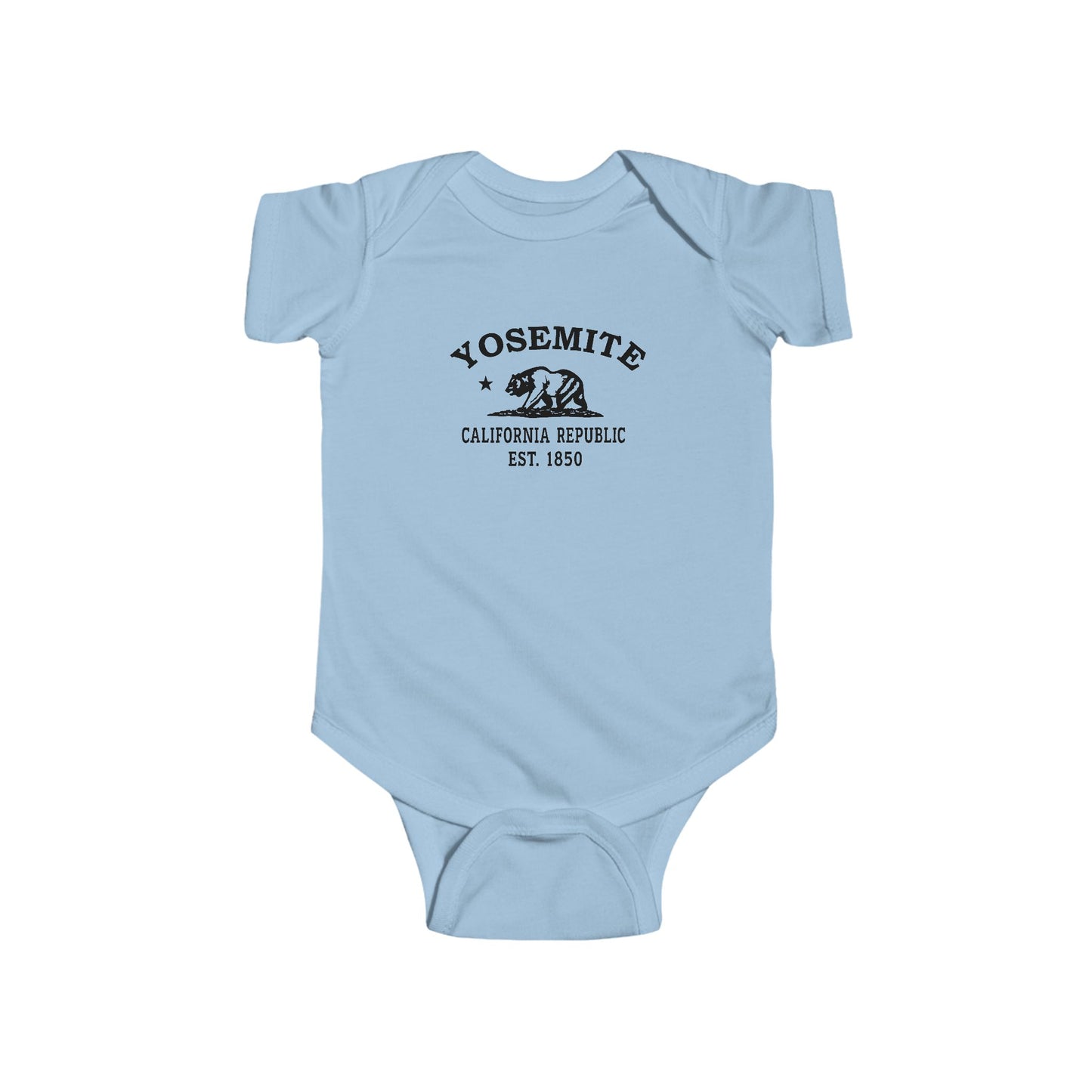
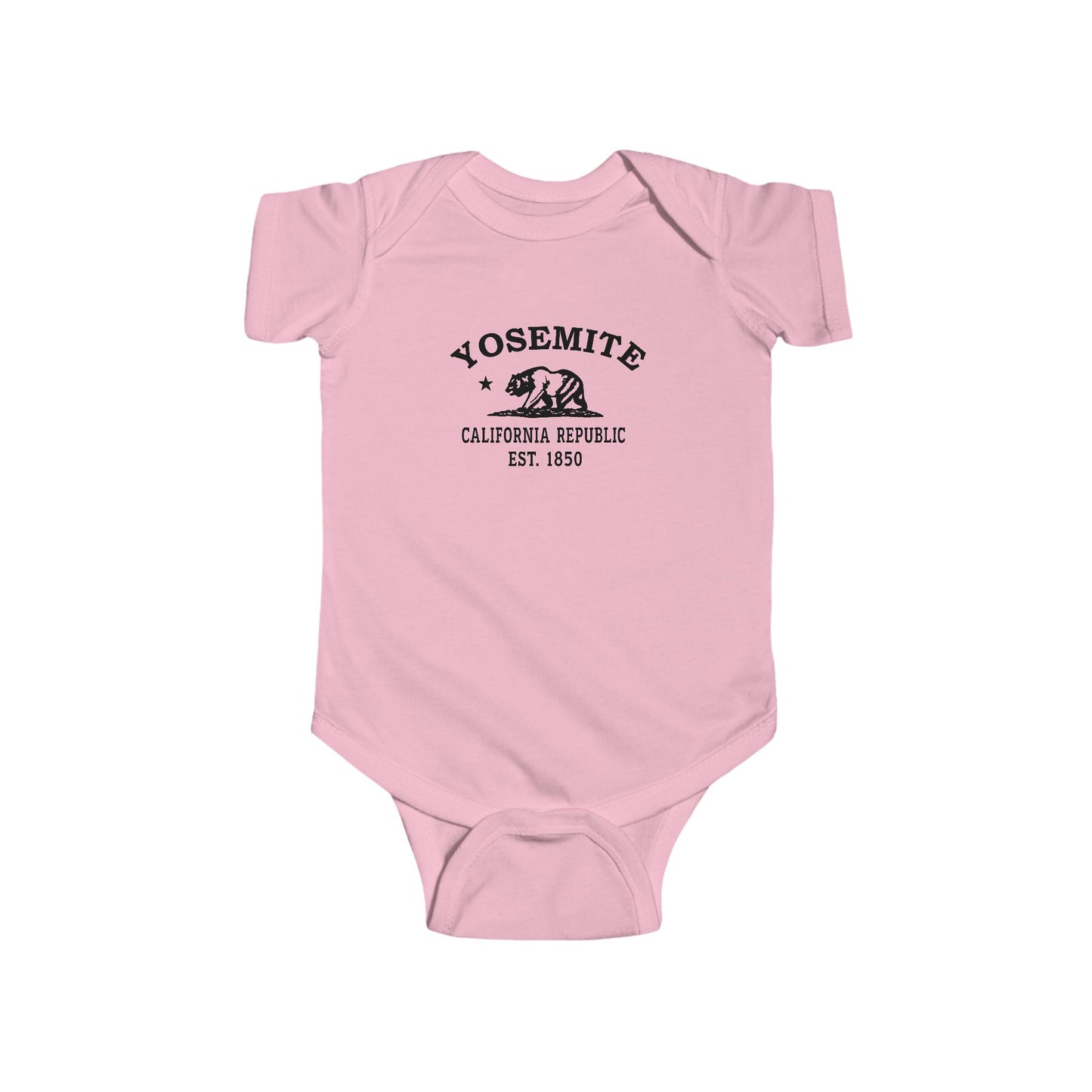
Our Yosemite logo carries California's grizzly and lone star above “California Republic · Est. 1850,” the year of statehood — the shared retro emblem of every Merlin Classics California place. Printed in a worn black-and-white that recalls an old WPA park poster and a crate-label stamp, the bear is California in shorthand: wild, durable, and at home in big country. The bear is the through-line that links Yosemite to every other California place we make. What makes this one Yosemite is everything around it — the granite of Half Dome and El Capitan, the sequoias, the waterfalls, and the valley that taught America to save its wild places.
What the soldiers found, others soon came to see. Within a few years travelers, hoteliers, and photographers were making the hard trip into the valley, and word of its scale spread east. The granite here is on a scale that stops people cold: Half Dome rising nearly a vertical mile above the valley floor, El Capitan standing as the largest exposed granite monolith in the United States, and Yosemite Falls dropping 2,425 feet in three tiers — among the tallest waterfalls in North America. Add the giant sequoias of the Mariposa Grove, trees older than the republic, and it is easy to see why the valley unsettled the people who first tried to describe it.
Why People Visit Yosemite
Yosemite offers wilderness on a scale few places can match — a glacier-cut valley of granite cliffs and waterfalls, giant sequoias older than the country, and the high Sierra beyond, all carrying the founding story of the national-park idea. Visitors come for Half Dome, El Capitan, and the falls, and stay for the sequoias, the meadows, and the long Sierra light. From a valley stroll to the high country, it rewards a day or a week. It is timeless, humbling, and unmistakably California.
