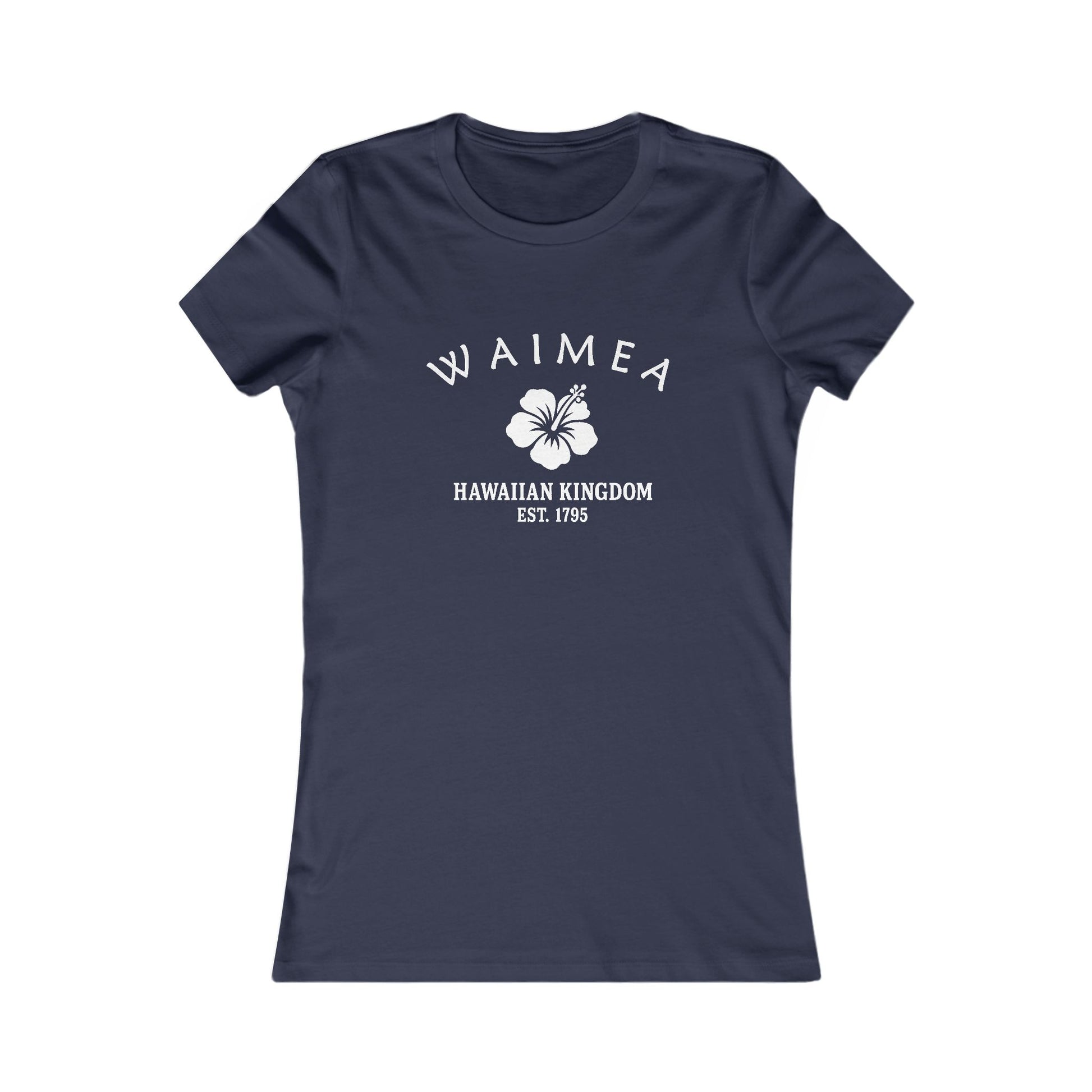
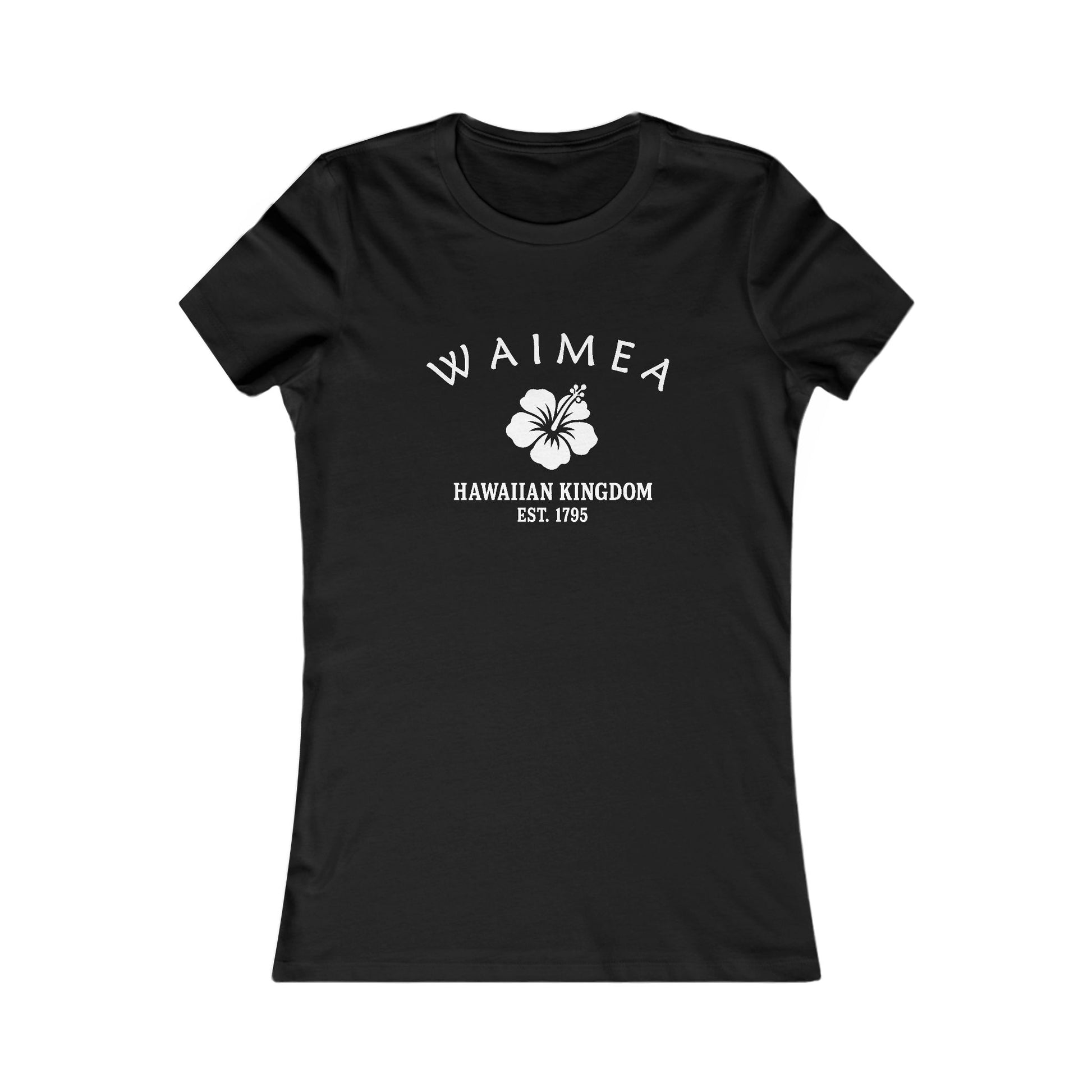
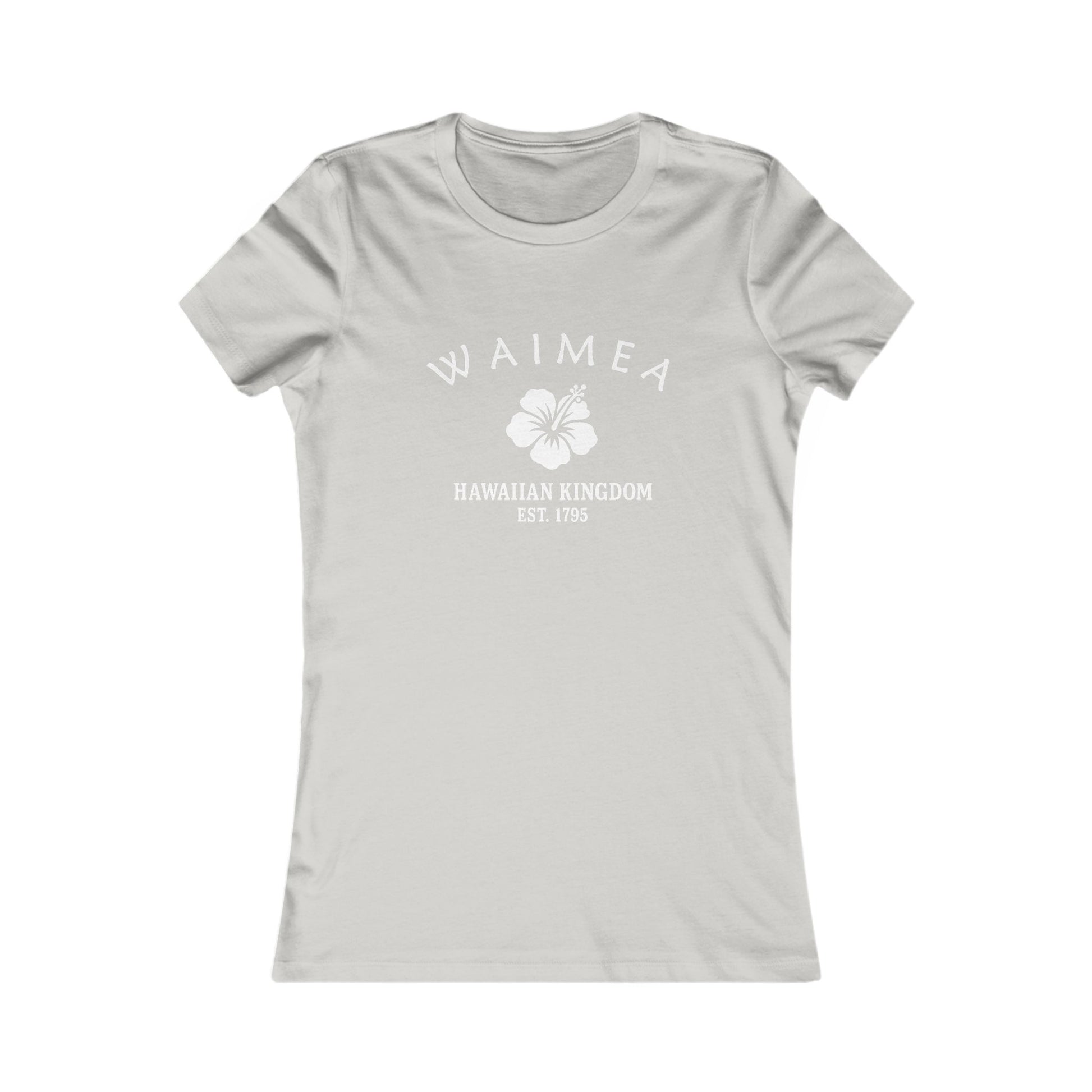
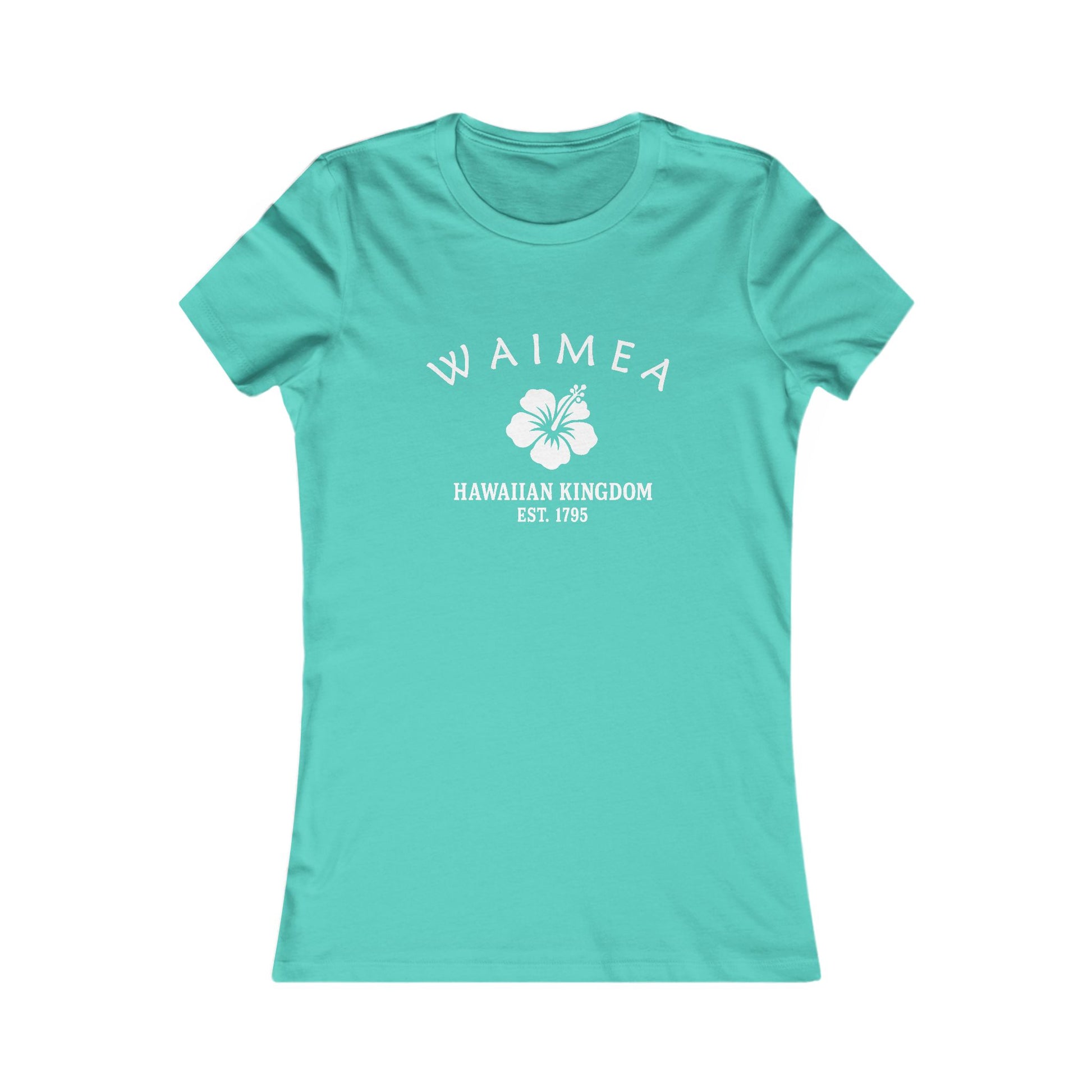
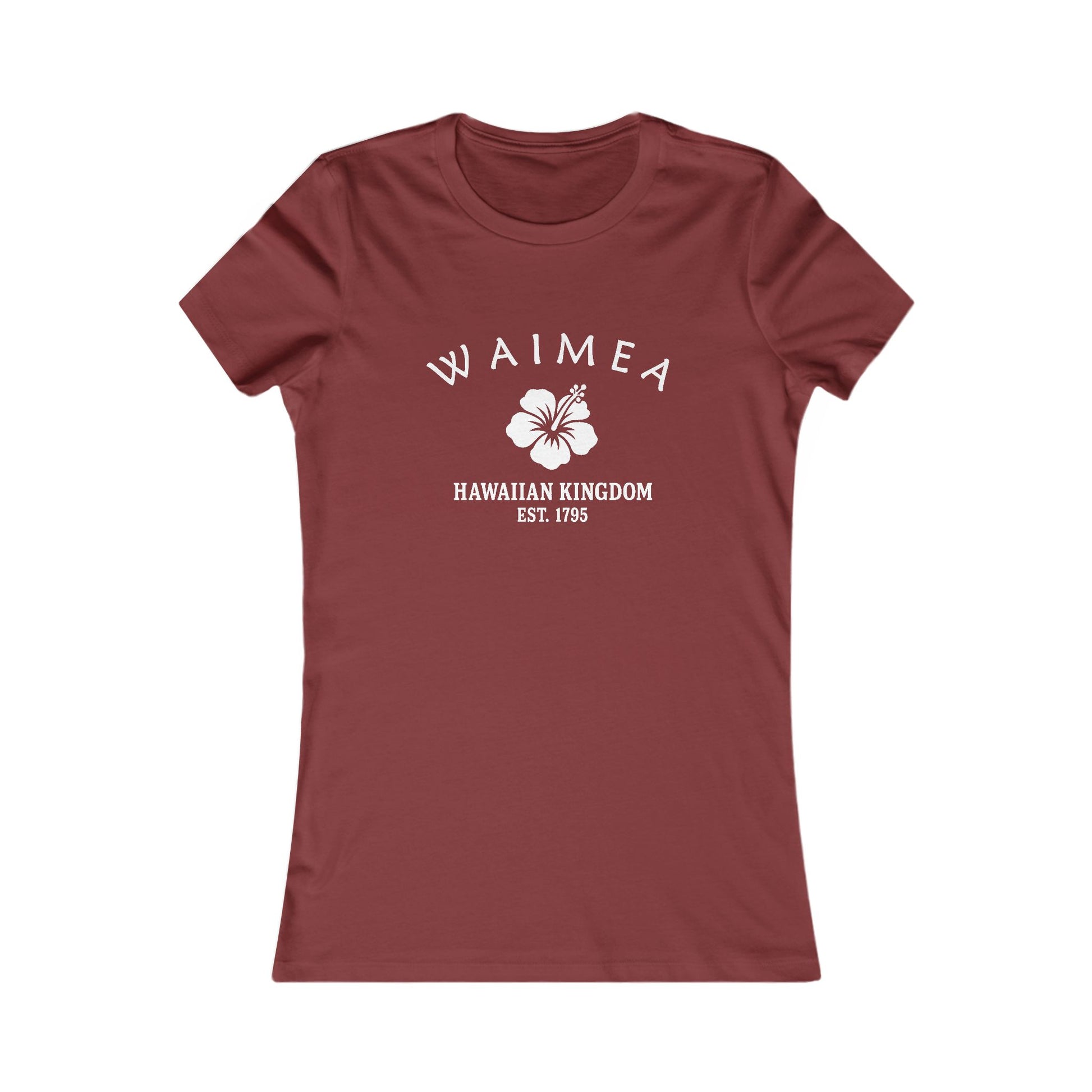
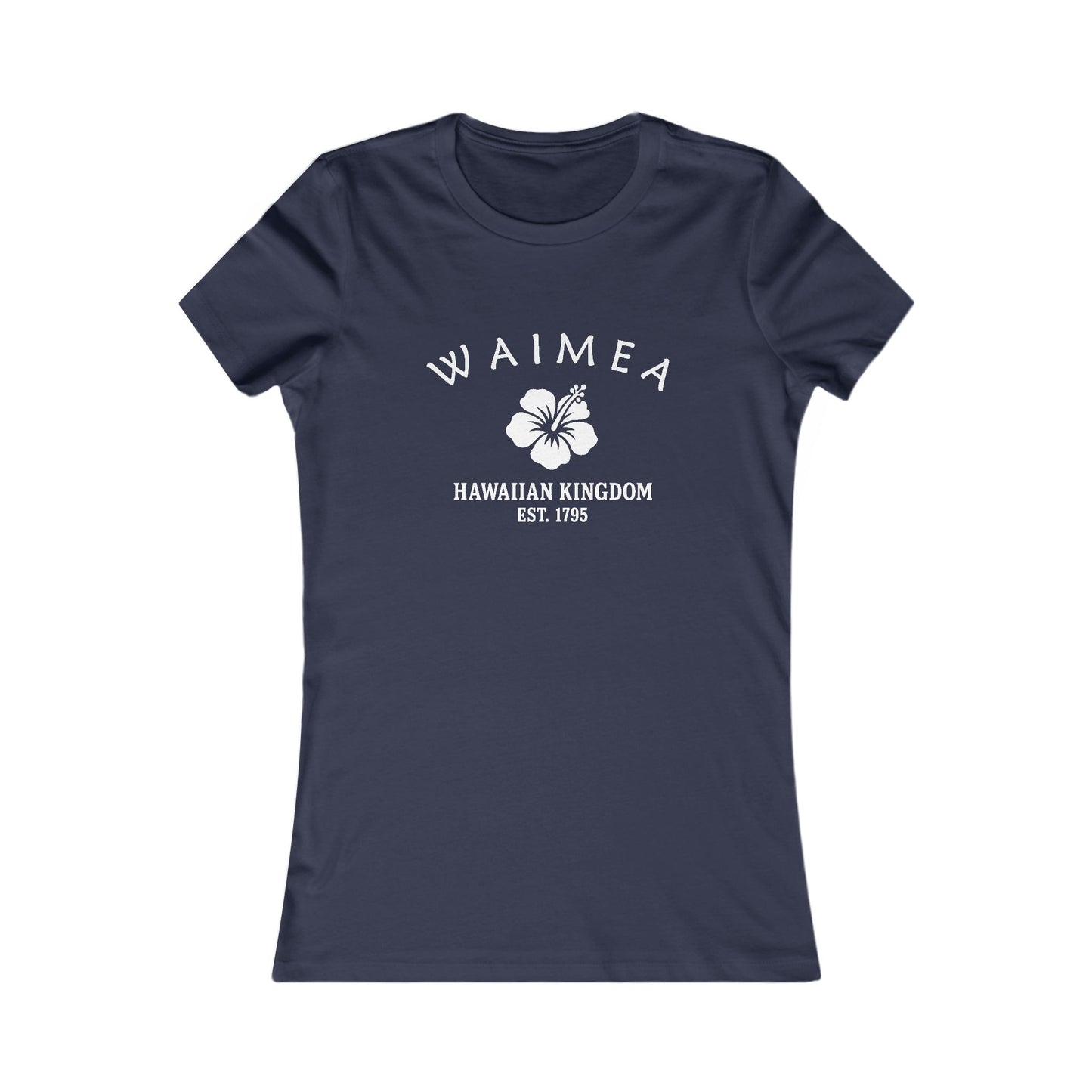
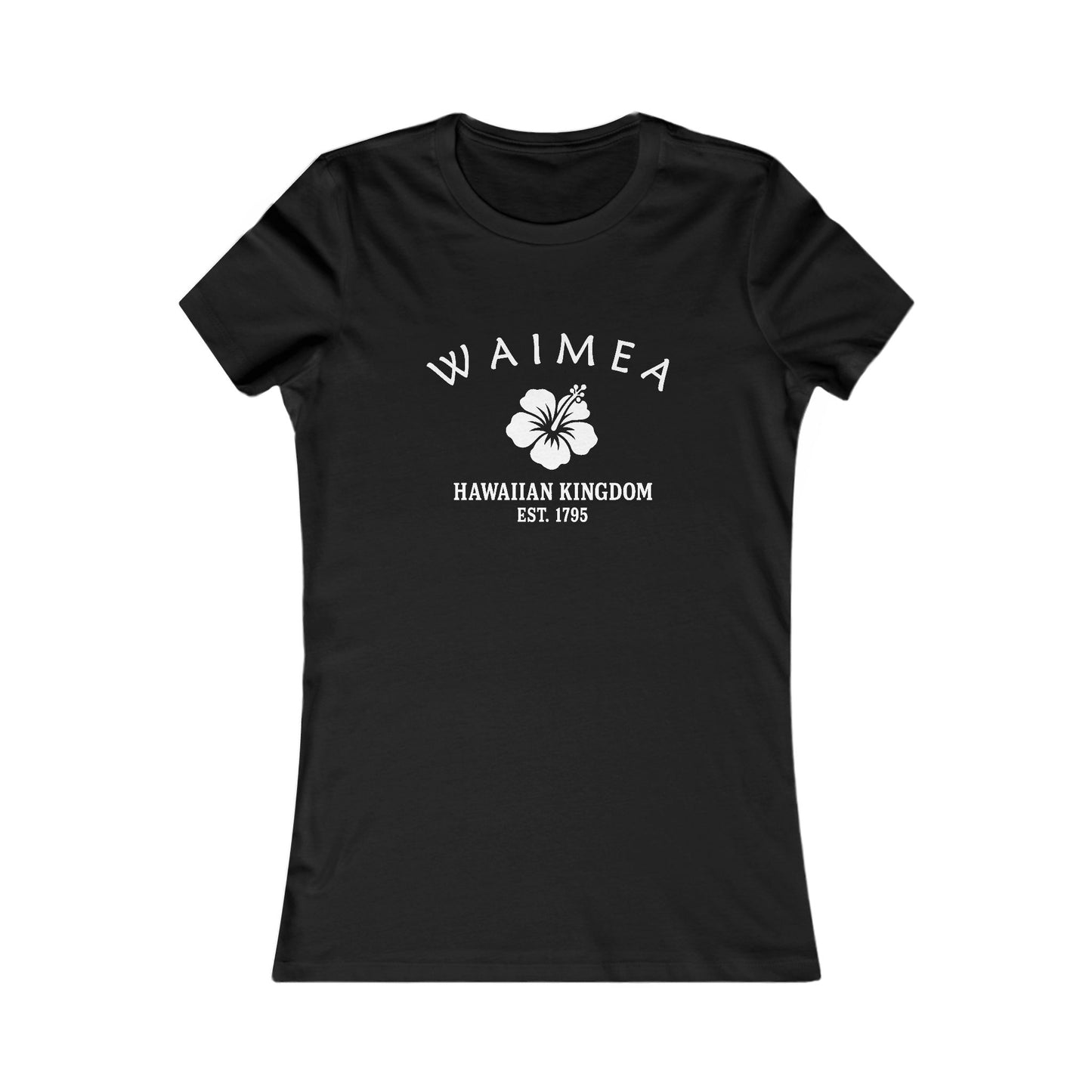
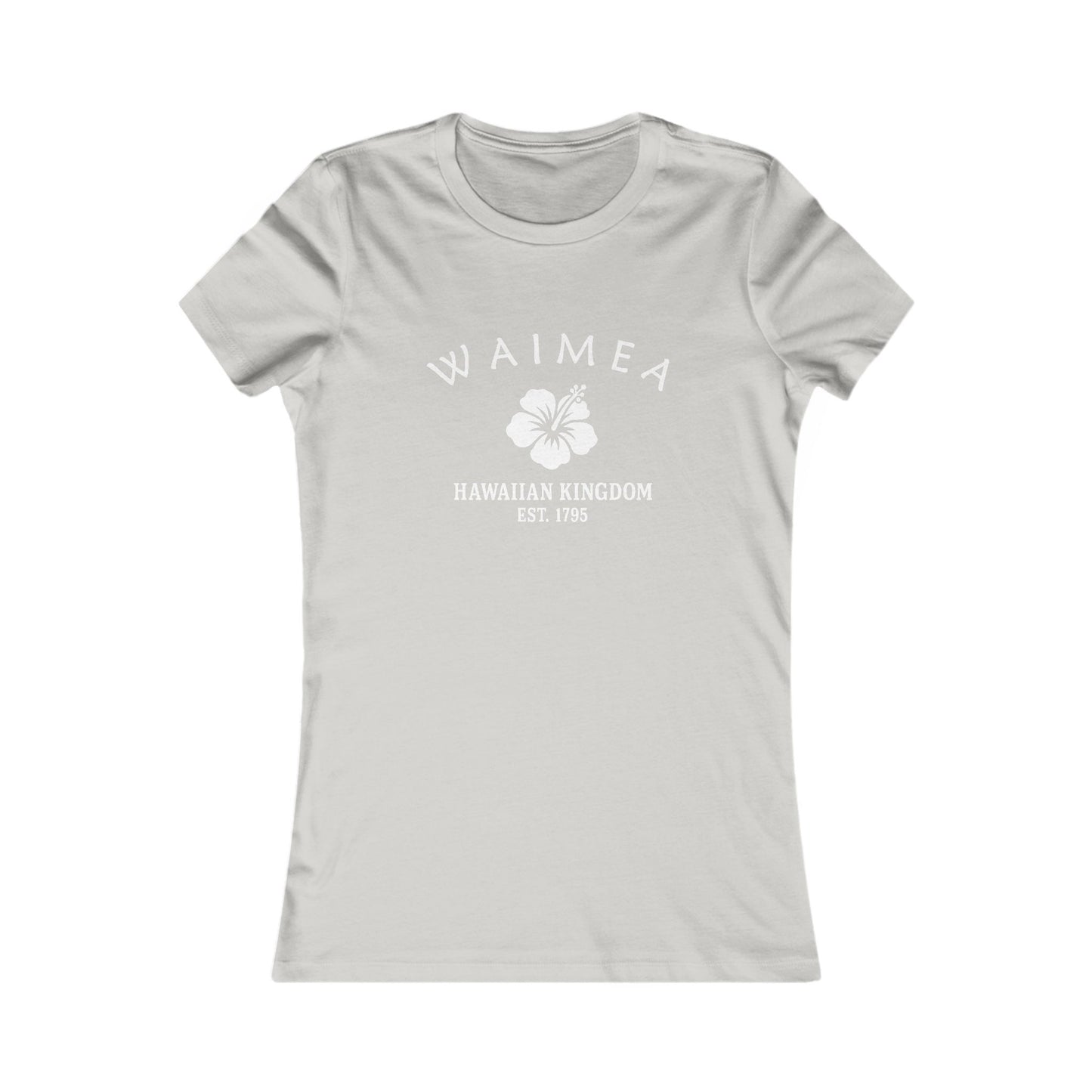
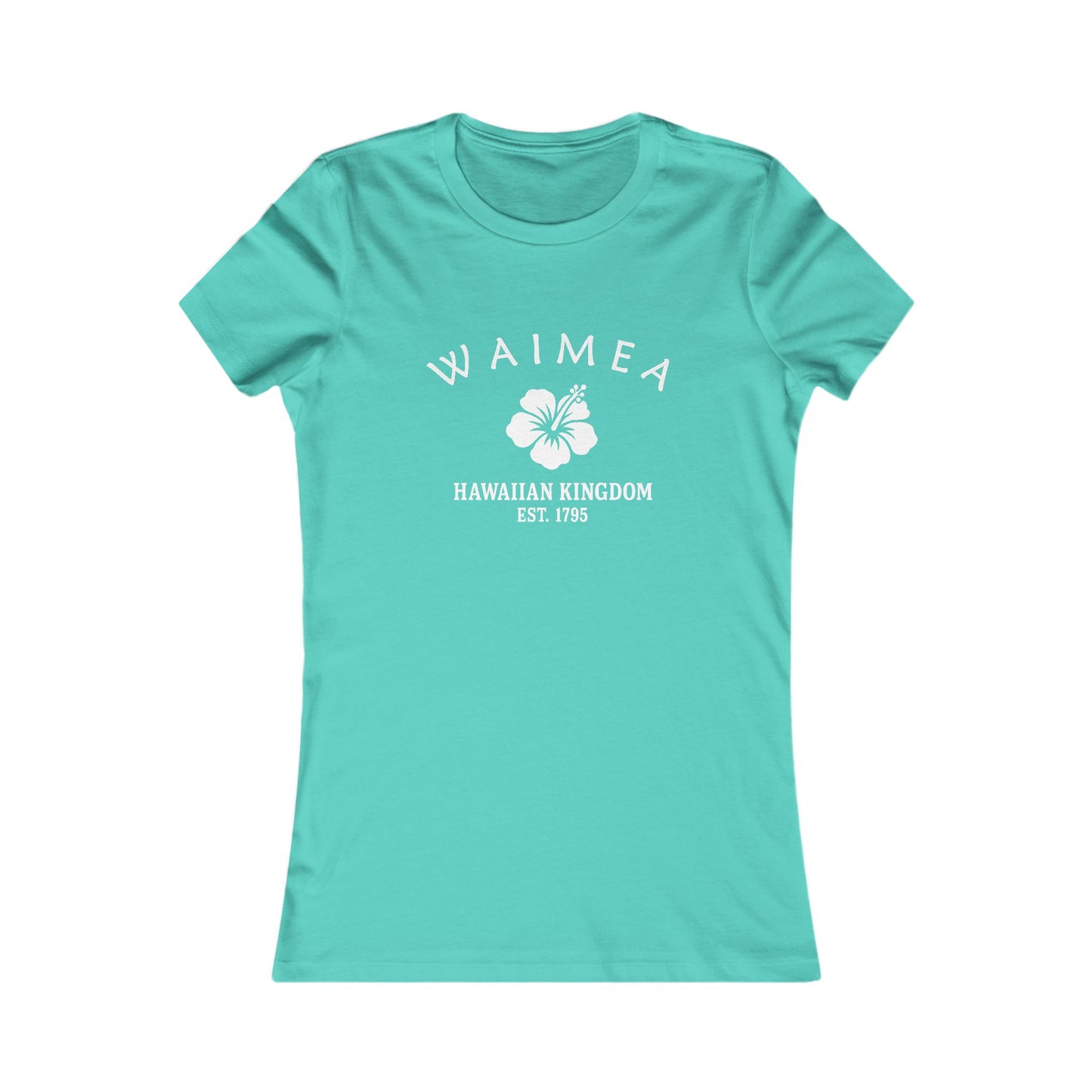
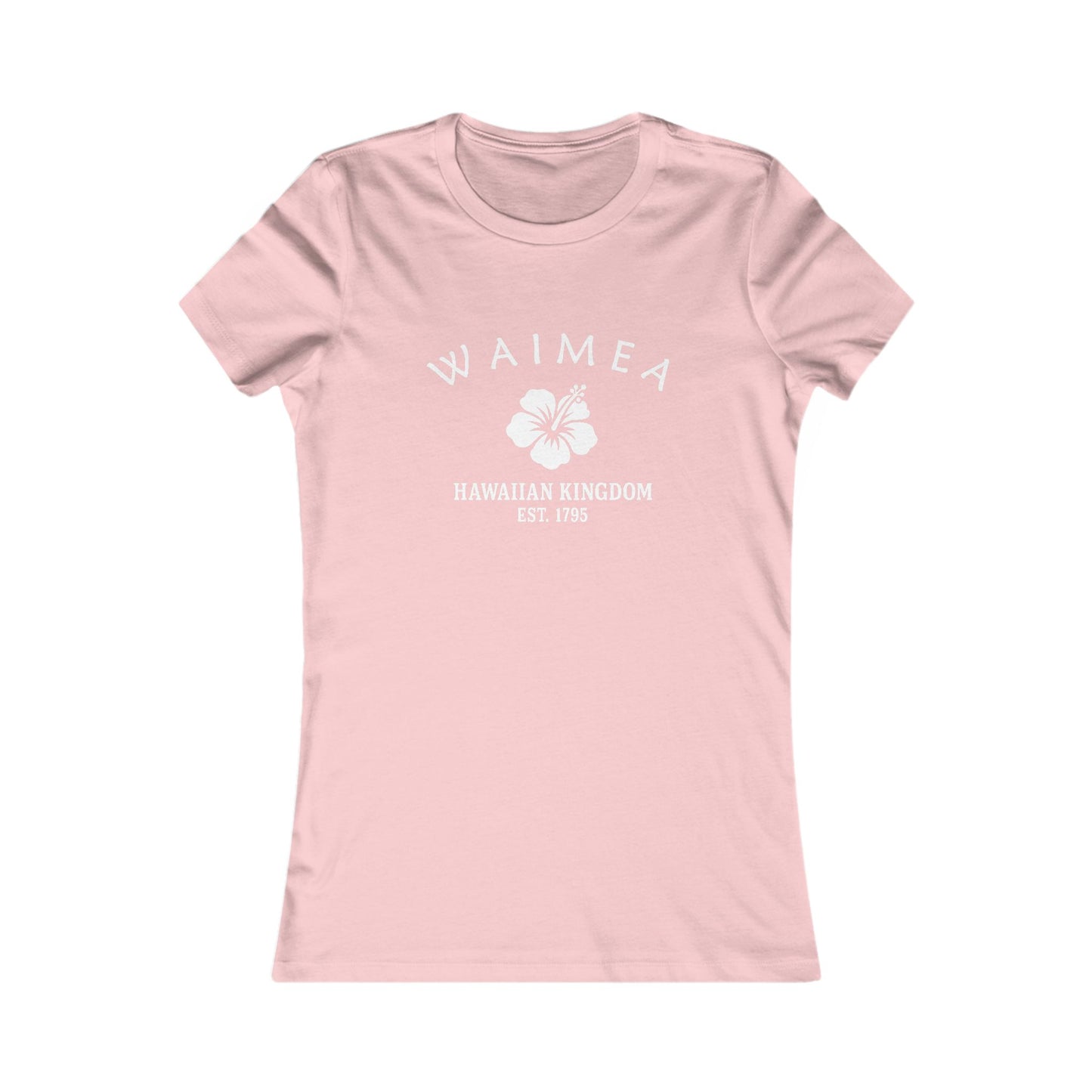
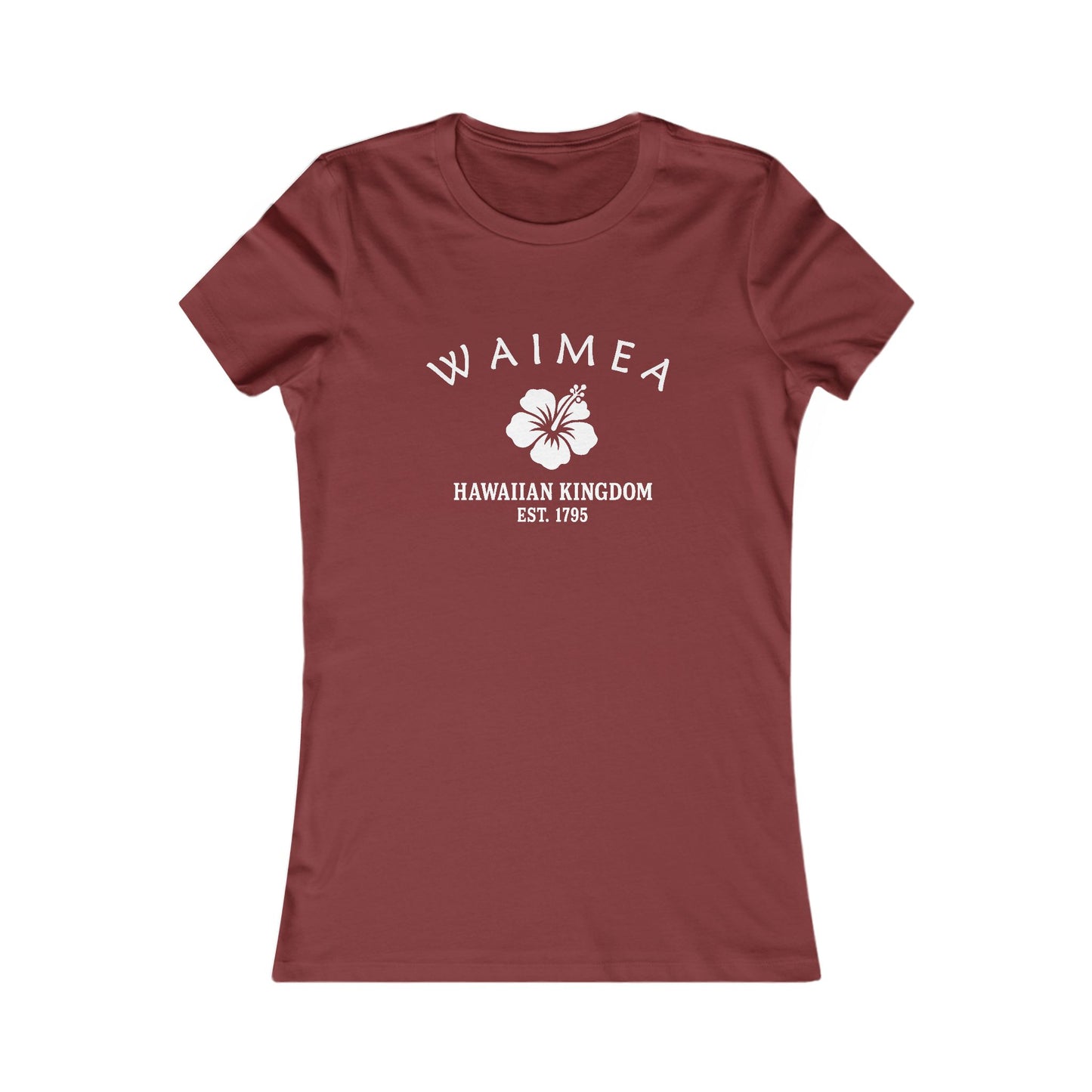
Today Waimea — Kamuela on the envelope — is still paniolo country: ranch land and farmers' markets, cool misty mornings, a rodeo every Fourth of July, and Mauna Kea standing over it all. Our Waimea designs gather that identity — the hibiscus emblem, the upland pastures, the Hawaiian cowboy heritage — into wearable form. It is a Hawaiian town that has stayed itself — Native roots and paniolo pride, ranch and rodeo, cool air and big skies. Waimea, Hawaiʻi — where the cowboys came first, high on the green slopes of the Big Island.
Our Waimea logo carries the Hawaiian hibiscus over “Hawaiian Kingdom · Est. 1795,” the year Kamehameha I unified the islands — the shared emblem of every Merlin Classics Hawaiʻi place. Printed in a clean retro black-and-white that reads like an old travel decal, the hibiscus stands for the islands as a whole; what makes this one Waimea is the country behind it — the paniolo on the high pastures, Parker Ranch under Mauna Kea, and a Hawaiian town that has been green, cool, and proud of its cowboys for nearly two centuries.
Why People Visit Waimea
Waimea offers the Hawaiʻi that isn't a beach — cool, green, and high, with a deep ranching culture and Native Hawaiian roots. Visitors come for the paniolo heritage, the upland air, the farmers' markets, and the rare feeling of a Hawaiian cowboy town under the slopes of a sacred mountain.
