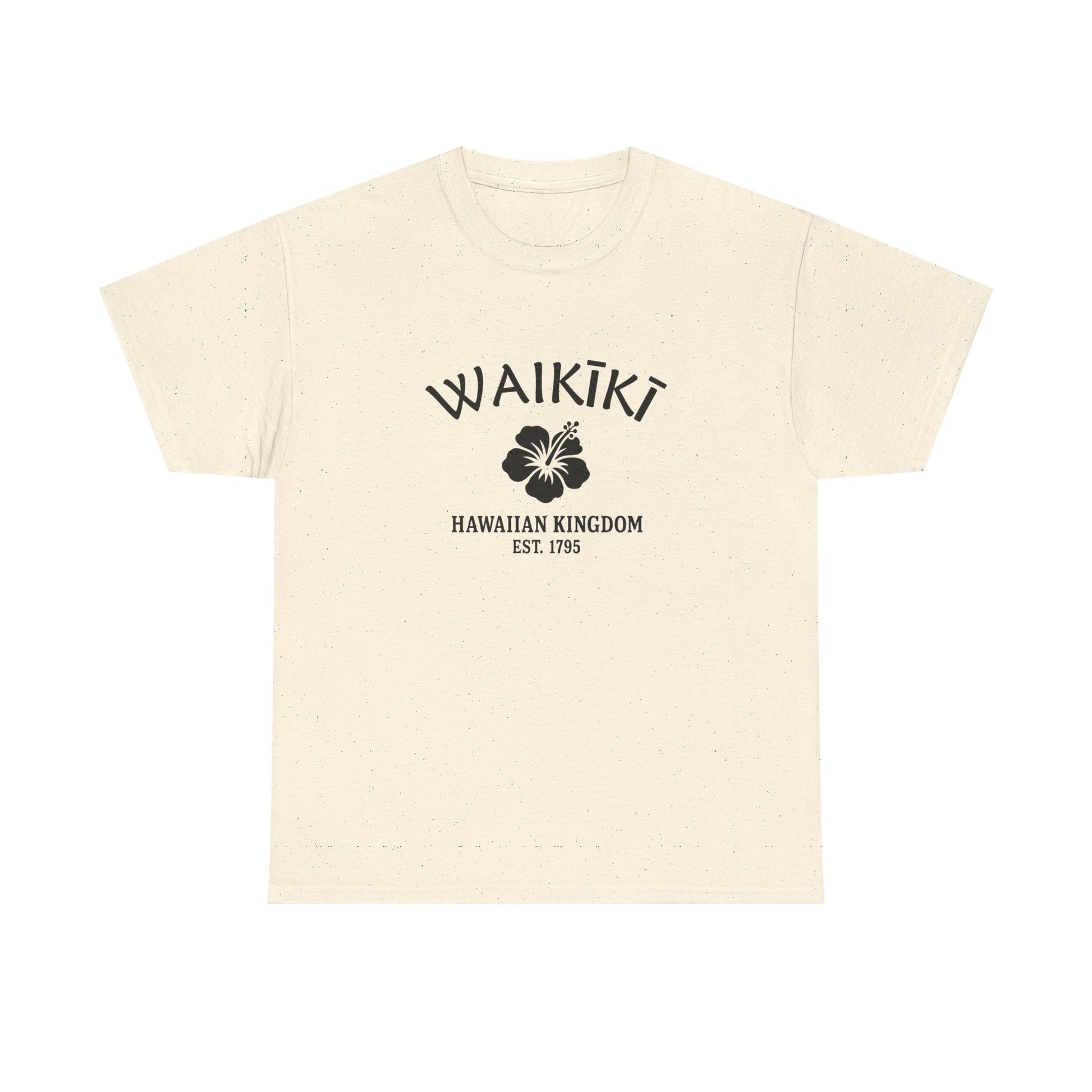
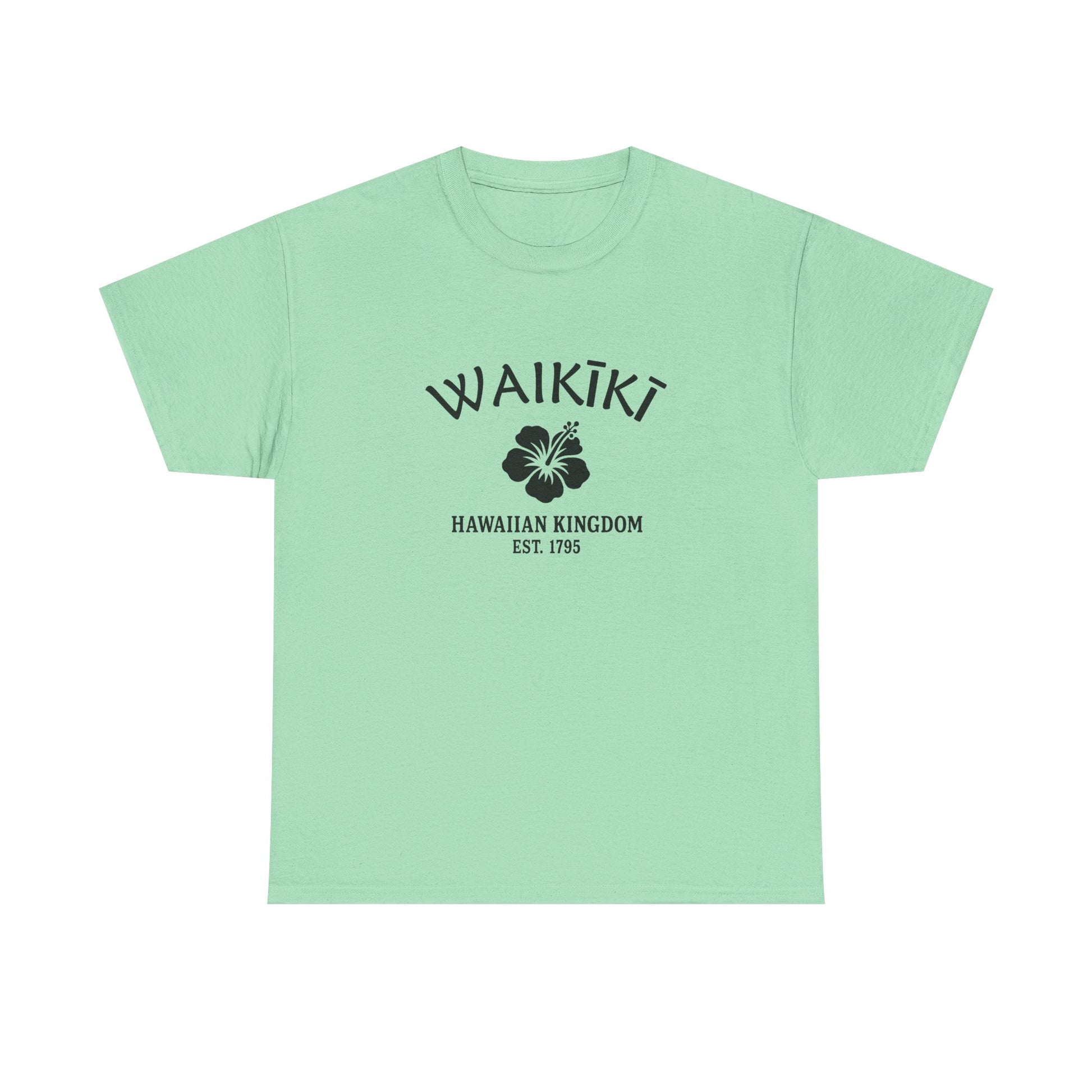
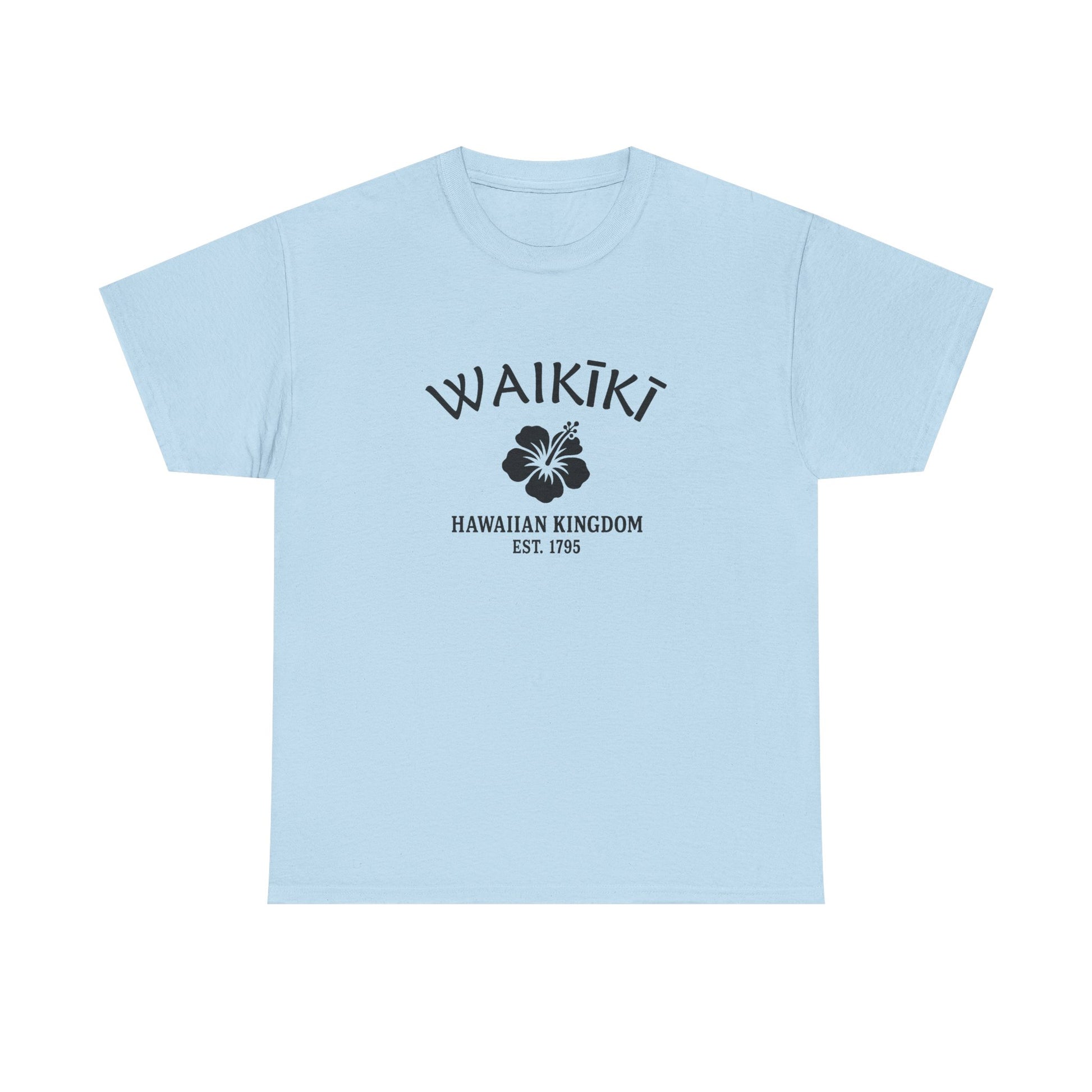
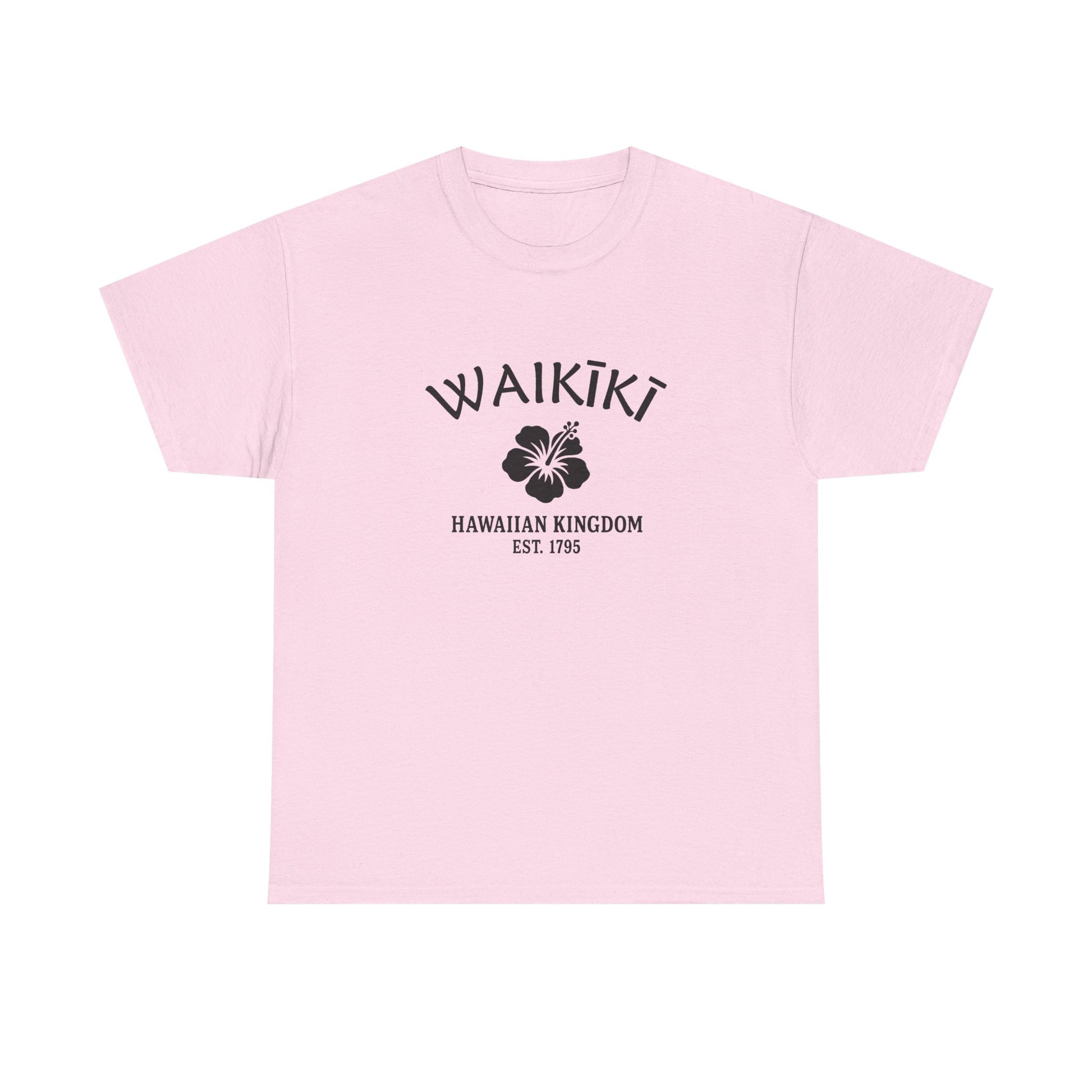
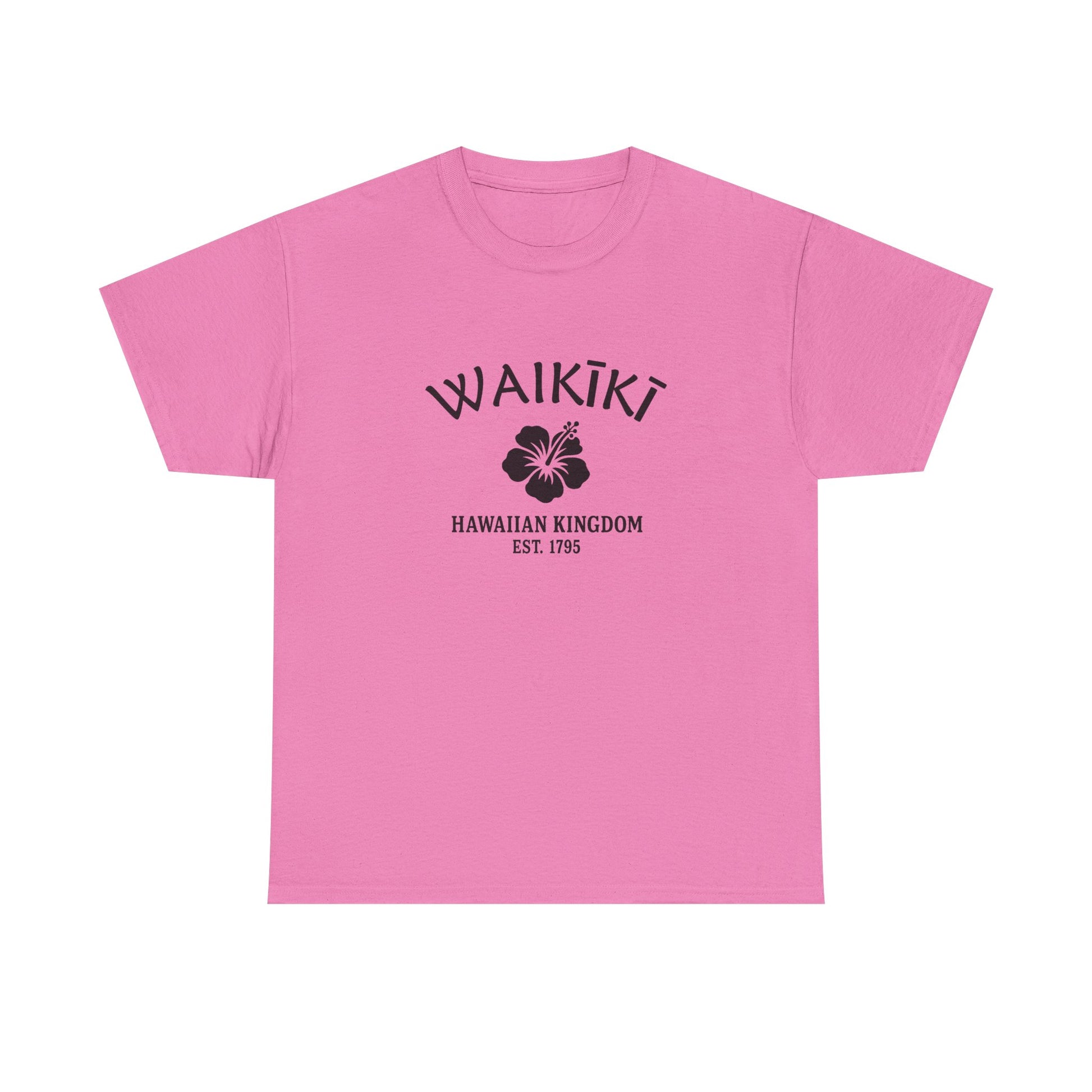
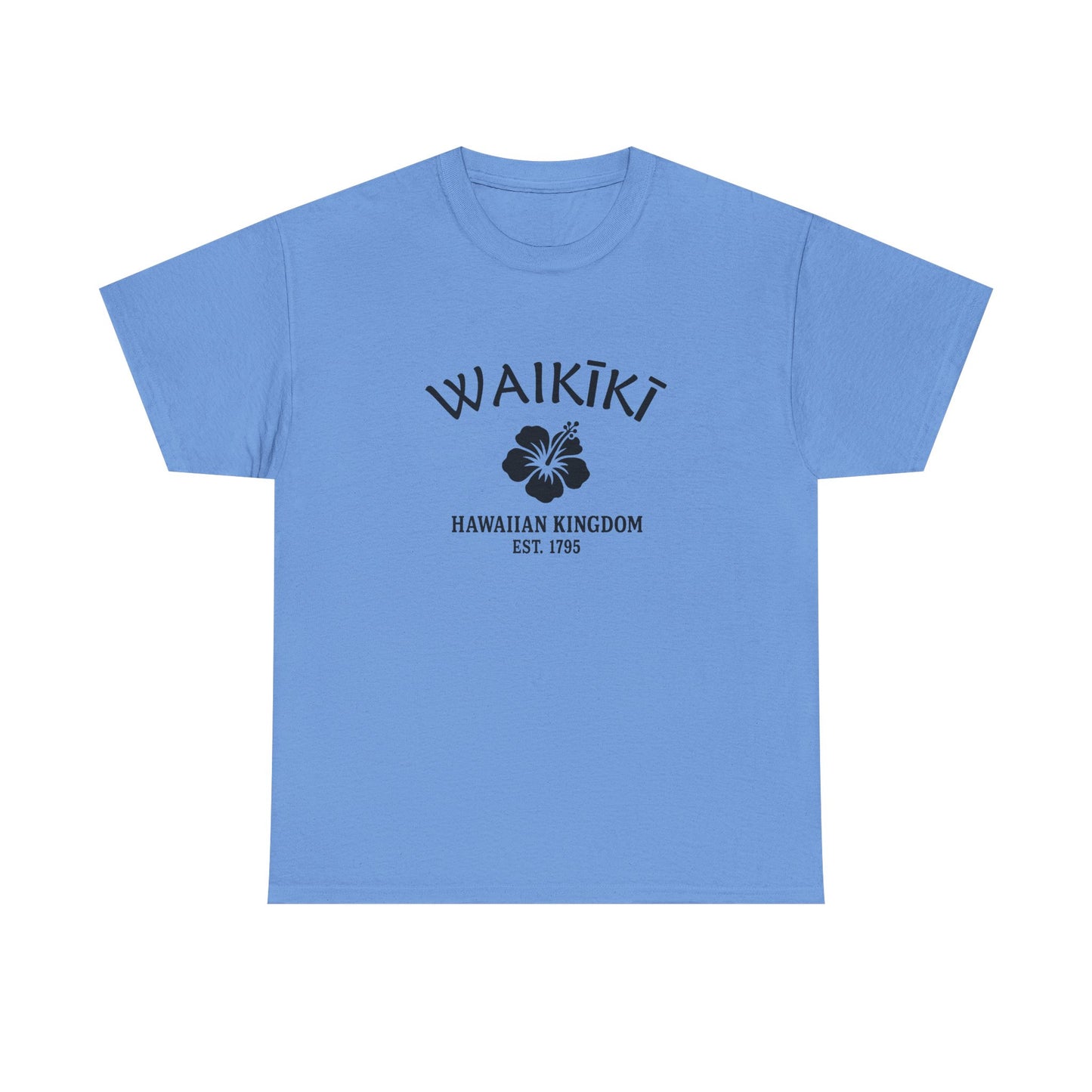
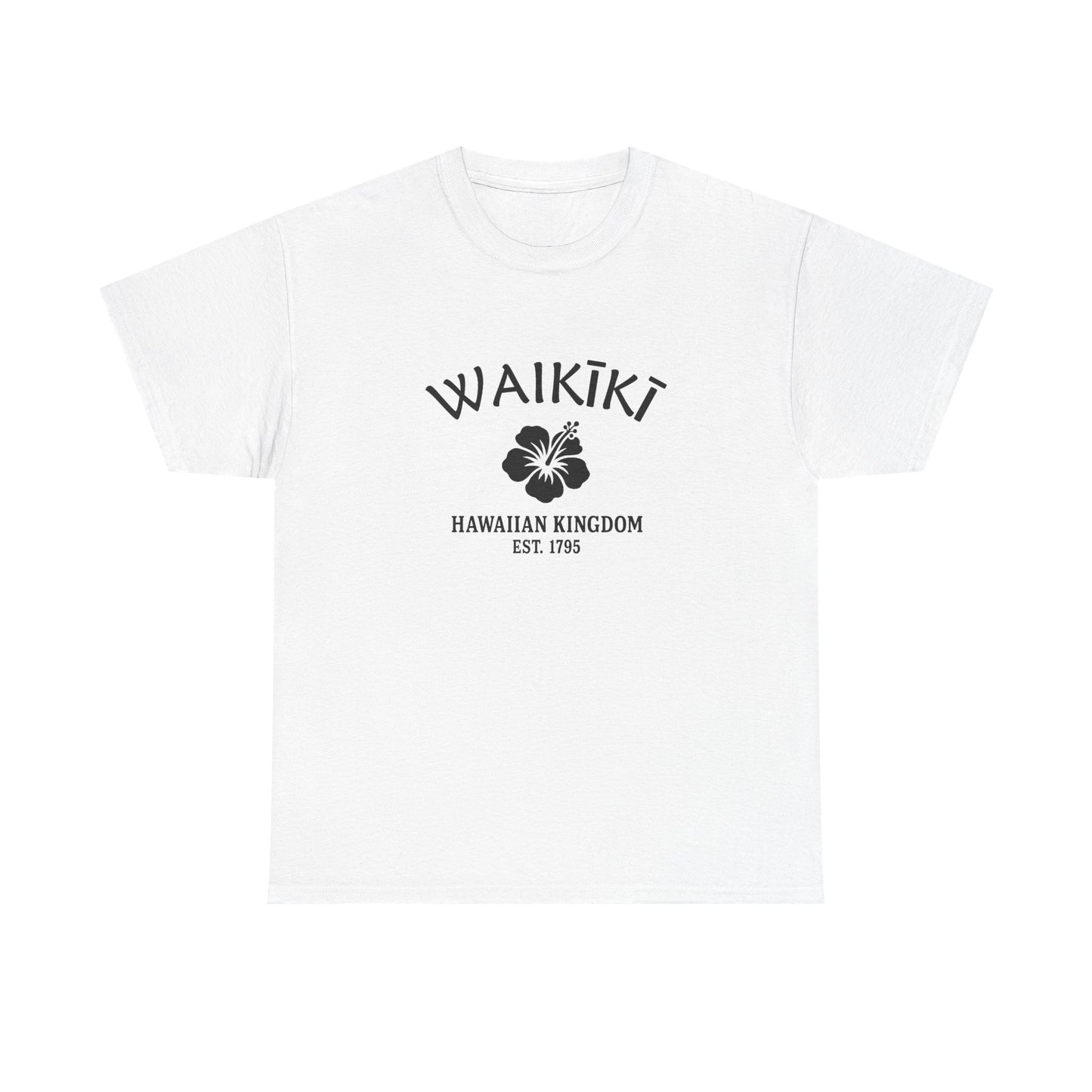
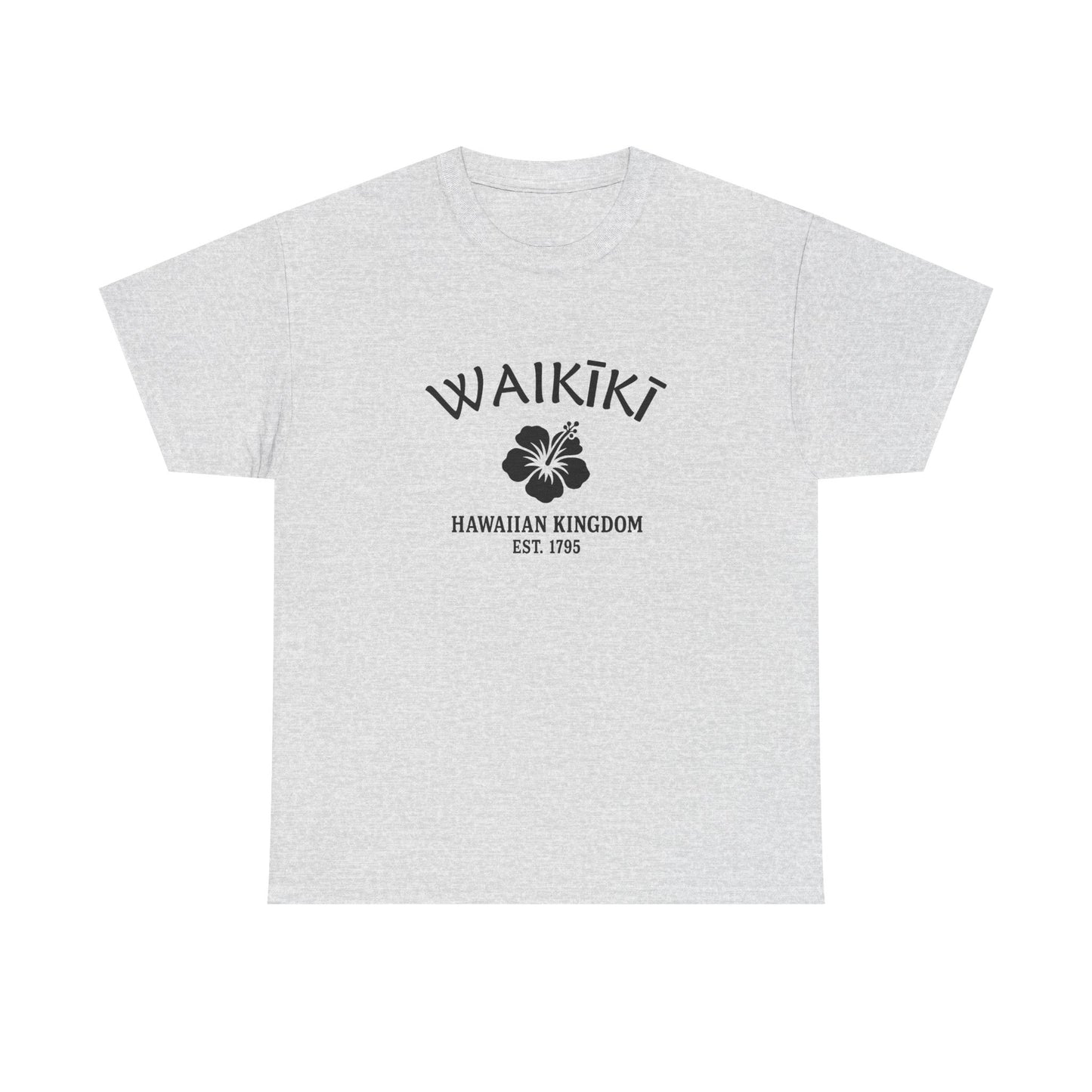
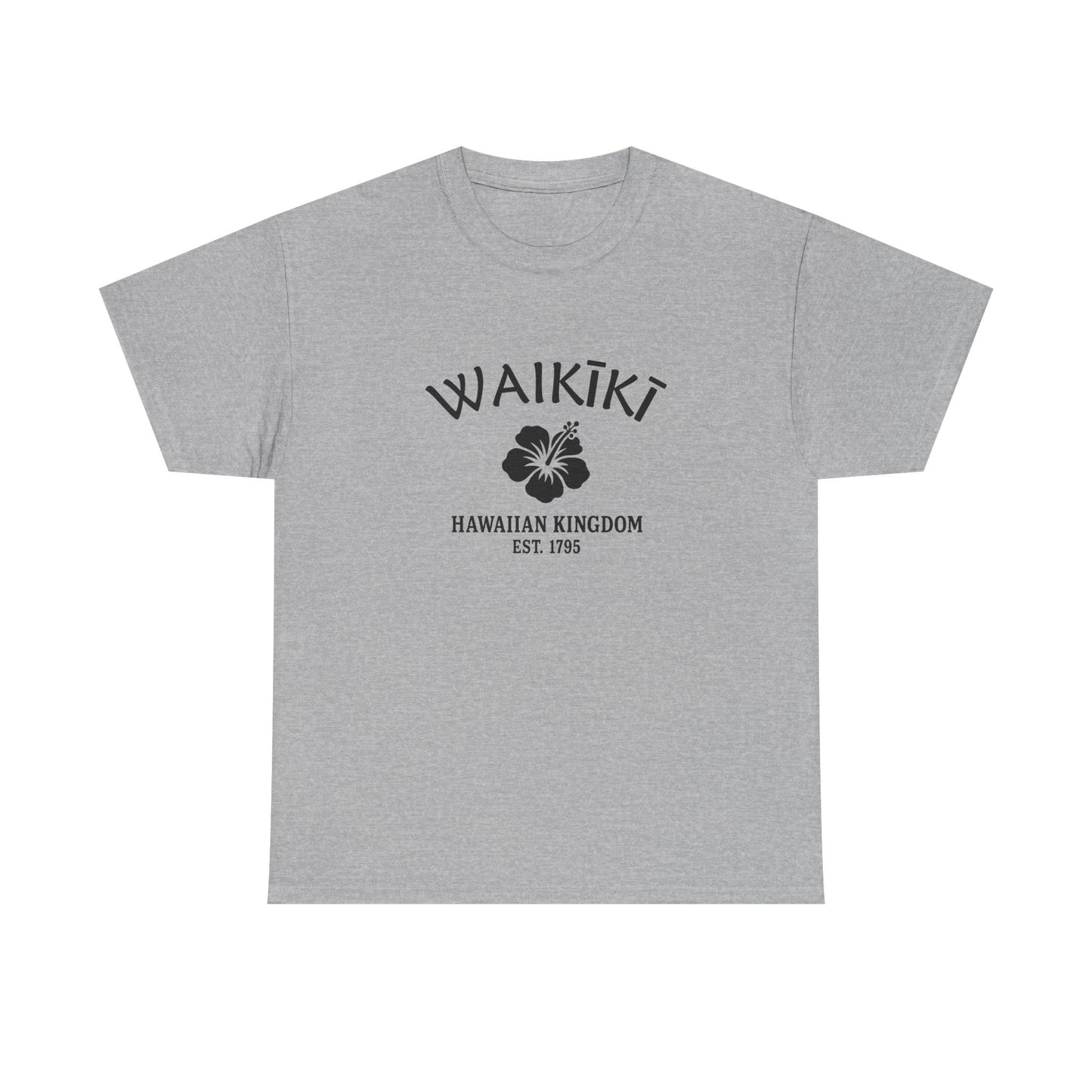
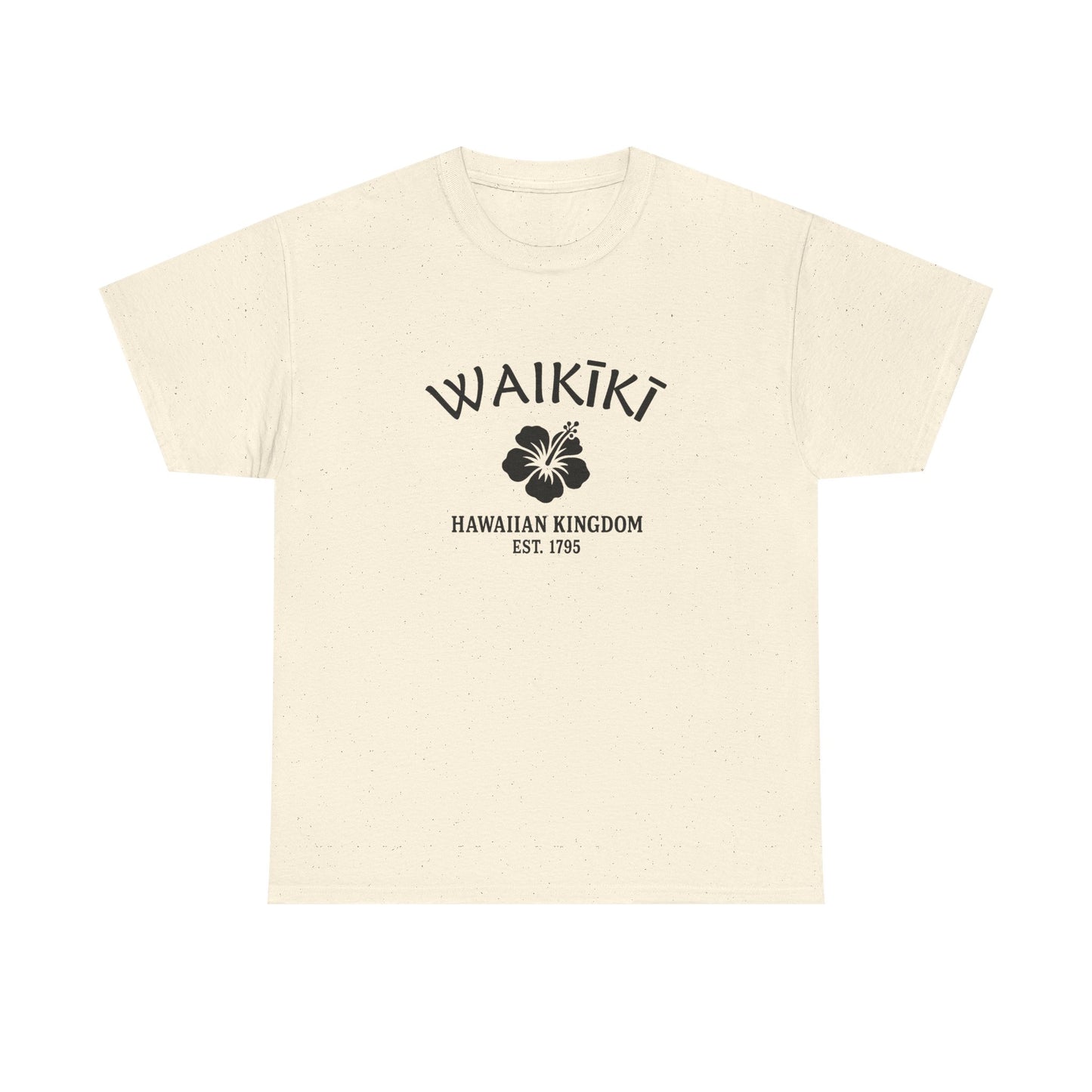
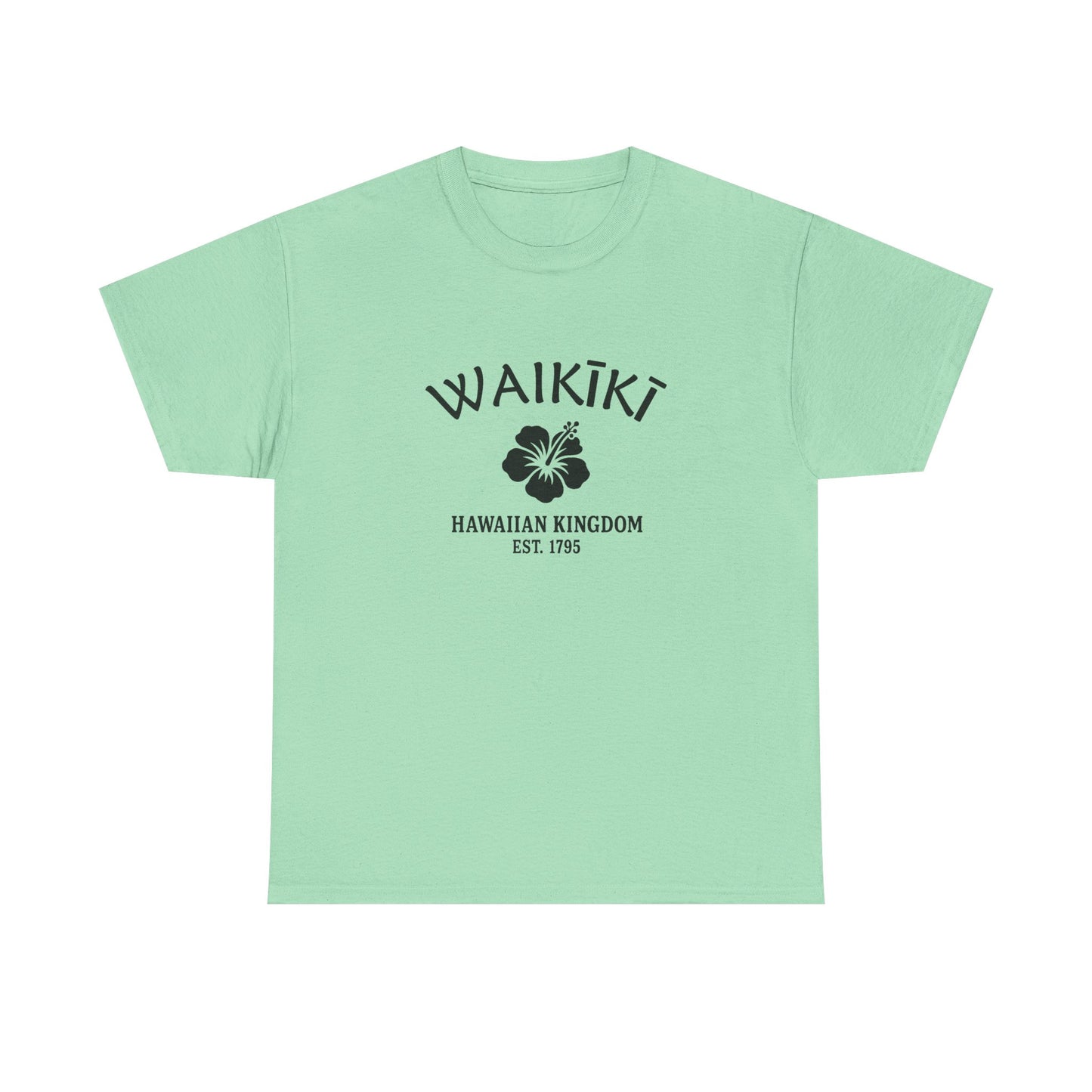
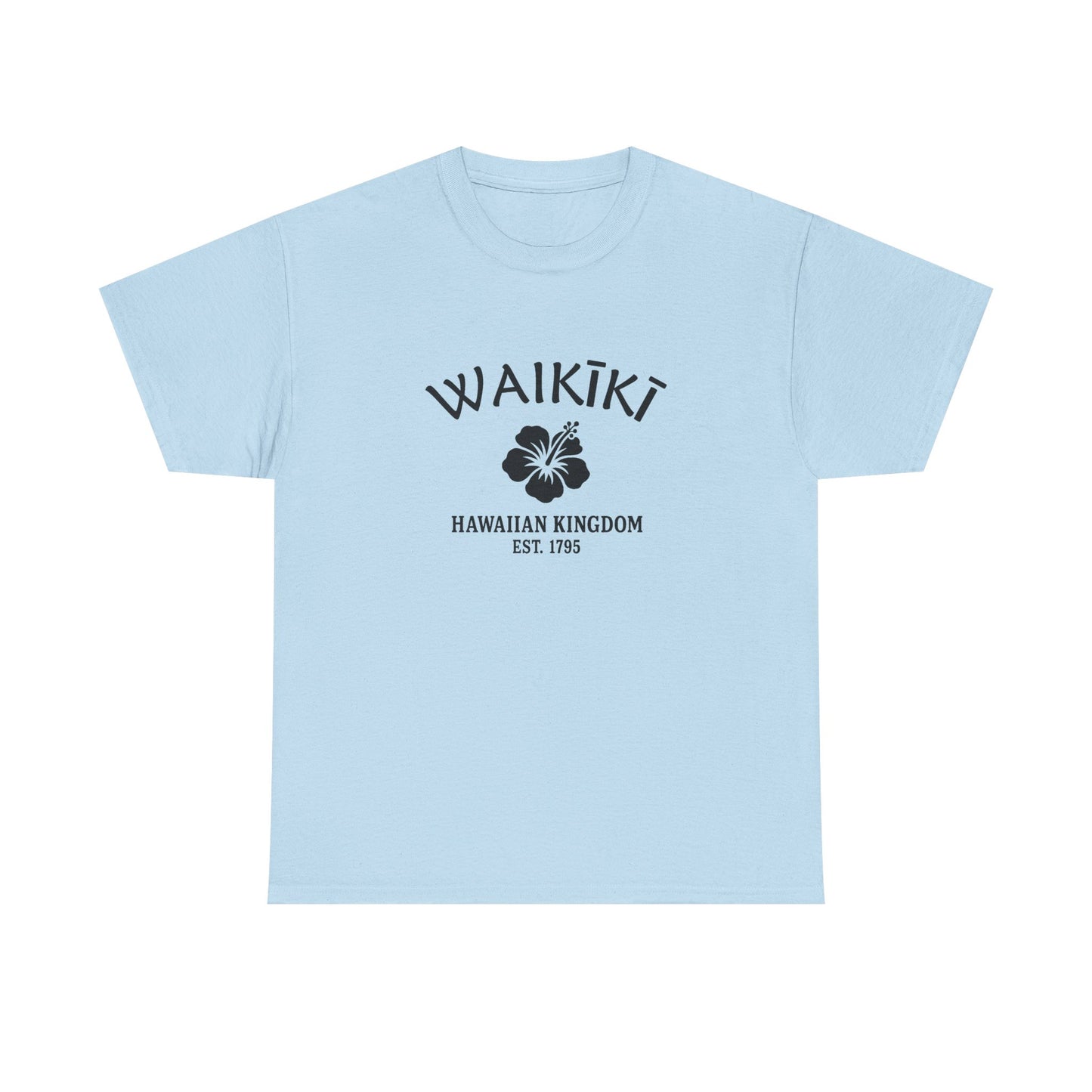
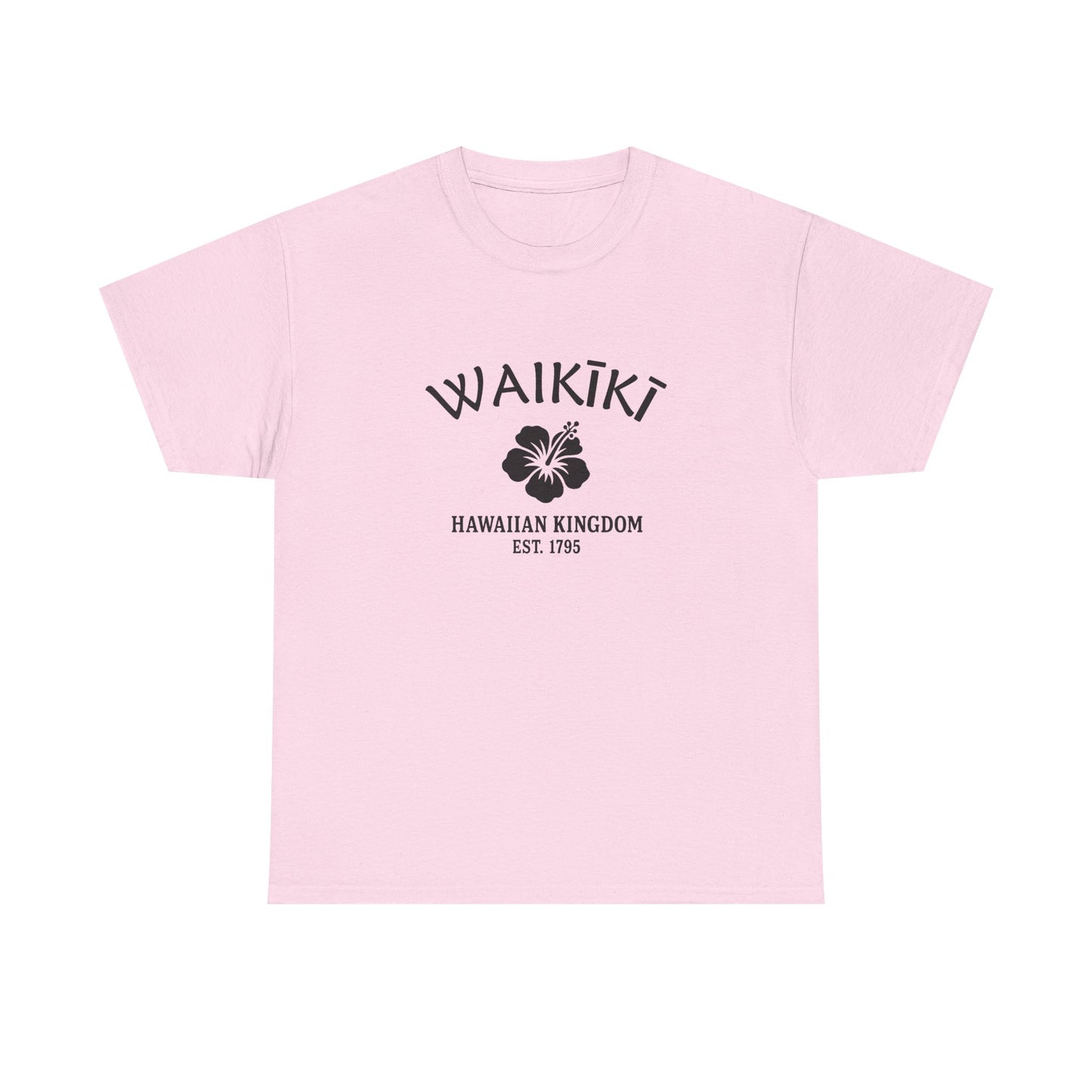
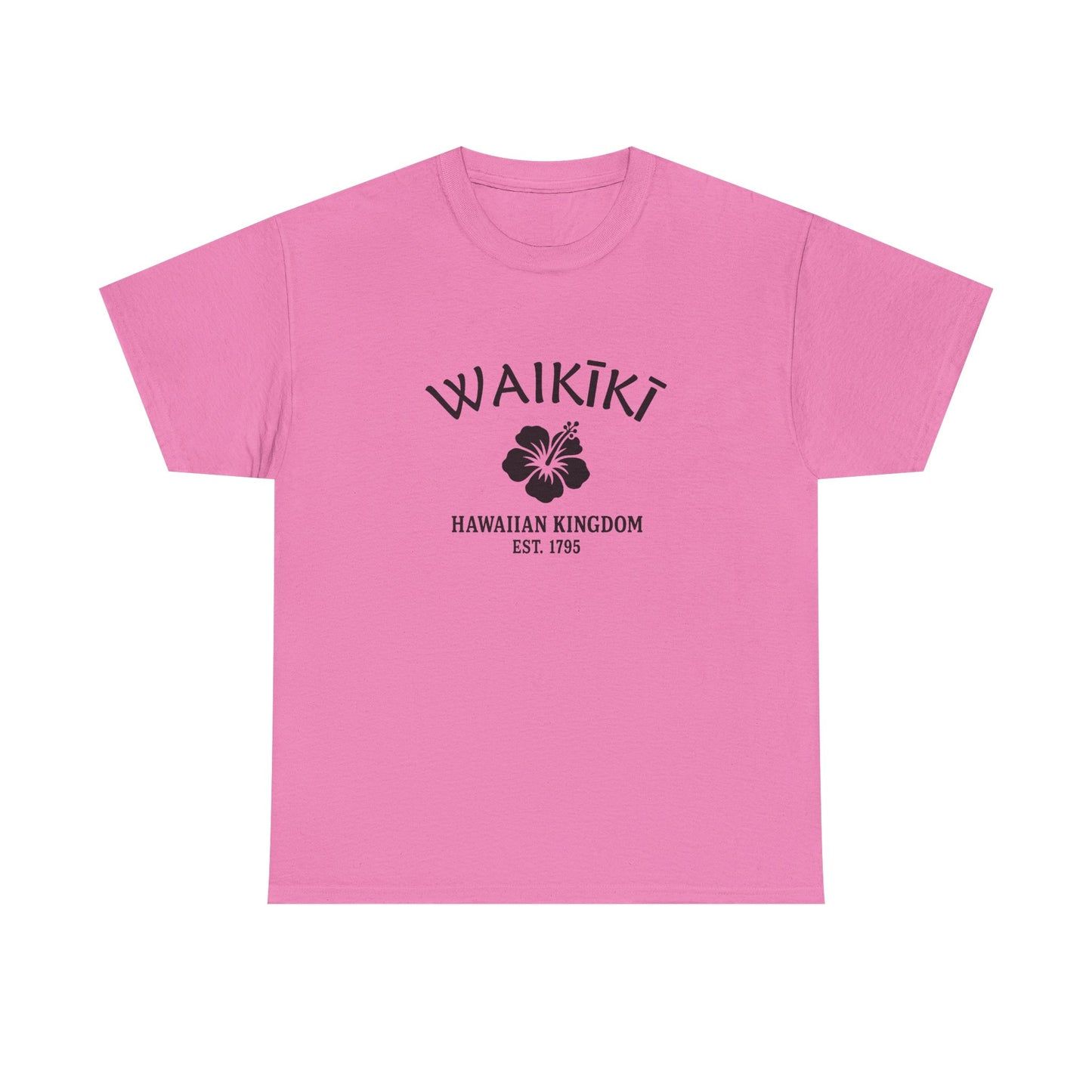
Our Waikīkī design wears the hibiscus, Hawaiʻi's flower, beneath the words “Hawaiian Kingdom · Est. 1795” — a date that belongs to Waikīkī more than to most, for this was the Kingdom's first capital in that founding year. Rendered in clean black and white, like an old travel decal or luggage label, it is a heritage mark — a nod to the islands' own story and to the deep Hawaiian identity of Waikīkī, the spouting waters. It is worn for the place and its people, not for any single chapter of its past.
That name tells you what this place once was. Waikīkī, “spouting water,” was named for the springs and streams that gushed from the Koʻolau valleys — Makiki, Mānoa, and Pālolo — and spread across a broad coastal plain. The old ahupuaʻa, or land division, of Waikīkī was vast, reaching from Kou, the future Honolulu, toward Maunalua at the island's east end. Where high-rises now stand was once some two thousand acres of marsh and wetland, fed by mountain water and framed, then as now, by the crater of Lēʻahi — Diamond Head — at the end of the beach.
Why People Visit Waikīkī
Waikīkī offers a whole world in two miles of sand: the birthplace of modern surfing, royal history beneath the hotels, Diamond Head at the end of the beach, and the easy warmth of Hawaiian hospitality. It is the most famous beach in the Pacific — and for the surfers, paddlers, and families who live and gather here, simply home.
