


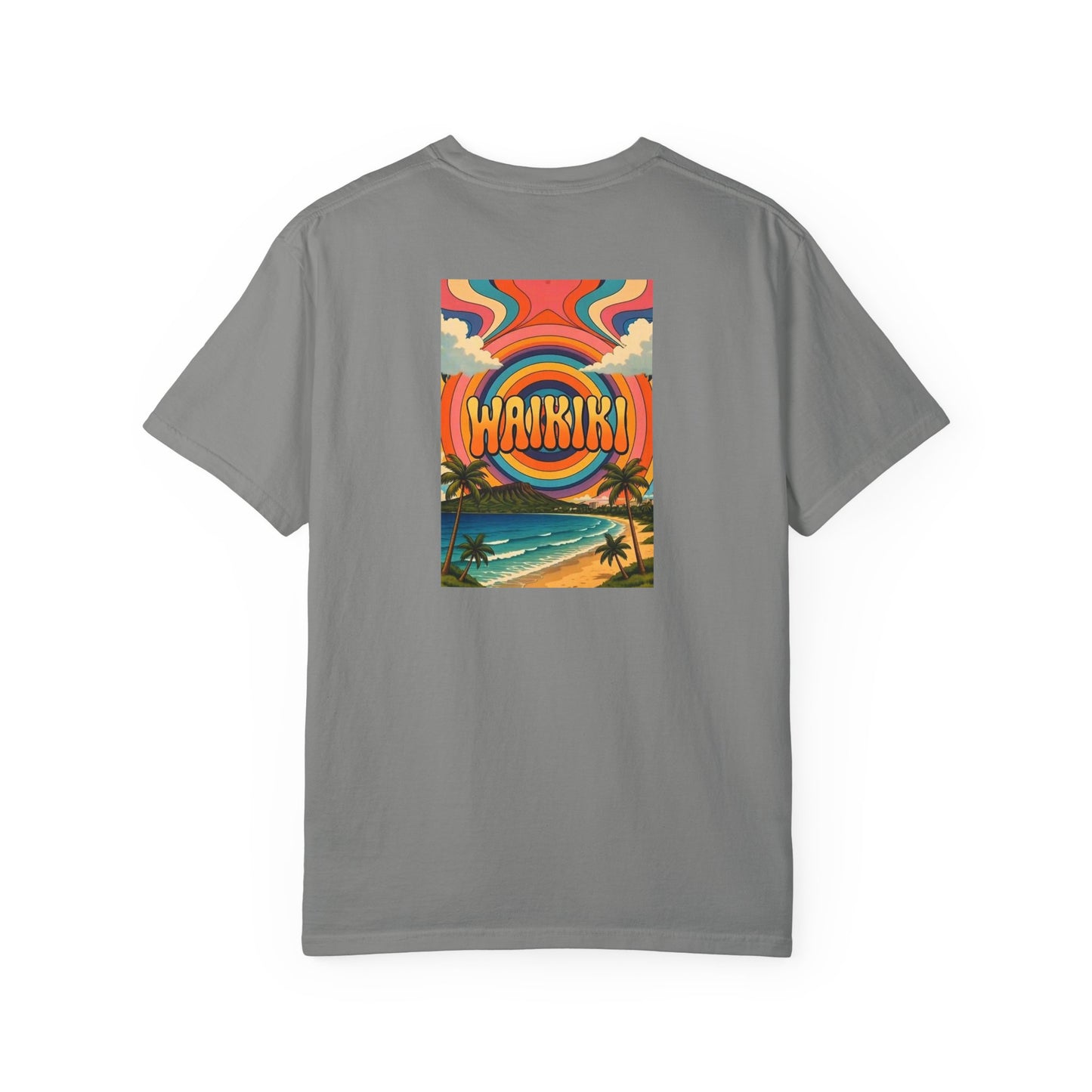
The resort era grew out of that royal ground. In the 1880s King Kalākaua cut the first real road to Waikīkī, opening it to recreation; by 1893 the little Sans Souci had become one of Hawaiʻi's first beach resorts, and Robert Louis Stevenson lingered there. The Moana Hotel — the “First Lady of Waikīkī” — opened in 1901, and in 1927 the Matson Line raised the Royal Hawaiian, the Pink Palace itself, on the Helumoa grove. Elegant ships carried mainland visitors to its doors, and Waikīkī began its second life as the most famous beach in the Pacific.
From the mid-1400s, Hawaiians turned that wetland into one of the most productive landscapes in the islands. They built loʻi kalo — irrigated taro terraces — and loko iʻa, walled fishponds, laced together by ʻauwai (irrigation channels), raising taro, fish, and seaweed in steady abundance. Waikīkī was a breadbasket and a center of power: high chiefs kept residences and heiau here, drawn by the food, the fresh water, and the surf. At Kālia, on the western shore, a family of fishers and watermen worked the ponds — and among their descendants would be a boy named Duke Kahanamoku.
Why People Visit Waikīkī
Waikīkī offers a whole world in two miles of sand: the birthplace of modern surfing, royal history beneath the hotels, Diamond Head at the end of the beach, and the easy warmth of Hawaiian hospitality. It is the most famous beach in the Pacific — and for the surfers, paddlers, and families who live and gather here, simply home.
