




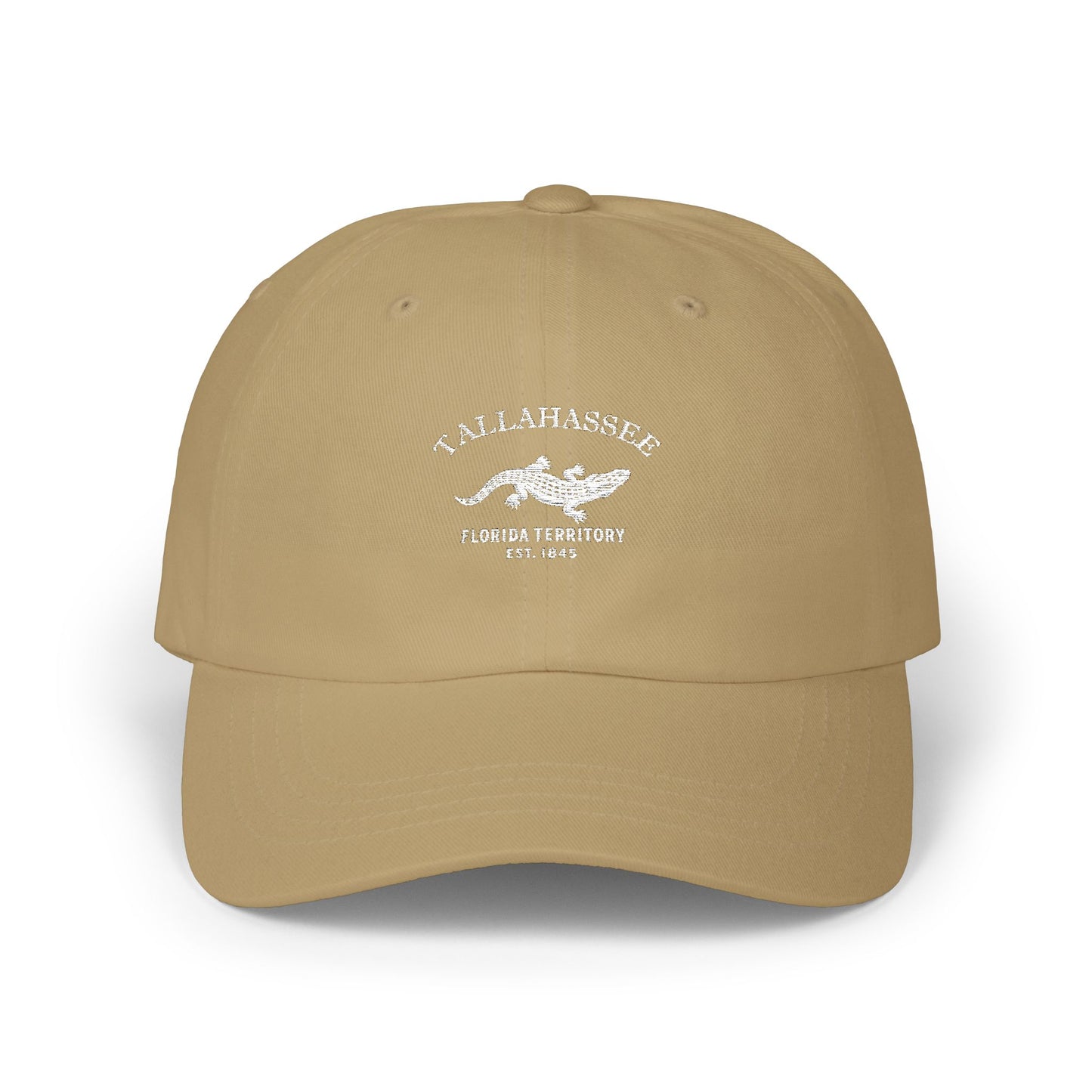



So Tallahassee gathers more history under its oaks than almost anywhere in Florida: an Apalachee old town, a Spanish mission rebuilt on its hill, a candy-striped capitol, and nine roads roofed in moss. Our Tallahassee designs gather that into wearable form. Wear the history. This is the capital under the canopy oaks.
Today Tallahassee is a green capital that runs on government and learning. The Legislature meets under the dome; two universities — Florida State and the historic Florida A&M — fill the city with students and shade their campuses with the same oaks. Around them are camellias and reflecting pools at Maclay Gardens, fountains and an amphitheater at Cascades Park, studios and murals at Railroad Square, the Museum of Florida History downtown, and, a short drive south, the vast clear bowl of Wakulla Springs. For a state capital, it stays remarkably unhurried and leafy.
Why People Visit Tallahassee
Tallahassee blends civic history with surprising green space. Visitors mix the capitol buildings and downtown museums with canopy-road drives, gardens, and easy urban trails. It is scholarly, calm, and quietly scenic, with year-round appeal in its parks, paths, and public spaces. This is Old Florida and the modern capital at once — history and everyday culture sitting side by side under the oaks in a welcoming way.
