


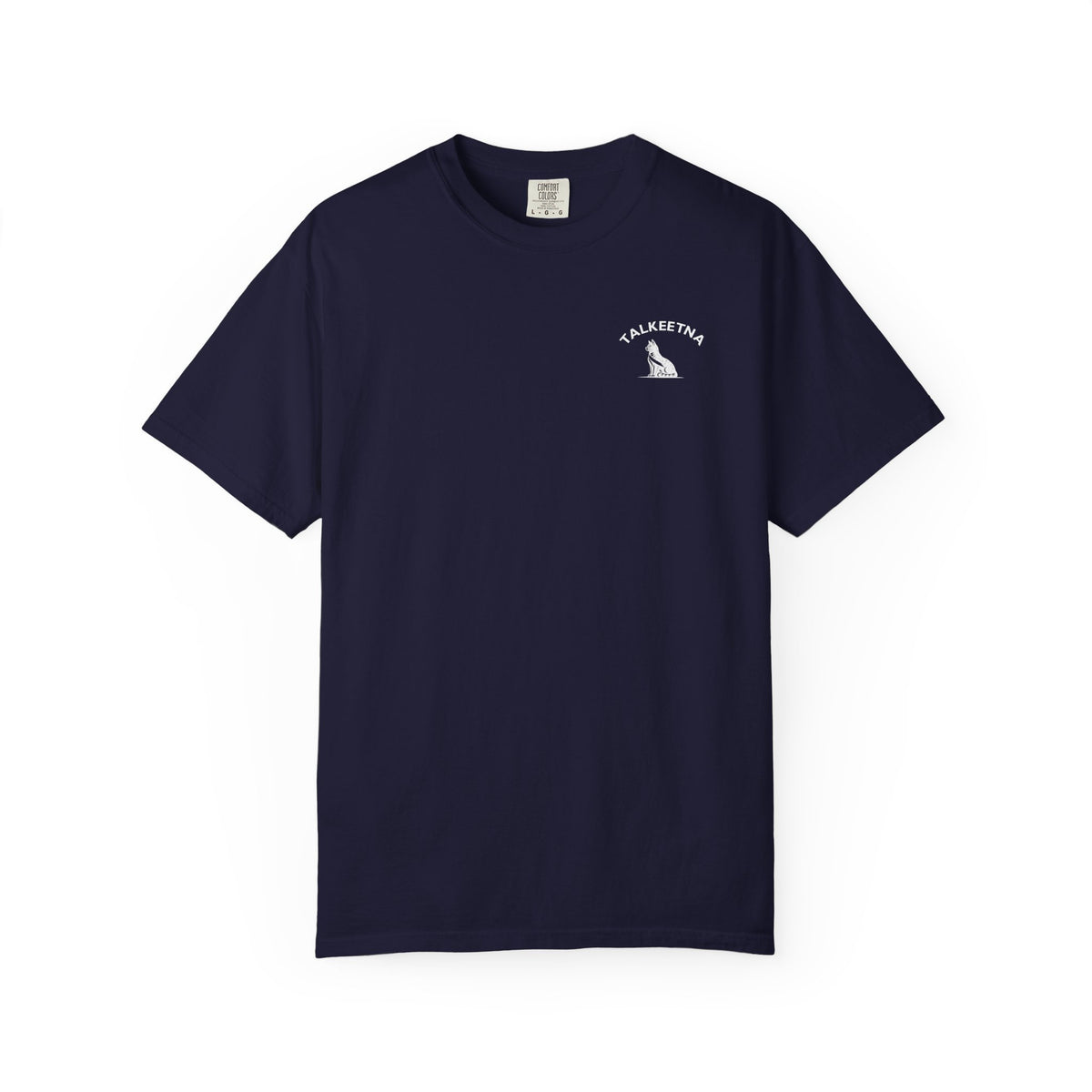
Our Talkeetna retro logo uses Alaska's distressed bear motif, representing toughness, wilderness, and endurance. The bear reflects both Indigenous reverence and frontier survival, while "1959" ties the design to Alaska's statehood. Its black-and-white styling is rugged and retro, resembling crate stamps or outfitter branding. The motif bridges Talkeetna's dual identity: Native heritage and frontier railroad town. On merchandise, it conveys authenticity and pride, retro vintage in tone. The bear emblem honors Talkeetna's layered story, making it a vintage symbol of Alaska resilience. It reflects survival, community, and heritage, capturing Alaska's story of continuity and pride.
The railroad made it a town: in 1915 the Alaska Railroad’s builders chose Talkeetna as a district headquarters, and by 1916 there was a post office, a sawmill, and even a cigar shop on the new Main Street. In 1919 the surveyors auctioned eighty lots, and the town that stands today took shape — a downtown of log buildings now listed, in its entirety, on the National Register of Historic Places: the 1917 roadhouse still serving breakfast at communal tables, the 1921 general store, the 1923 frontier inn, and the 1936–37 territorial schoolhouse that houses the town museum. Trains still stop; upriver, the flag-stop line still picks up anyone who waves.
Why People Visit Talkeetna Alaska
Talkeetna offers the three-rivers confluence the Dena'ina have gathered at for centuries, the National Register downtown with the Roadhouse and Nagley's and the Fairview Inn intact and operating, the Walter Harper Ranger Station that every Denali climber walks through, the long view of the highest mountain in North America rising at the head of the Susitna Valley, the Alaska Railroad Denali Star at the depot daily, and the small-plane glacier-landing tradition that opened the mountain to the world. It is a small town at the end of a fourteen-mile spur road, and almost every climber on Denali has stood on its one main street first. Below Denali since 1896.
