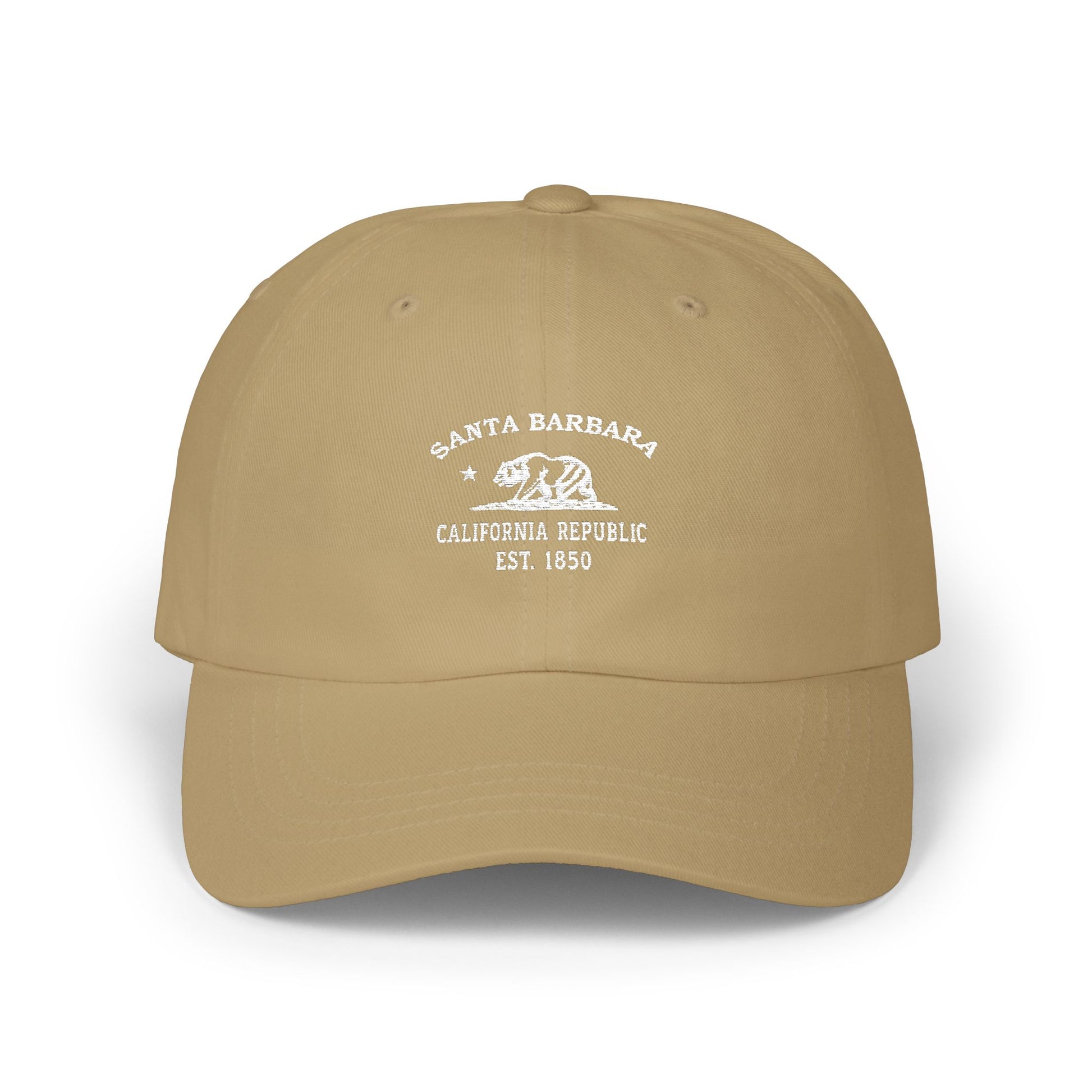
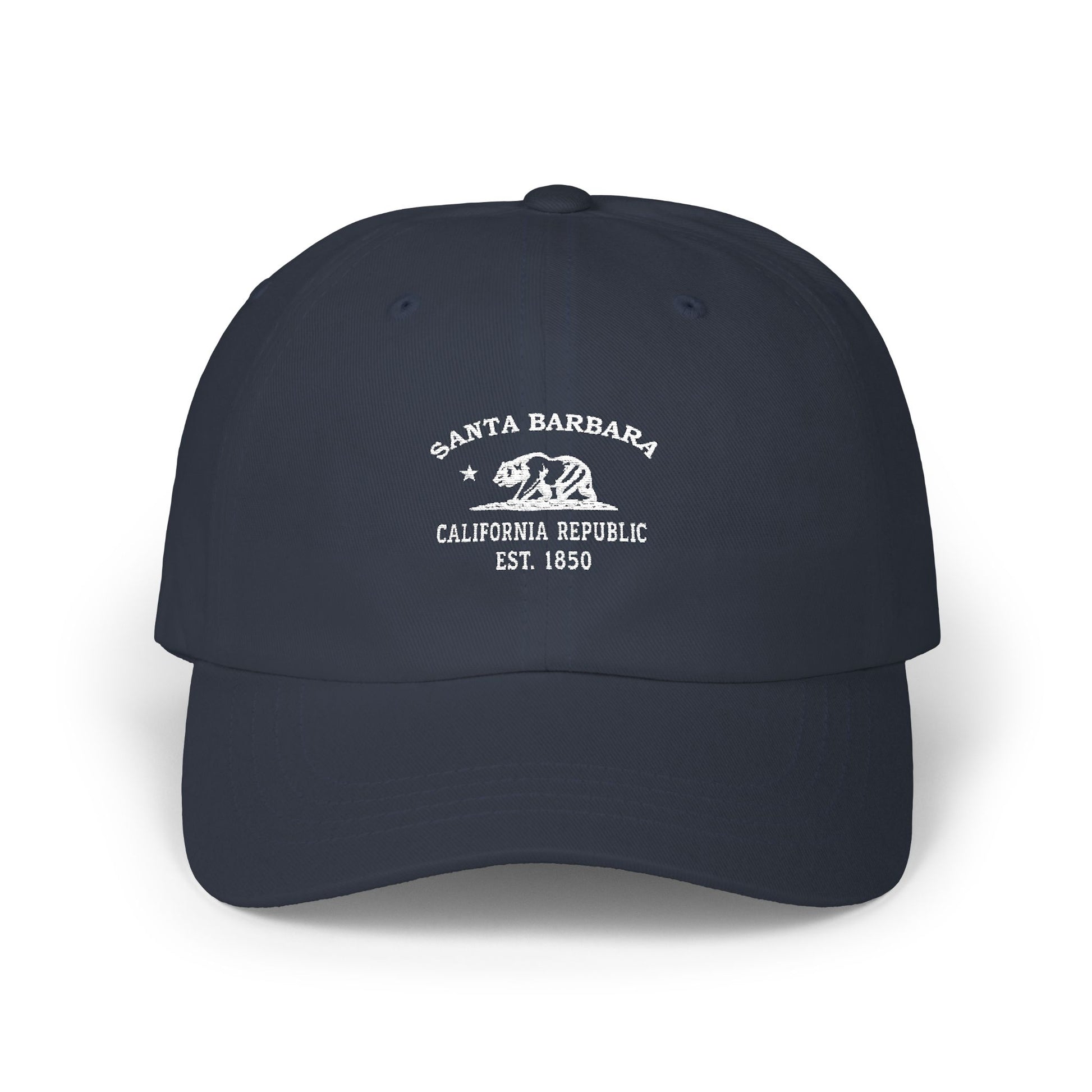
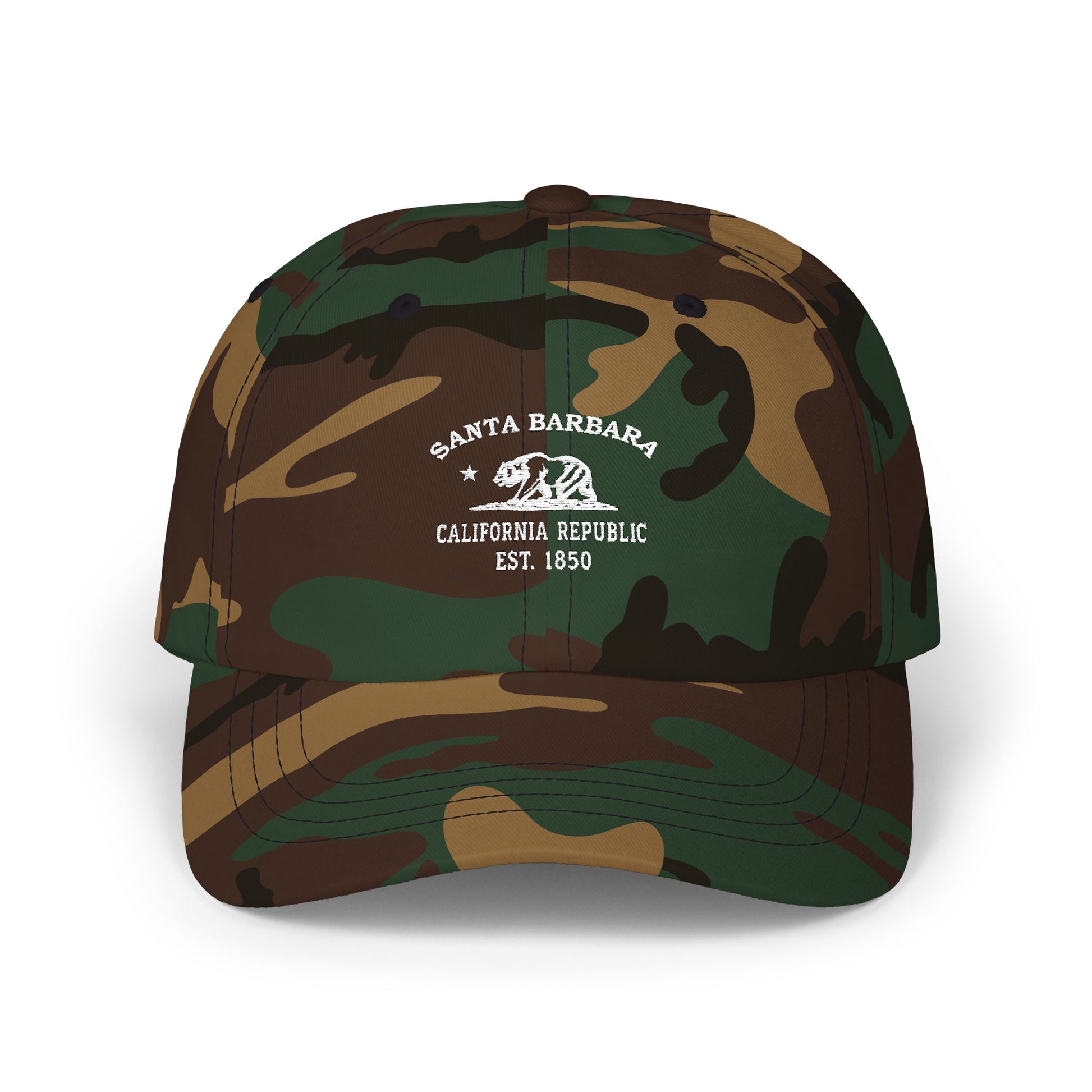
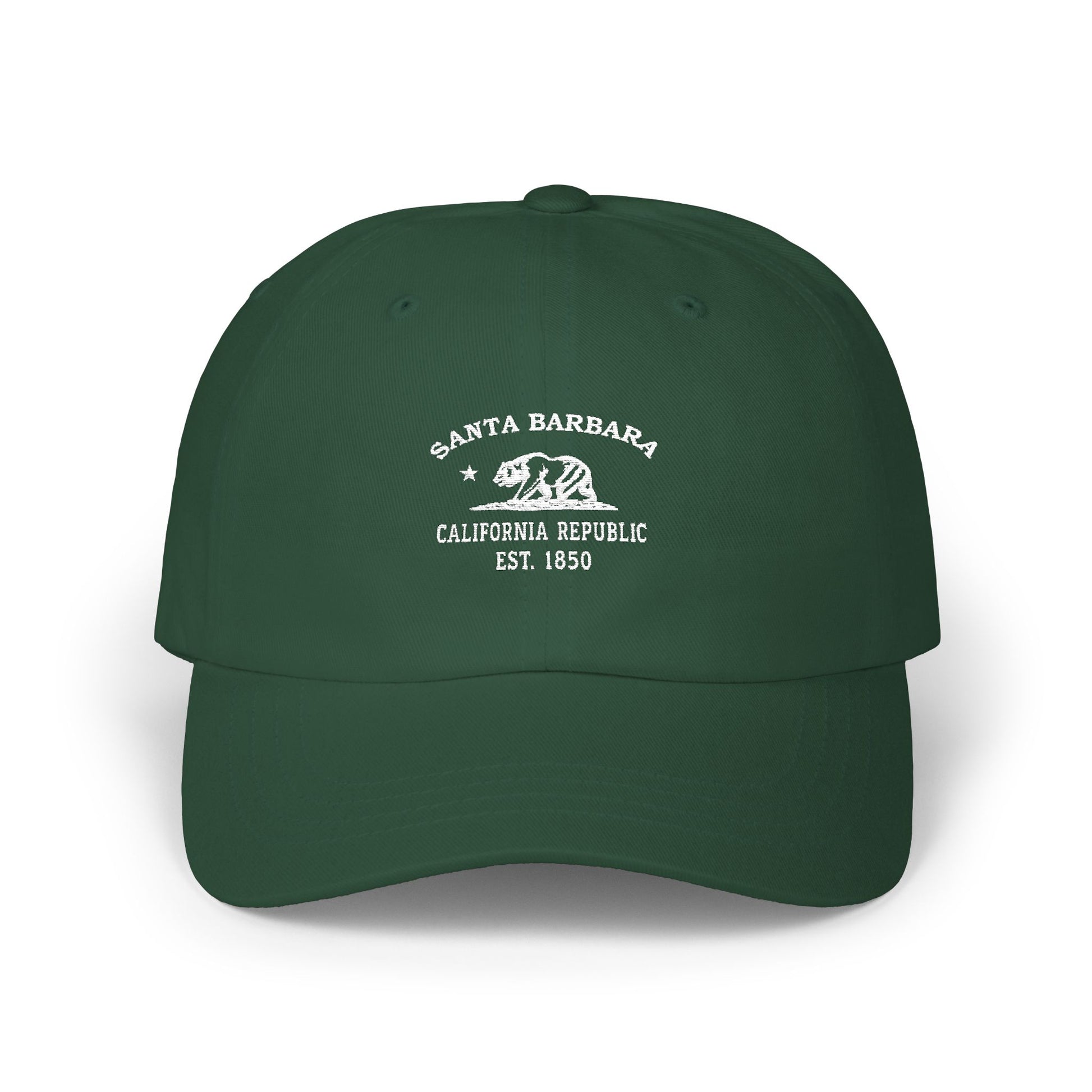
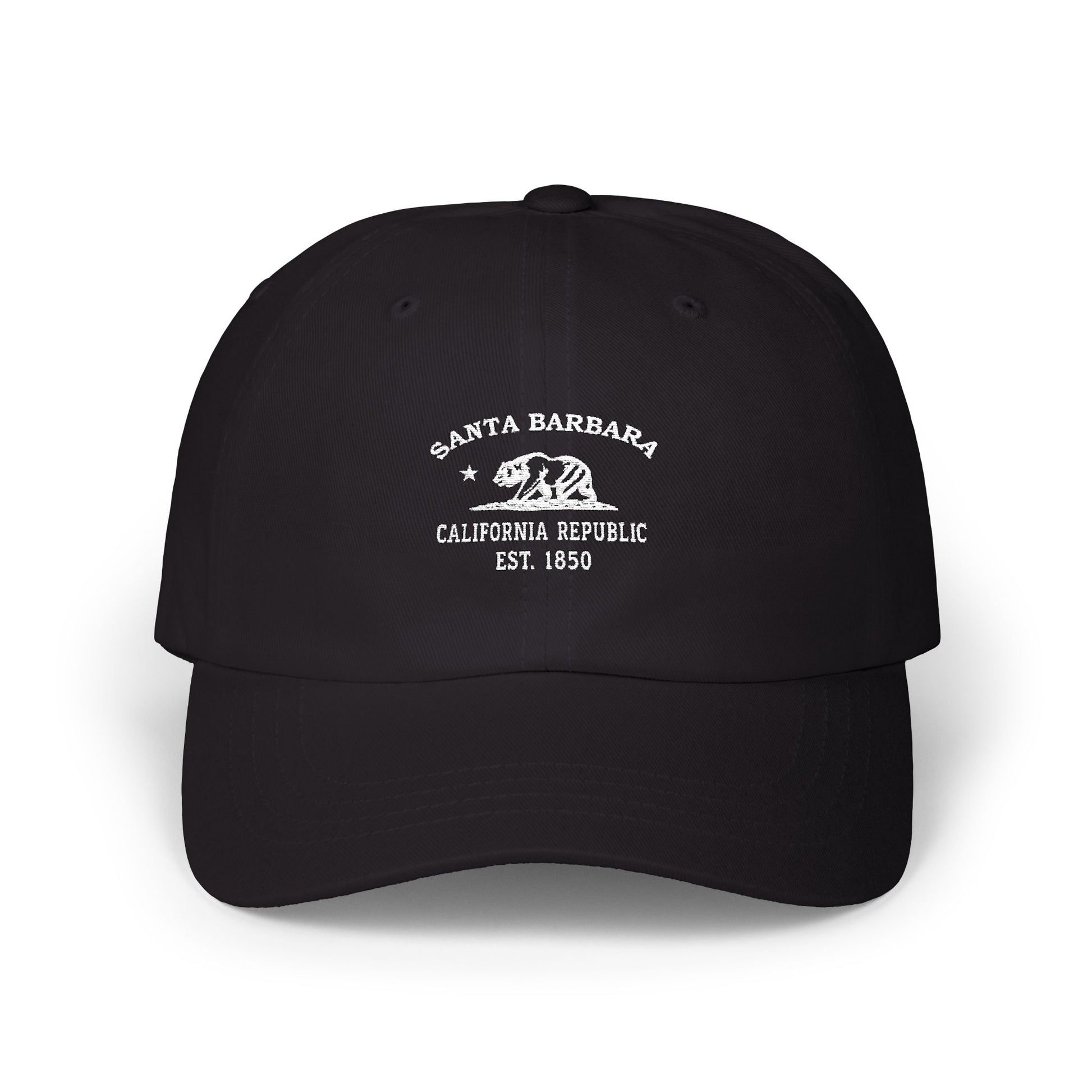
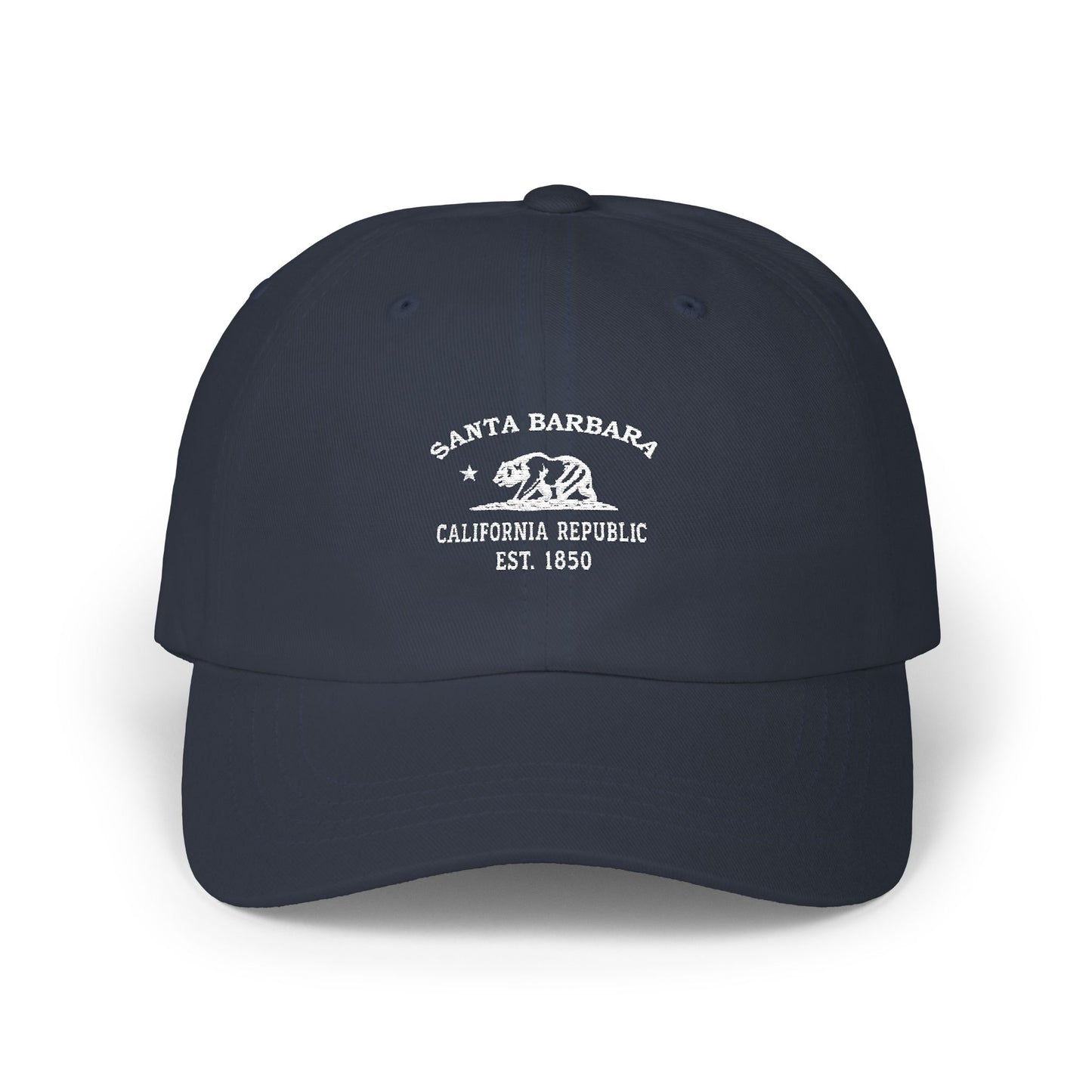
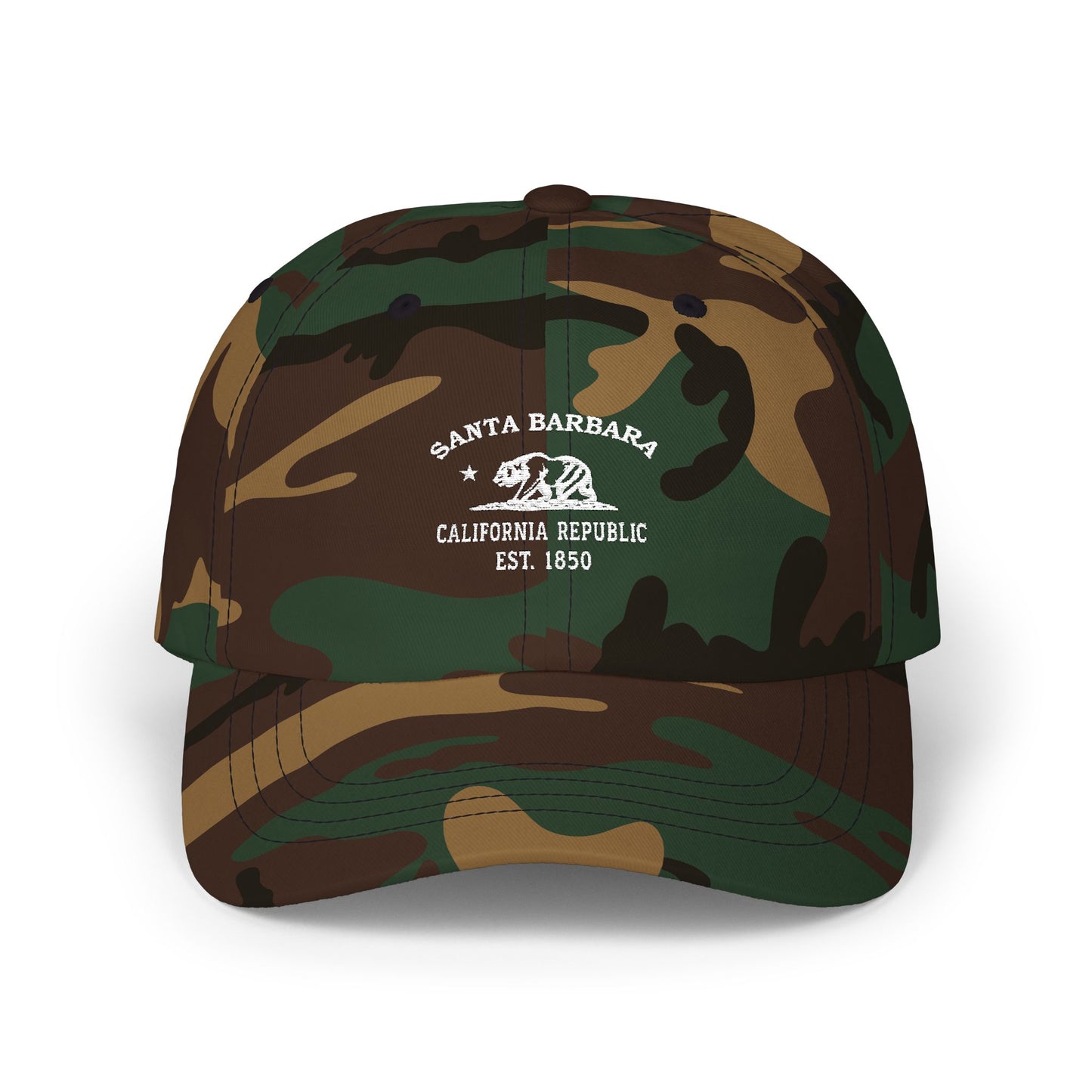
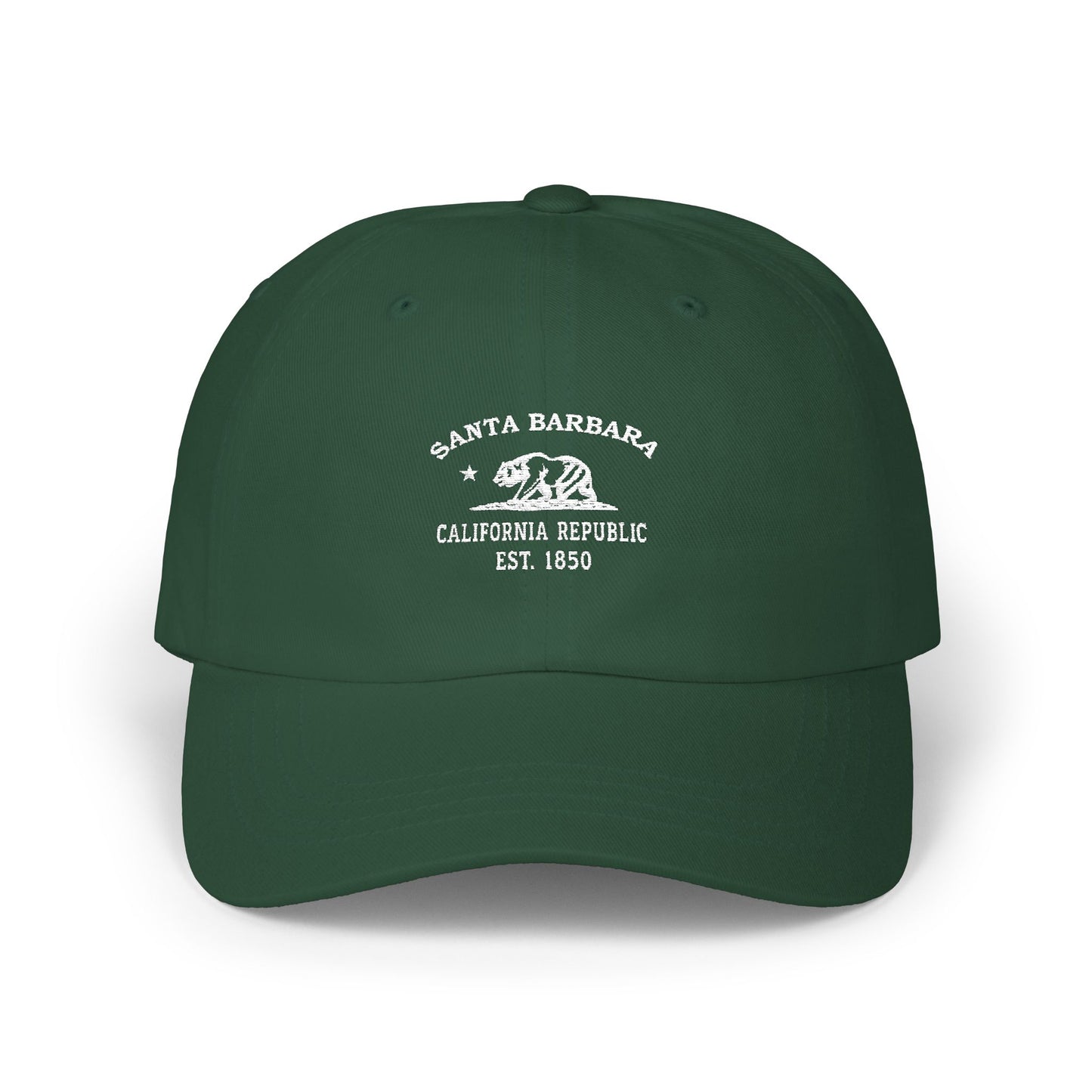
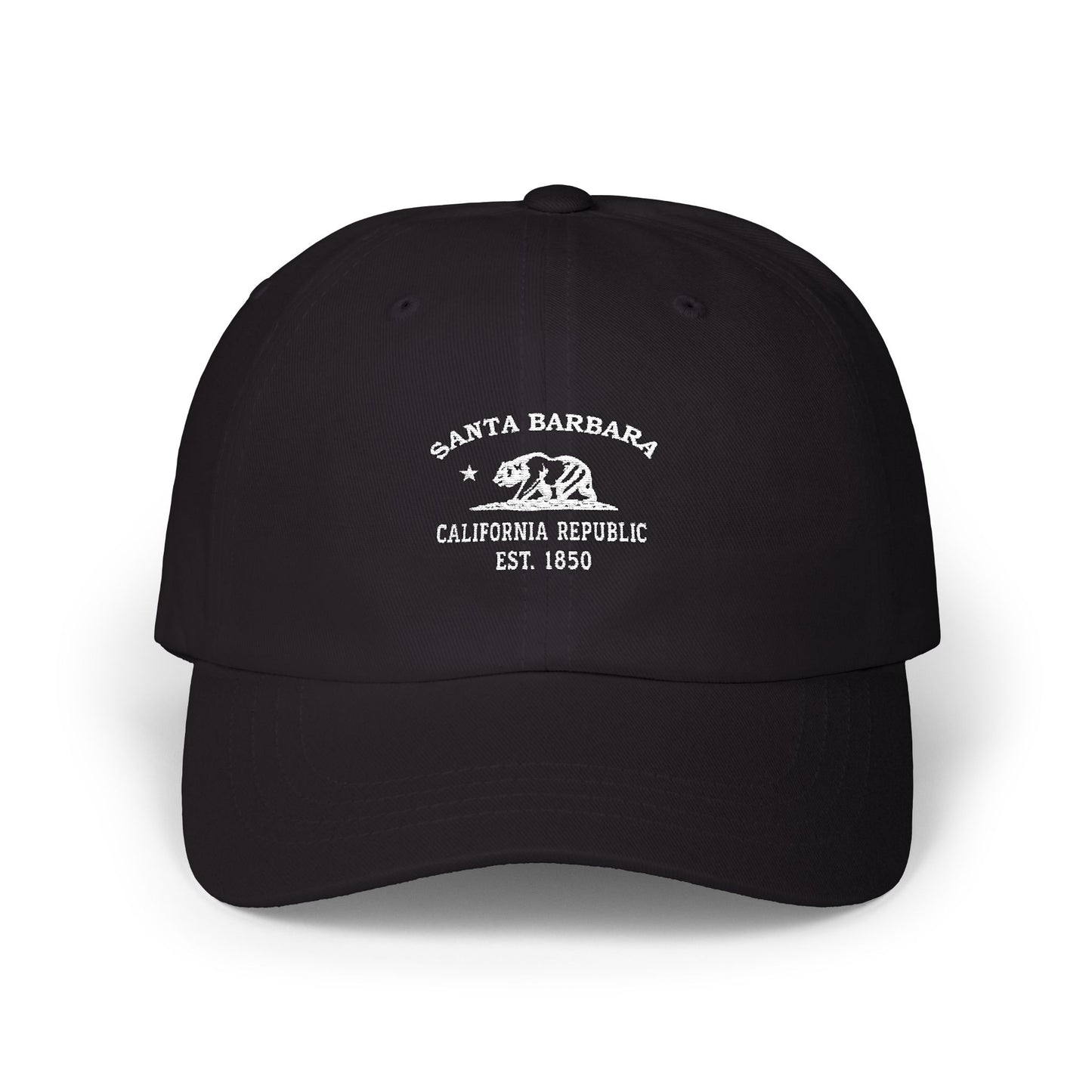
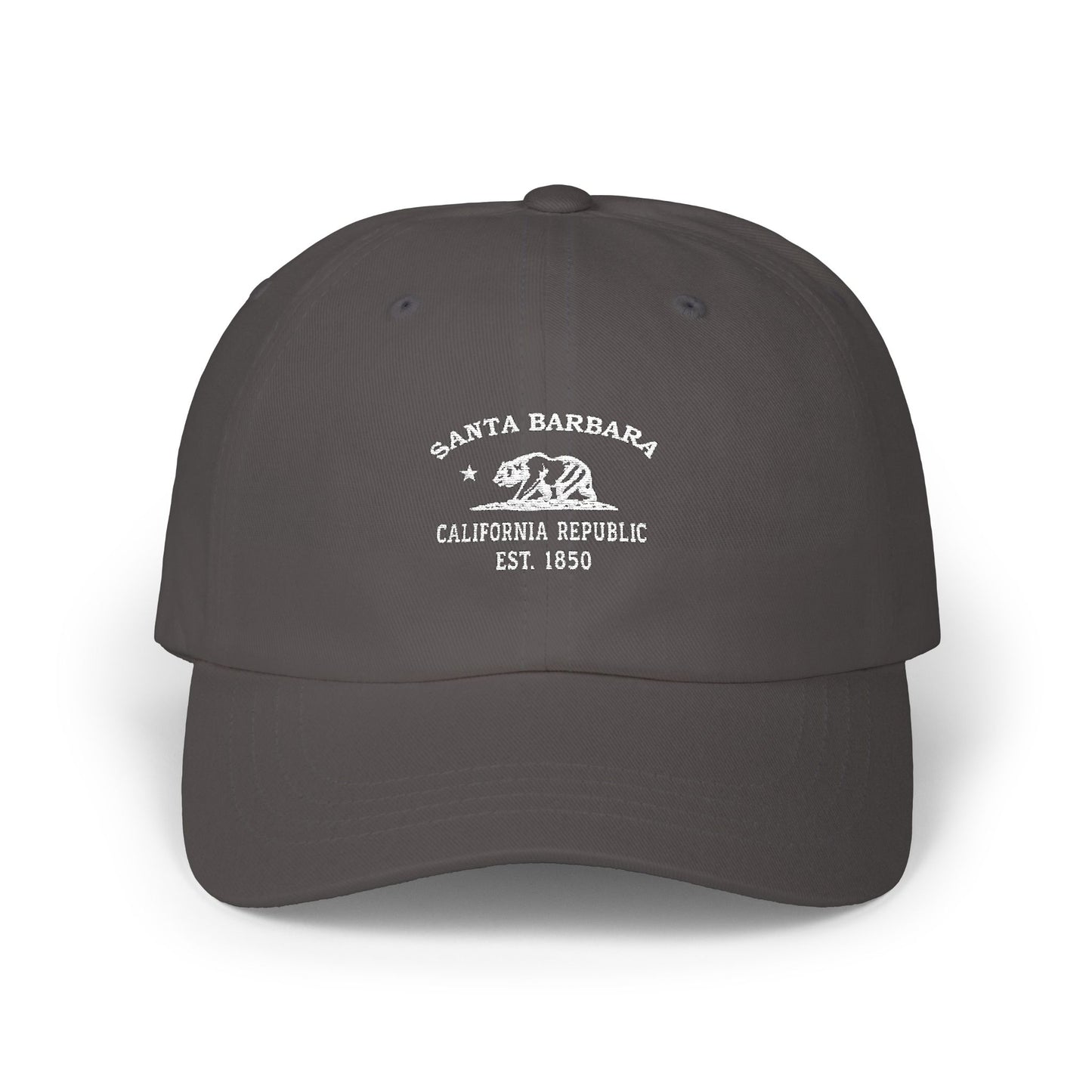
Our Santa Barbara retro logo uses California's bear and star motif, the brand-wide California emblem of every Merlin Classics CA town, symbolic of state pride and resilience. The bear embodies strength, independence, and wilderness heritage, while the star recalls the Bear Flag and California Republic spirit. The "1850" inscription ties the design to California statehood — the brand-pattern anchor across our California towns, regardless of each town's specific founding date. Black-and-white styling resembles WPA travel posters, citrus crate labels, or frontier signage, retro and practical. The motif bridges Santa Barbara's layered story: Chumash and Spanish roots, Mexican rancho era, American resilience, and the legislated post-1925 architectural identity. On merchandise, it communicates authenticity and endurance, retro vintage in tone, perfectly suited for honoring this American Riviera city.
In the nineteenth century, Santa Barbara grew as a ranching and trading hub. Following statehood in 1850, American settlers expanded vineyards, citrus groves, and commerce. Stearns Wharf was driven out into the harbor in 1872 and has run continuously since. The June 29, 1925 earthquake devastated downtown, but the rebuilding mandate brought Spanish Colonial Revival architecture, still iconic today. The 1929 County Courthouse rose from that rulebook. The 1950s and 1960s saw suburban expansion, tourism growth, and educational institutions flourish. Highways linked Santa Barbara more closely to Los Angeles, while beach culture attracted visitors. This timeline reflects resilience: from Chumash roots and mission influence to the legislated post-1925 architectural identity and mid-century tourist economy. Santa Barbara evolved while honoring heritage, balancing cultural pride with modern growth.
Why People Visit Santa Barbara
Santa Barbara offers a south-facing Pacific coast, a 1786 mission, a 1782 presidio, a 1929 courthouse, a 1922 Spanish courtyard, a 1872 wharf, and an entire downtown legislated into matching whitewashed stucco and red tile a hundred years ago. Visitors come for the Queen of the Missions, the courthouse tower view, the wharf at sunset, the four miles of beach, the August Fiesta, and the simple Mediterranean pleasure of a city where the rulebook for what a block should look like was written down and is still followed. It is the American Riviera, and the architecture earns the name.
