Skip to product information
1 of 7

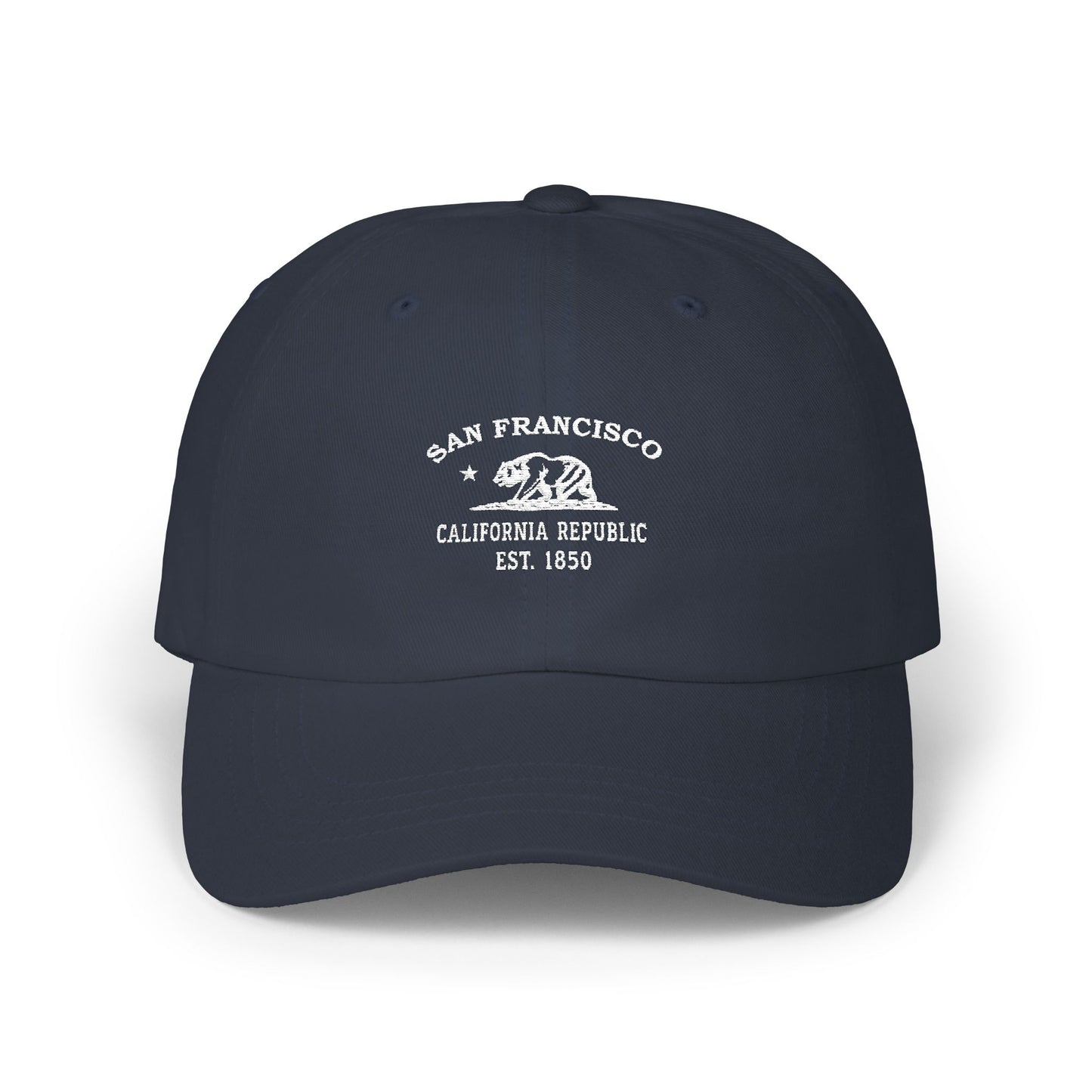
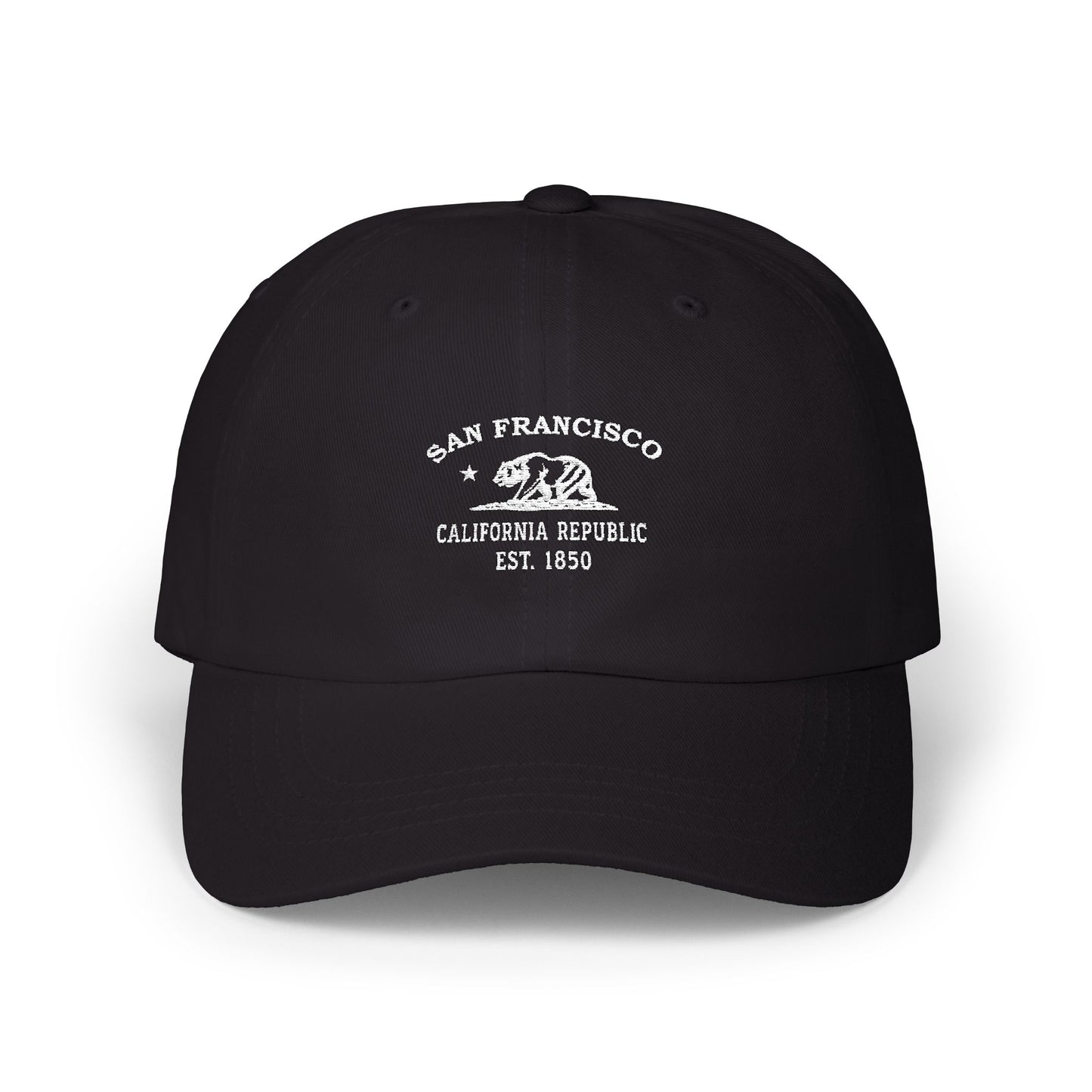
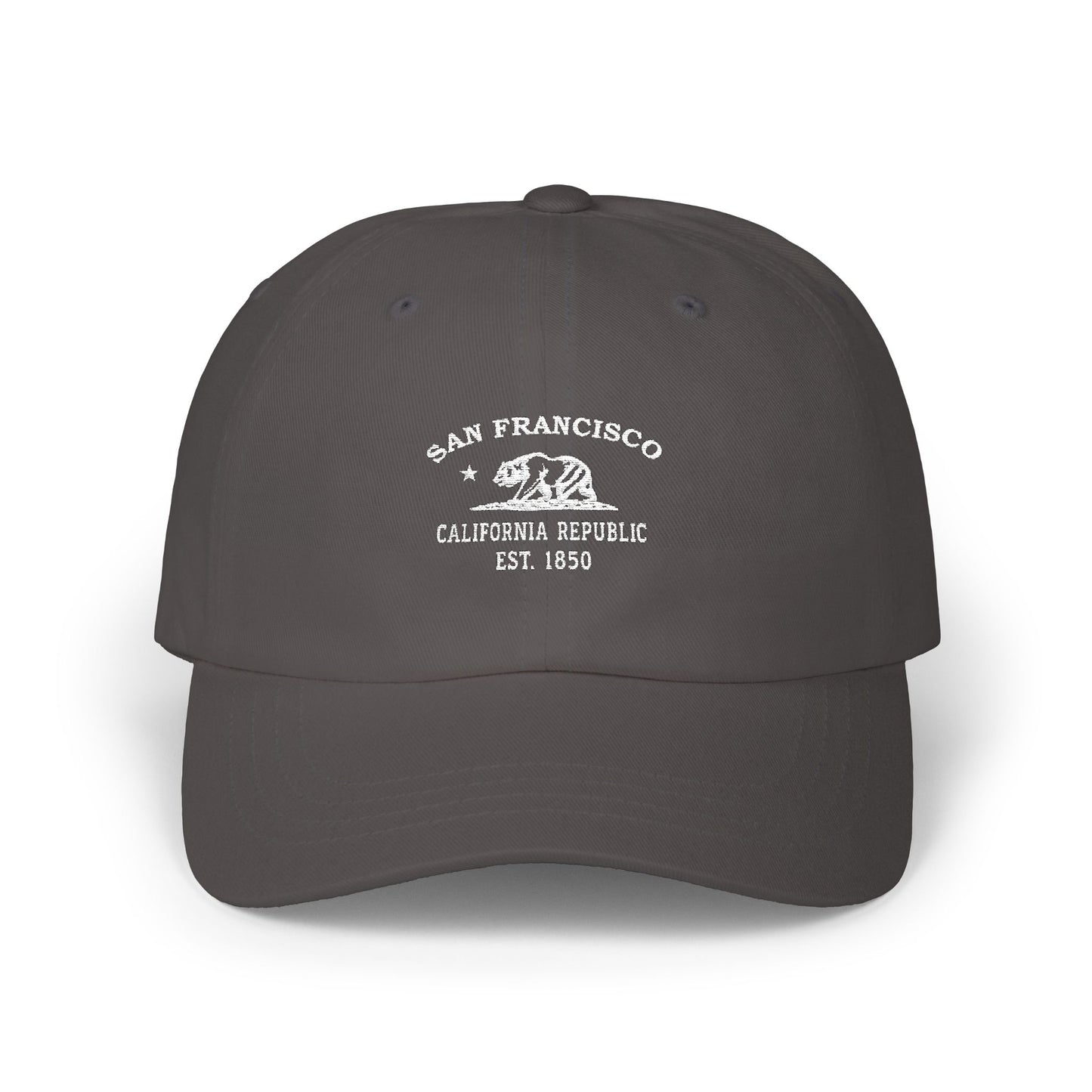
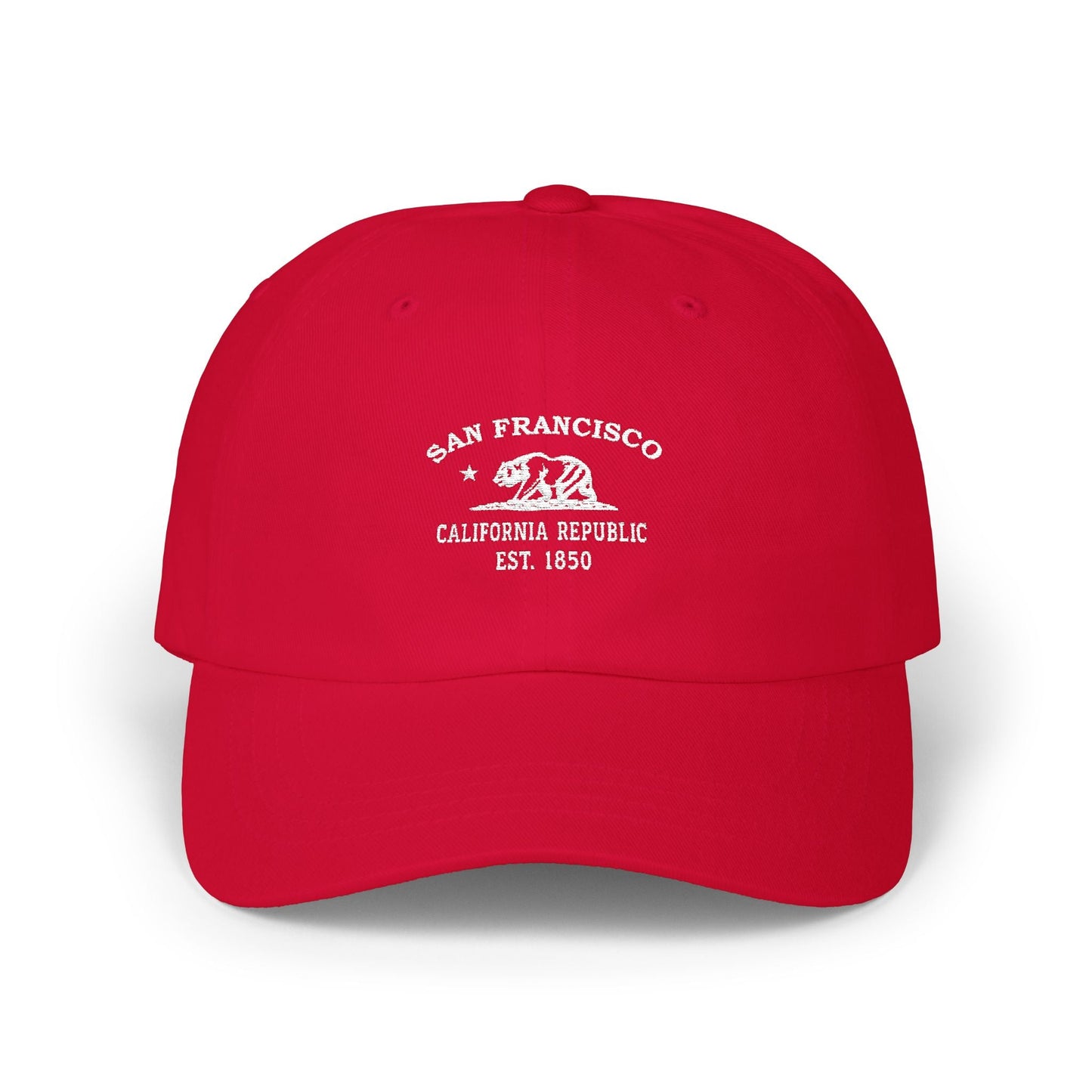
San Francisco California Vintage Retro Embroidered Cotton Cap - White Logo

San Francisco California Vintage Retro Embroidered Cotton Cap - White Logo

Regular price $32.00 USD
Regular price Sale price $32.00 USD
Sale
Shipping calculated at checkout.
Color
Size
Quantity
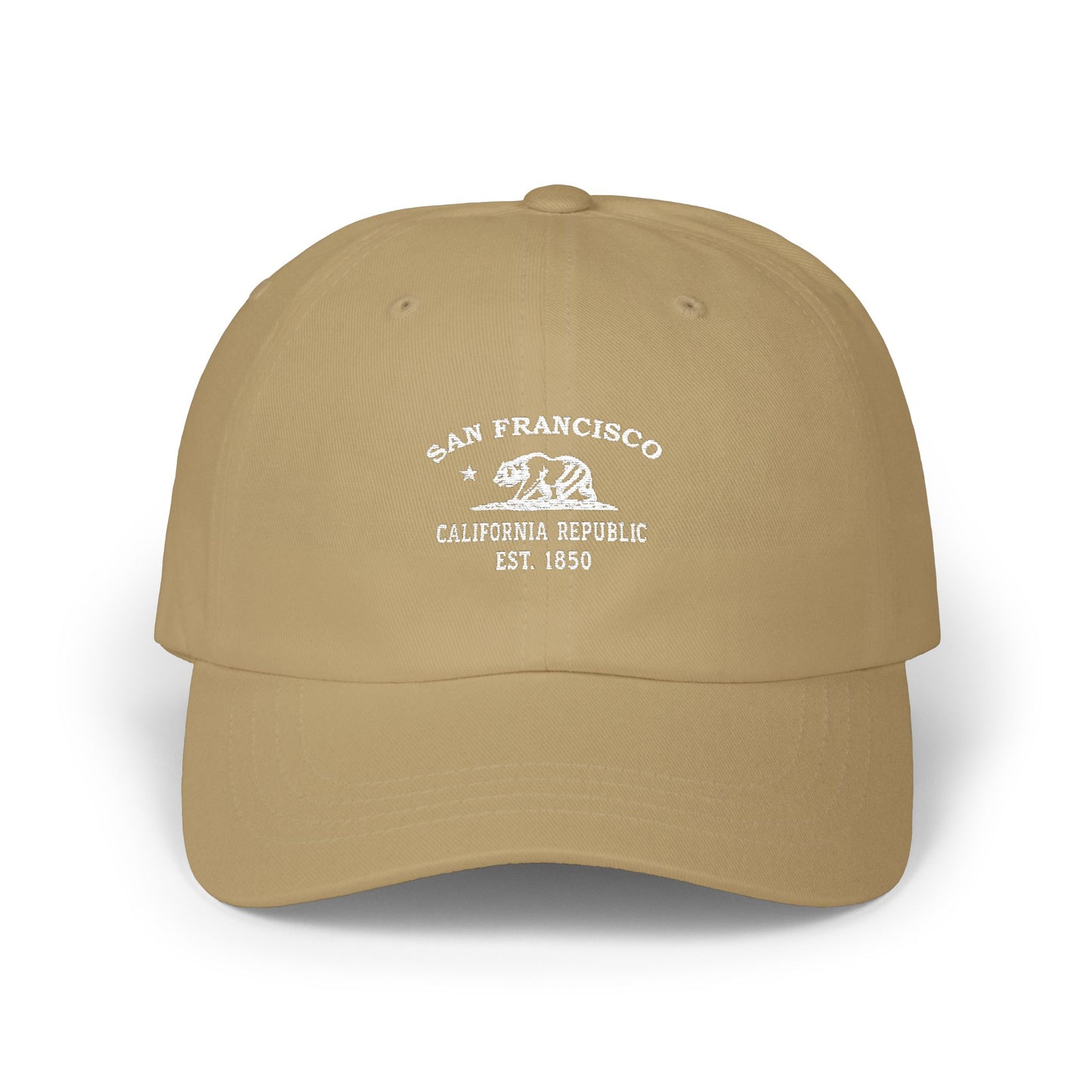
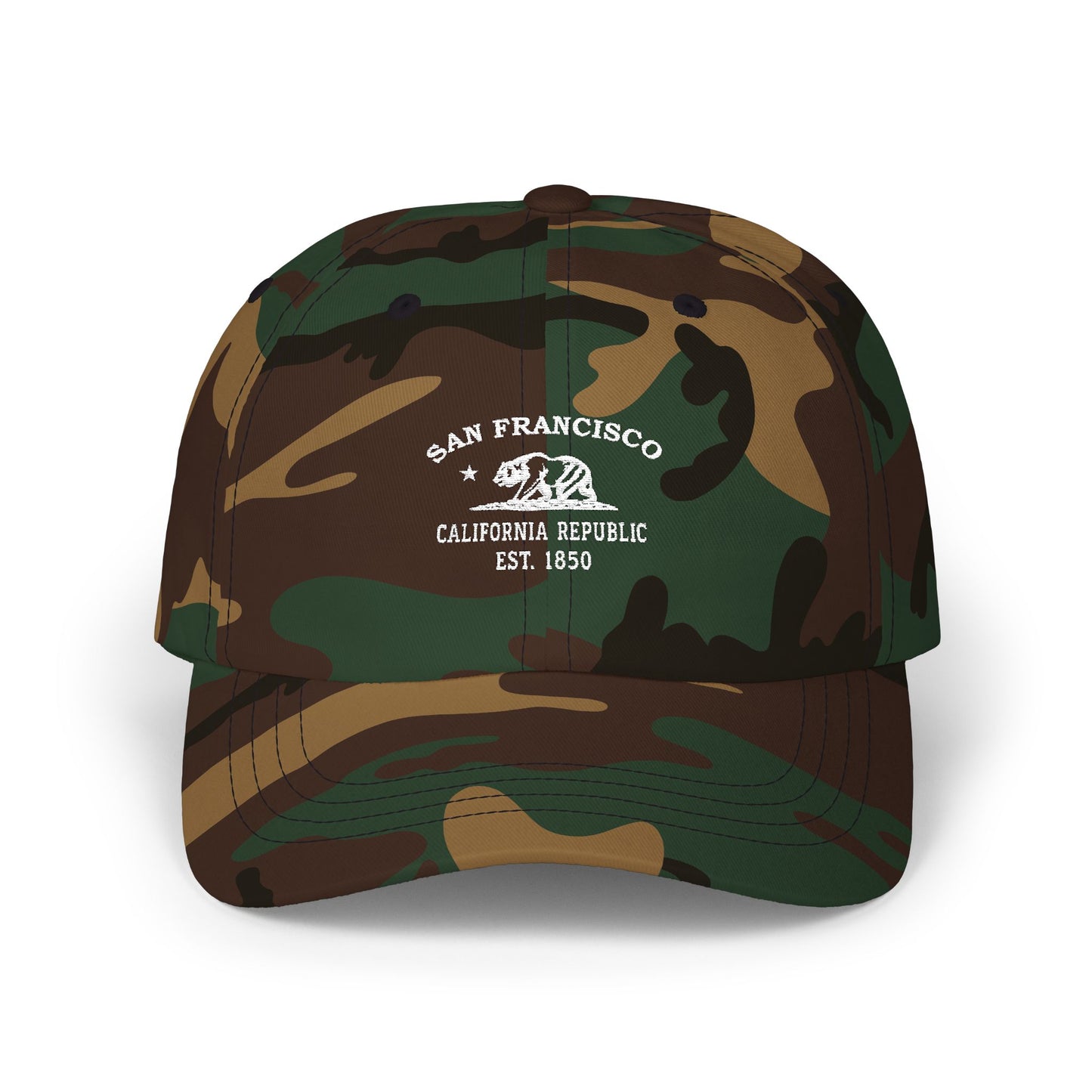
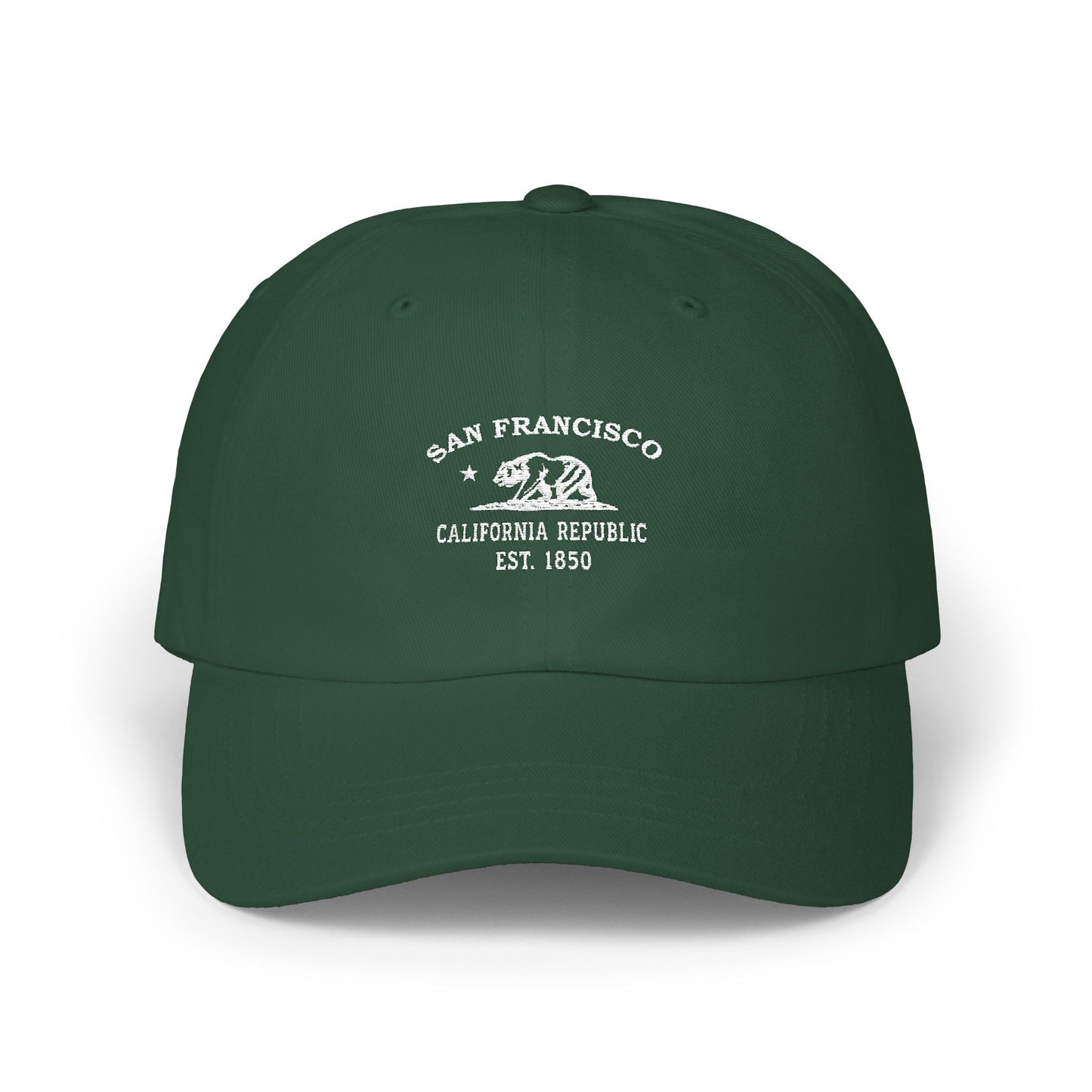
Unisex embroidered dad cap with an unstructured 6-panel, low-profile fit and a Permacurv visor. Made from breathable cotton with a self-fabric hideaway strap and antique-brass buckle, plus a matching undervisor and four-row visor stitching for durability. All colors are 100% cotton; the camo variation is 65% polyester / 35% cotton. Classic embroidered finish — durable and vintage-inspired. Because embroidery uses thread (not ink), slight differences from the digital product image are normal and part of the process. Full details explained in our Embroidery footer.

View full details

San Francisco is the city the Gold Rush built and the 1906 earthquake rebuilt. The Ramaytush Ohlone have been the original peoples of this seven-by-seven-mile peninsula for at least ten thousand years. On March 28, 1776, Juan Bautista de Anza planted a cross at the tip of the peninsula above what is now Fort Point and selected the sites of a presidio and a mission; on June 29, 1776 — five days before the Declaration of Independence was signed across the continent — Father Francisco Palóu and Father Pedro Cambón celebrated the first mass at Mission San Francisco de Asís, and on October 9 they formally dedicated the mission. Lieutenant José Joaquín Moraga founded the Presidio of San Francisco on September 17, 1776. The adobe chapel completed in 1791, known as Mission Dolores for the nearby Arroyo de los Dolores, still stands and is the oldest intact building in the city. A small Mexican-era village called Yerba Buena grew up along the cove. The U.S. Navy took it without a shot in July 1846, and on January 30, 1847, Lieutenant Washington Bartlett renamed the place San Francisco. A year later, on January 24, 1848, James Marshall found gold at Sutter's Mill on the American River; on May 12 of that year, a Mormon merchant named Sam Brannan walked San Francisco's streets with a vial of gold flakes shouting Gold! Gold! Gold from the American River! Brannan had already bought every pick, shovel, and pan he could find. By the end of 1848 the town of fewer than a thousand was a city of twenty-five thousand. San Francisco incorporated on April 15, 1850, the same year California became the thirty-first state. At four in the morning on August 2, 1873, the Scottish-born inventor Andrew Smith Hallidie took the controls of the Clay Street Hill Railroad and ran the first cable car down the Nob Hill grade — the world's first successful cable railway, and today, with the Powell-Hyde, Powell-Mason, and California Street lines, the only moving National Historic Landmark in the United States. The Painted Ladies of Alamo Square — the Queen Anne row at 710-720 Steiner Street, built between 1892 and 1896 by the developer Matthew Kavanaugh — were a generation old when, at five-twelve in the morning on April 18, 1906, a magnitude-7.9 earthquake on the San Andreas Fault ran for forty-five seconds and toppled the city. The fire that followed burned for four days. Eighty percent of San Francisco was destroyed. The city rebuilt fast enough to throw a world's fair in 1915 — the Panama-Pacific International Exposition on the Marina — and Bernard Maybeck's Palace of Fine Arts still stands from it. Coit Tower went up on Telegraph Hill in 1933. Alcatraz Island was the federal penitentiary from 1934 to 1963. Joseph B. Strauss broke ground for the Golden Gate Bridge on January 5, 1933, and at six in the morning on May 27, 1937, two hundred thousand people walked across the new four-thousand-two-hundred-foot Art Deco span — Irving Morrow's International Orange against the fog and the strait. Lombard Street still bends eight times down Russian Hill. The Painted Ladies are still on Steiner. The fog still pours through the Gate every evening from May to September. On the Bay since 1776.

San Francisco's lore is the lore of every place built on a fault line: the dreamers and the schemers, the fog and the foghorns, the ships in Yerba Buena Cove with their masts sticking up out of the mud where they had been pulled ashore and built around. The Italians who settled North Beach. The Chinese who built Chinatown — the oldest in North America, organized in 1848 and rebuilt after the quake. The Danes who opened the Cable Oyster Depot in Polk Gulch in the 1890s and rebuilt it as Swan Oyster Depot at 1517 Polk Street in 1912, where the same Italian marble counter and the same eighteen wooden stools are still in place after a century, now run by the third generation of the Sancimino family who bought it in 1946. The Beats who read poetry at City Lights Bookstore on Columbus Avenue from 1953 forward. The fog horns of Lime Point and Mile Rocks. The smell of sourdough on the Embarcadero. The clang of a cable car bell rising up Powell Street at six in the morning.

Why People Visit San Francisco California

San Francisco offers the Golden Gate Bridge in International Orange against the strait, the 1776 Mission Dolores still standing as the oldest building in the city, the only moving National Historic Landmark in the country still running uphill on Andrew Hallidie's 1873 system, the Painted Ladies of Alamo Square that survived 1906, the 1915 Palace of Fine Arts, Coit Tower on Telegraph Hill, Lombard Street's eight switchbacks down Russian Hill, Alcatraz federal-prison rock in the bay, Chinatown — the oldest in North America — rebuilt after the fire, the 1898 Ferry Building on the Embarcadero, the 1912 marble counter at Swan Oyster Depot on Polk Street, forty-nine hills, the western beach at Ocean Beach, and the fog that pours through the Gate every evening from May to September. It is a peninsula city that came back from a magnitude-7.9 earthquake and built the most photographed bridge in the world inside thirty years. On the Bay since 1776.

San Francisco California Merlin Classics retro vintage logo featuring California Bear and star motif with 1850 statehood-and-incorporation date

Wear Local. Feed Local. Stay Classic.

Product FAQs

How does your sizing work?

Because items are made to order, we can’t accept returns for sizing or color choices. We do accept returns for defects, misprints, or shipping damage. Please review the detailed photos and descriptions before purchasing. Women’s fitted tees run small; if you prefer a looser fit, consider sizing up.

How do I send gifts?

All items ship without prices and include a simple packing slip for easy gifting. Enter the recipient’s shipping address and your billing address at checkout. Use your contact info to receive tracking updates. Orders typically arrive within 6–11 business days—please allow extra time for time-sensitive gifts.

How do I care for my item?

For apparel: wash cold, inside-out, with like colors; avoid bleach and high heat; tumble dry low or hang dry. For embroidery, iron inside-out to protect the stitching. See specific care instructions in product descriptions and also follow general best practices in caring for your items for long term enjoyment.

How are items made and when will they arrive?

We make each item on demand using premium blanks, embroidery, and soft-hand prints. Production usually takes 2–5 business days (excluding weekends and holidays). You’ll receive tracking once shipped. We currently ship to U.S. addresses via USPS, UPS, or FedEx. Most orders arrive within 6–11 business days.

What’s the return/exchange policy?

We accept returns for defects, misprints, or damage on arrival. Report issues within 14 days with photos and your order number, and we’ll replace or refund. Size or color changes aren’t supported after purchase, so please consult size charts before ordering if you are at all unsure.

Who are we?

Merlin Classics is a volunteer-run, AI-assisted apparel project celebrating timeless local style. Every item is made to order, and profits (revenue minus external product/marketing cost) support hunger-relief programs in the communities our collections spotlight. Classic looks, real local impact—every purchase helps.