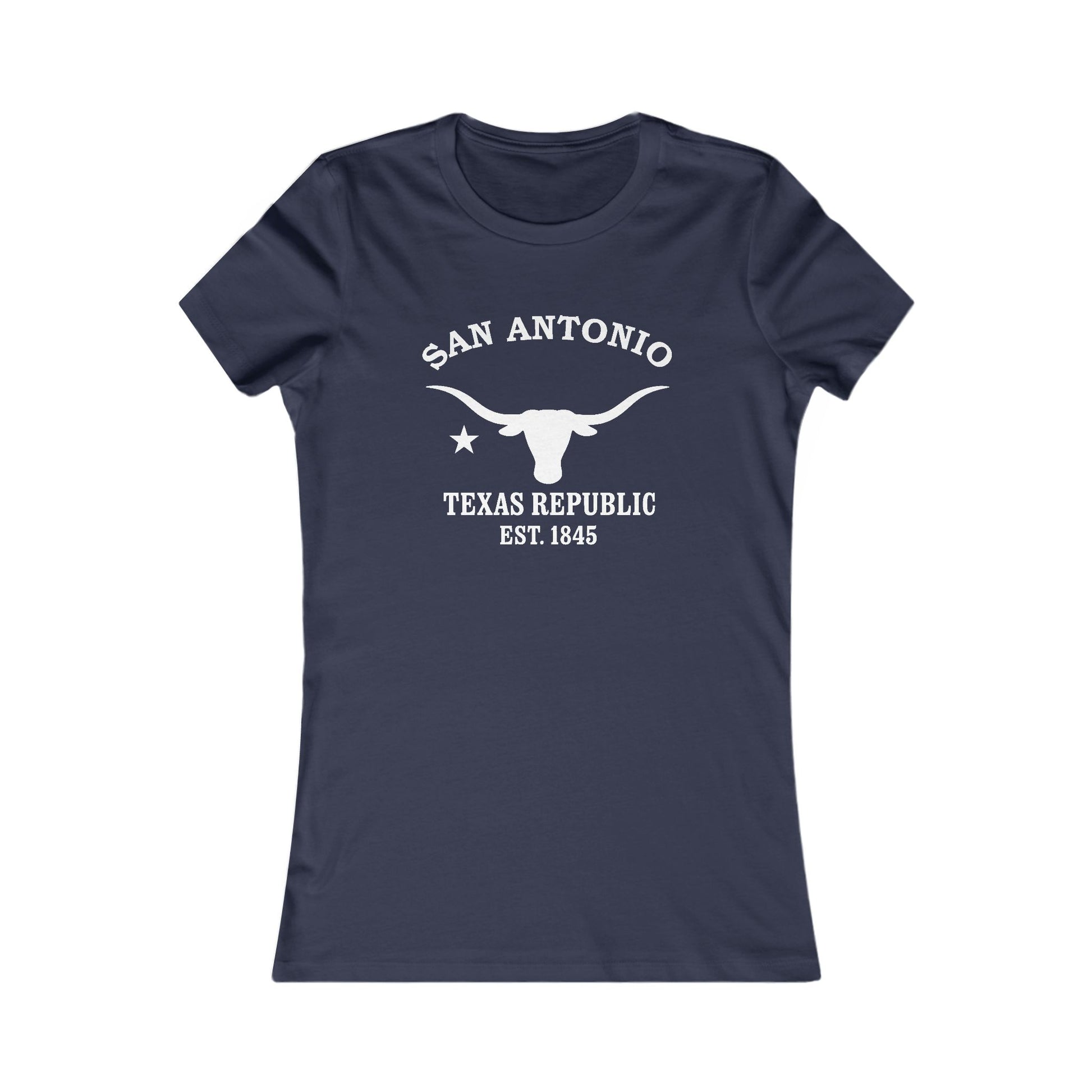
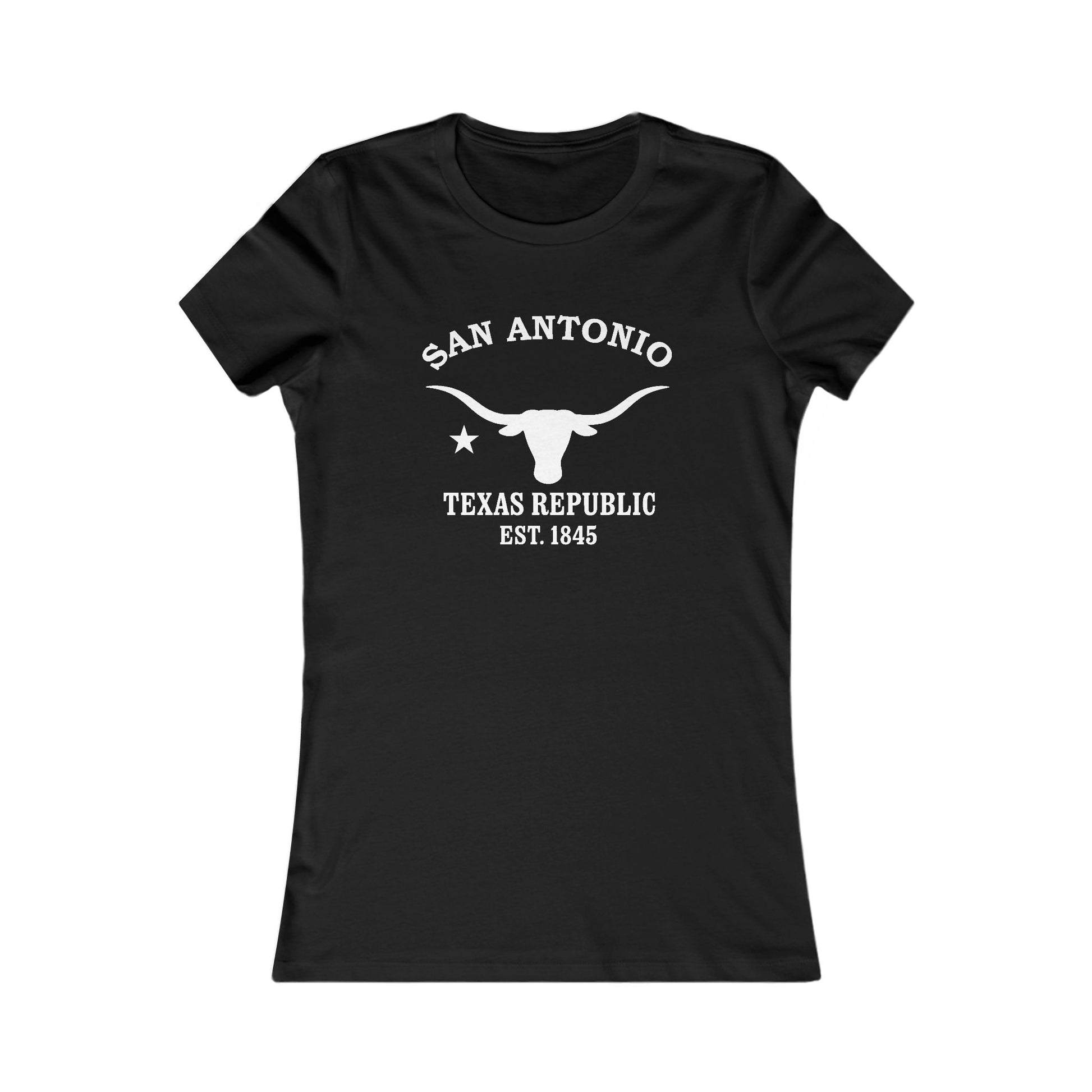
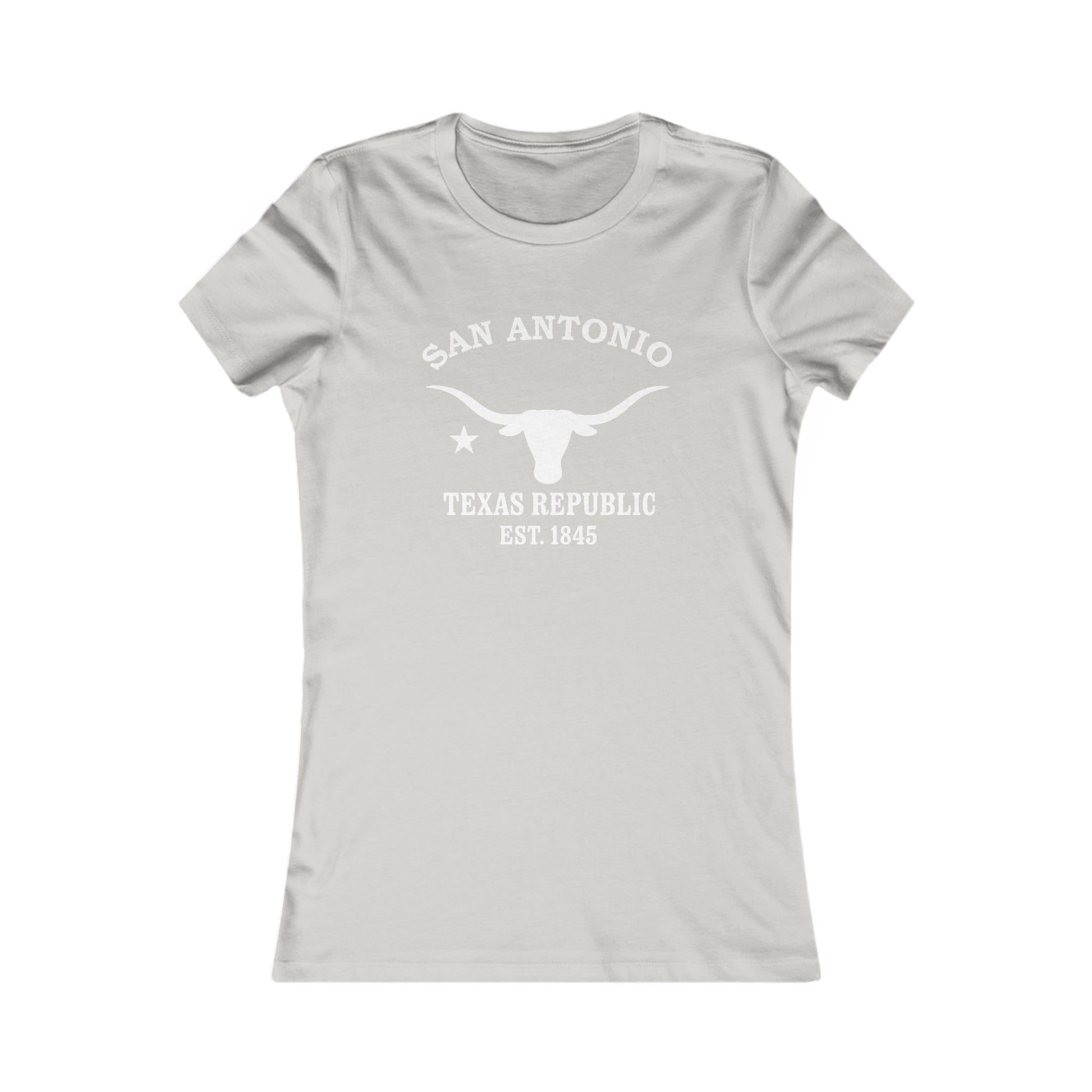
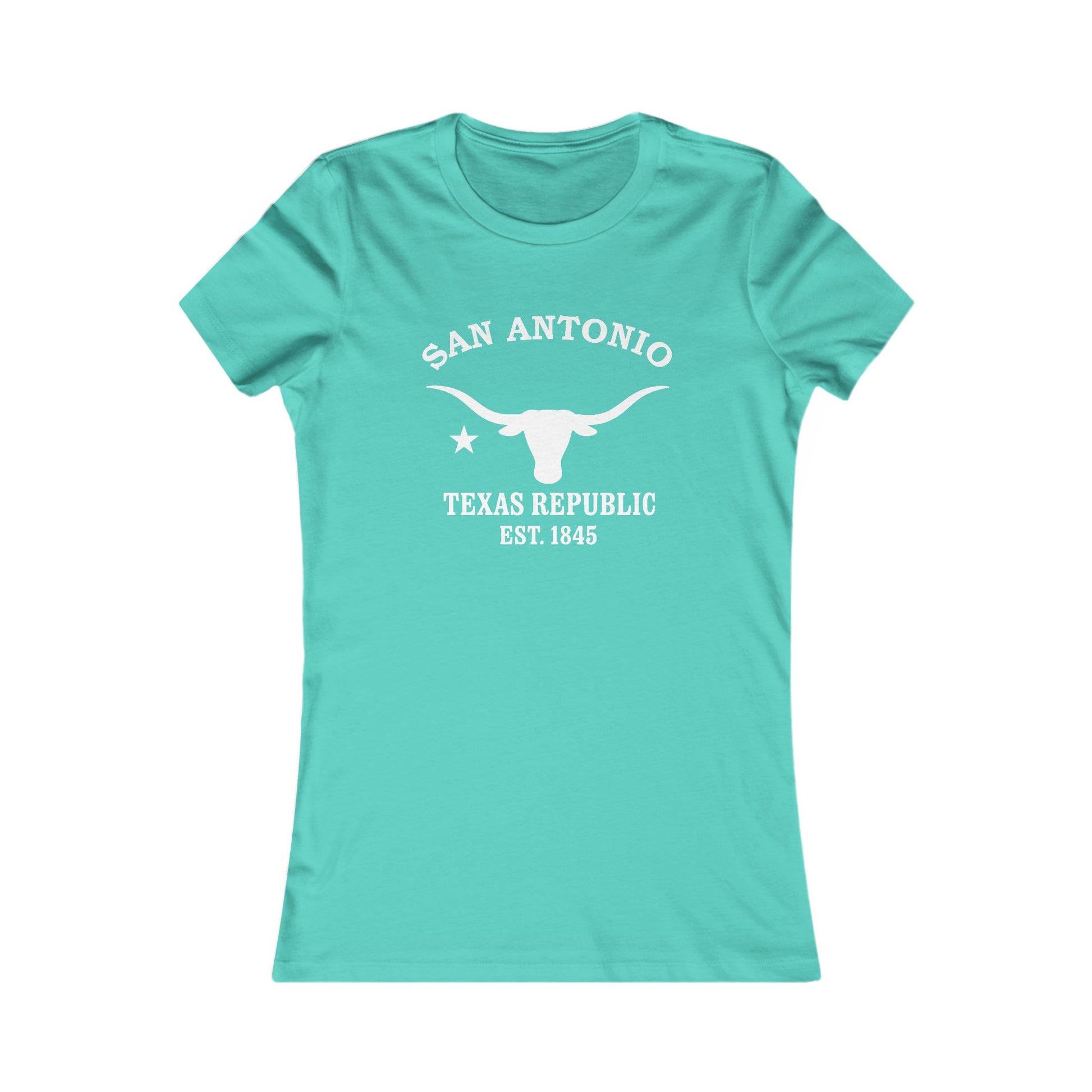
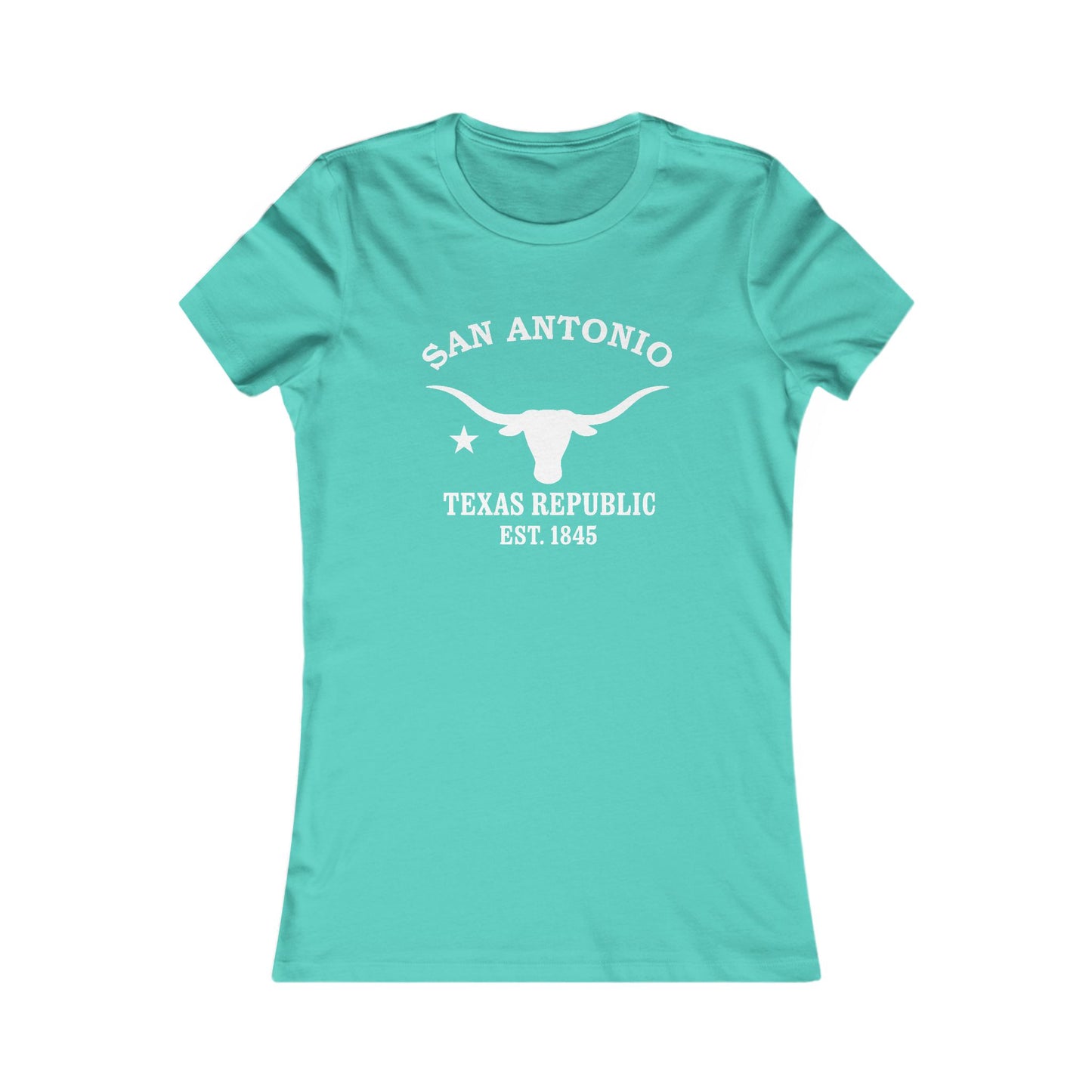
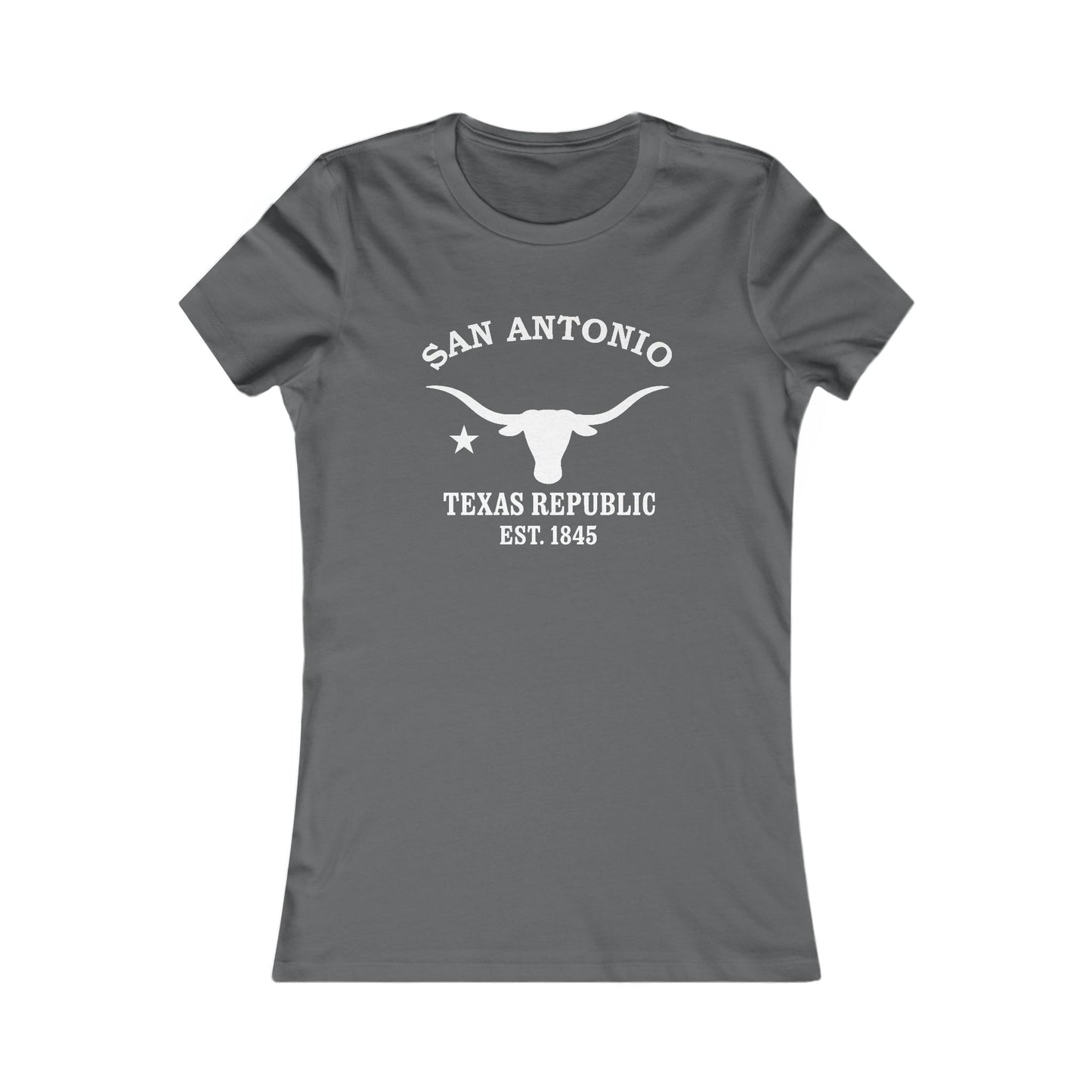
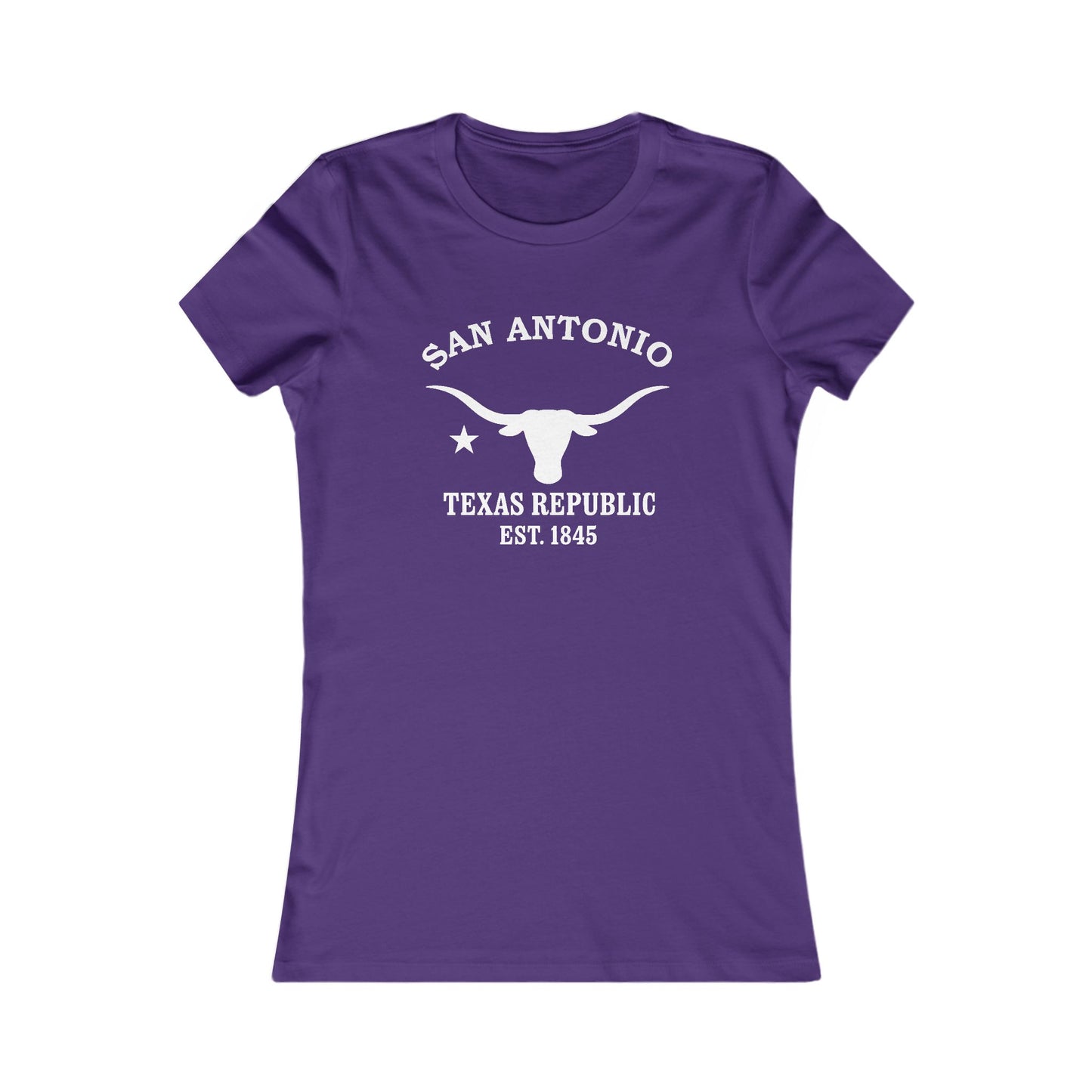
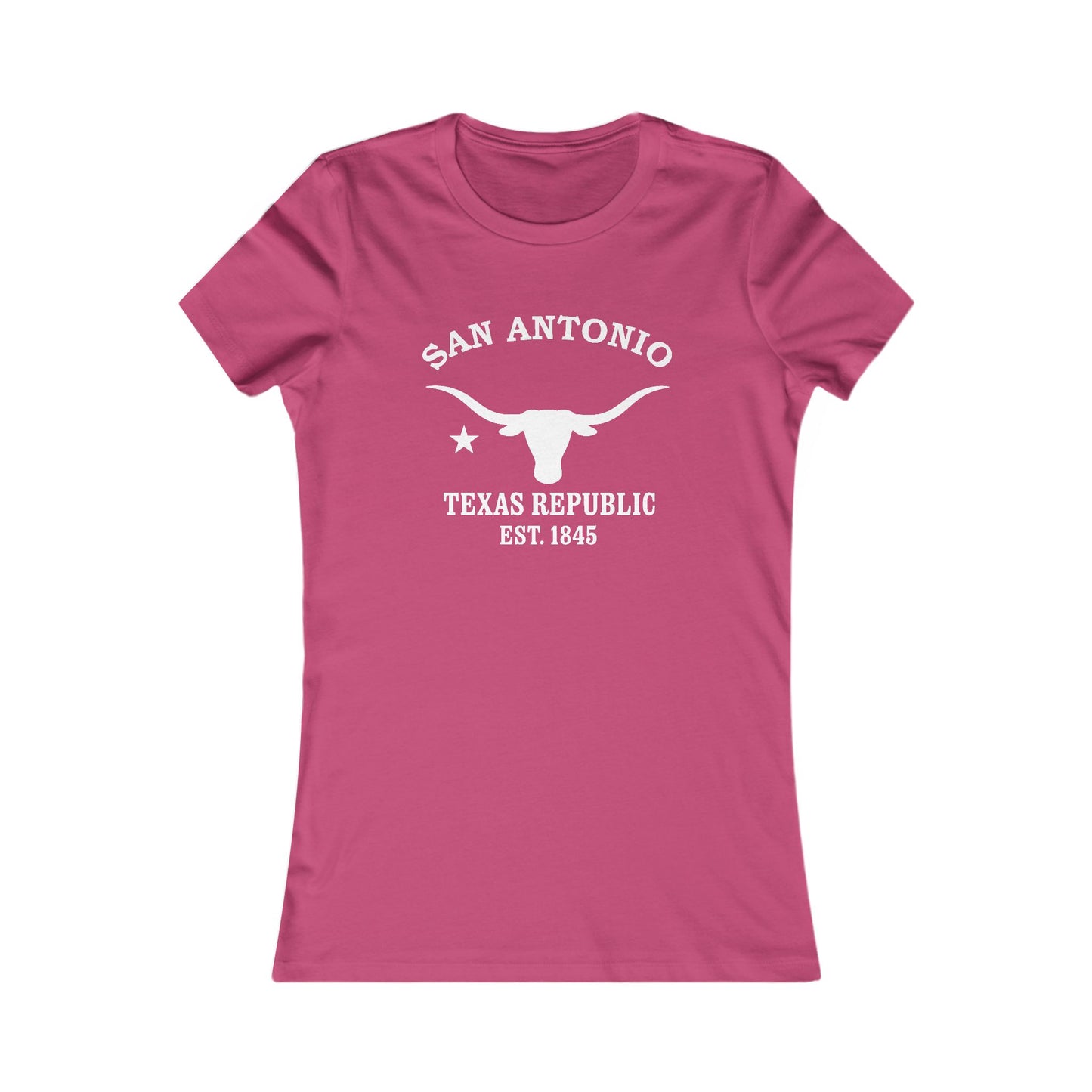
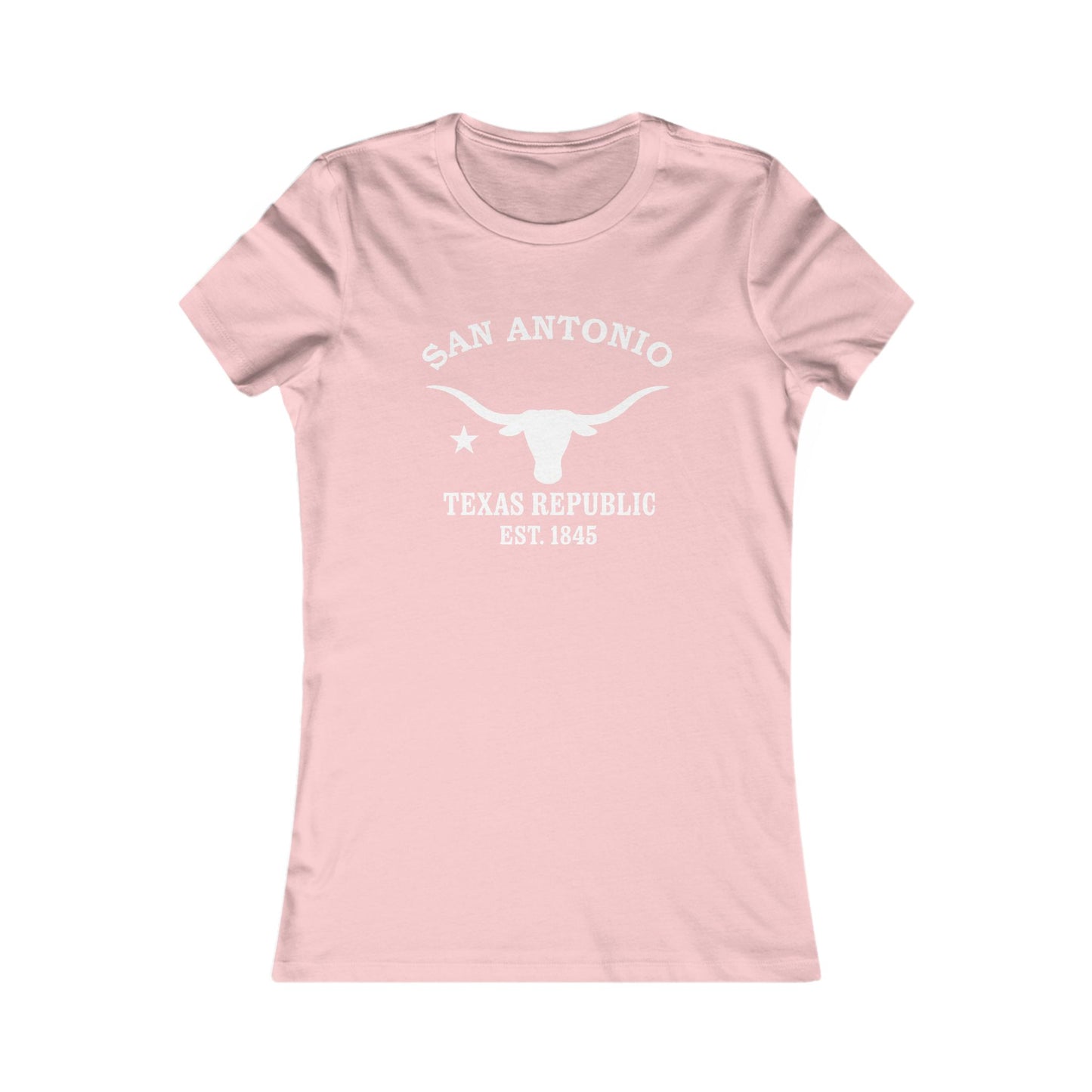
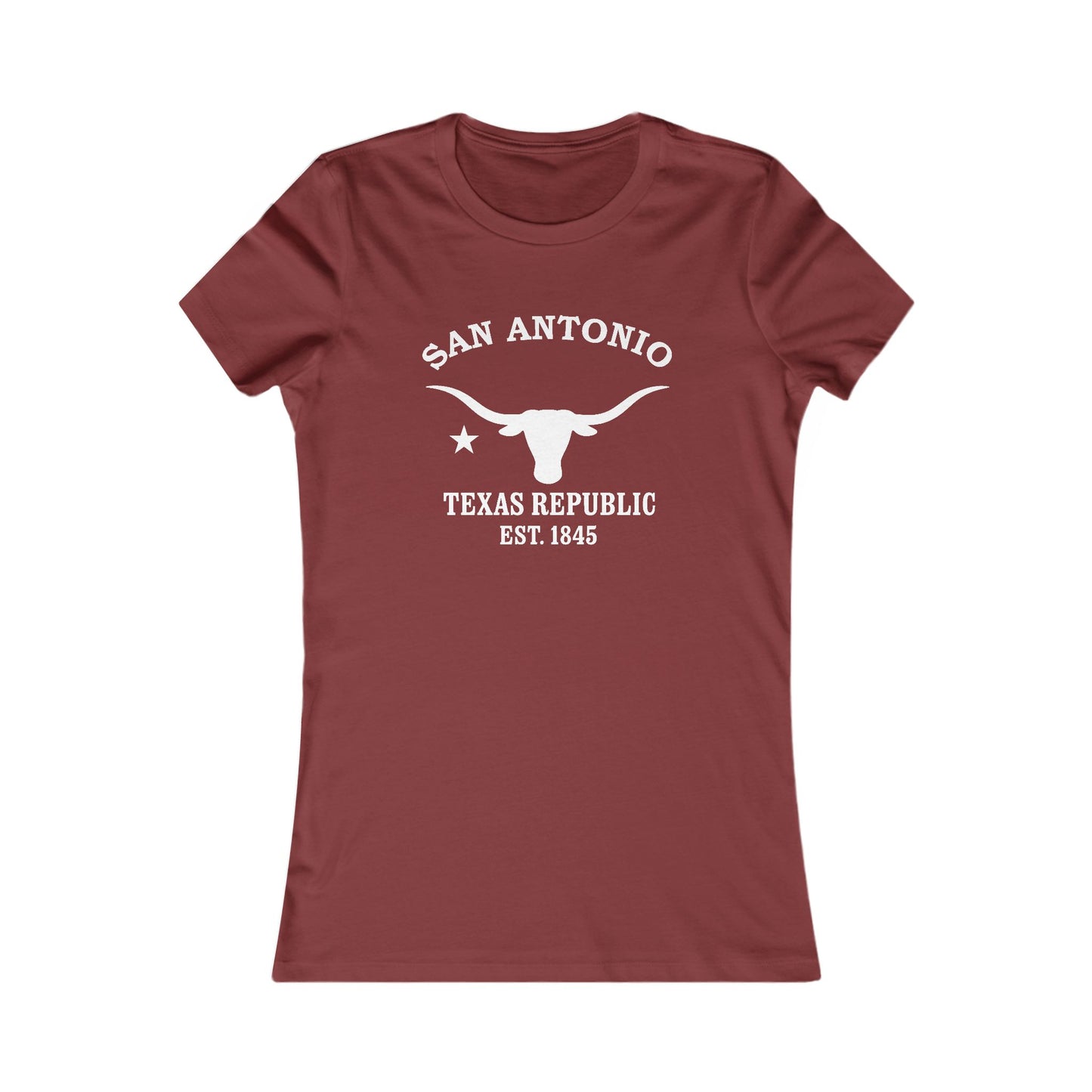
Our San Antonio logo gathers the Texas end of that story into a Texas longhorn — the cattle breed that built the open range — and a Lone Star over “1845,” the year of statehood and the shared emblem of every Merlin Classics Texas place. Printed black-and-white with the worn look of a branding iron or a rodeo poster, the longhorn and star read as Texas in shorthand — cattle country, the Lone Star, the open range — set over the deep Spanish-colonial city the missions built.
A different kind of landmark runs below the streets. In 1929 the architect Robert Hugman drew a plan to turn the downtown river into a level of the city all its own — a cypress-shaded paseo of stone stairs and footbridges, a street of water beneath the street of cars. Above it the city kept layering: the chili queens who sold supper in the plazas for some fifty years and helped seed what the country now calls Tex-Mex — barbacoa and puffy tacos, a bowl of fideo, aguas frescas sweating in the heat — then German brewers, the cattle drives and the rail boom, conjunto accordions, and a long run as “Military City.” And local legend holds that the ghosts of children push stalled cars uphill off a set of railroad tracks on the south side, a story San Antonians have told each other for generations.
Why People Visit San Antonio
People come to San Antonio for the River Walk and the Alamo, but the city rewards anyone who follows the older thread: a chain of five Spanish missions along a quiet river, a downtown laid out by Canary Island colonists in 1731, and a Tejano culture you can hear in the music and taste in the food. It's warm, walkable, and layered — three centuries of South Texas history sitting right alongside the modern city.
