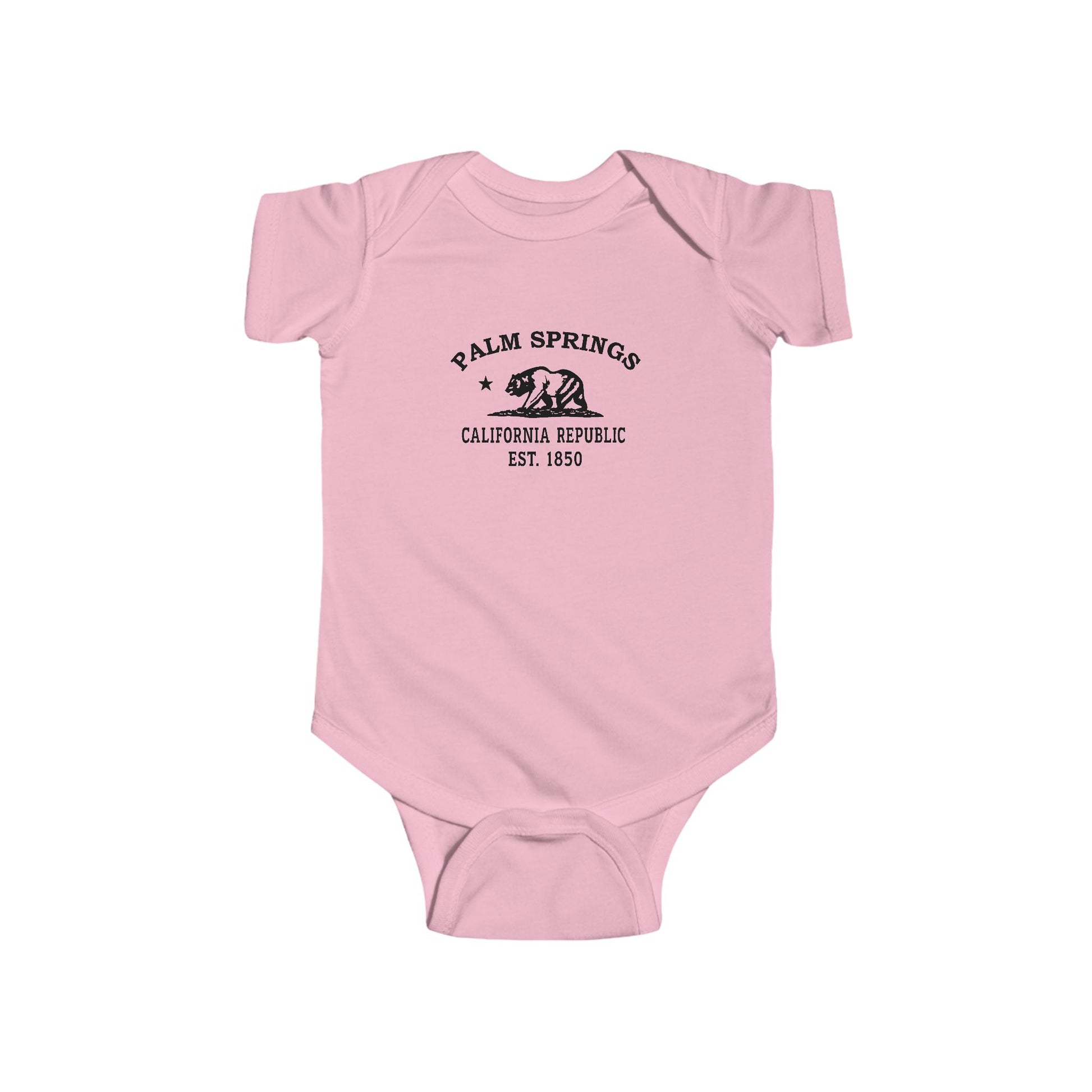
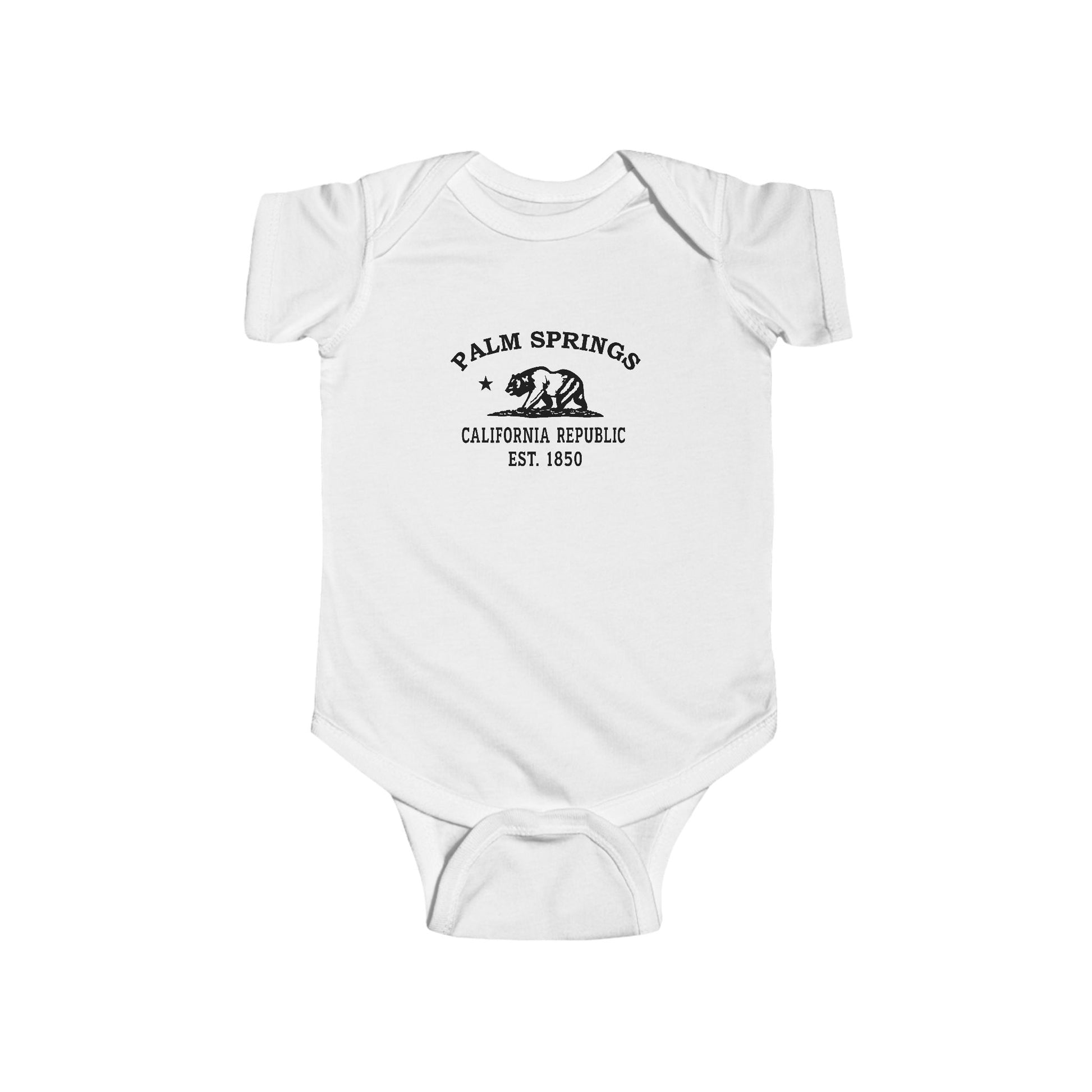
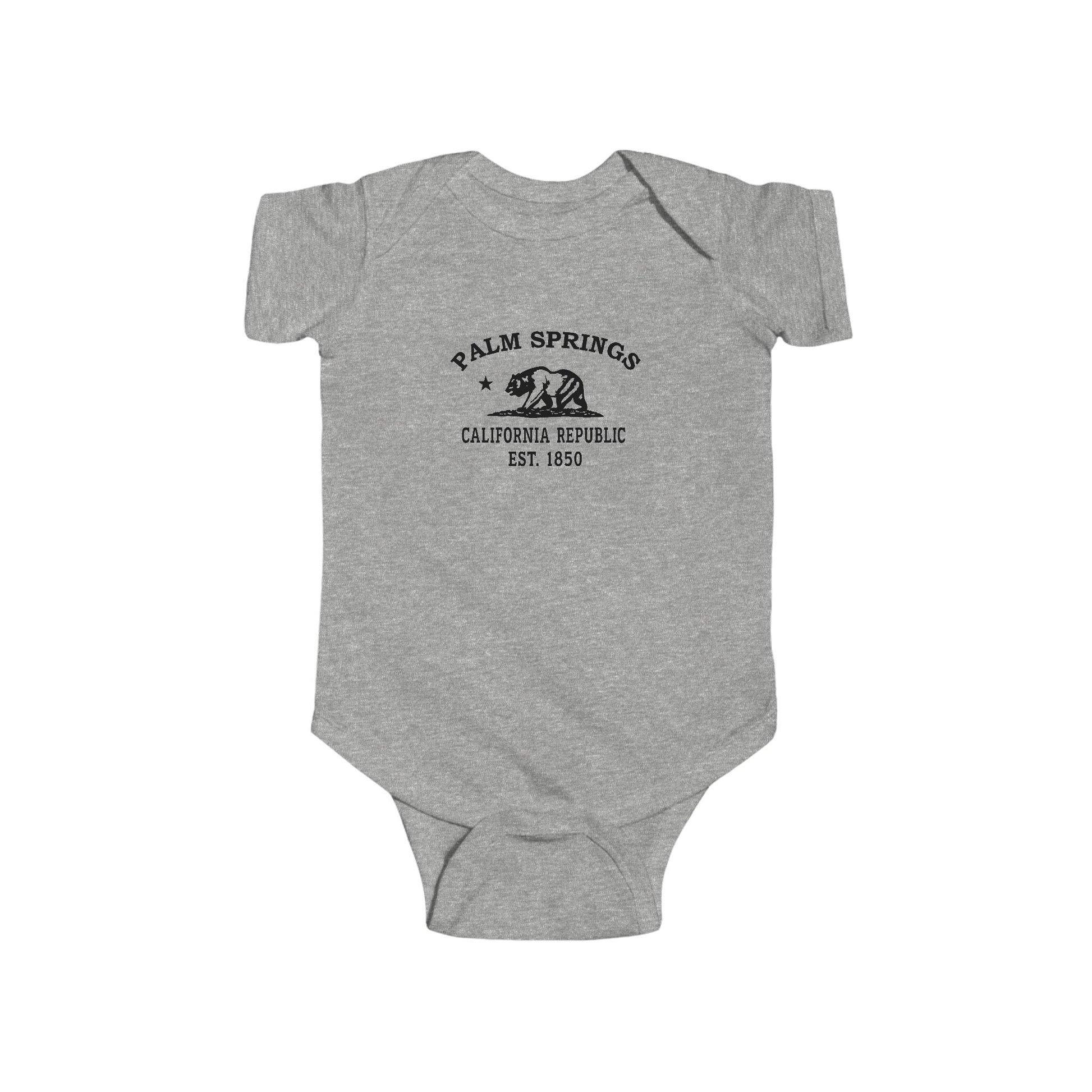
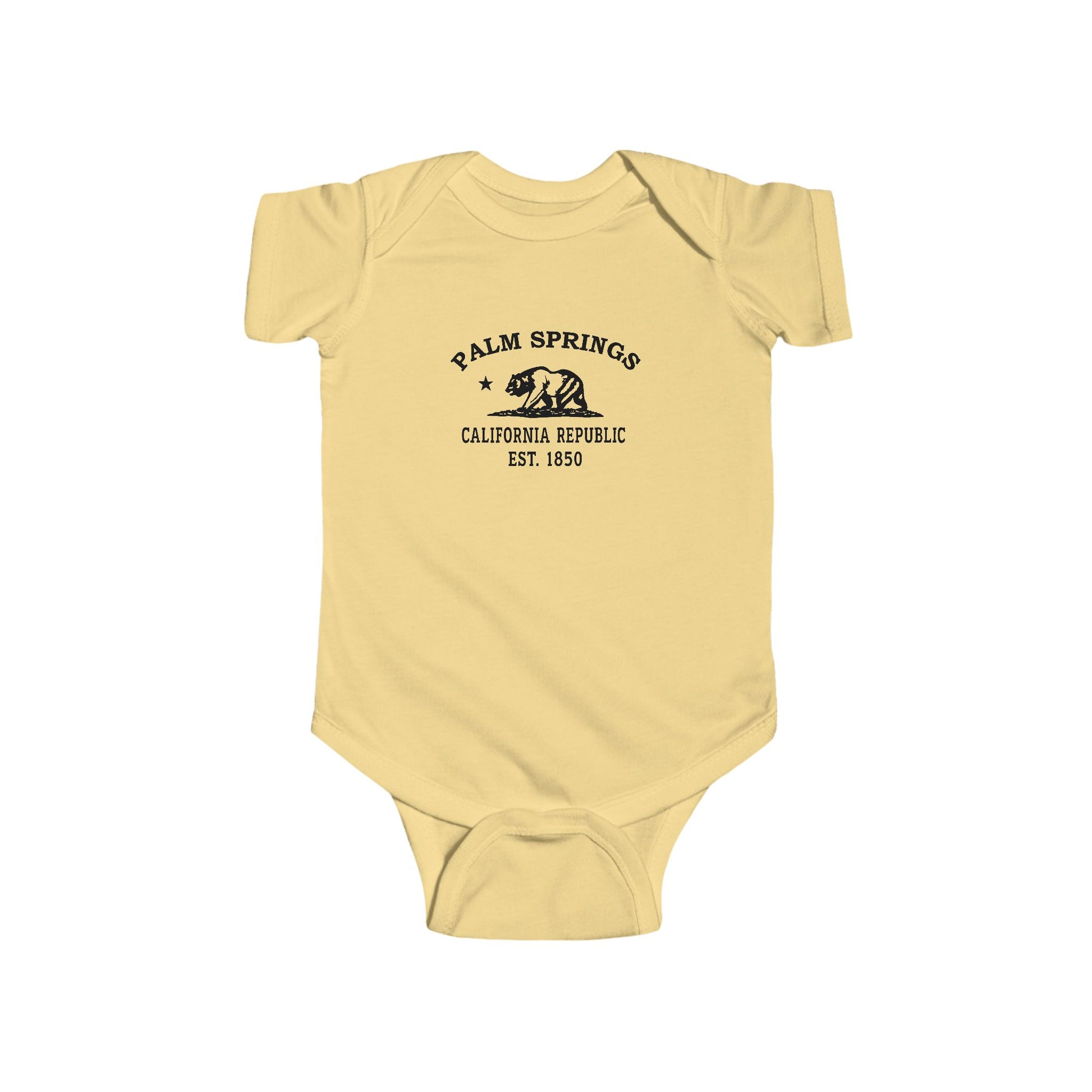
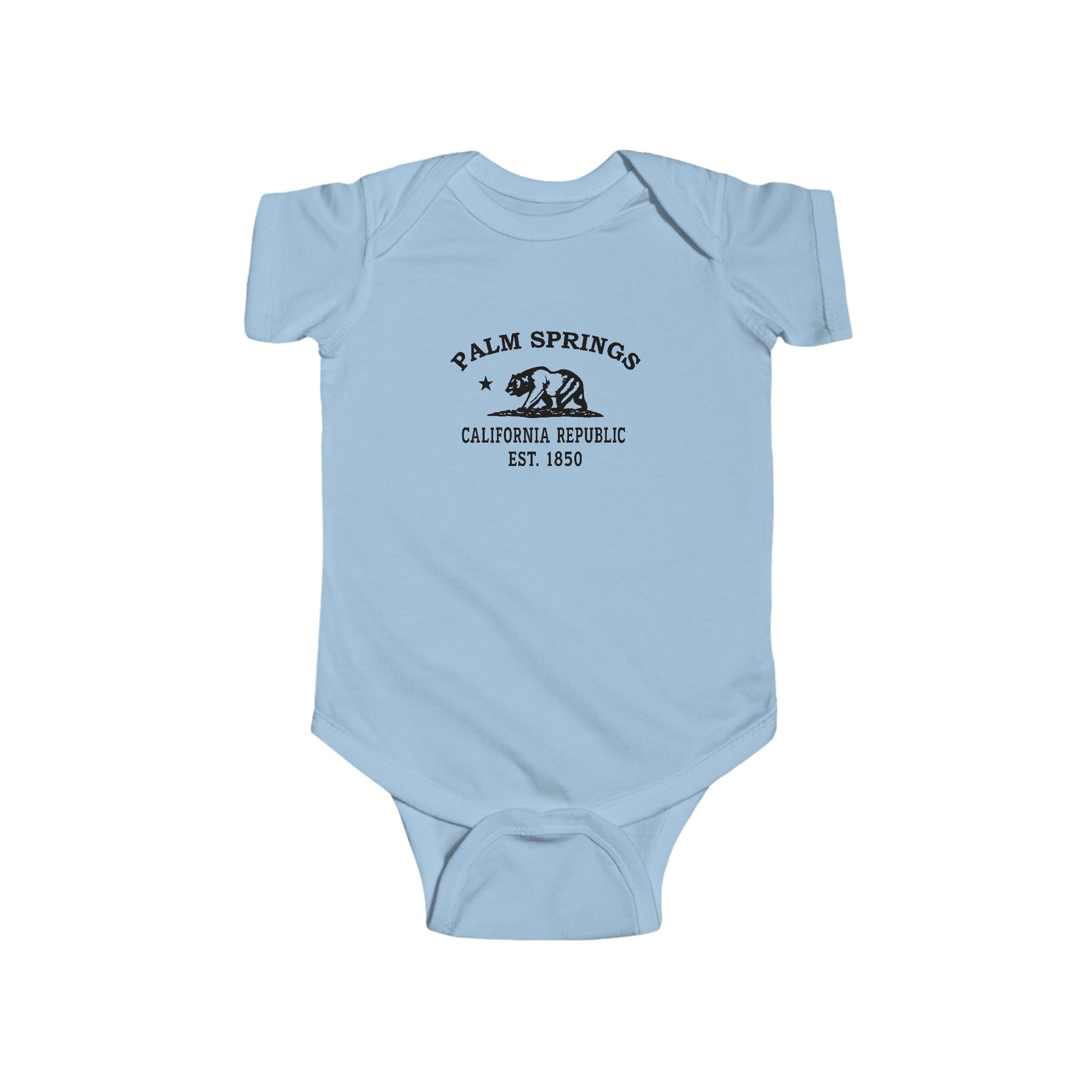
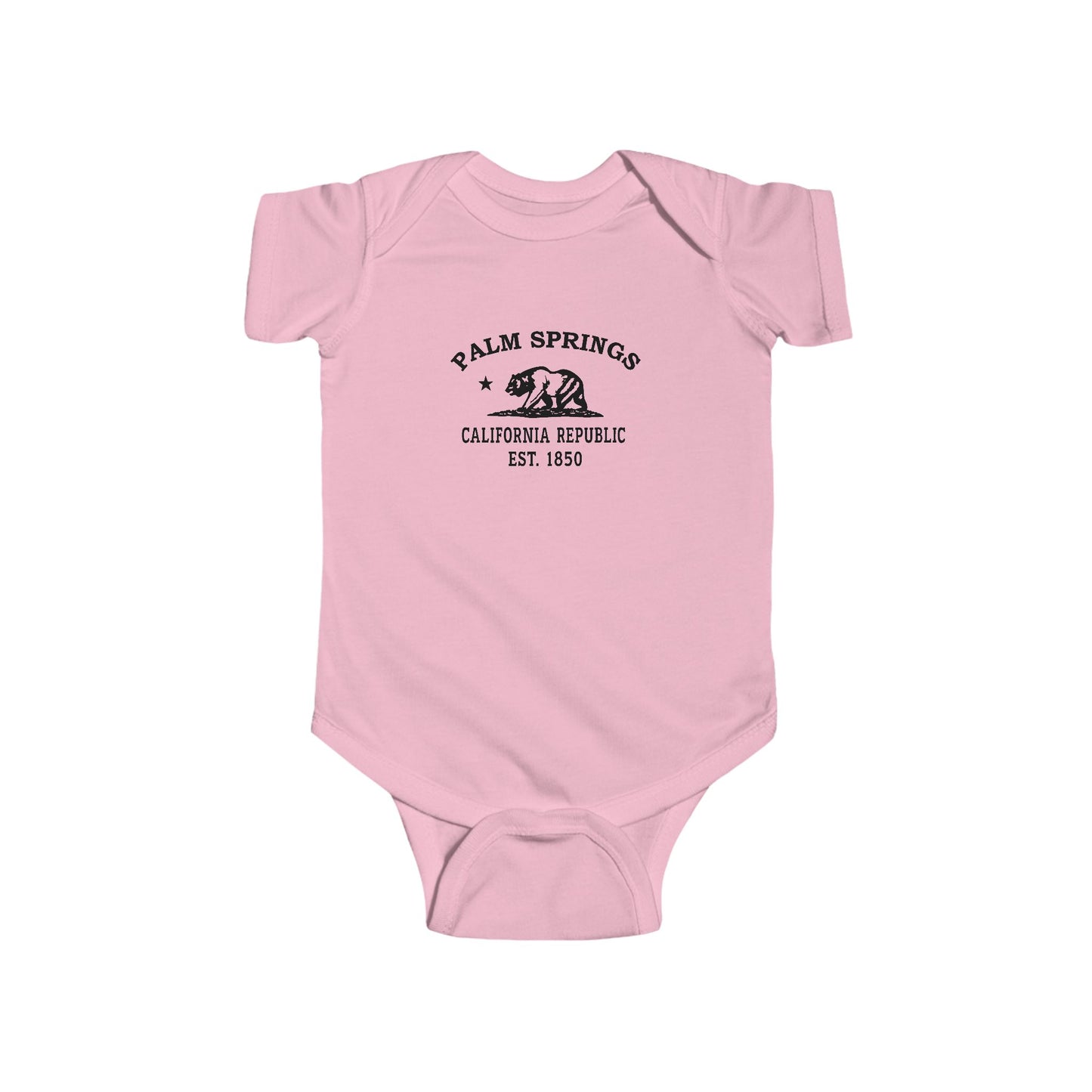
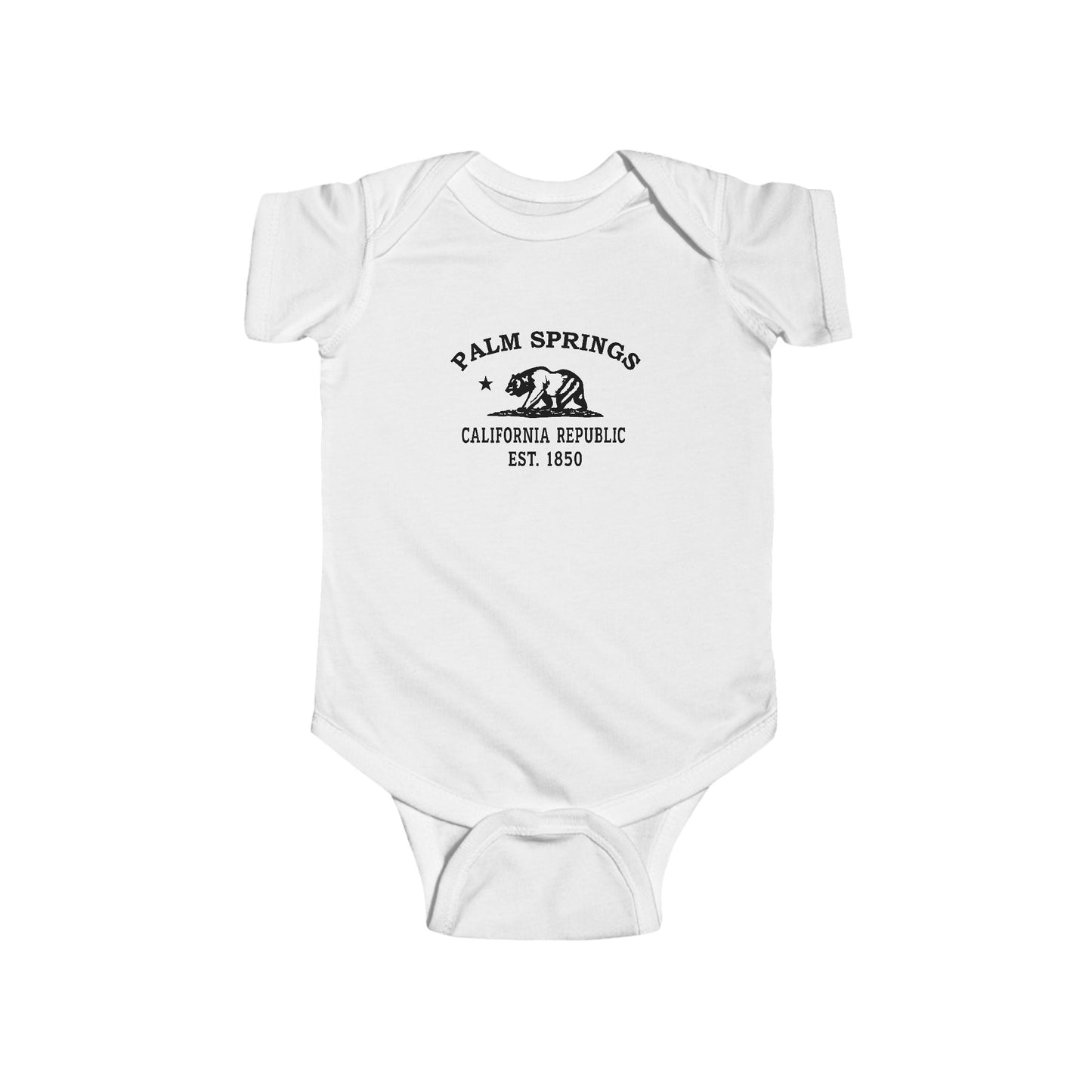
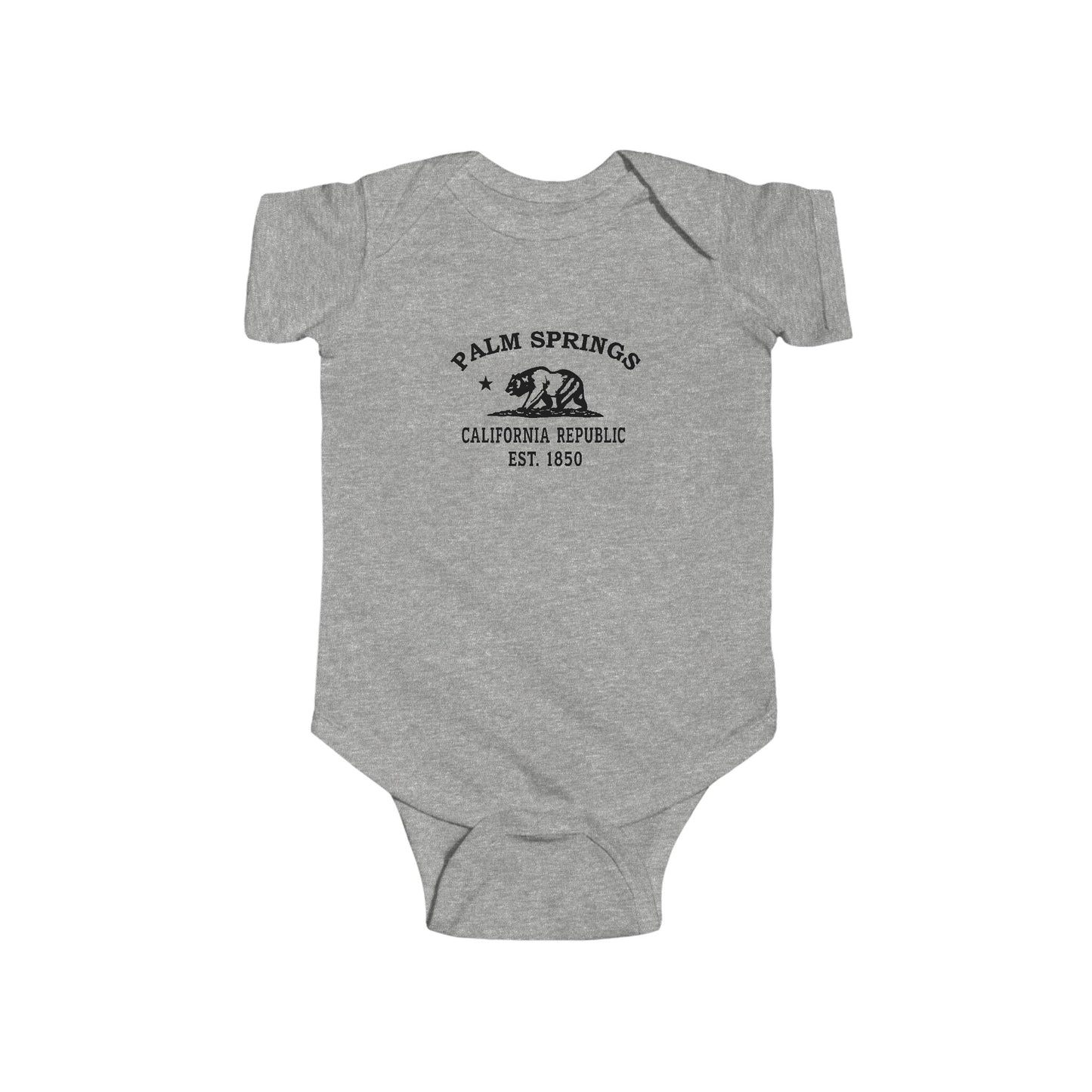
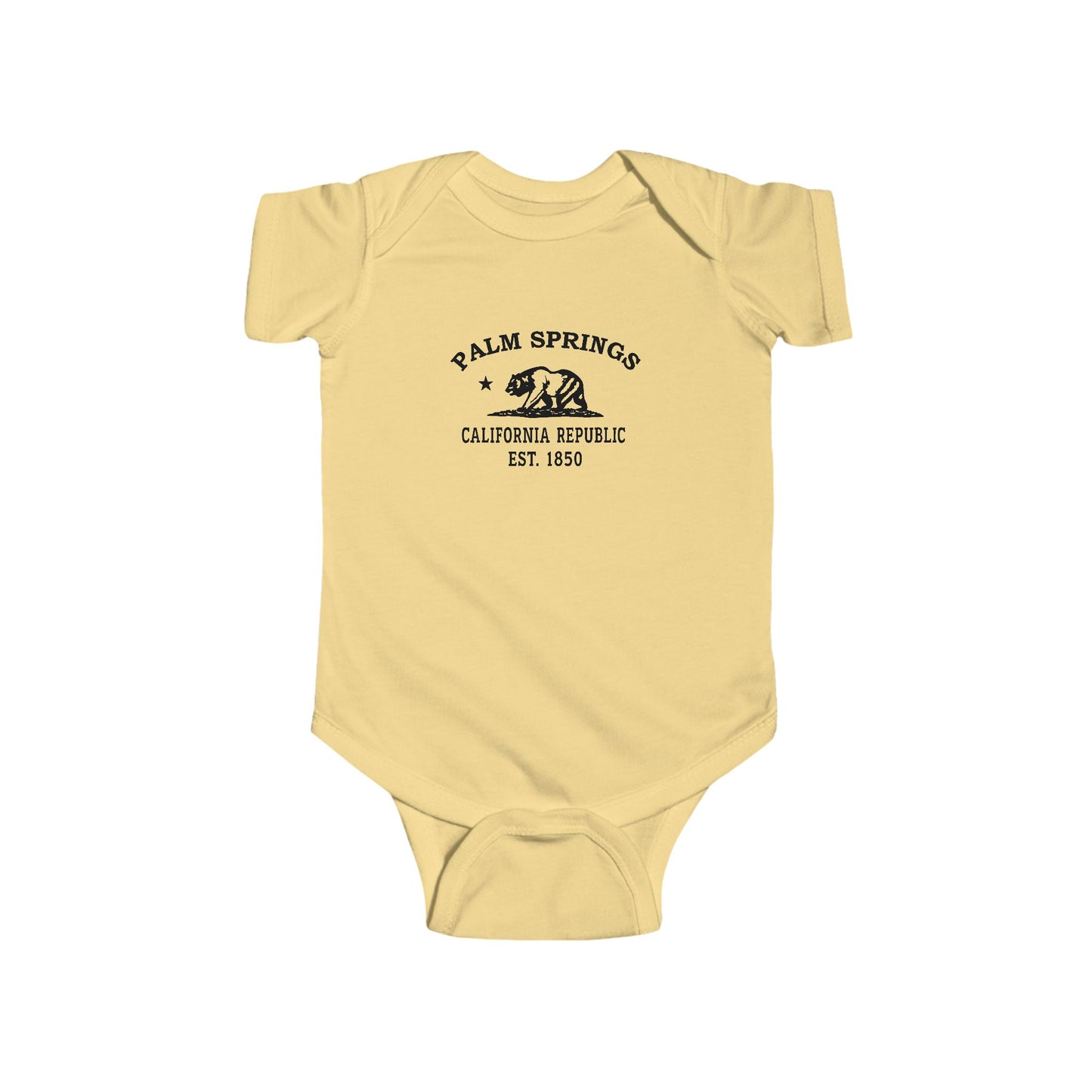
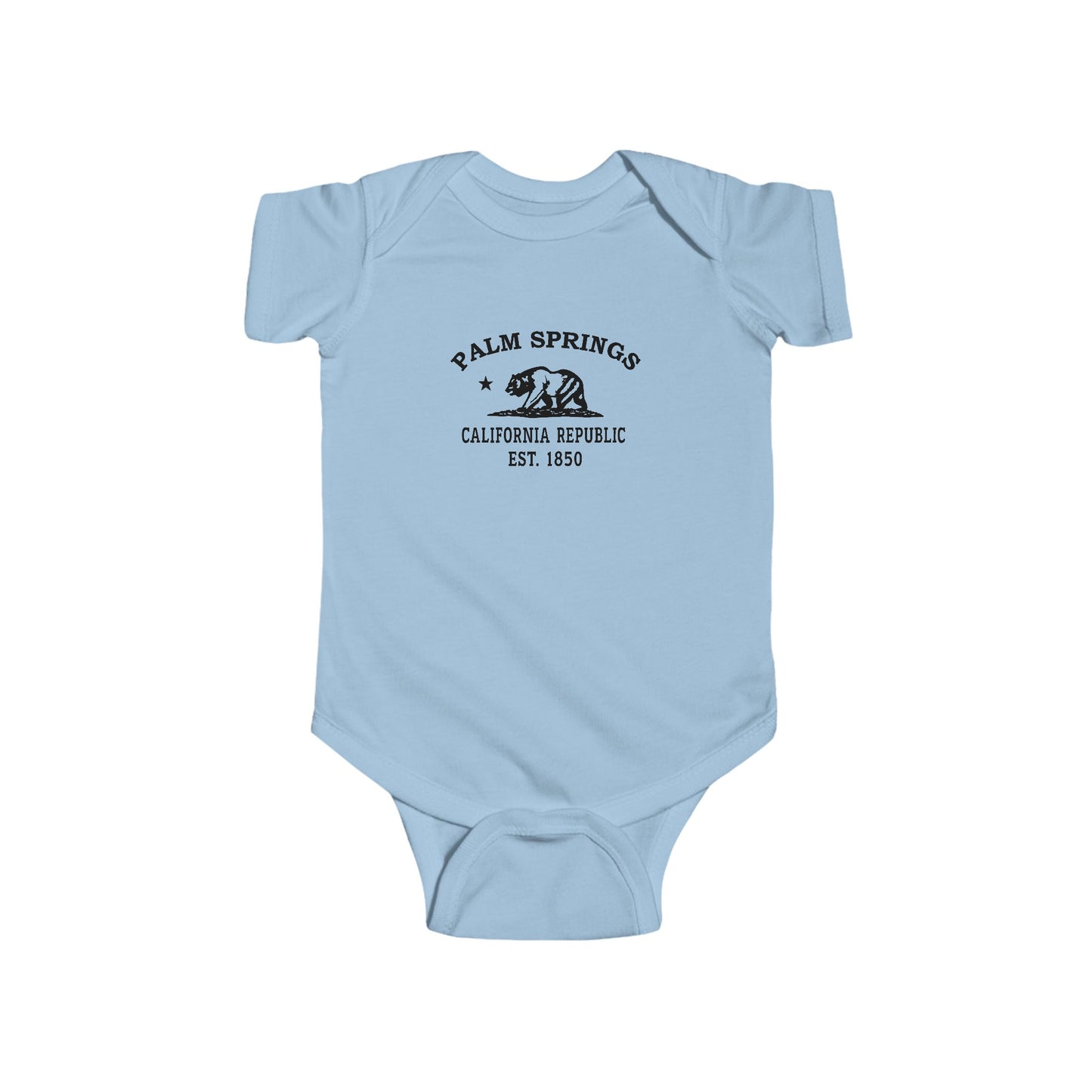
Our Palm Springs logo carries the California grizzly and star over "California Republic, Est. 1850," the same emblem every Merlin Classics California place wears. The bear and star are California's shorthand — wildness, independence, the open West — printed black-and-white with the worn look of an old state-park sign or a vintage athletic print. What makes this one Palm Springs is the place behind it: the mid-century modern, the rotating tram, the desert oasis. On a tee or a cap it reads less like a souvenir and more like a piece of the California desert — Est. 1850, worn plain.
Two hours from the Hollywood studios, Palm Springs became a movie-colony retreat in the 1920s and '30s, and after the war it turned into something the world had never quite seen: the capital of mid-century modern design. Through the 1940s, '50s, and '60s, architects filled the desert with glass-walled houses, folded-plate roofs, and breeze-block screens — the style now called Desert Modernism, and still the densest concentration of preserved mid-century modern architecture in the country. In 1963 the Palm Springs Aerial Tramway opened, climbing the sheer cliffs of Chino Canyon to Mount San Jacinto State Park; rebuilt with rotating cars in 2000, it remains the world's largest rotating tramcar. Each February, Modernism Week — founded in 2006 — brings a global design crowd back to the butterfly roofs.
Why People Visit Palm Springs California
- Ride the Palm Springs Aerial Tramway up Chino Canyon to the cooler pine forests of Mount San Jacinto State Park.
- Hike the Indian Canyons, the Cahuilla fan-palm oases with stream-fed trails.
- Tour the mid-century modern neighborhoods — and time a visit for Modernism Week in February.
- Stroll Palm Canyon Drive downtown for galleries, design shops, and classic facades.
- Wander Moorten Botanical Garden and the Palm Springs Art Museum.
- Detour west to the roadside Cabazon Dinosaurs (in Cabazon, about 20 minutes away) or out to Joshua Tree National Park.
