


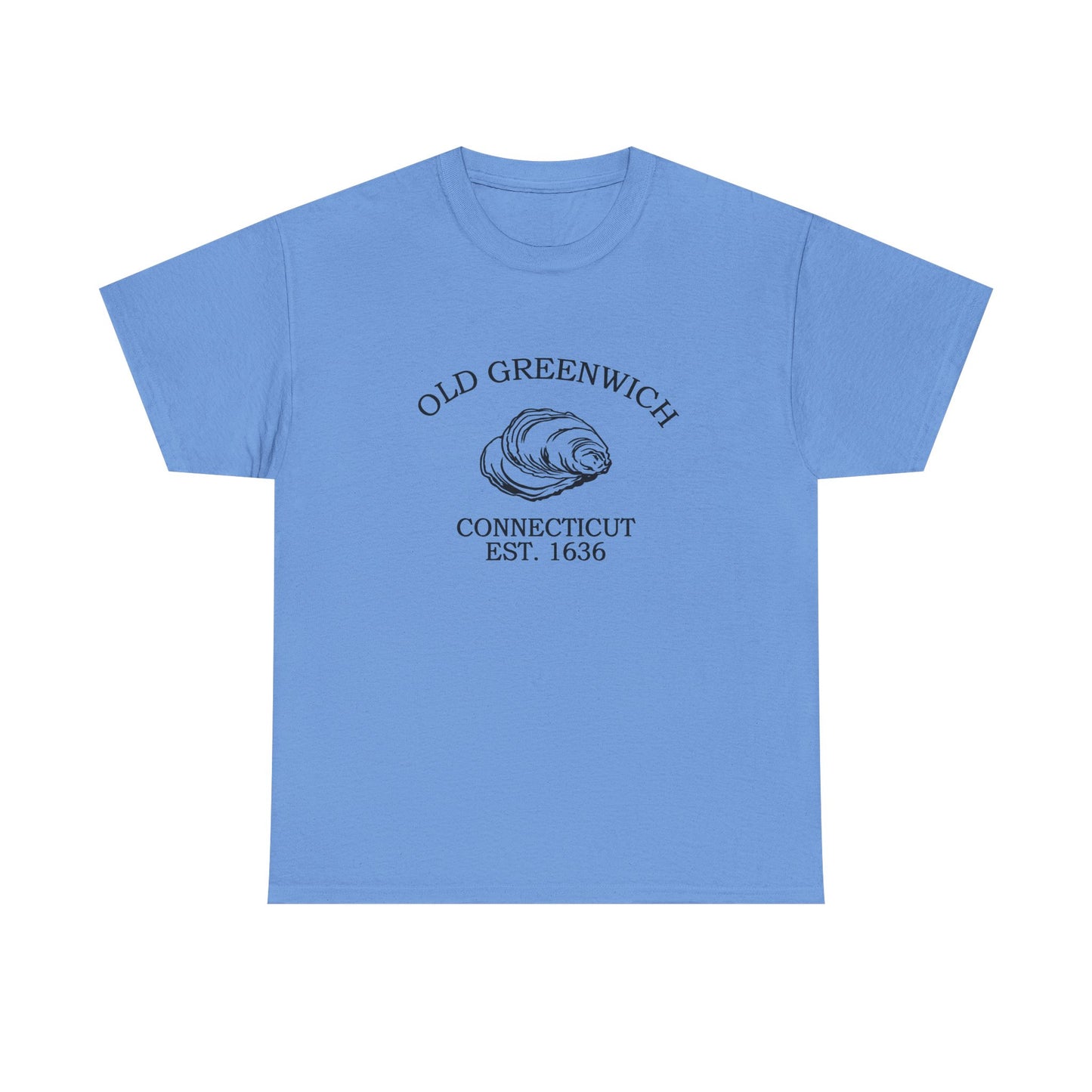
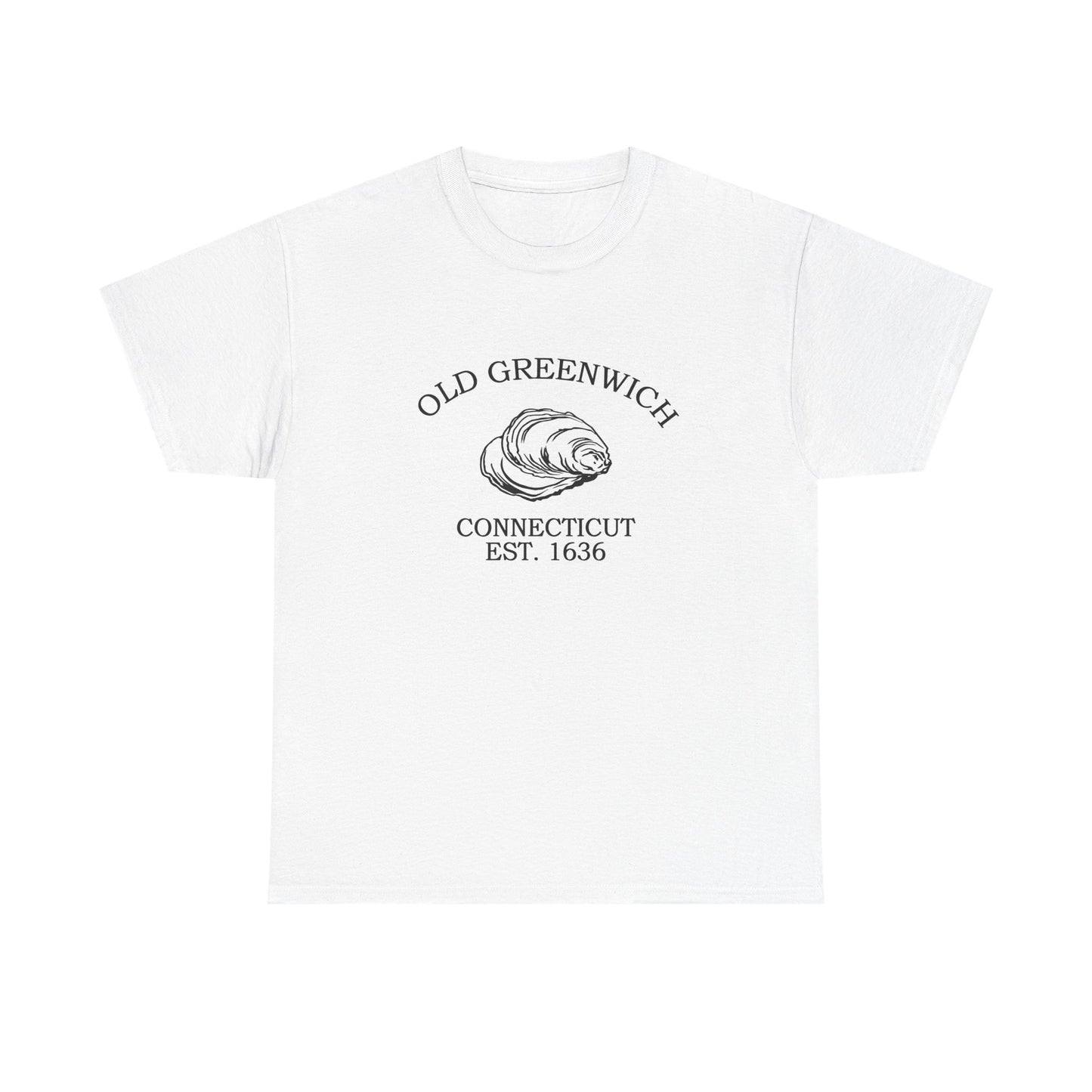
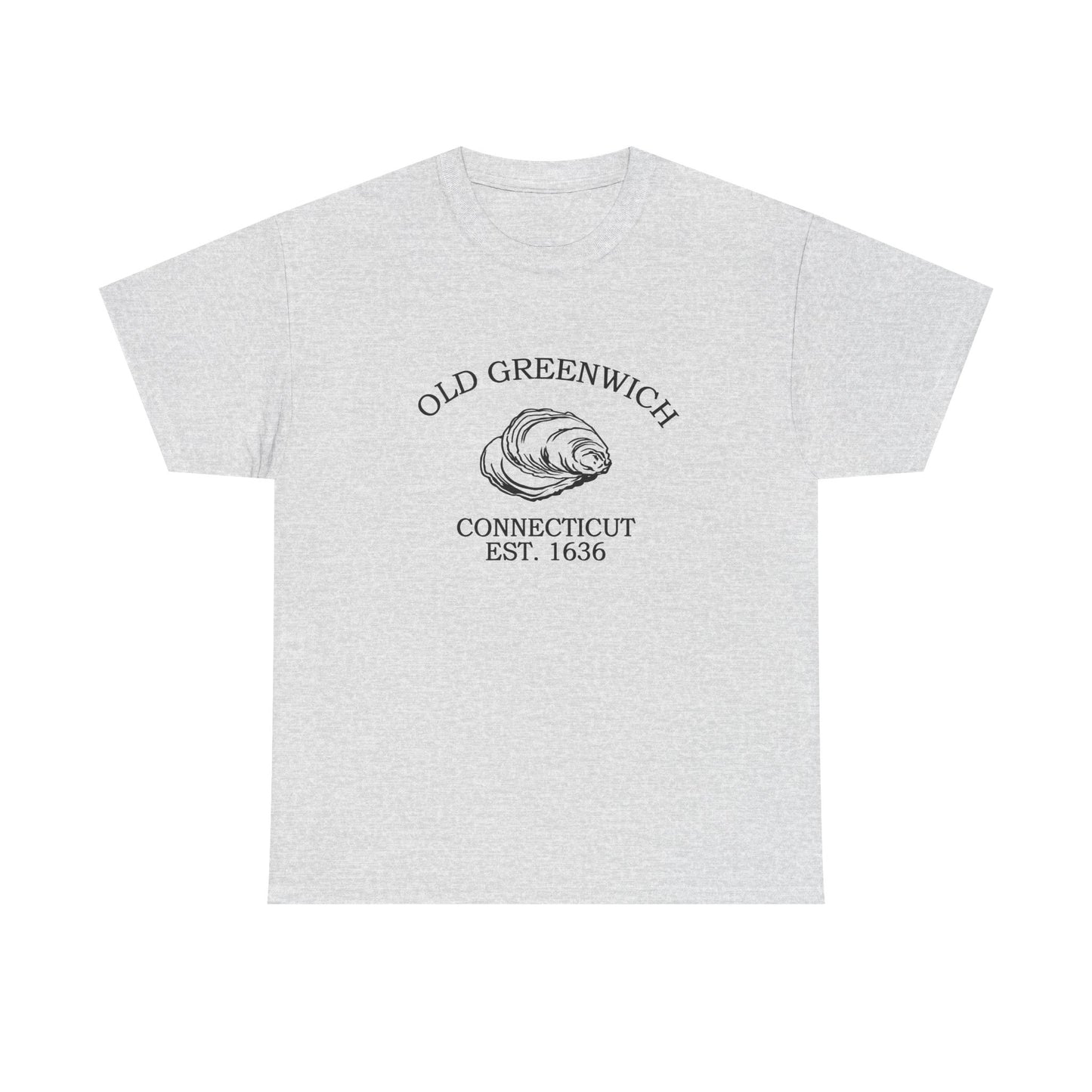
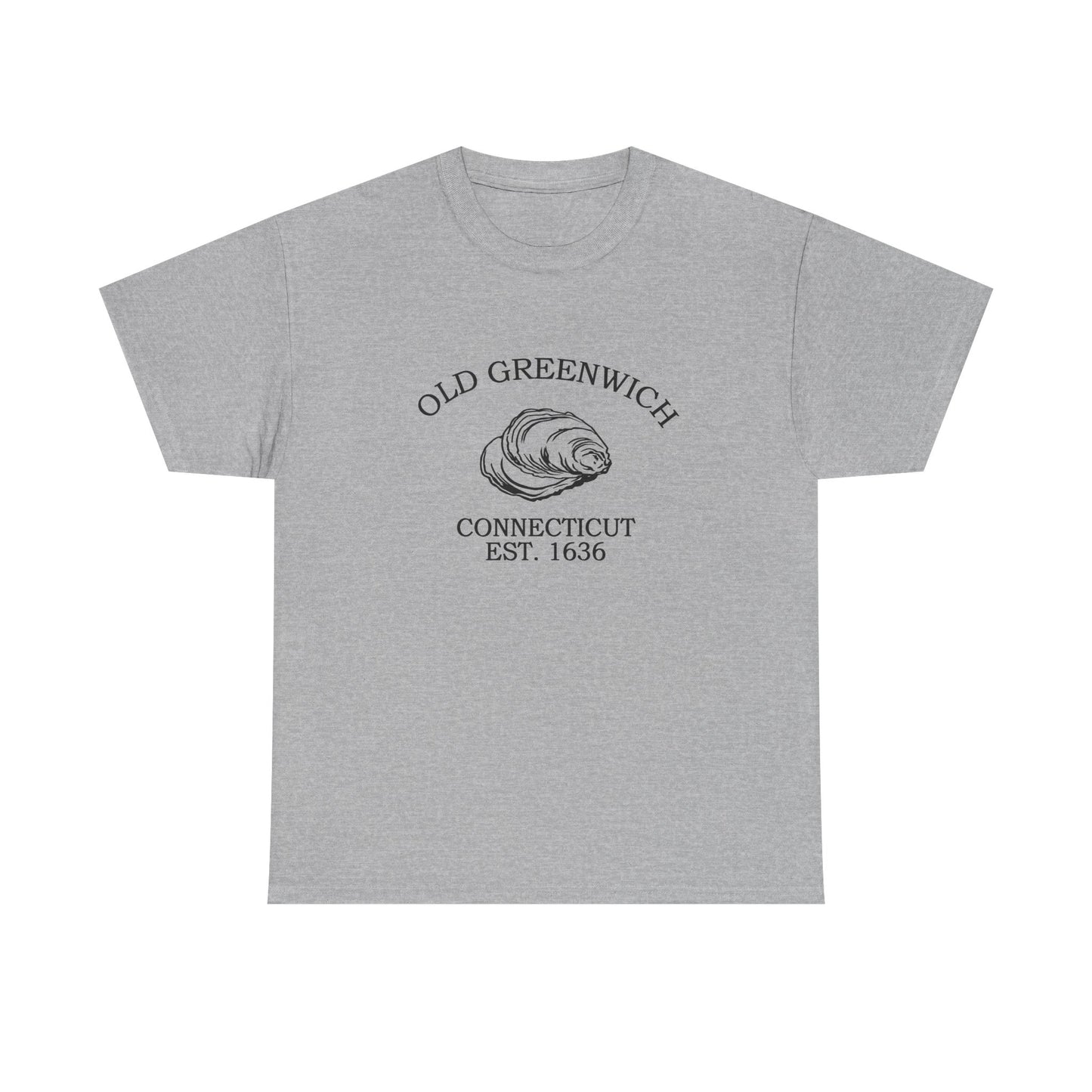
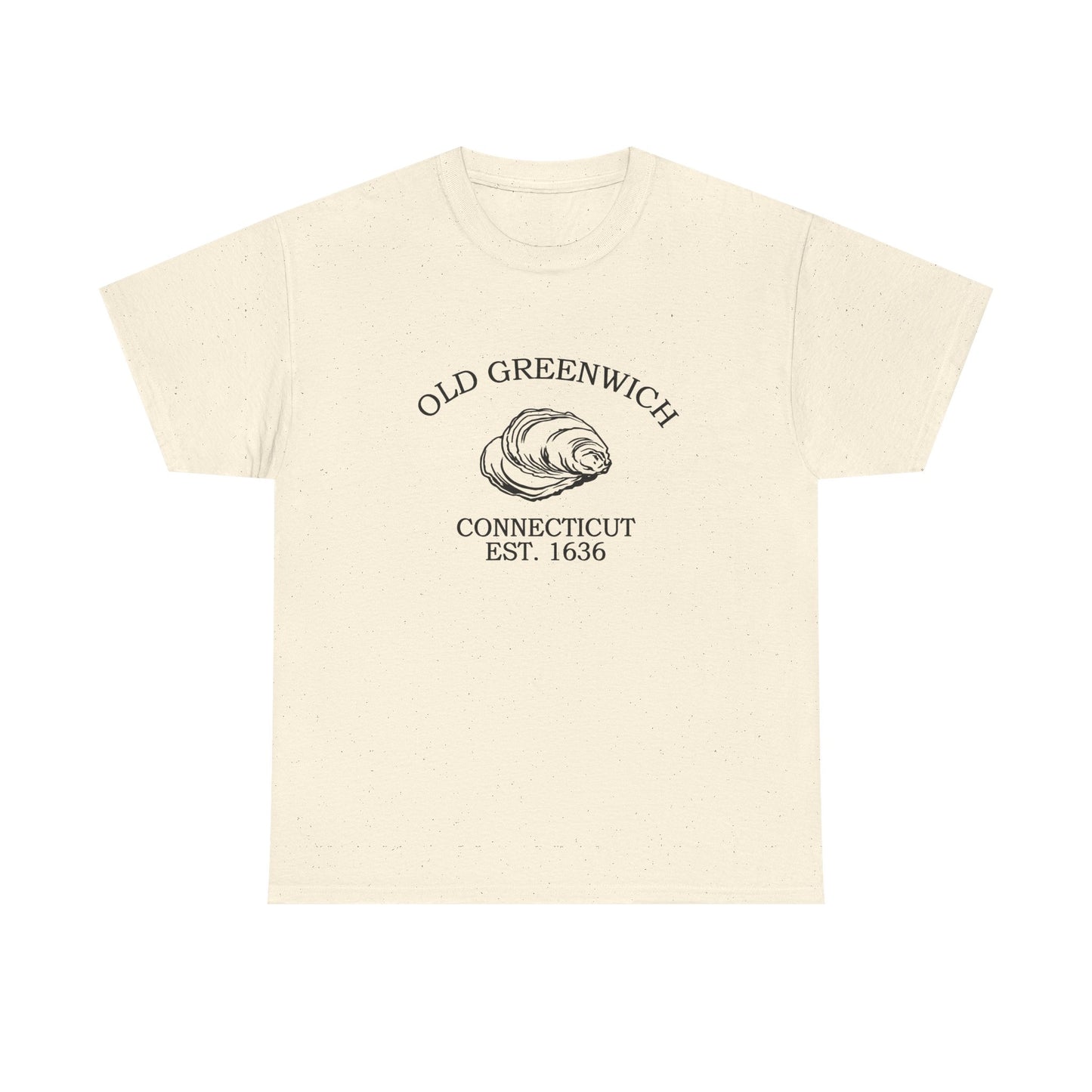
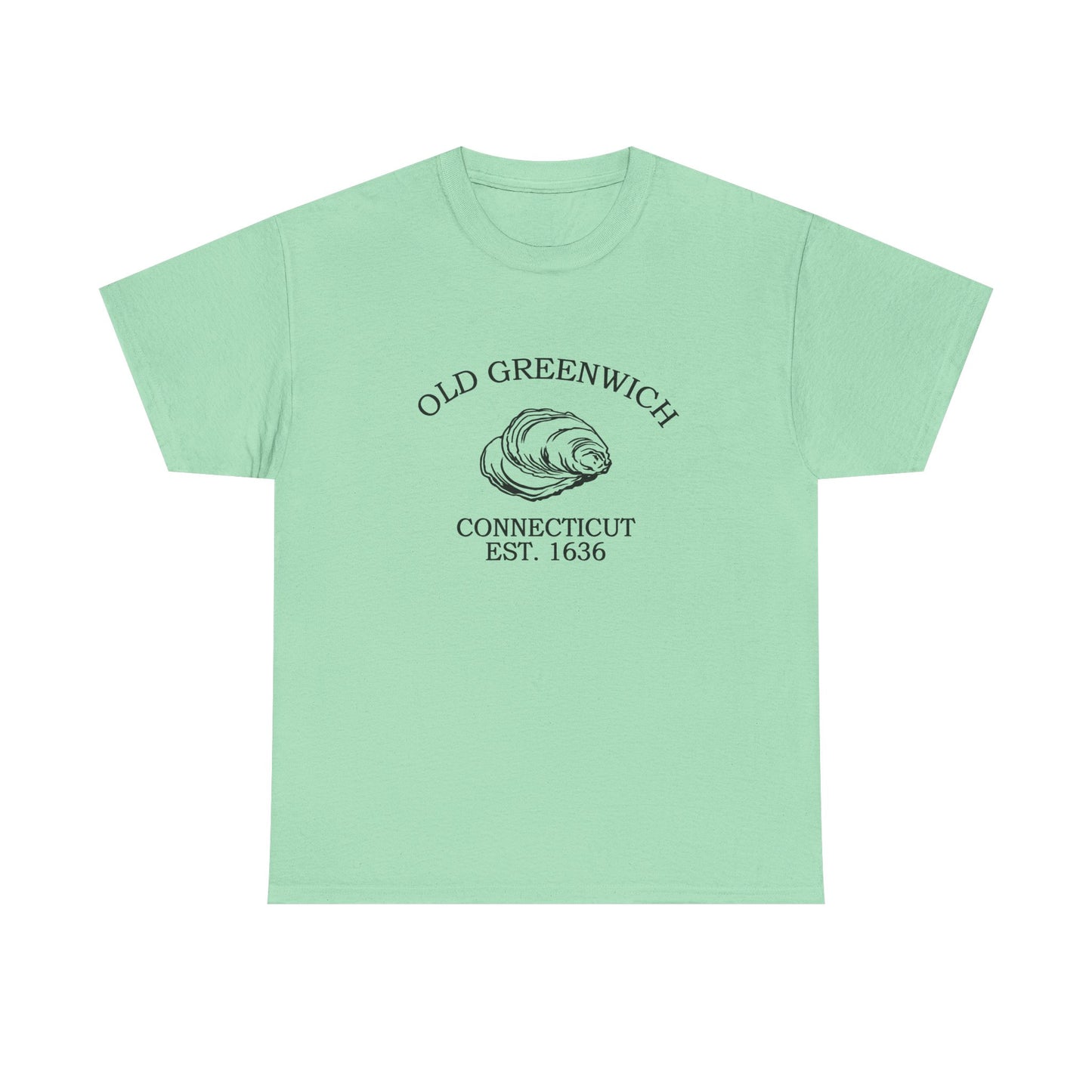
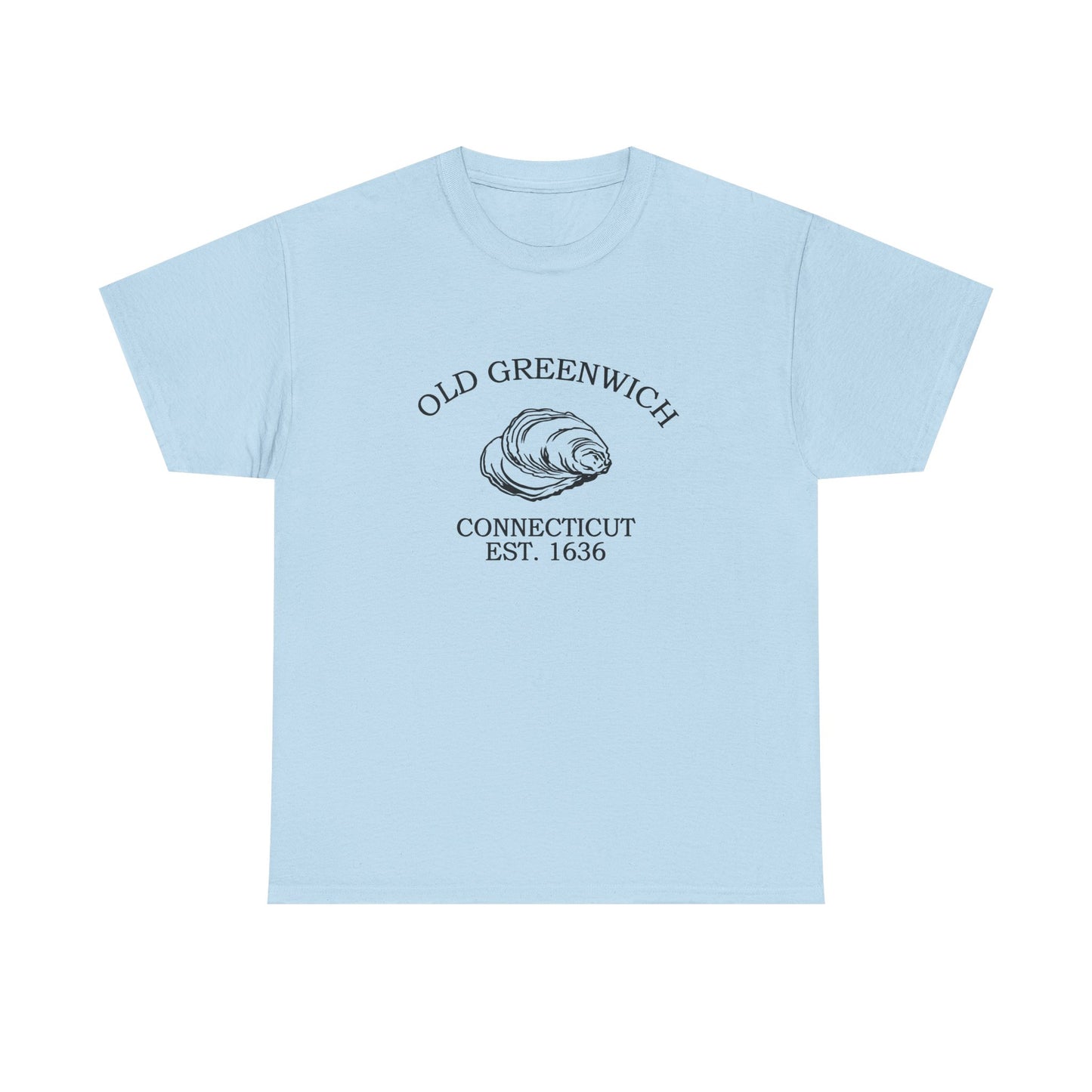
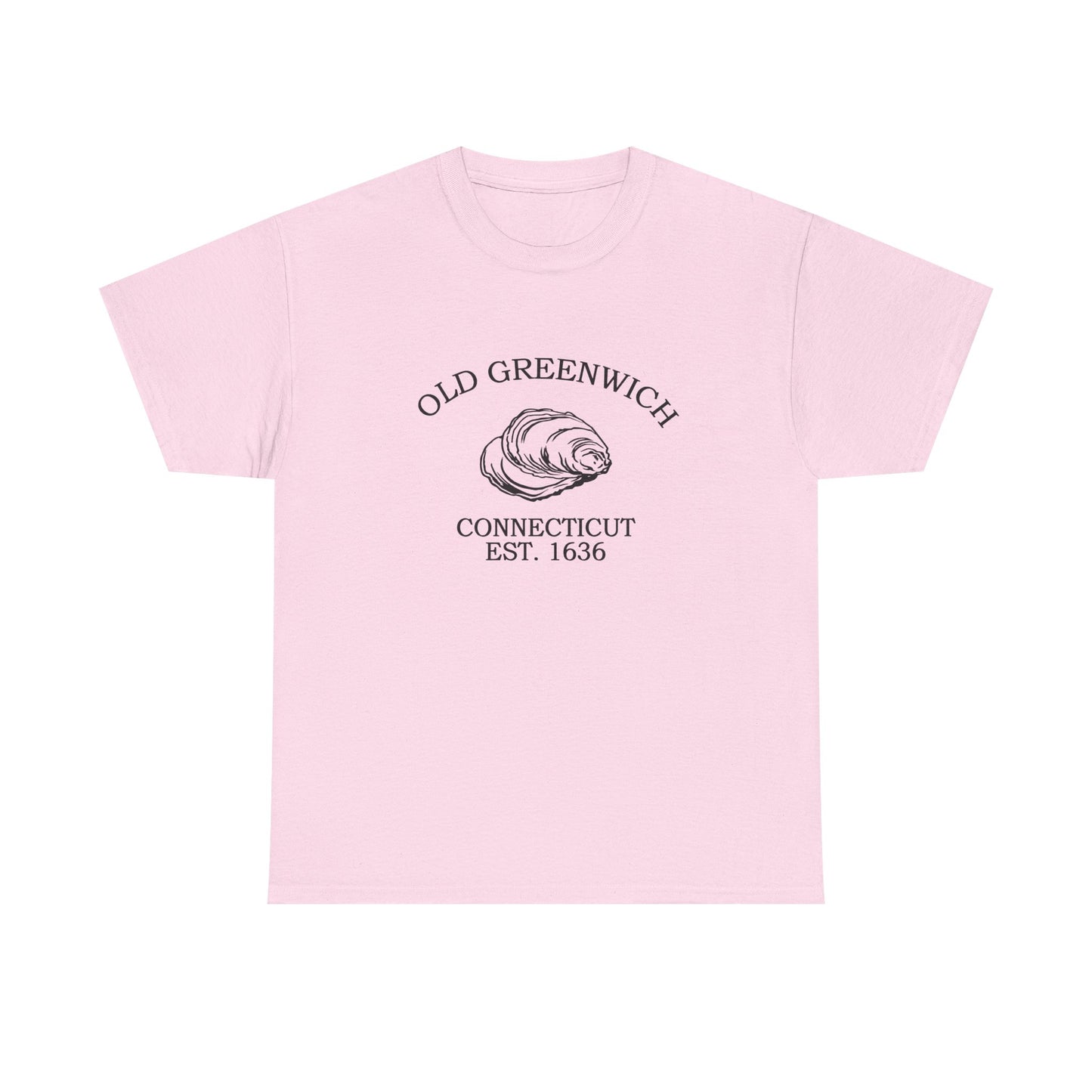
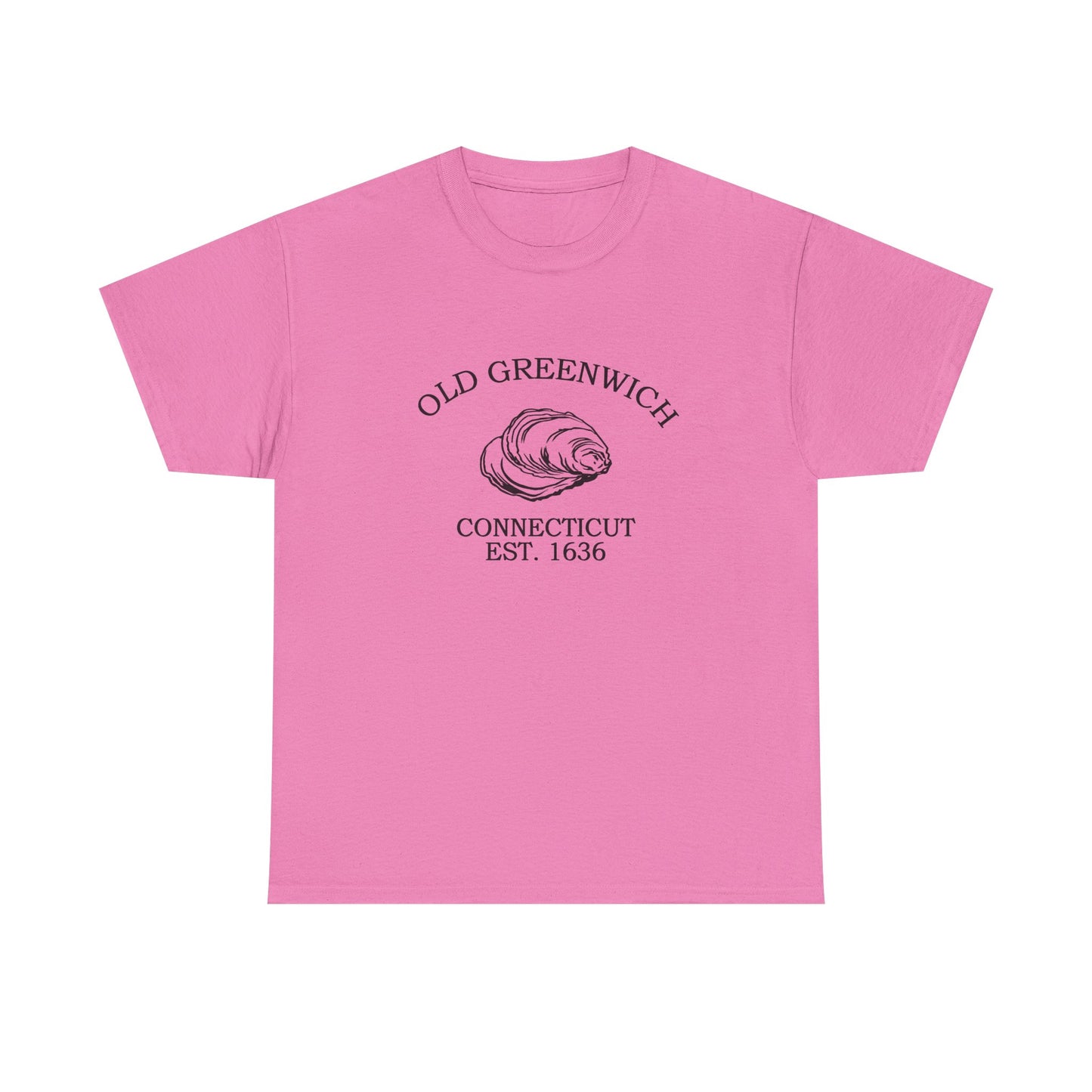
Our Old Greenwich logo carries Connecticut's oyster, above “Est. 1636,” the founding era of the Connecticut Colony — the shared emblem of every Merlin Classics Connecticut shoreline place. Printed in a worn black-and-white that recalls an old oyster-crate label, the oyster is the shoreline in shorthand: briny, durable, and tied to the working water. The oyster is the through-line that links Old Greenwich to every other Connecticut town we make. What makes this one Old Greenwich is everything around it — the shining sands of Tod's Point, the pond at Binney Park, and the 1640 founding ground where Greenwich began.
Old Greenwich is the original Greenwich. In 1640 Robert Feake, Captain Daniel Patrick, and their companions bought the land along this stretch of Long Island Sound from the Siwanoy people — a transaction recorded, in the language of the day, as a sale for twenty-five coats, and one that, like so many of its kind, began the long dispossession of the people who had lived here first. The settlers laid out farms and a landing on the sheltered coves, and the Feake-Ferris House, built around 1645 and still standing, survives as one of the oldest houses in Connecticut. For generations this was simply the “Old Town,” the founding ground from which the rest of Greenwich would grow.
Why People Visit Old Greenwich
Old Greenwich offers the Connecticut Gold Coast at its most low-key — a real shore village with a beach peninsula, a pond park, and a handful of streets of shops, plus the quiet distinction of being where Greenwich began. Visitors come for Tod's Point and the Sound, the founding history, and the unhurried village pace, and stay for the beaches, the coves, and the deep-rooted New England feel. It is refined, historic, and genuinely Connecticut.
