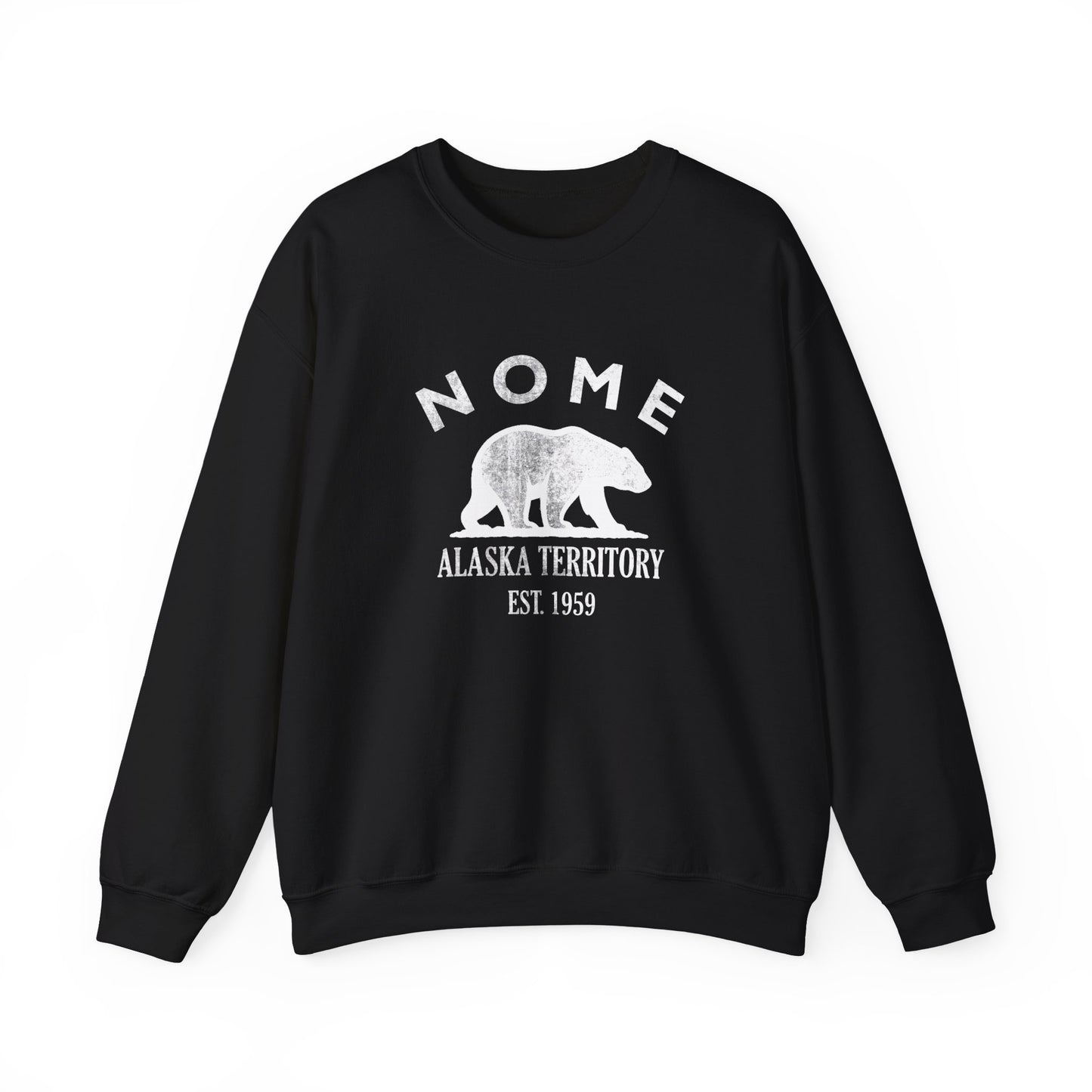
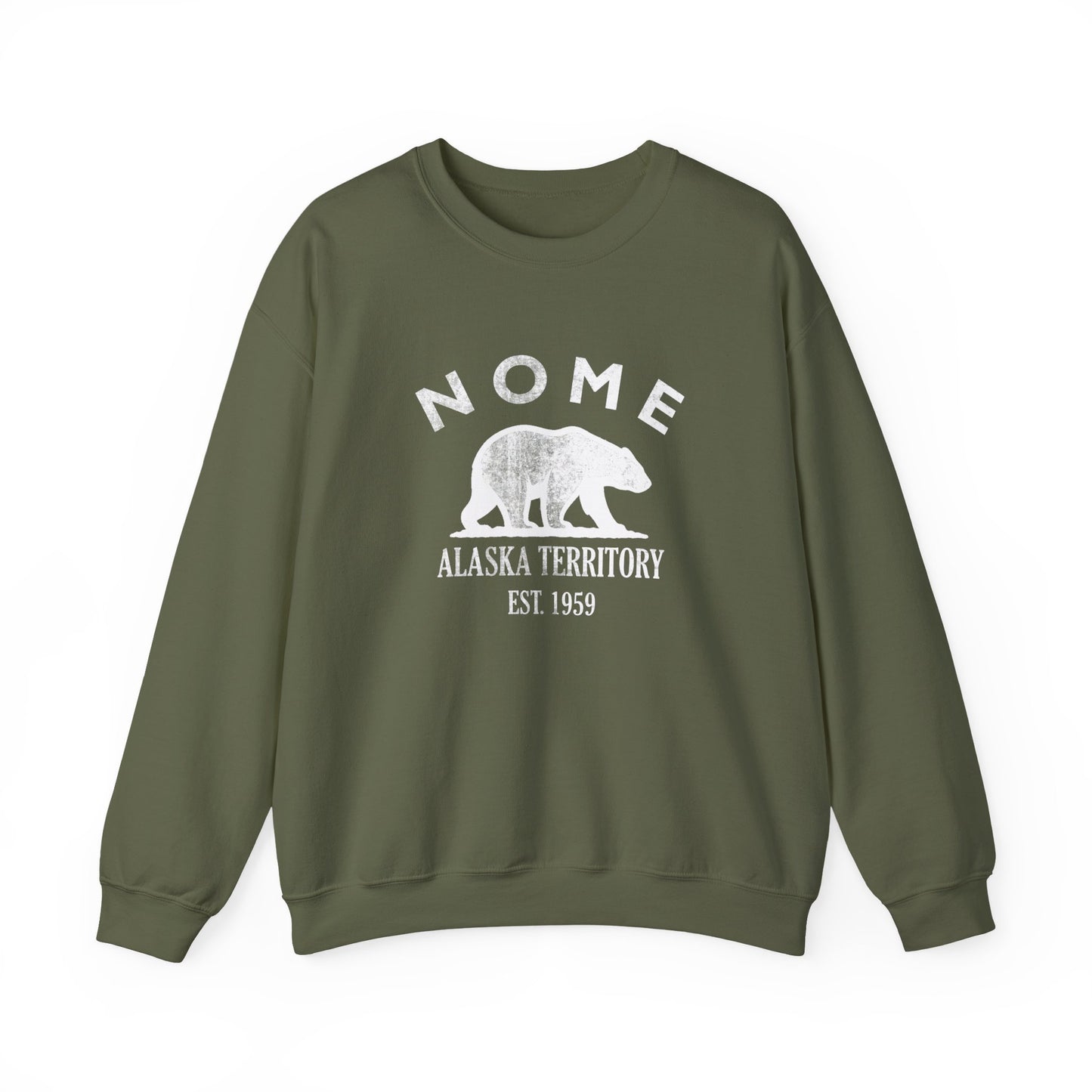
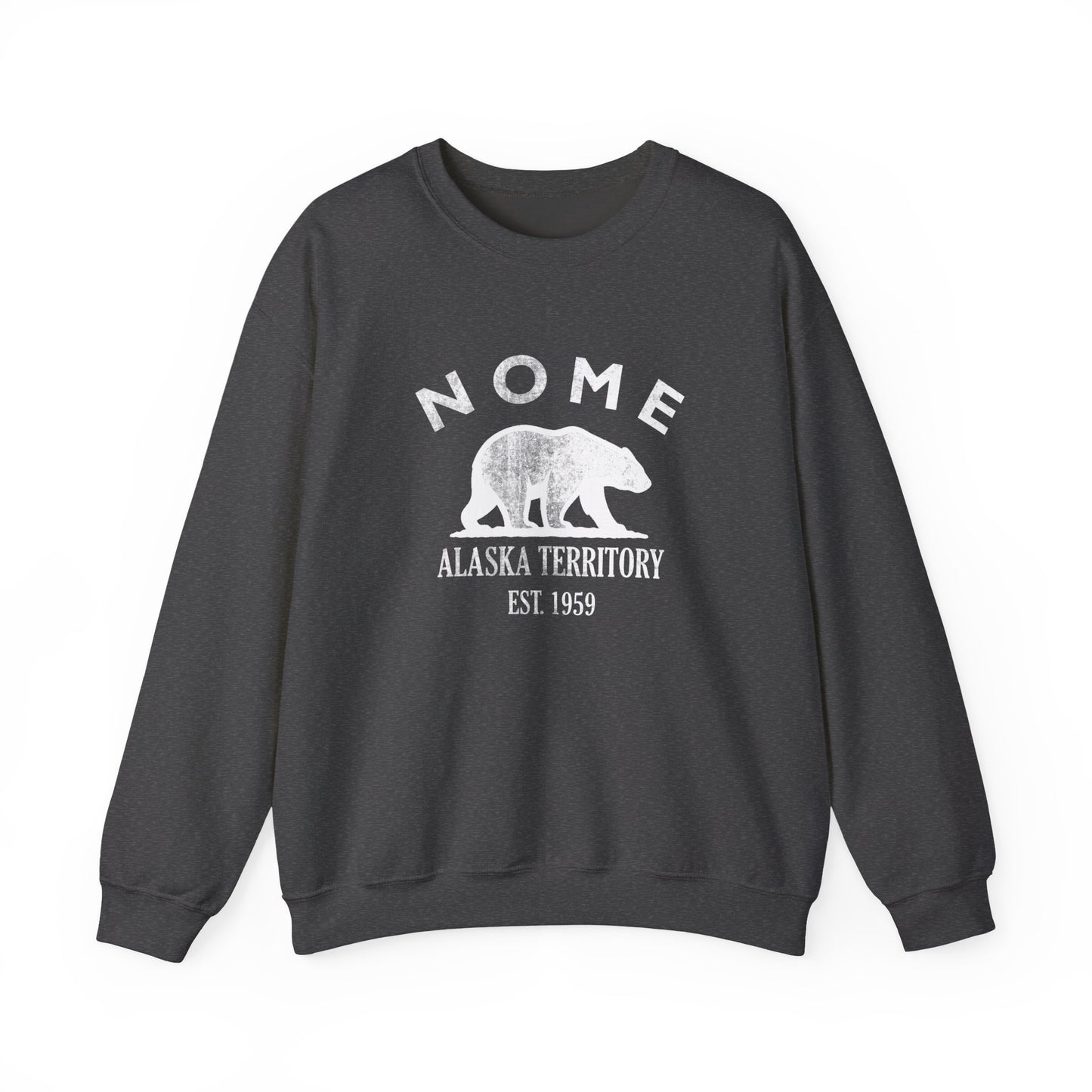
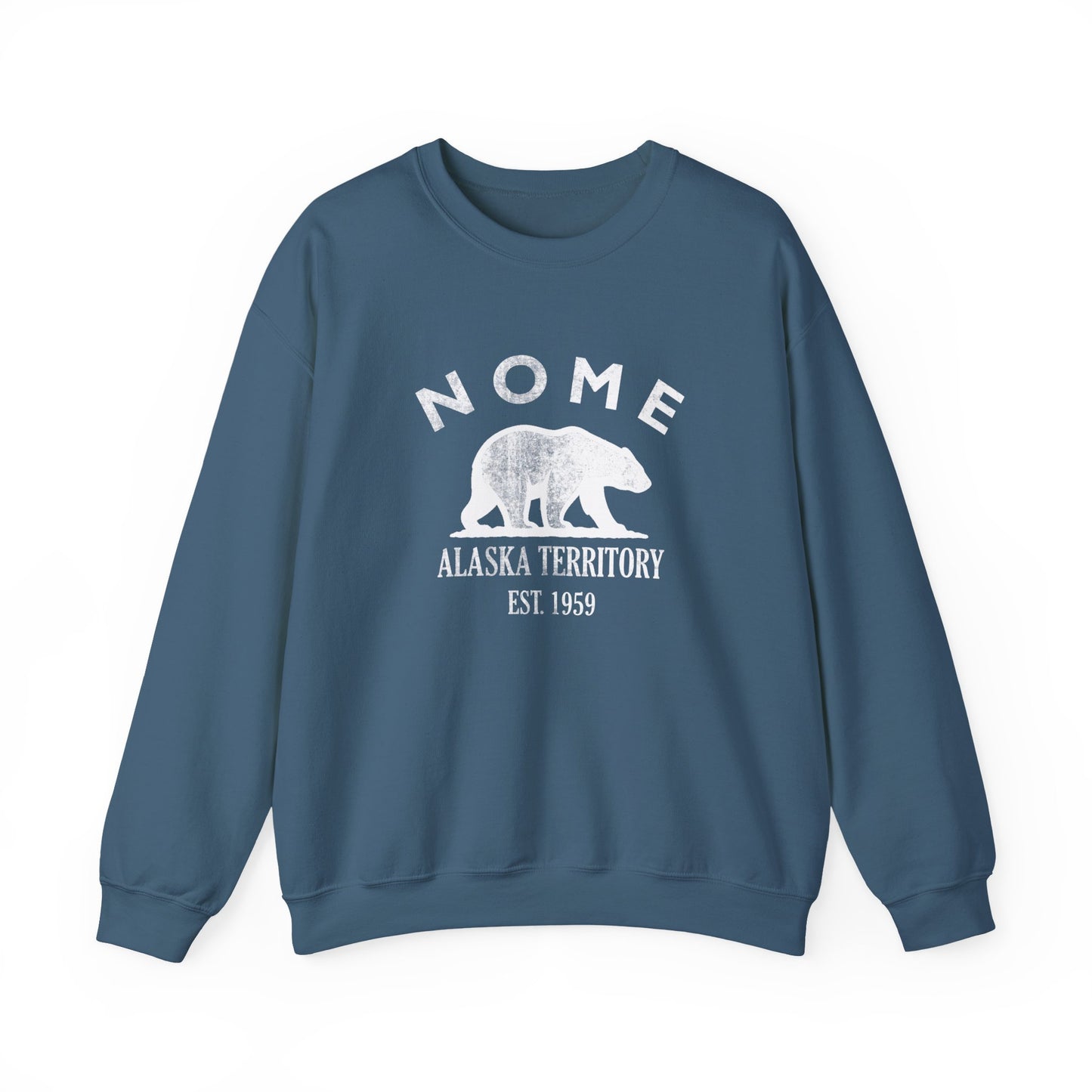
More From Nome Alaska
-
Nome Alaska Vintage Retro Embroidered Cotton Cap - White Logo
Regular price $32.00 USDRegular price -
Nome Alaska Vintage Retro Back Printed Art Series Cotton Tee - Black Logo
Regular price $32.00 USDRegular price -
Nome Alaska Vintage Retro Giclée Print Art Series Poster
Regular price From $38.00 USDRegular price -
Nome Alaska Vintage Retro Vinyl Sticker - Black Logo
Regular price From $6.00 USDRegular price


Front Street collected characters. Wyatt Earp — the Tombstone lawman — arrived in 1899 and ran the Dexter Saloon for two years as a businessman rather than a marshal; biographers estimate he left Nome with about $80,000, more than his lawman years ever paid him. The rush also drew a subtler kind of prospector: in 1900, political boss Alexander McKenzie and federal judge Arthur H. Noyes worked a scheme to seize the richest claims — including the Swedes’ — through the court itself, until a federal appeals panel shut it down and jailed McKenzie. Rex Beach turned the affair into his 1906 novel The Spoilers. Nome incorporated as a city on April 9, 1901; storms and fires — the worst in 1913 and 1934 — later took most of the original gold-rush buildings, though St. Joseph’s Church of 1901 still stands.
The twentieth century kept finding uses for the edge of the map. Roald Amundsen’s airship Norge, first across the North Pole in 1926, was bound for Nome when weather forced it down at nearby Teller; a bronze bust of the explorer stands on Front Street today. During World War II, Lend-Lease aircraft bound for the Soviet Union staged through Nome on their way across the Bering Strait. From the late 1950s until 1979 the four giant White Alice antennas on Anvil Mountain carried Cold War military communications, and they still stand against the tundra sky. In 1959 the federal government closed the school on King Island, and that Iñupiat community was forced to relocate permanently to Nome — a loss still carried within living memory. And in March 1973, the first Iditarod Trail Sled Dog Race finished on Front Street; every March since, dog teams have run roughly a thousand miles from Anchorage to the burled wooden arch the town raises over the street — an arch so beloved that when rot felled the old one in 2024, a new two-ton burled spruce was flown in for 2025 — and Nome’s population briefly doubles for race week.
Why People Visit Nome Alaska
- Walk Front Street, where the annual thousand-mile sled dog race from Anchorage has finished under a burled wooden arch since 1973 — a brand-new arch went up for 2025, and race week in March is the town’s biggest event of the year.
- Visit the Carrie M. McLain Memorial Museum for collections from the 1898 Anvil Creek gold rush, the 1925 Serum Run, and the Iñupiat communities of the Seward Peninsula.
- Drive the three gravel highways — Nome-Council, Kougarok, and Nome-Teller — for wide tundra views, seabirds, summer wildflowers, and muskox sightings before the roads simply end.
- See the abandoned gold dredges standing on the tundra outside town, massive relics of the 1920s–30s deep-dredging era.
- Visit Anvil Creek, the September 1898 discovery site a few miles north of town.
- Look up at the four White Alice antennas on Anvil Mountain, the Cold War communications site in service until 1979, accidentally photogenic against the Arctic sky.
- Stop at St. Joseph’s Church, completed in 1901 — one of the few structures to survive the town’s early disasters.
- Try recreational beach gold panning in summer — the same sands that started it all still give up color, and visitor panning is permitted on the public beach.
- Watch for the aurora borealis on clear nights from September through March — Nome’s long winter darkness makes it one of Alaska’s best northern-lights towns.
