


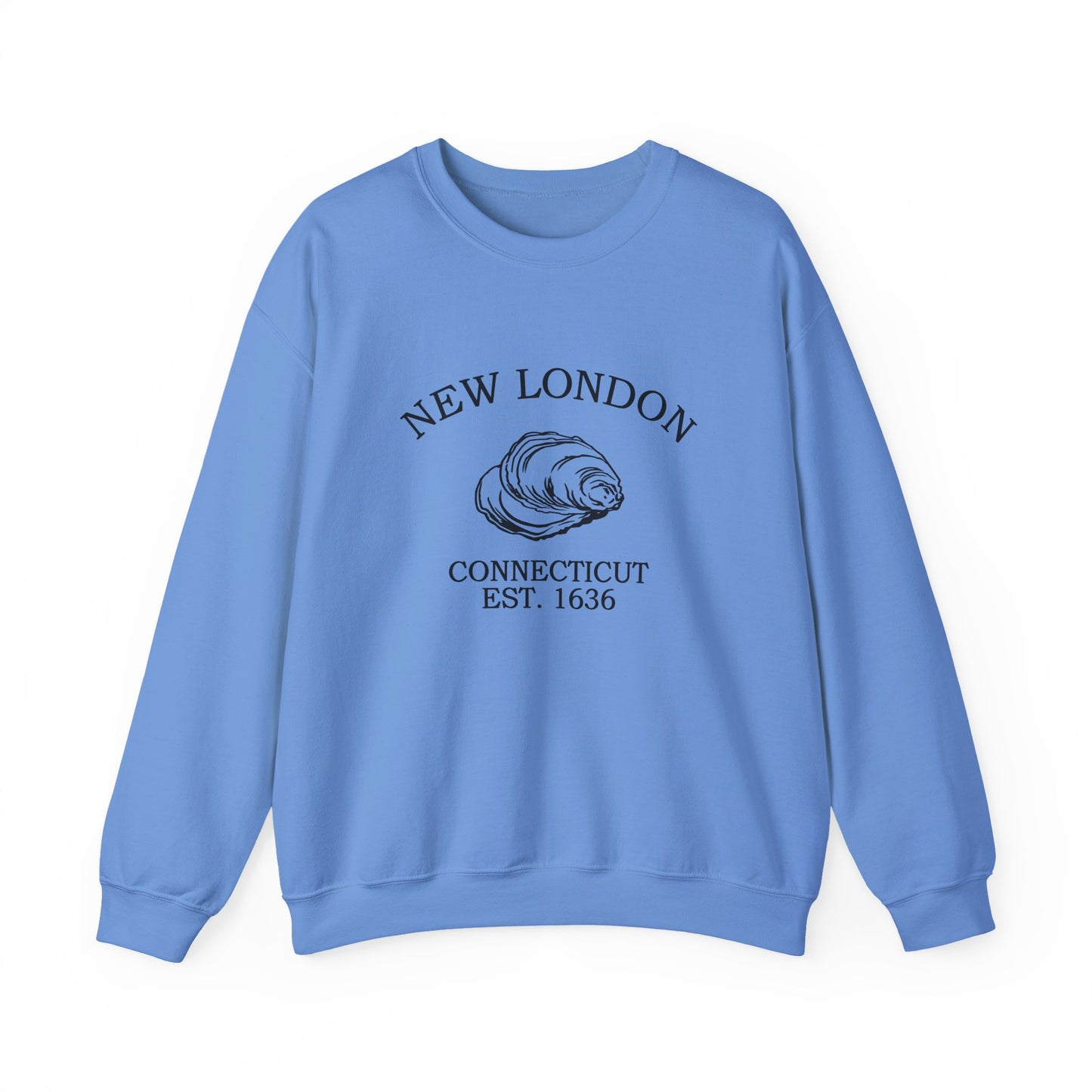
The water came first. The Pequot people lived and fished at the mouth of the Thames, and the settlement John Winthrop the Younger began here in 1646 was called Pequot until it was renamed New London in 1658 — for the city in England, on a river the colonists renamed the Thames to match. With one of the best deep-water harbors on the coast, New London became a shipbuilding and shipping town, and in the Revolution a base for privateers who captured hundreds of British vessels. That made it a target: on September 6, 1781, a British force led by the turncoat Benedict Arnold — born just up the river in Norwich — burned much of the city and stormed Fort Griswold across the Thames in Groton. New London rebuilt; chartered as a city in 1784, it turned back to the sea.
As whaling faded, the harbor found new work. The Coast Guard's officer school — afloat since 1876 — moved ashore to Fort Trumbull in 1910, was renamed the U.S. Coast Guard Academy in 1915, and in 1932 built its permanent campus on land New London citizens gave up the Thames. Since 1946 the academy's training barque Eagle has sailed from New London: a 295-foot square-rigger built in Germany in 1936 and taken as a war reparation, today the only active square-rigger in U.S. service. The city kept a literary fame, too — the playwright Eugene O'Neill spent his boyhood summers at the cottage on Pequot Avenue he later set on the stage, down to the moan of the harbor foghorn that runs all through Long Day's Journey Into Night.
Why People Visit New London Connecticut
People come to New London for its deep maritime history and its working-harbor life — the whaling heritage, the Coast Guard Academy, the lighthouses and ferries, the literary thread of Eugene O'Neill. It is a real seaport, not a recreated one: a small Connecticut city with a great harbor and a long view down the Thames toward the Sound.
