


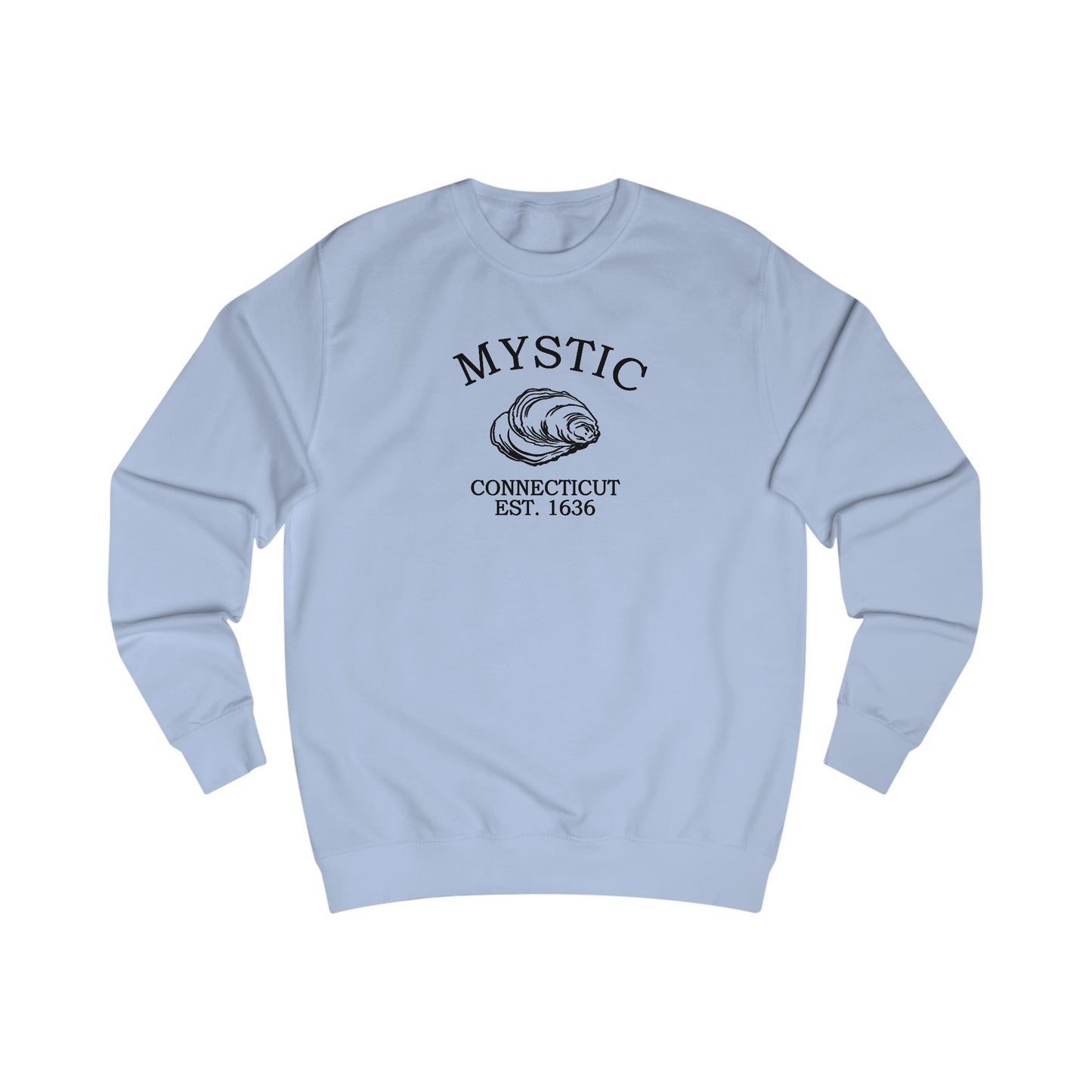
The village beneath the legend is older than the yards. Settled in 1654 along the banks of the Mystic River, Mystic has never been an incorporated town at all — it is a village split down the middle by its own river, the west bank in Groton, the east bank in Stonington, with the 1922 bascule drawbridge stitching the two halves together on Main Street. Captain Daniel Packer opened his tavern above the river in 1756, and it still serves dinner today. In the 19th century the Greenman brothers built their shipyard, their mill village, and their church at Greenmanville — the riverbank where the seaport museum complex, founded in 1929, now keeps the working preservation shipyard.
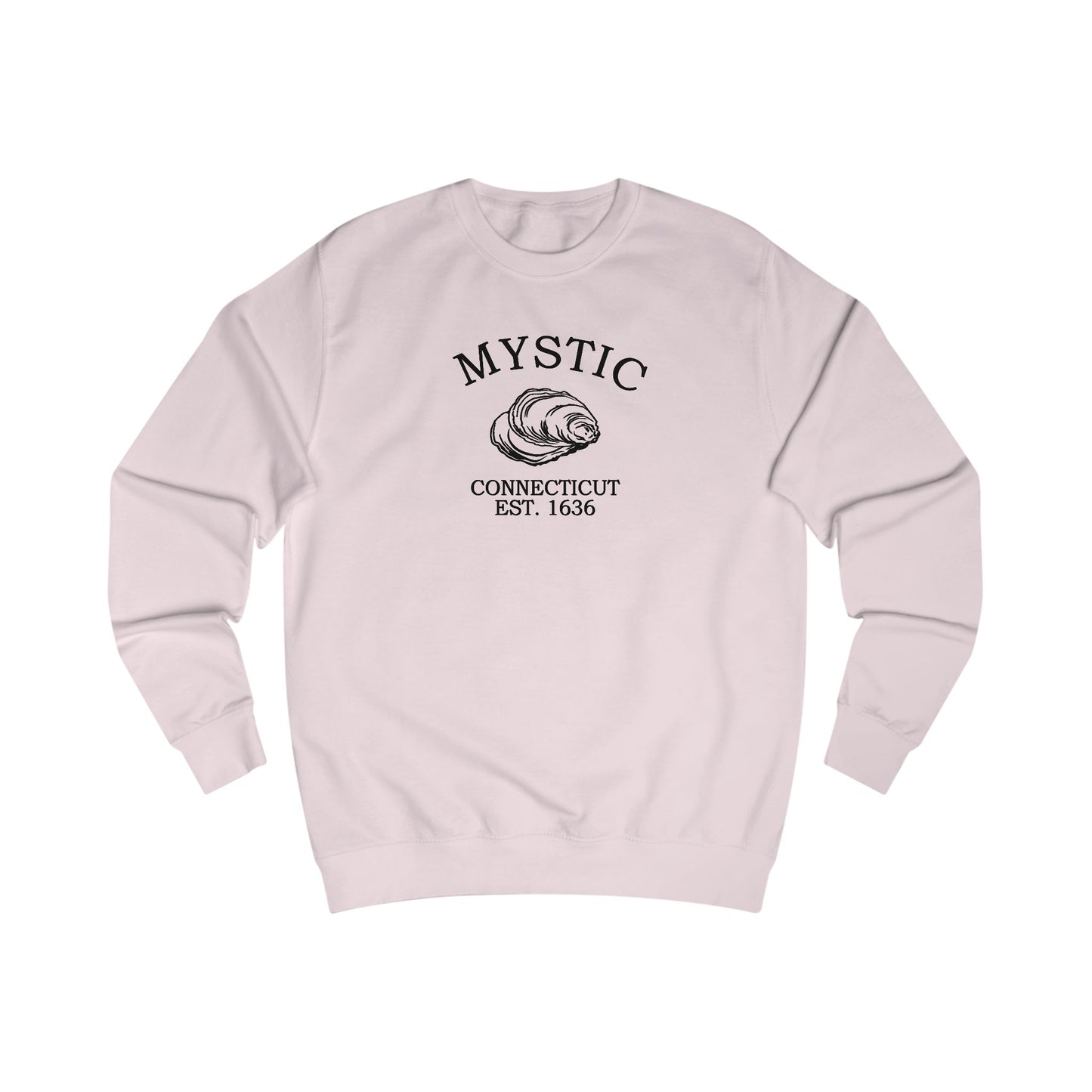
Our Mystic logo carries Connecticut's oyster shell over "Connecticut · Est. 1636," tying the village to the colonial founding of Connecticut — the shared emblem of every Merlin Classics Connecticut place. Printed black-and-white with the worn look of an old oyster-crate label, the shell reads as the shoreline in shorthand: tidal, maritime, salt-aired. What makes this one Mystic is the story behind it — the five yards, the six hundred ships, and the last wooden whaler in the world.
Why People Visit Mystic Connecticut
Mystic blends living maritime history with family experiences. Walkable streets, river views, and hands-on exhibits keep visits engaging. It is picturesque and educational in equal measure. Travelers find year round appeal in parks, paths, and public spaces. The setting combines natural beauty with accessible neighborhoods and landmarks. History and everyday culture sit side by side in a welcoming way.
