


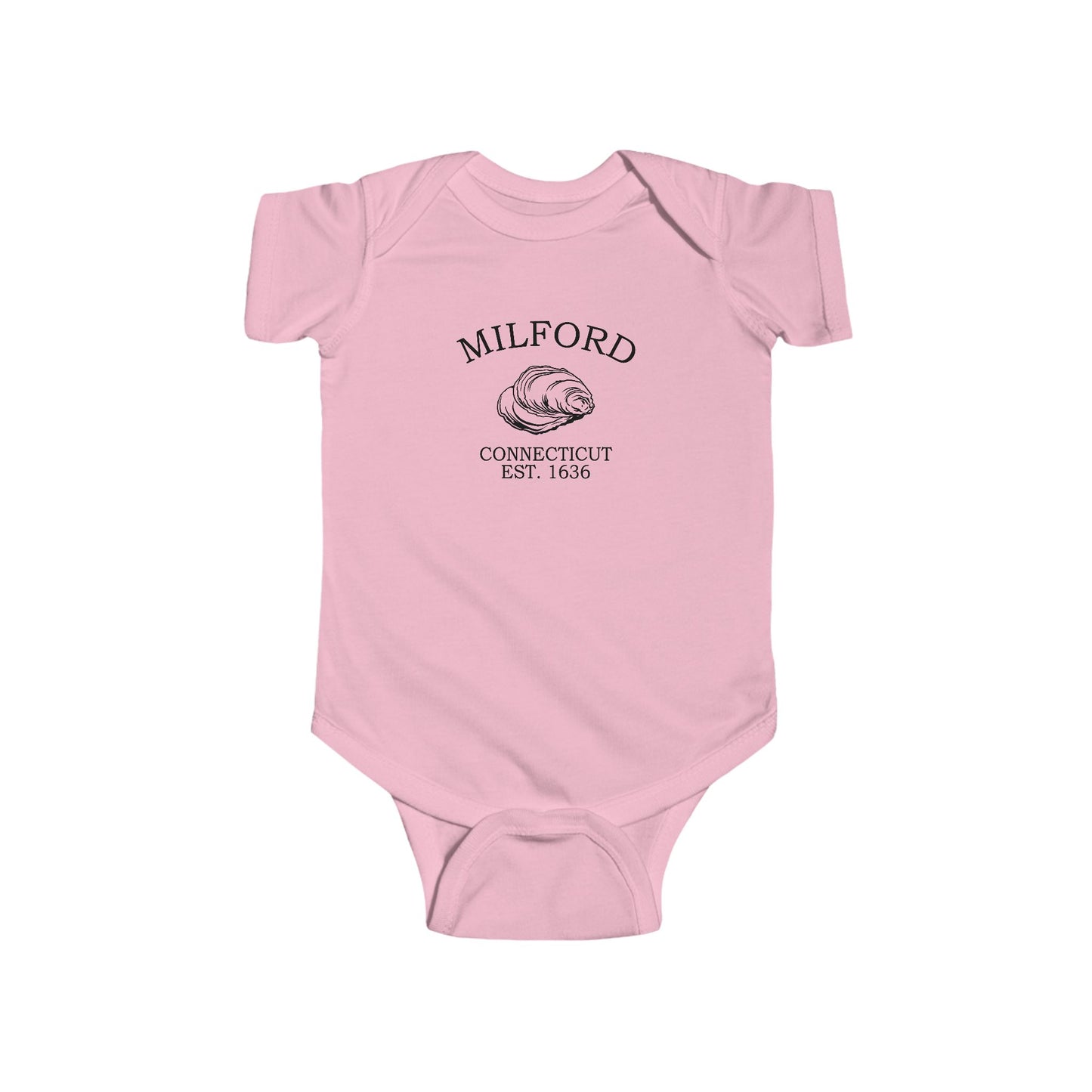
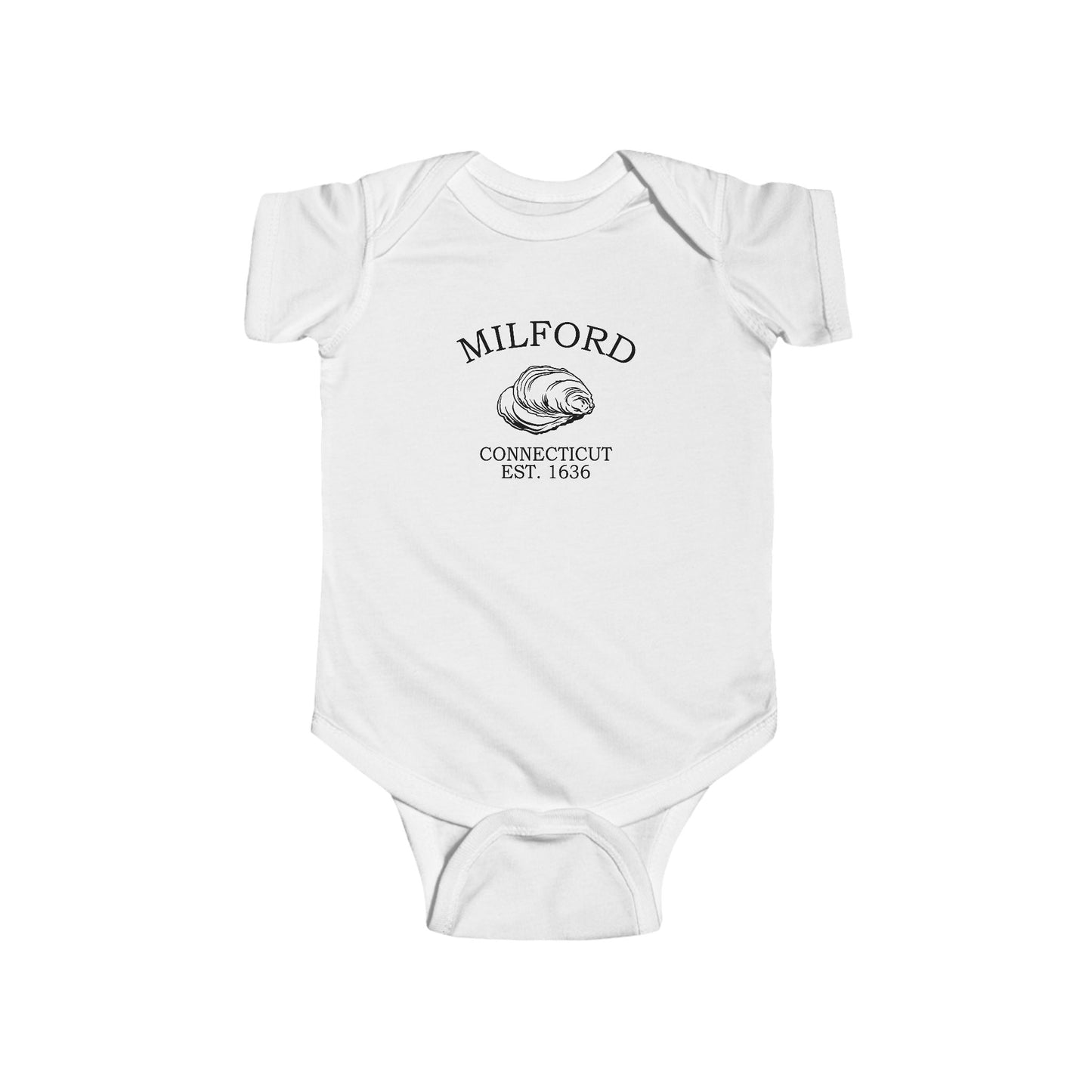
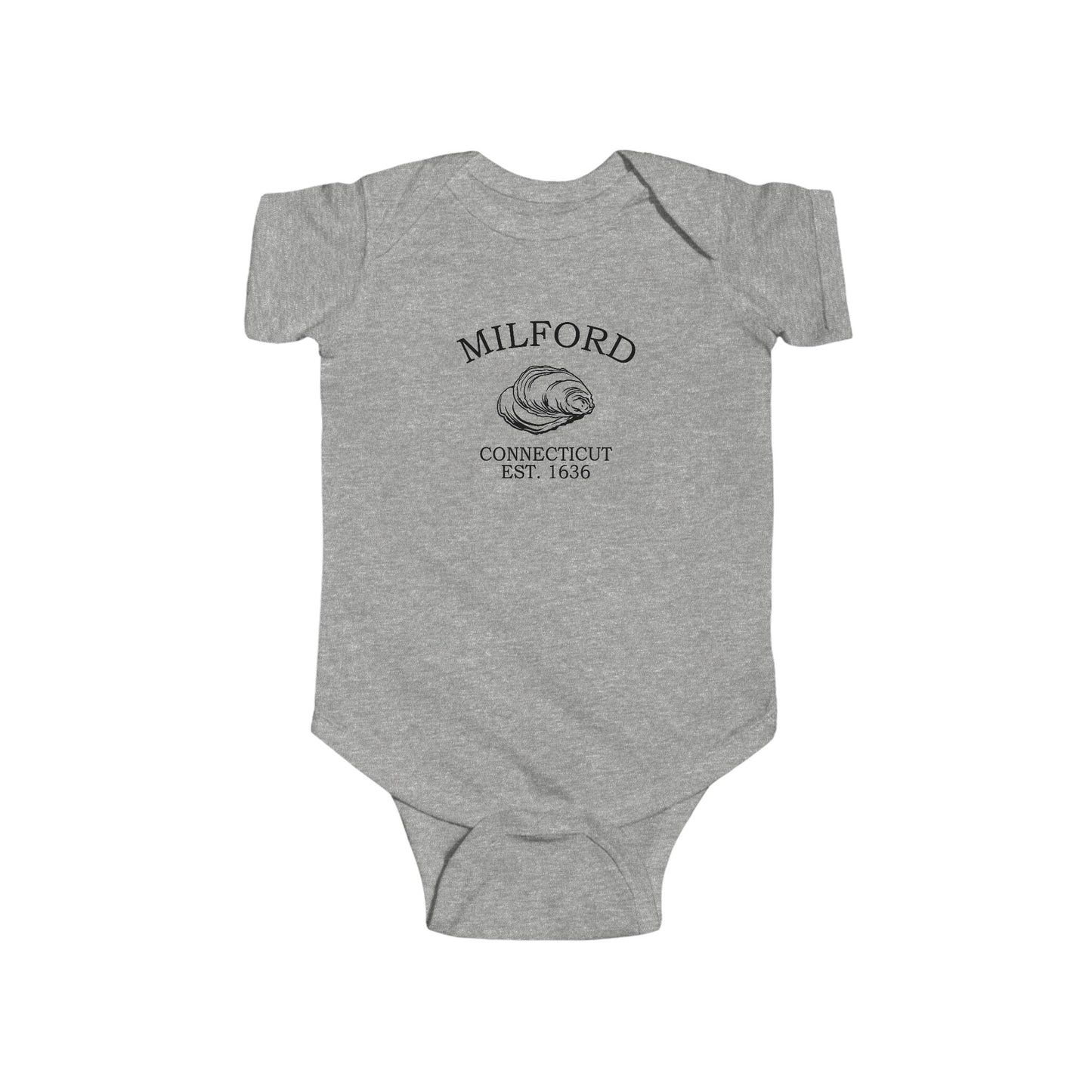
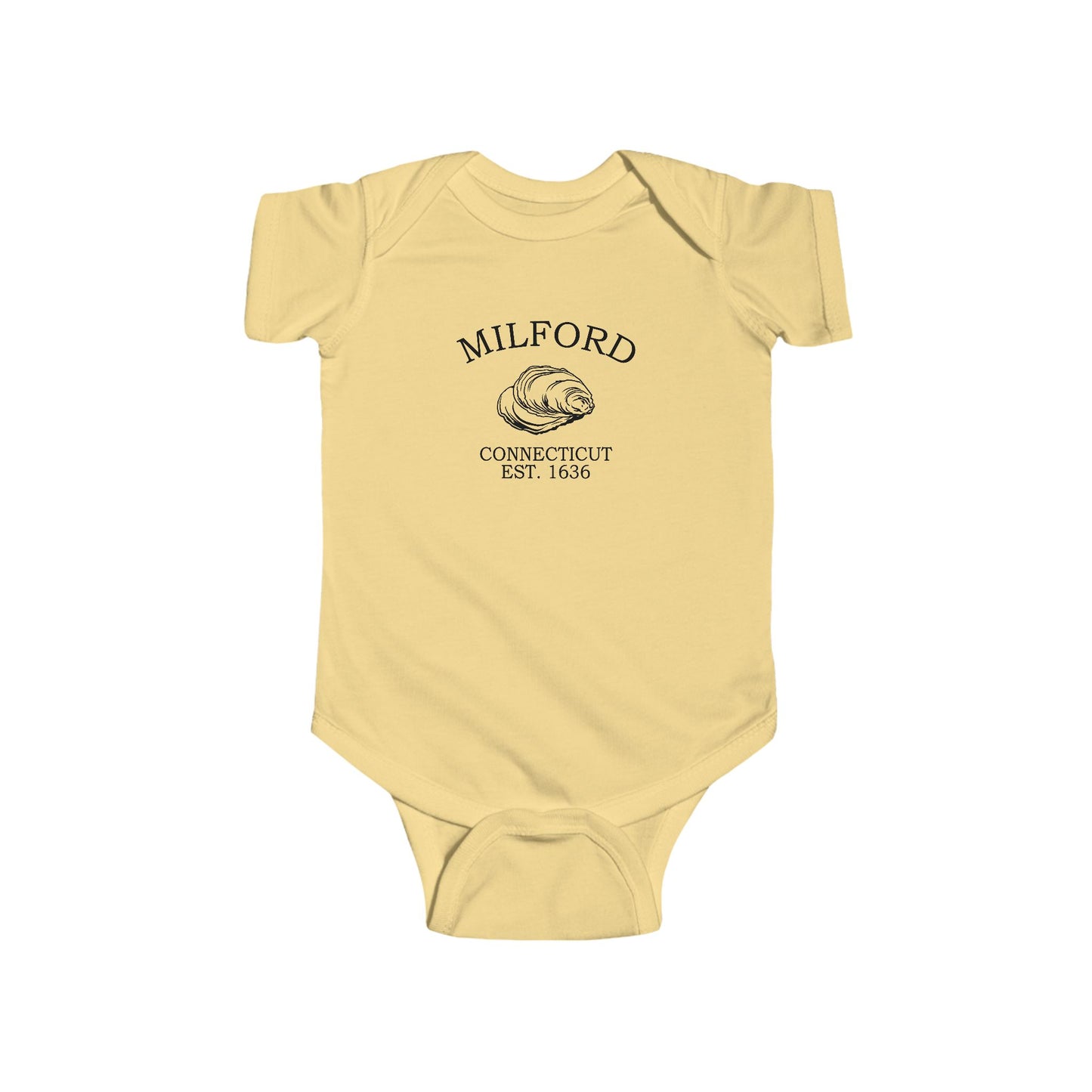
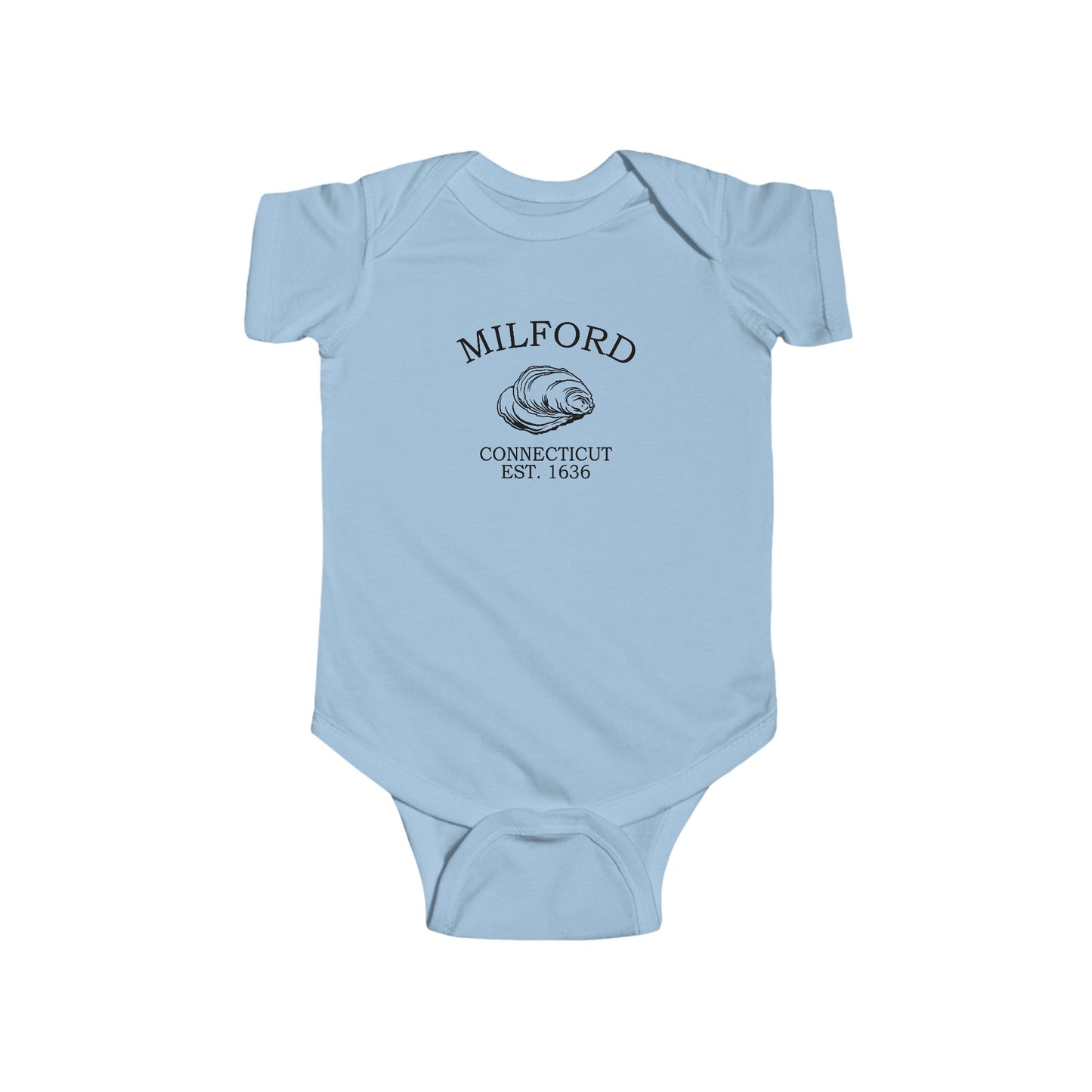
Our Milford logo carries Connecticut's oyster above ‘Connecticut — Est. 1636,’ the shared retro emblem of our Connecticut towns; the oyster stands for the Long Island Sound shellfishing that built so many of them, and 1636 marks the founding of the colony. Rendered in black-and-white, like an old crate label, it ties Milford to every other Connecticut town we make. What makes this one Milford is the town behind the shell — the long Green, the island offshore, and the oyster boats on the Sound.
That story begins on the water's edge. In February 1639, English settlers led by the Reverend Peter Prudden bought the land the Paugusset called Wepawaug from their chief sachem, Ansantawae, whose bow and arrow still appear on the town seal. The settlers arrived that August, making Milford the sixth-oldest town in Connecticut. A year later, in 1640, William Fowler built a water-powered grist mill by the river — the mill at the ford — and the town took its name. Among the first planters was Robert Treat, who settled here at fifteen, rose to be governor of Connecticut, and later led the group that founded Newark, New Jersey.
Why People Visit Milford
Milford balances a historic green, a legendary island, and miles of easy shoreline. Visitors enjoy simple seaside walks, boardwalks, and small cultural stops between the beaches and the harbor. It is peaceful, family-friendly, and close to nature, with year-round appeal in its parks, paths, and public spaces. History and everyday coastal life sit side by side here, from the long Green and the colonial downtown to the oyster boats and the boardwalk beyond.
