


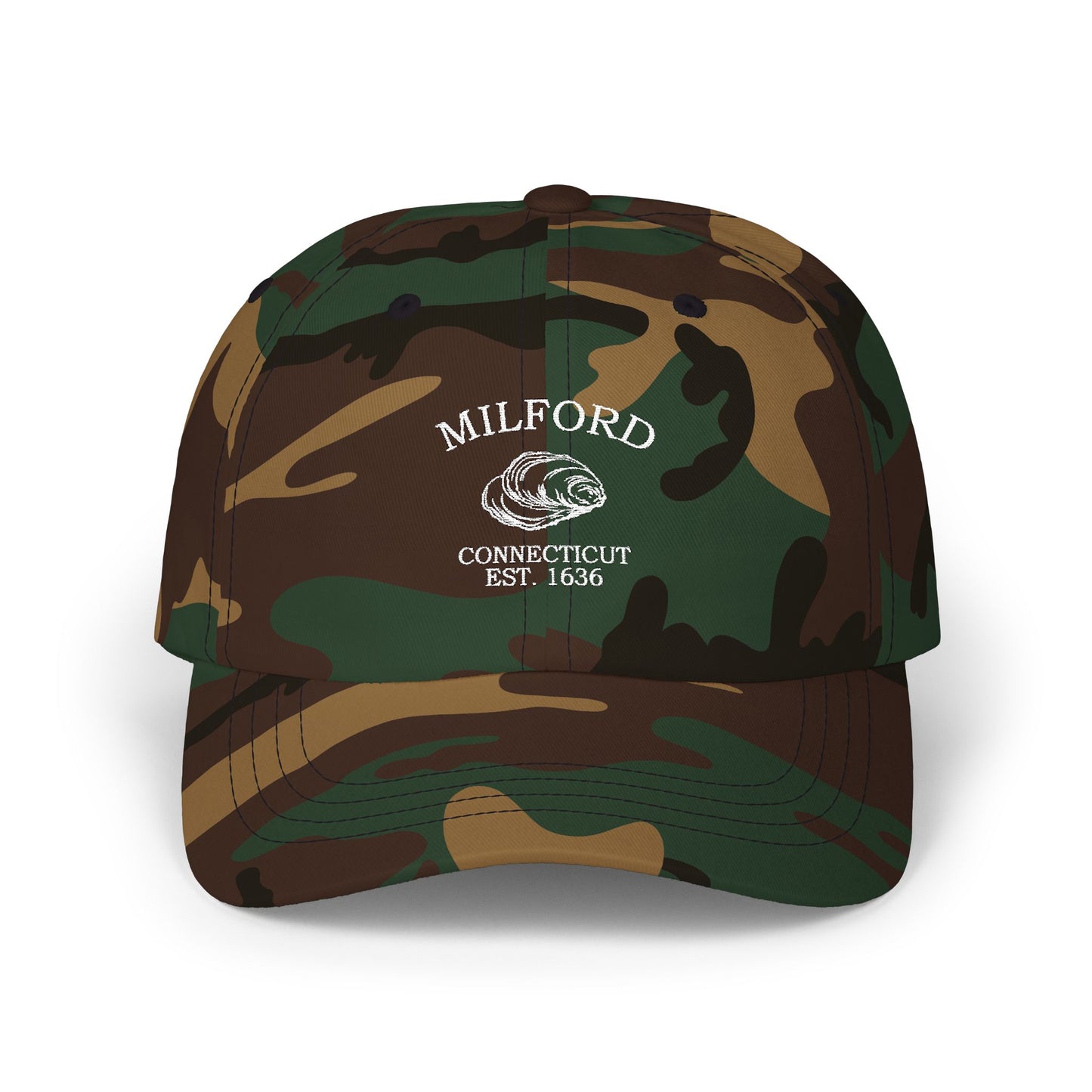
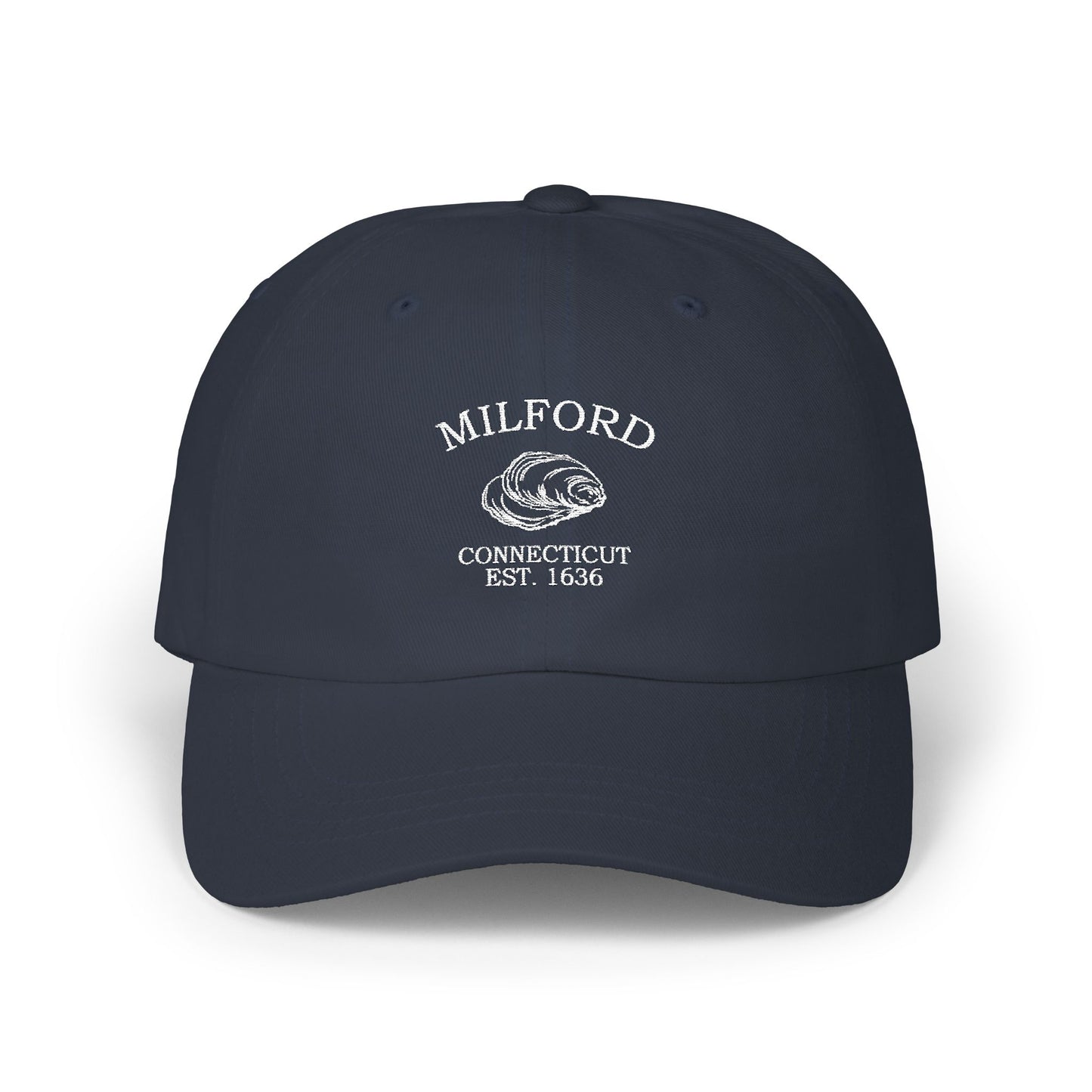
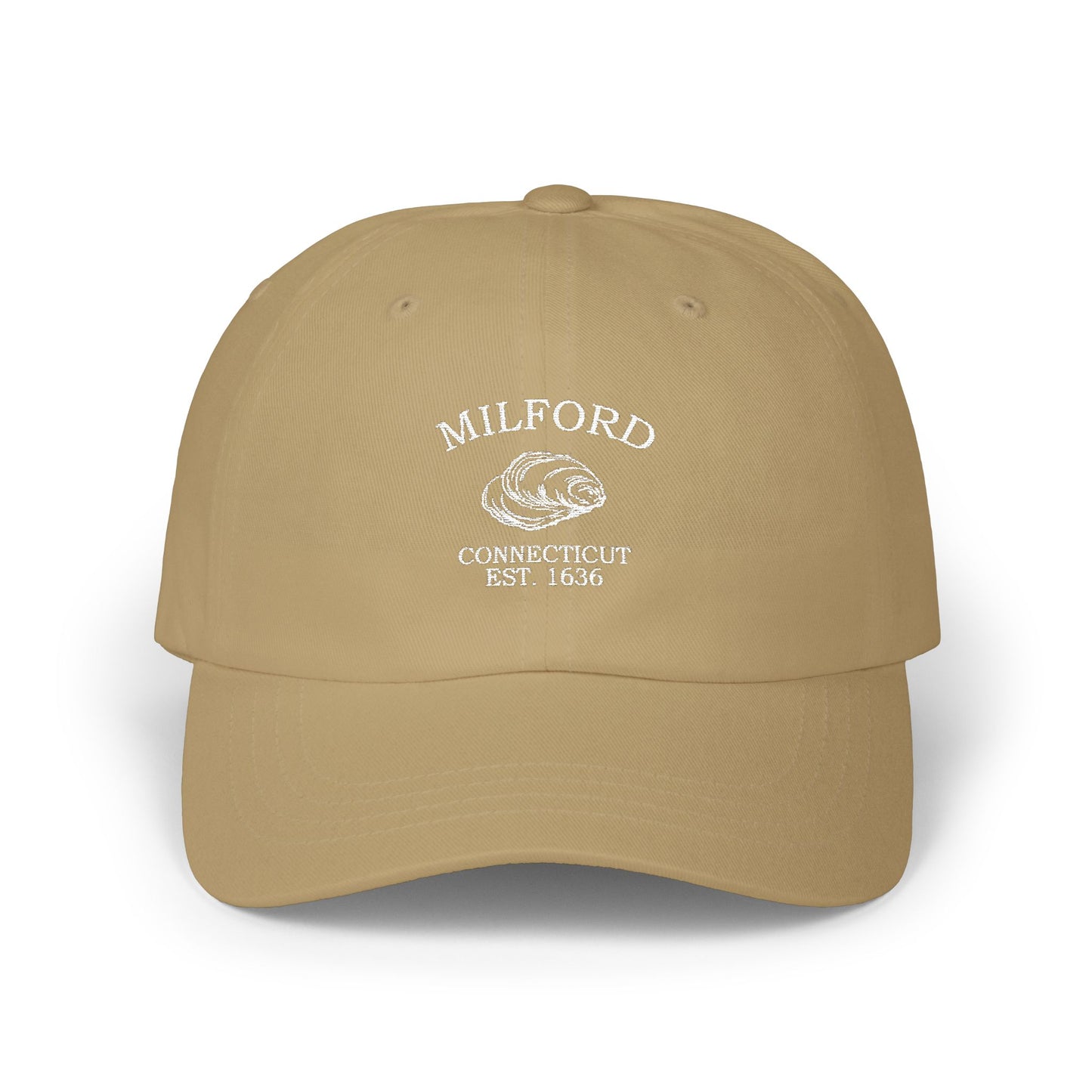
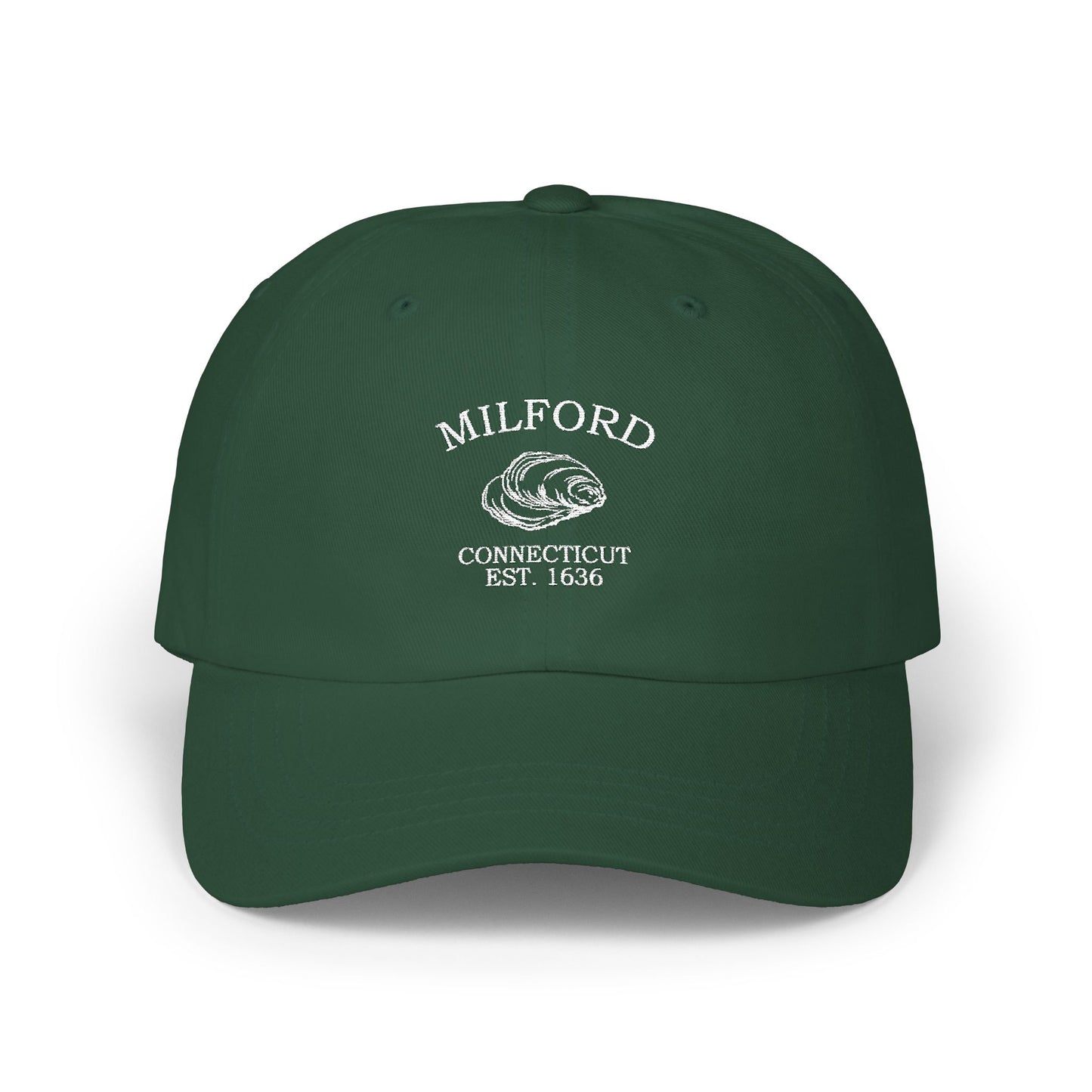
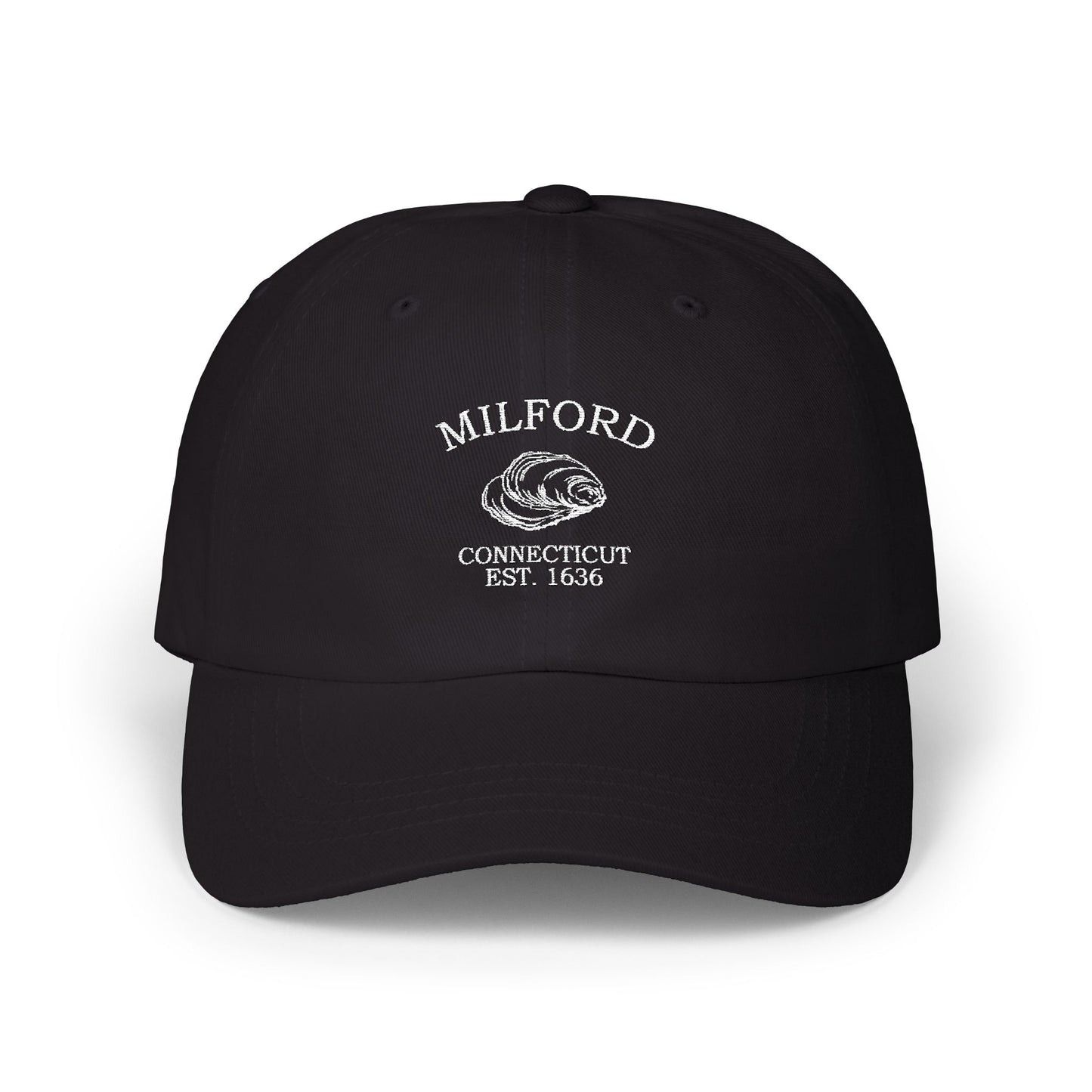
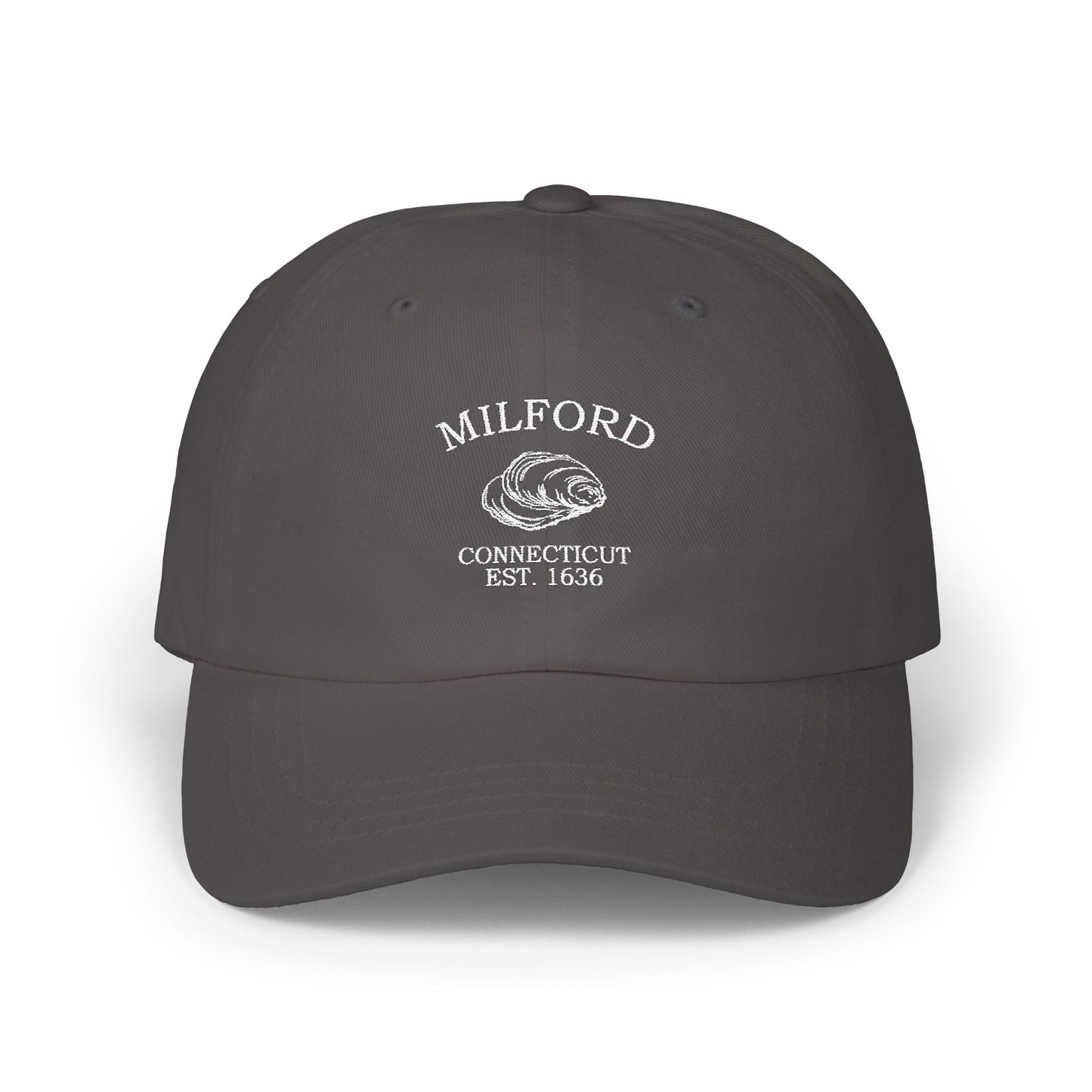
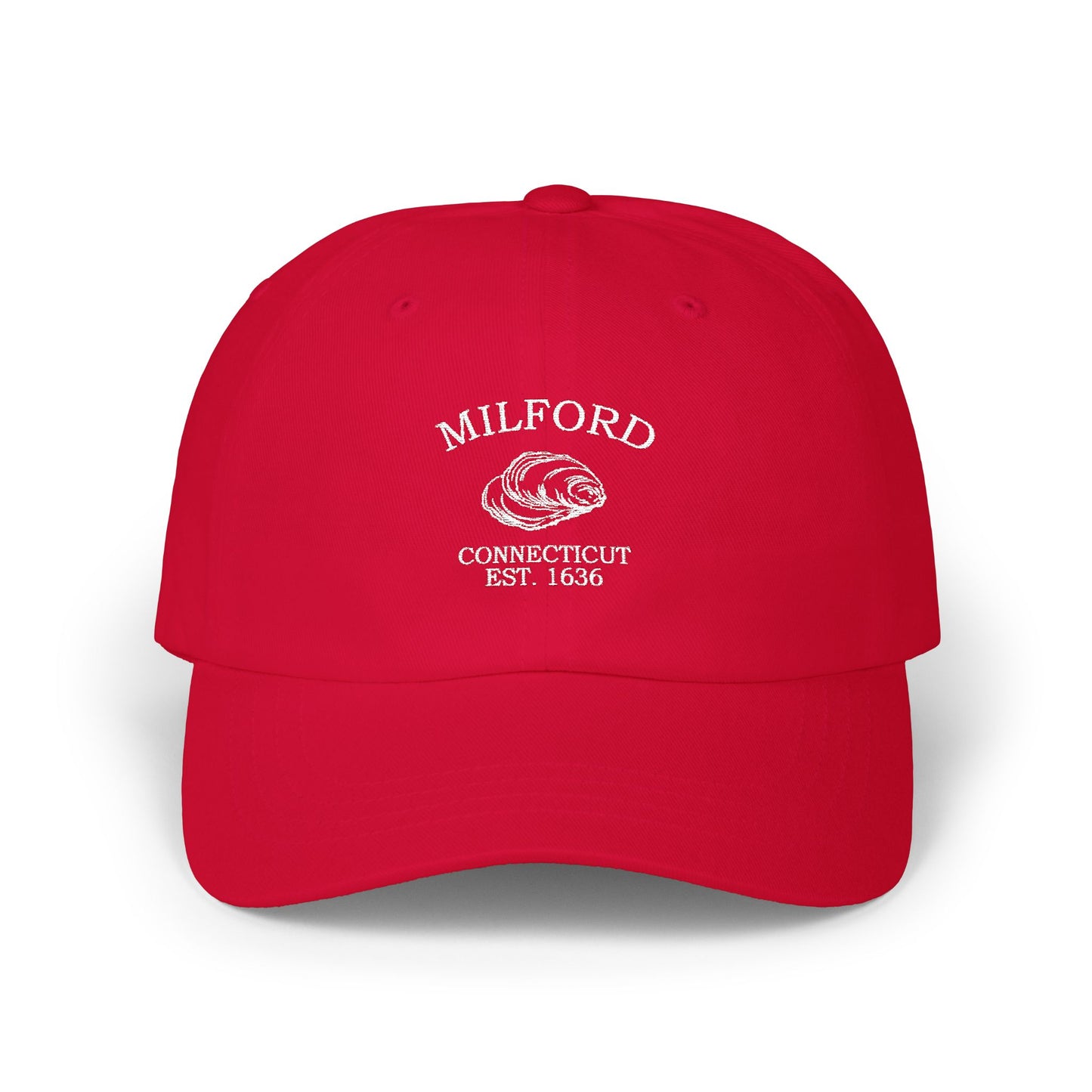
So Milford gathers a 1639 green, a treasure island, an oyster festival, and seventeen miles of shore onto Long Island Sound. Our Milford designs gather that into wearable form. Wear the history. On the Wepawaug since 1639 — Milford, CT.
The town still gathers where it always has. Since 1974 the Milford Oyster Festival has filled the Green and the downtown every August, growing into the largest single-day event in the state. Around it sits a historic downtown along the Wepawaug — the duck pond, the First Congregational Church, the Robert Treat Memorial Tower honoring the founders — a New Haven–area city that, through every change, has kept its harbor and its Green.
Why People Visit Milford
Milford balances a historic green, a legendary island, and miles of easy shoreline. Visitors enjoy simple seaside walks, boardwalks, and small cultural stops between the beaches and the harbor. It is peaceful, family-friendly, and close to nature, with year-round appeal in its parks, paths, and public spaces. History and everyday coastal life sit side by side here, from the long Green and the colonial downtown to the oyster boats and the boardwalk beyond.
