


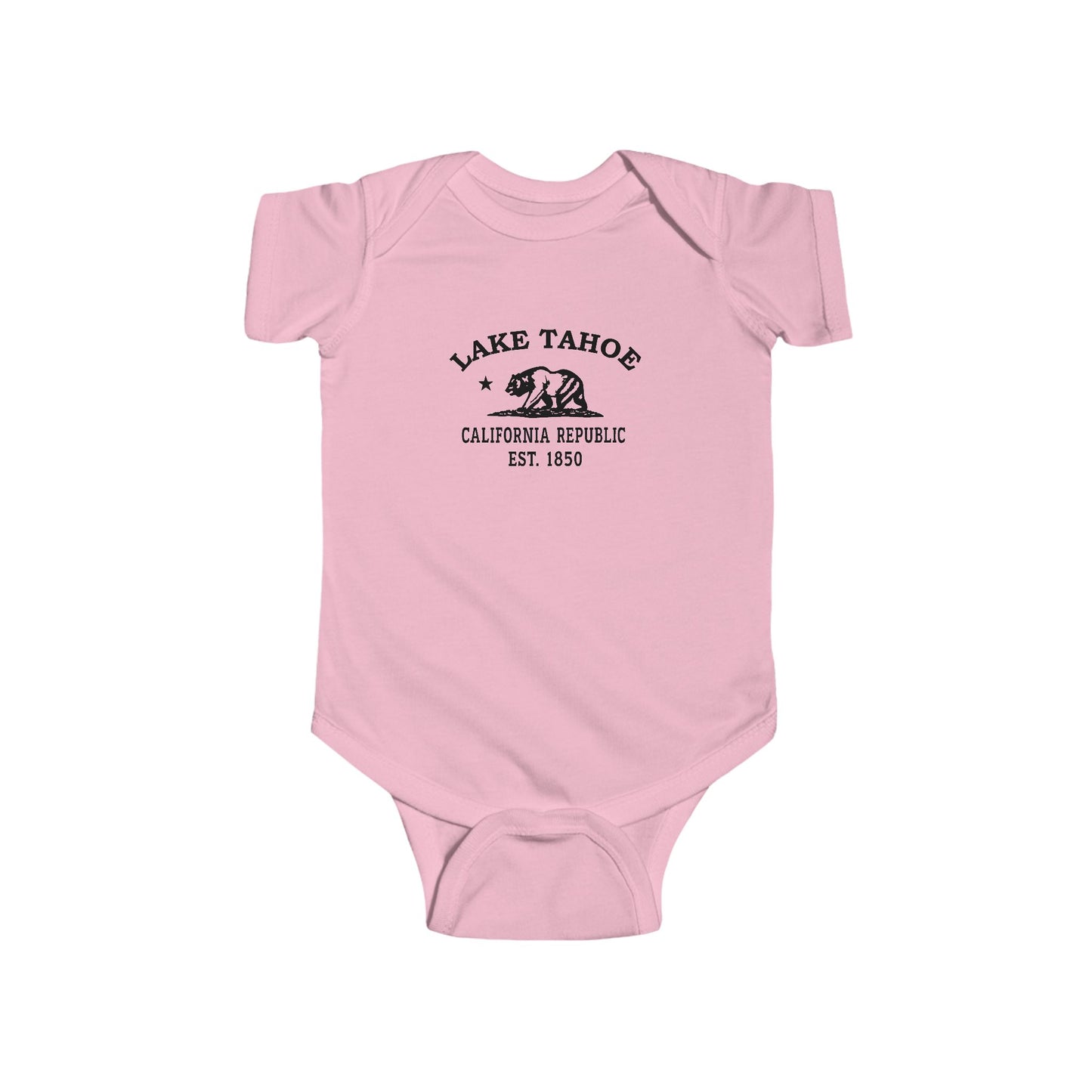
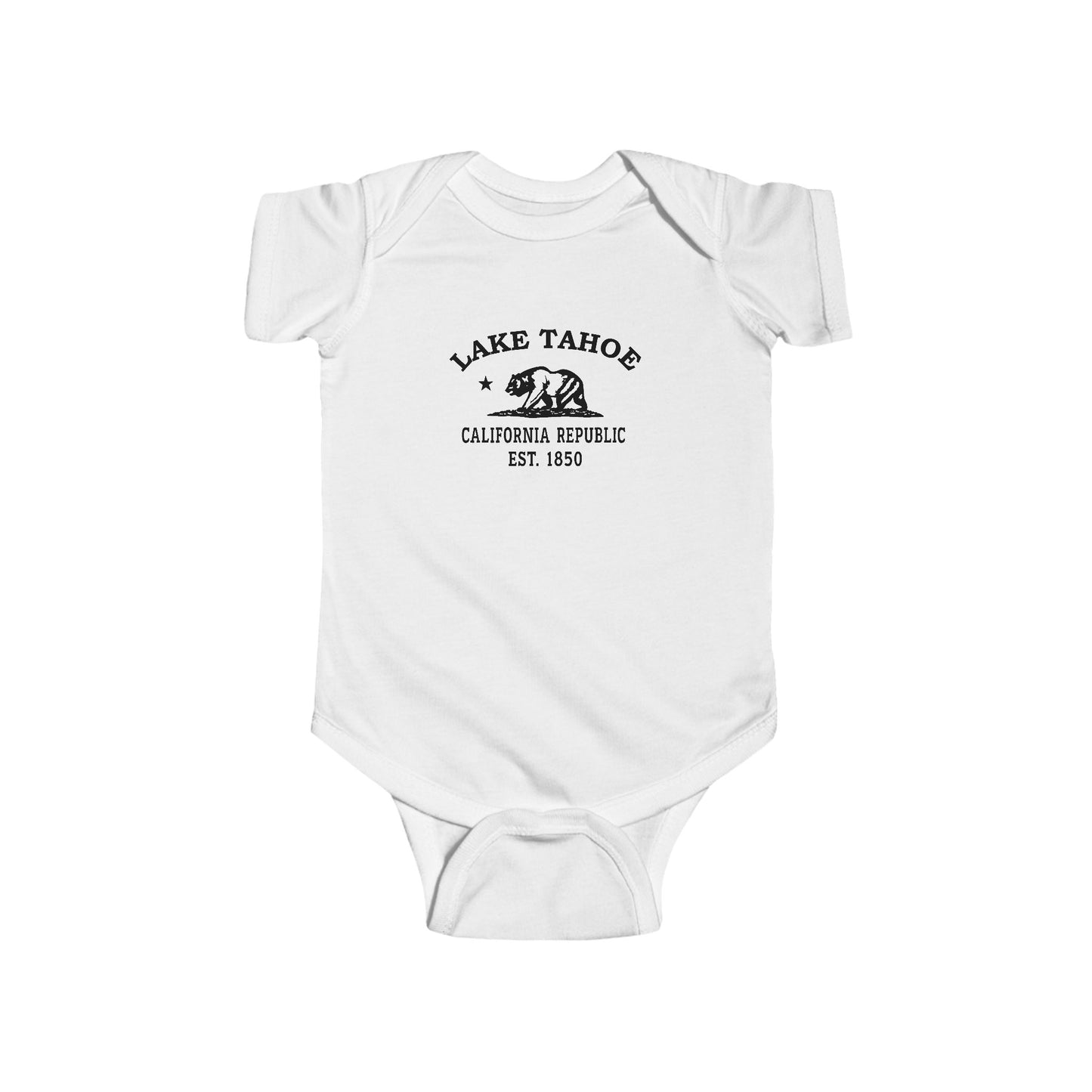
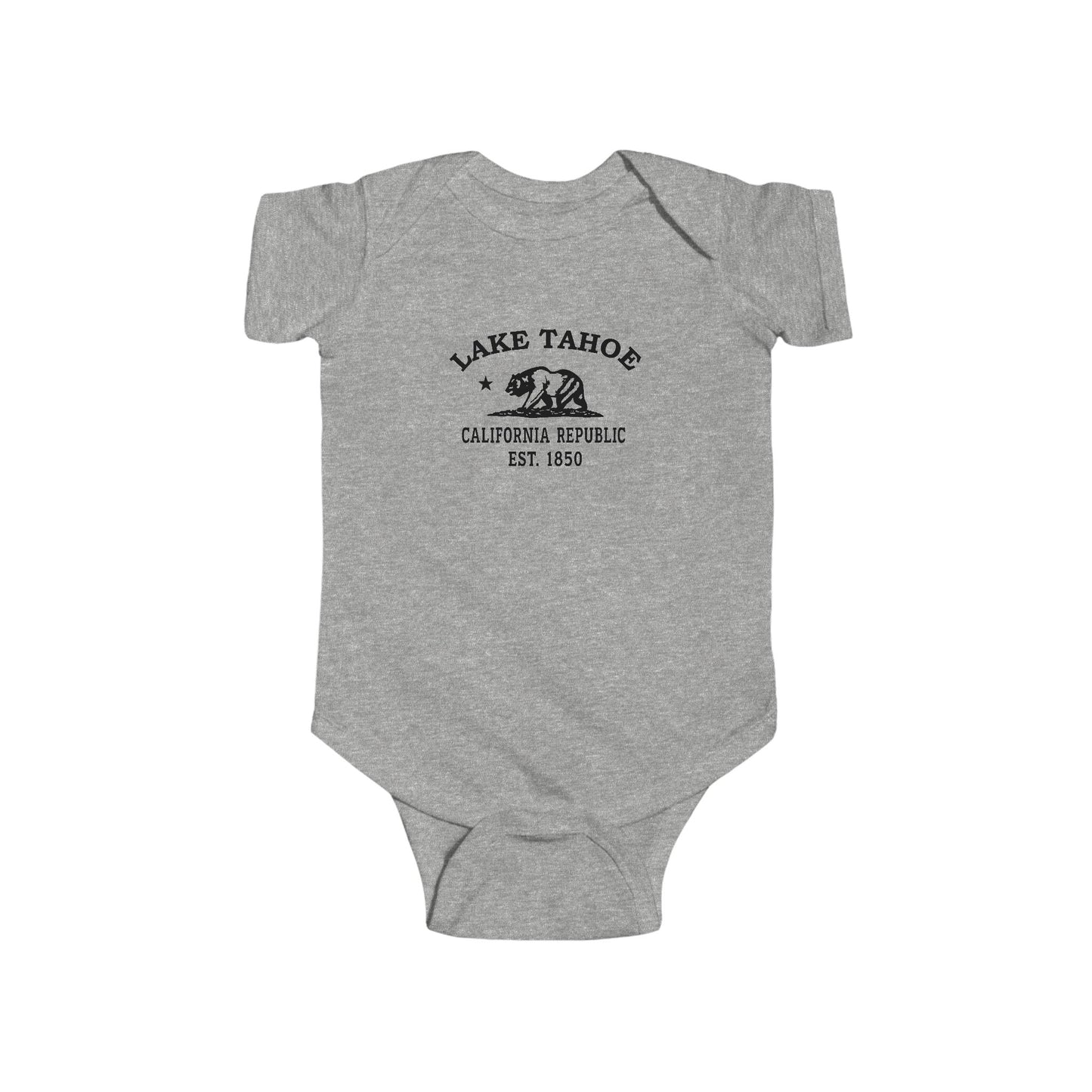

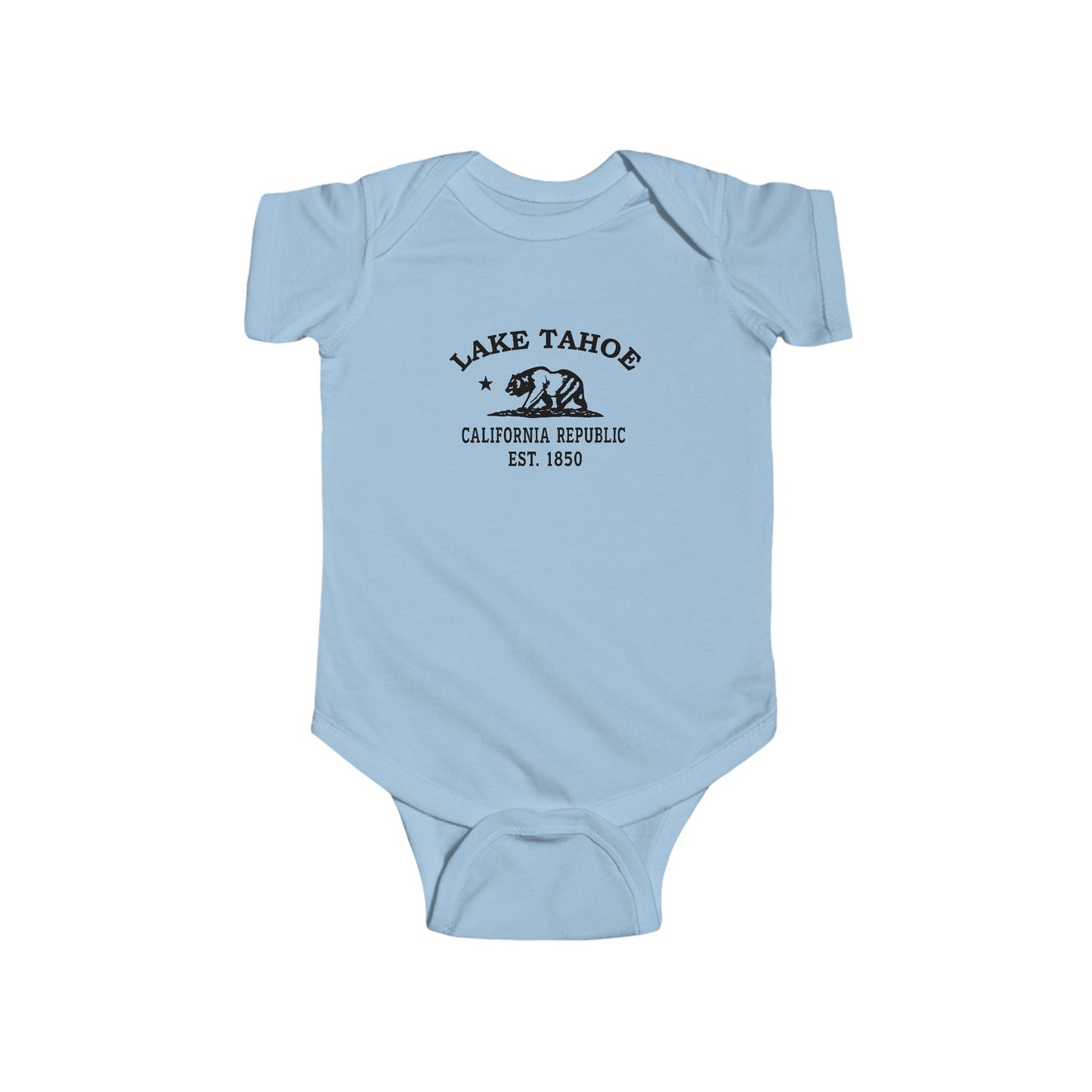
Our Lake Tahoe logo carries the same emblem every Merlin Classics California place wears — the grizzly bear and lone star of the state flag, above "California, Est. 1850," the year of statehood, rendered in hand-printed black and white with a worn, vintage feel. The bear is California's mark, the through-line that ties Tahoe to every other California place we make. What makes this one Tahoe is everything around it: the cobalt depth, the granite shore, the castle on Emerald Bay. On a tee or a cap it reads less like a souvenir and more like a small piece of the High Sierra — Est. 1850, worn plain.
The twentieth century made Tahoe a playground. Steamers gave way to highways, lodges to ski resorts, and in 1960 the Winter Olympics came to nearby Olympic Valley — today Palisades Tahoe — launching the modern ski era that fills the basin every winter. Summer brought boating, hiking, and the beaches; winter brought the snow that lingers on the peaks into May. Through all of it, the clarity of the water became the thing worth protecting: the "Keep Tahoe Blue" conservation movement grew up to defend exactly the cobalt depth that made the lake famous. Big Blue is still, first and last, the lake itself.
Why People Visit Lake Tahoe California
Lake Tahoe draws people who love mountains and water in the same view. It is Big Blue — the highest, deepest, clearest alpine lake in the West — with a National Natural Landmark bay, a Scandinavian castle, a ten-thousand-year Washoe heritage, and ski slopes and beaches a few hours from the city. Visitors come for the rare combination: cobalt water you can see straight down into, granite peaks above it, and a shore that's beautiful in snow and sun alike.
