


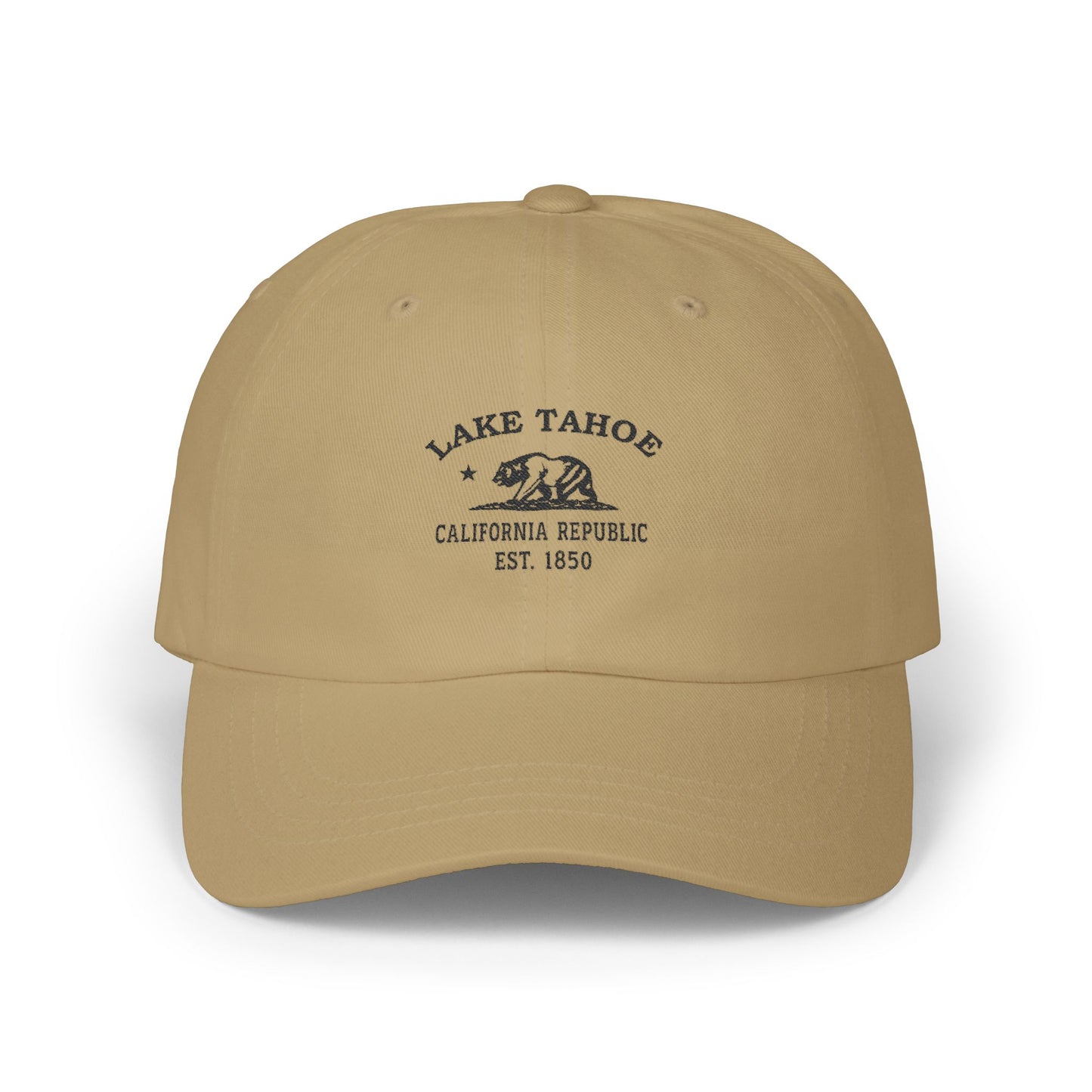
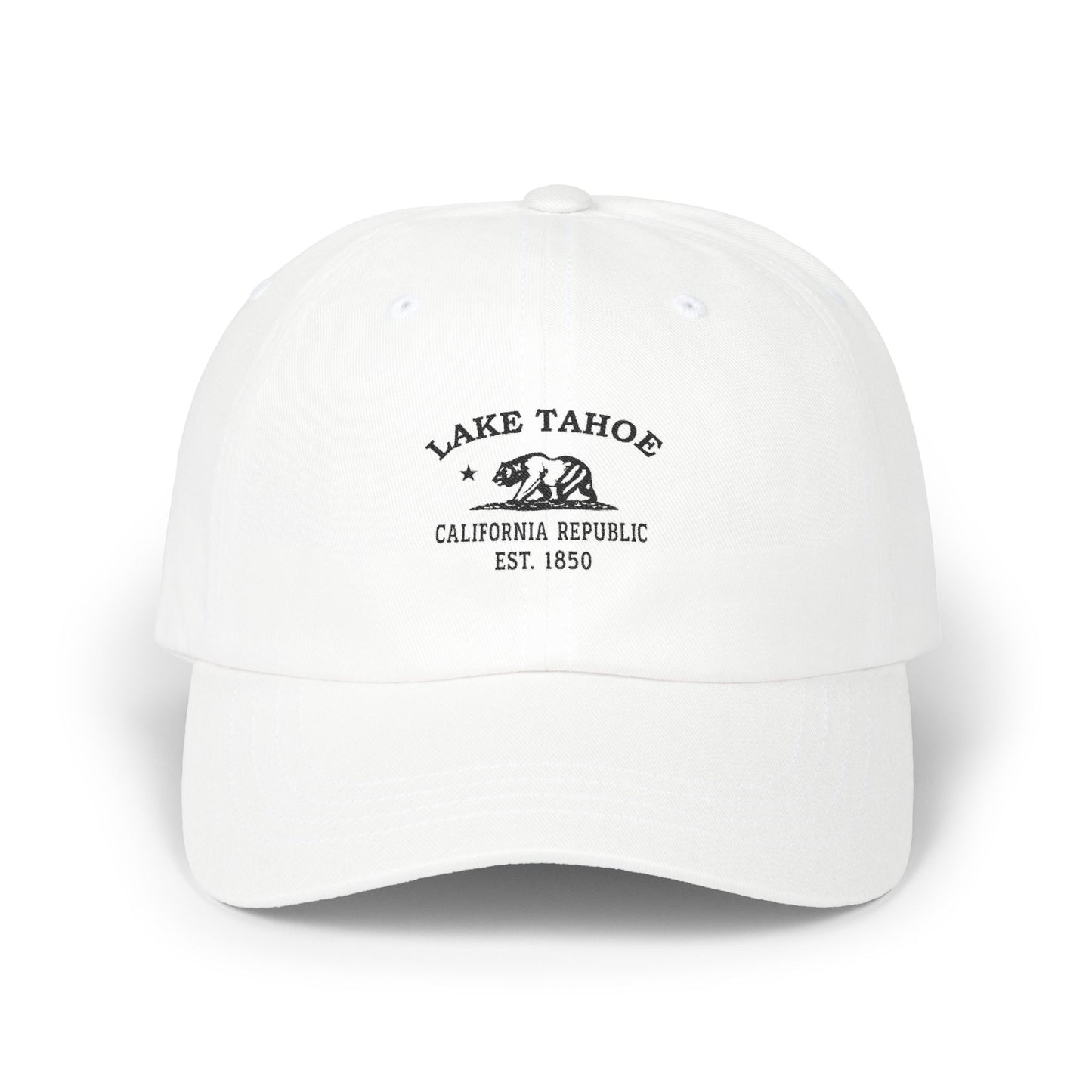
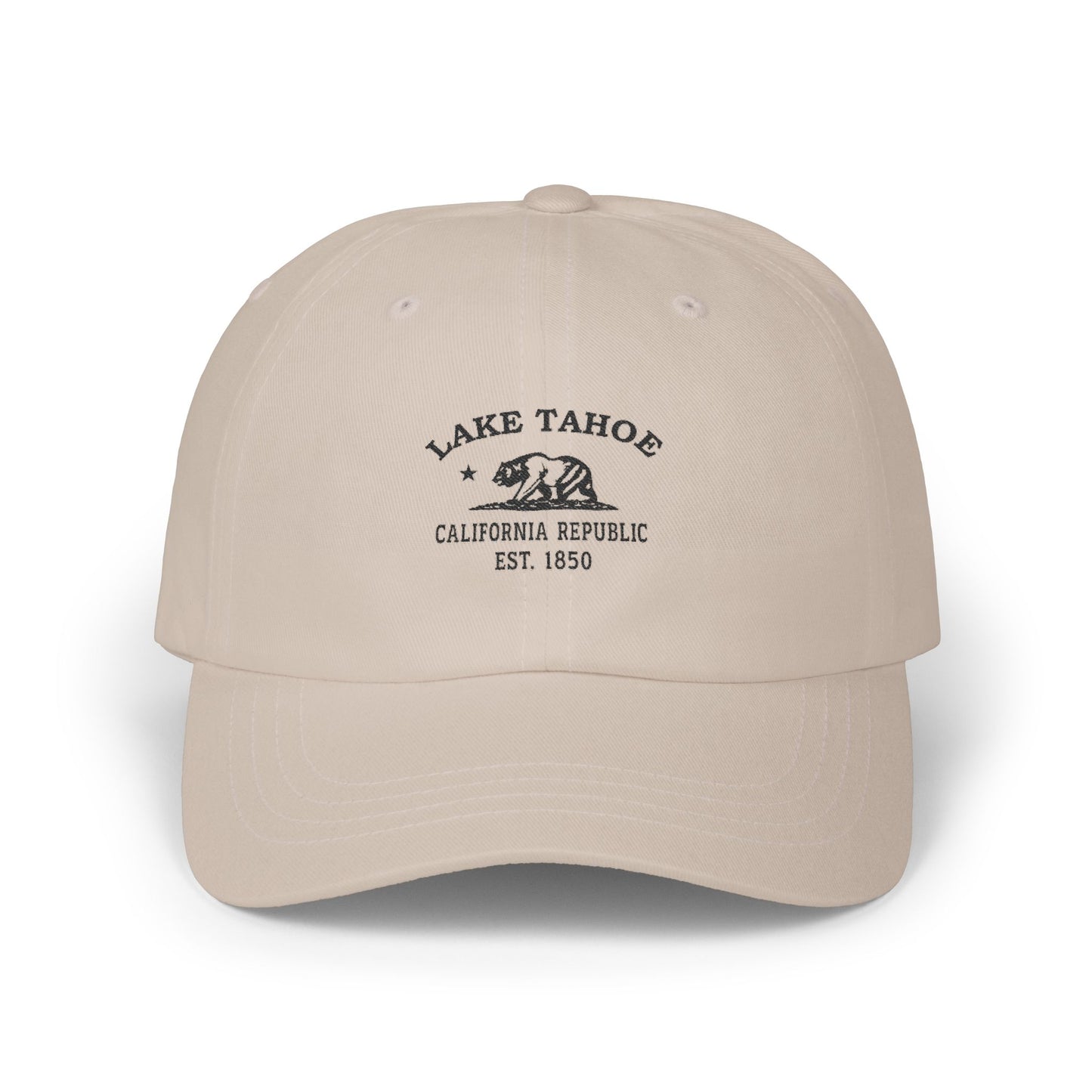
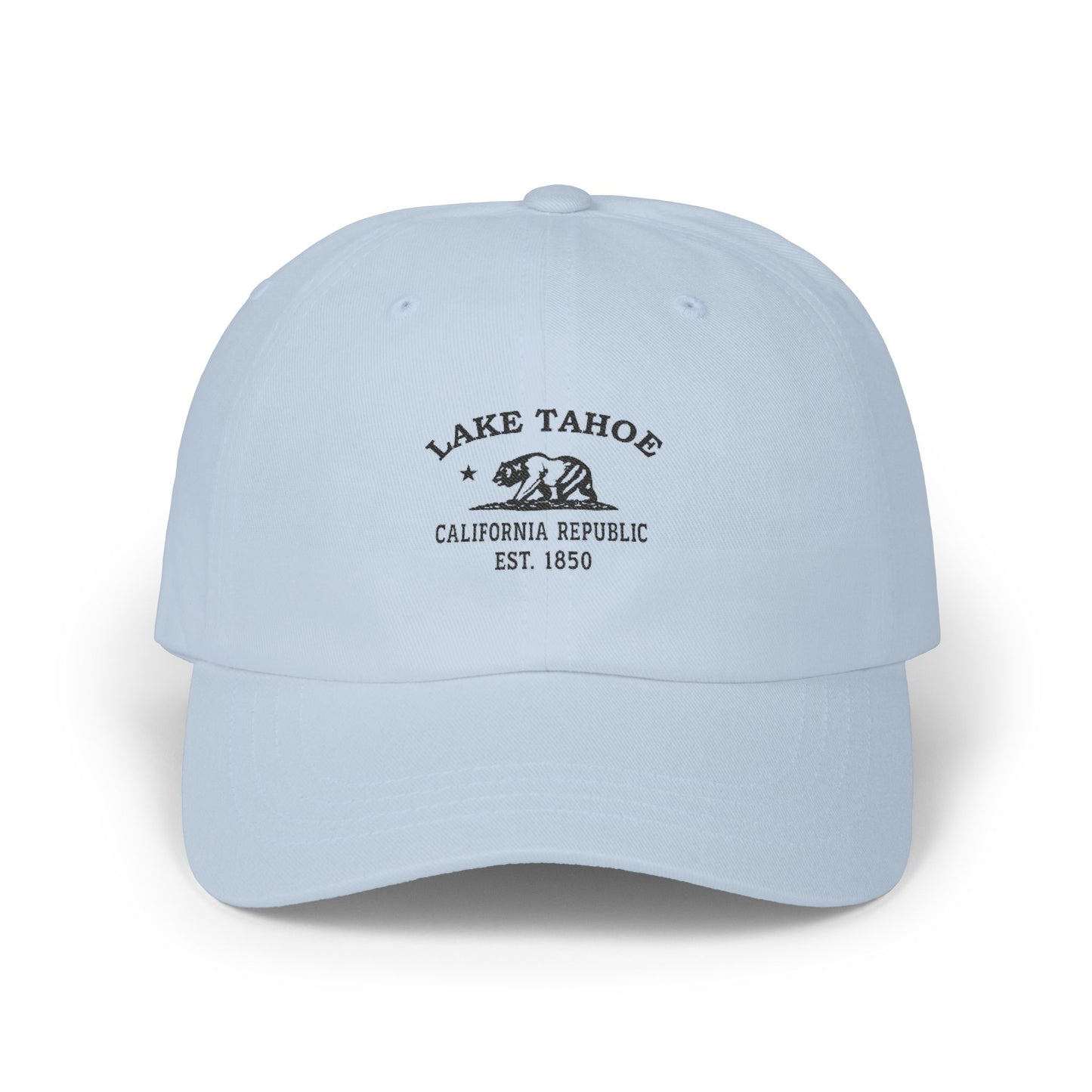
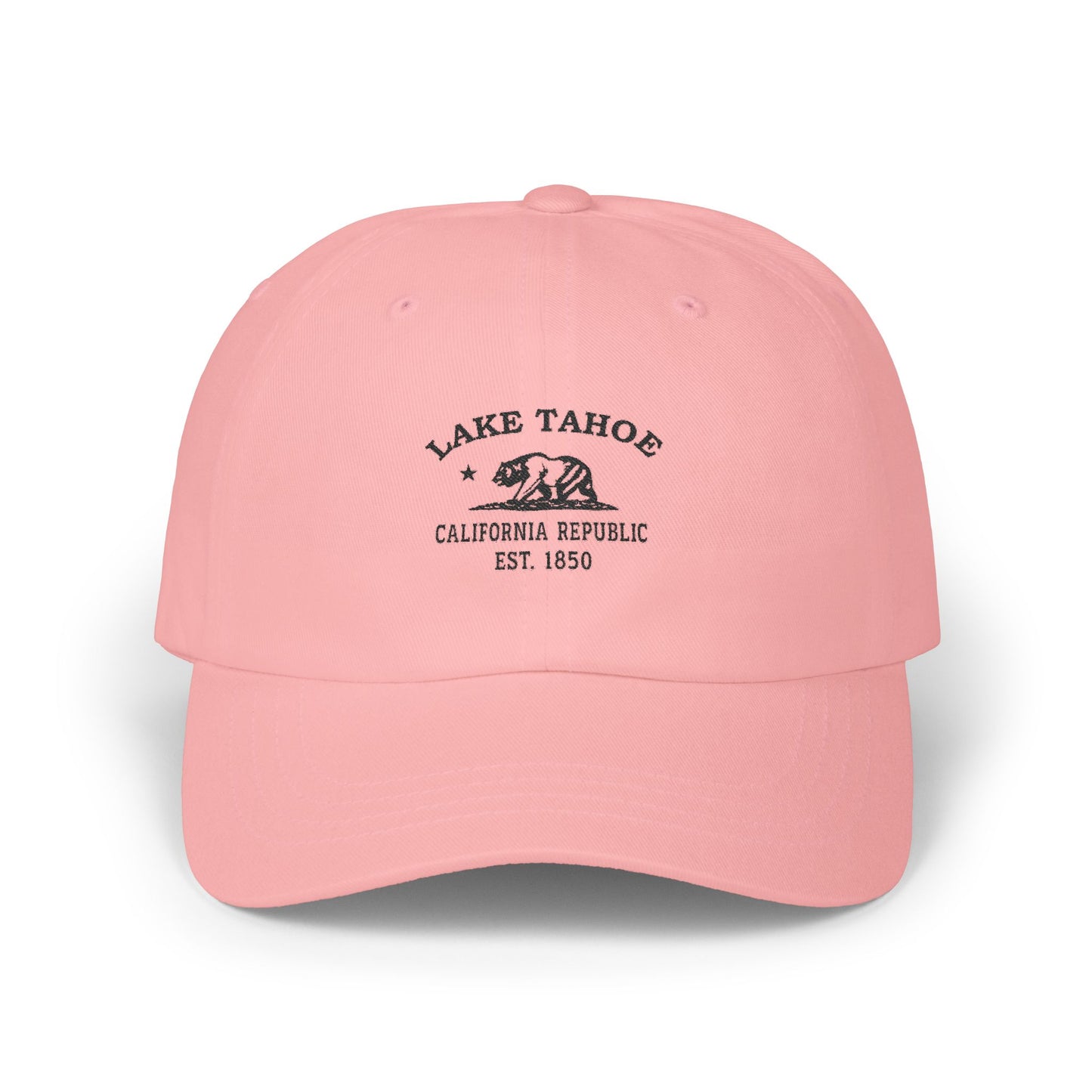
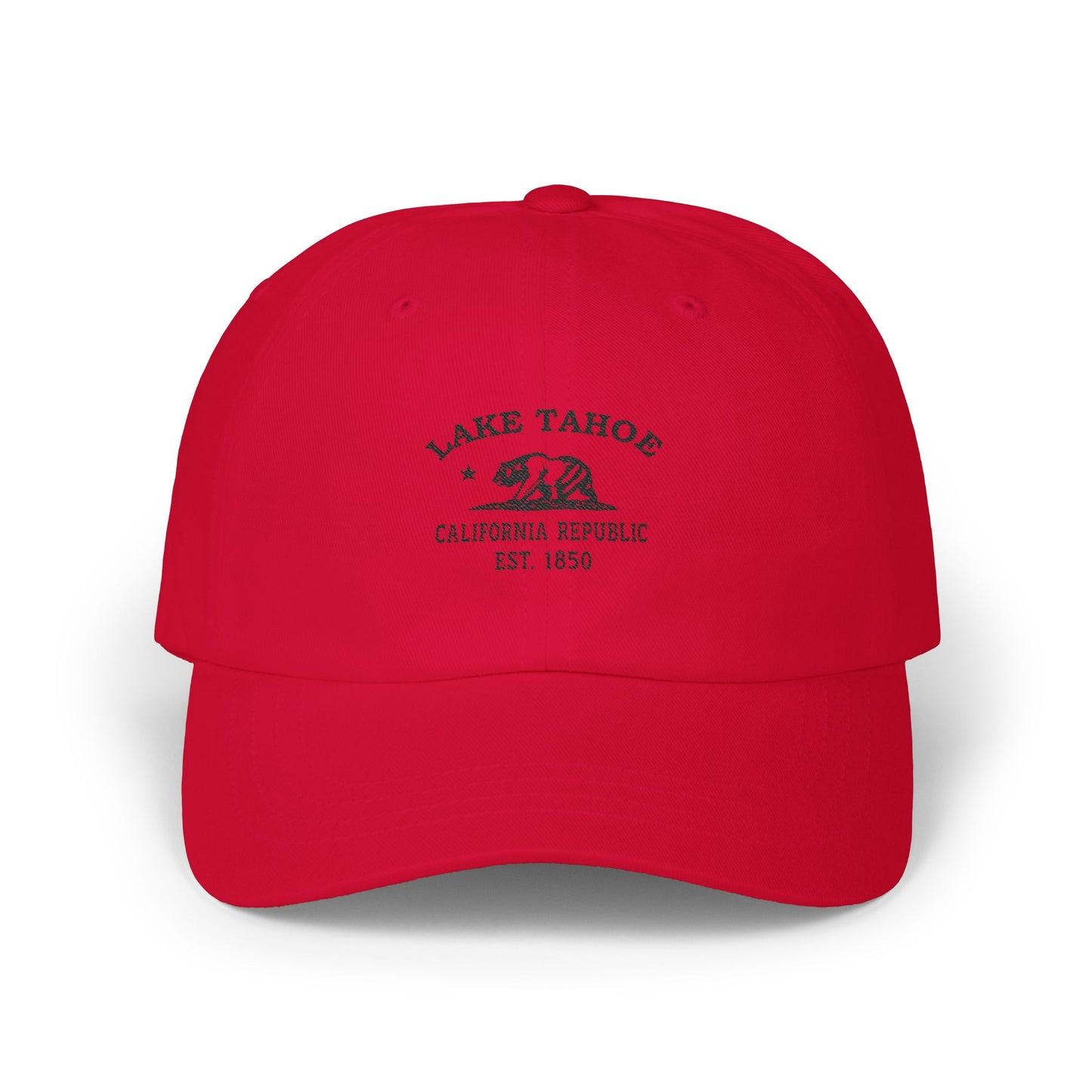
Our Lake Tahoe logo carries the same emblem every Merlin Classics California place wears — the grizzly bear and lone star of the state flag, above "California, Est. 1850," the year of statehood, rendered in hand-printed black and white with a worn, vintage feel. The bear is California's mark, the through-line that ties Tahoe to every other California place we make. What makes this one Tahoe is everything around it: the cobalt depth, the granite shore, the castle on Emerald Bay. On a tee or a cap it reads less like a souvenir and more like a small piece of the High Sierra — Est. 1850, worn plain.
Big Blue — a glacier-carved cobalt lake, a mile and a quarter high and a third of a mile deep. Lake Tahoe sits on the crest of the Sierra Nevada, on the line between California and Nevada, the highest large alpine lake in North America at about 6,225 feet and one of the deepest, near 1,645 feet. Its water is famous the world over for its clarity and its impossible cobalt blue. Long before any of the names on today's maps, this was Daaw — "the lake" — the sacred center of the Washoe people, who have lived in this basin for more than ten thousand years. This page tells the California-shore story of Big Blue: the lake, Emerald Bay, and the castle within it.
Why People Visit Lake Tahoe California
Lake Tahoe draws people who love mountains and water in the same view. It is Big Blue — the highest, deepest, clearest alpine lake in the West — with a National Natural Landmark bay, a Scandinavian castle, a ten-thousand-year Washoe heritage, and ski slopes and beaches a few hours from the city. Visitors come for the rare combination: cobalt water you can see straight down into, granite peaks above it, and a shore that's beautiful in snow and sun alike.
