Throughout the nineteenth and twentieth centuries, Kodiak remained defined by maritime economy. The 1912 Novarupta eruption buried the town in volcanic ash, and the 1964 Good Friday Earthquake and tsunami devastated downtown — but rebuilding was swift, showing resilience. By the 1950s and 1960s, Kodiak thrived as both a fishing hub and a U.S. military base; the Coast Guard took over from the Navy in 1971, and Coast Guard Base Kodiak became the largest Coast Guard installation by area in the country. Its timeline illustrates Alaska's frontier endurance and maritime dependence. Kodiak embodies Alaska's story: survival in harsh environments, blending Indigenous heritage with modern institutions. It grew steadily, anchored in the sea and the resourcefulness of its people who endured storms and change.
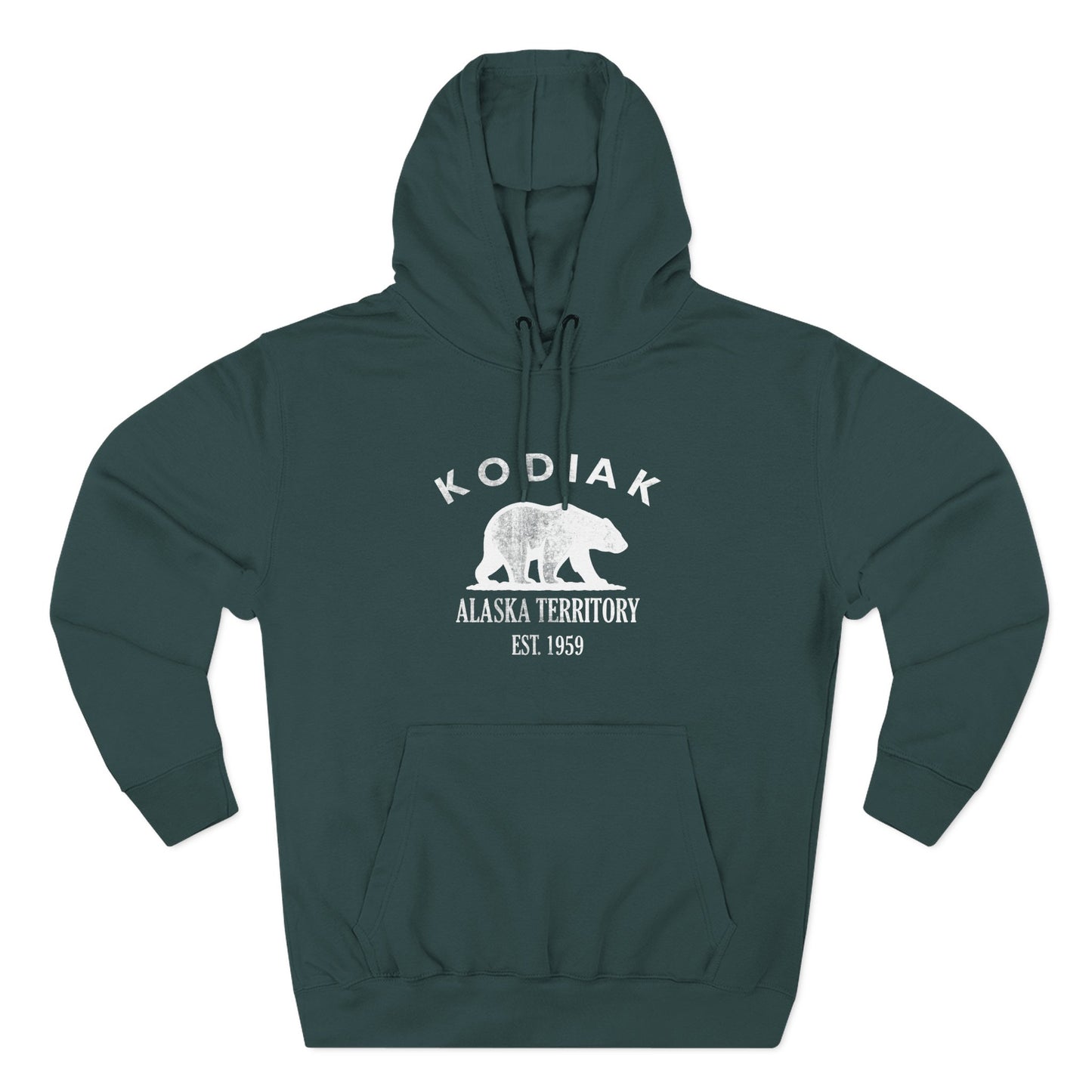
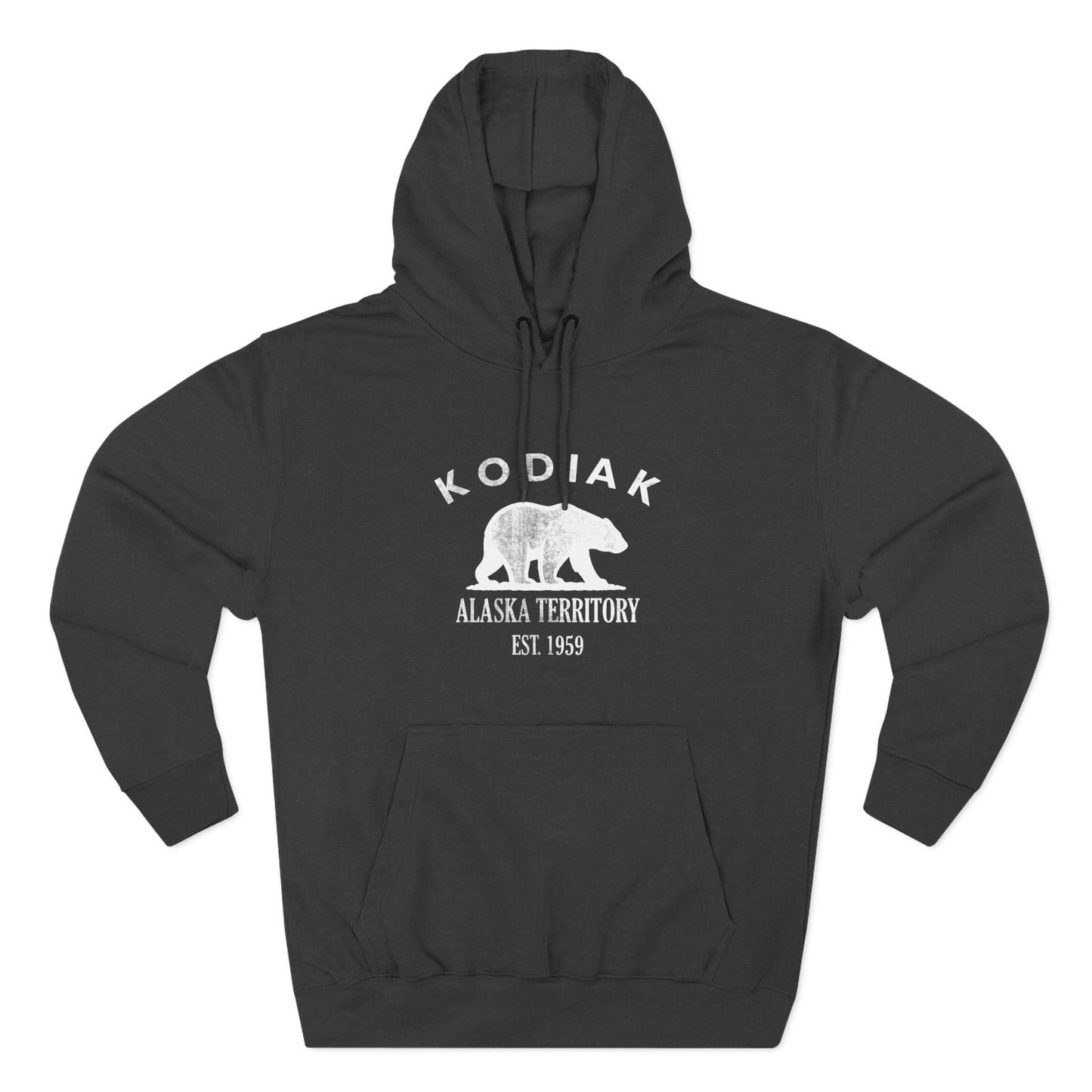
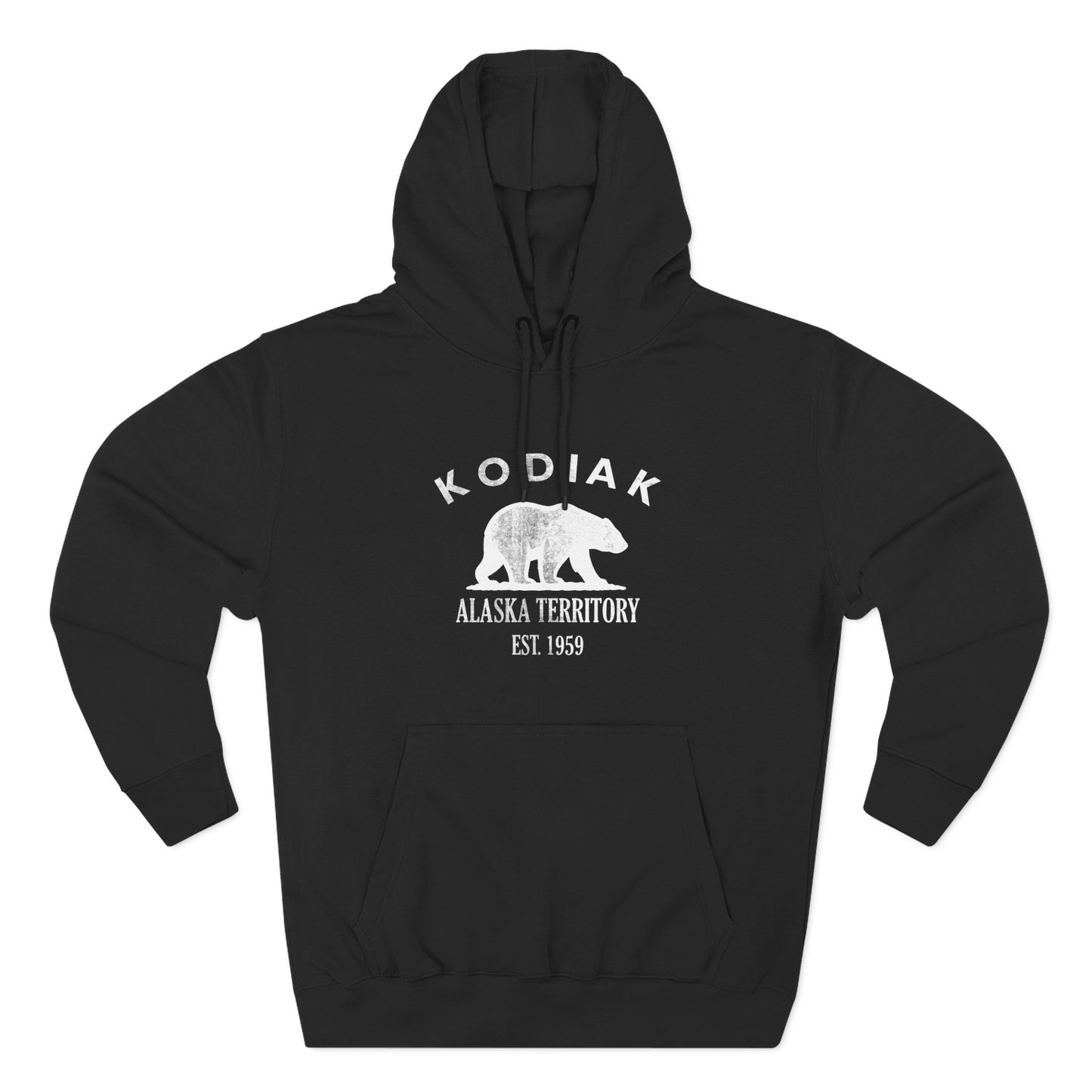
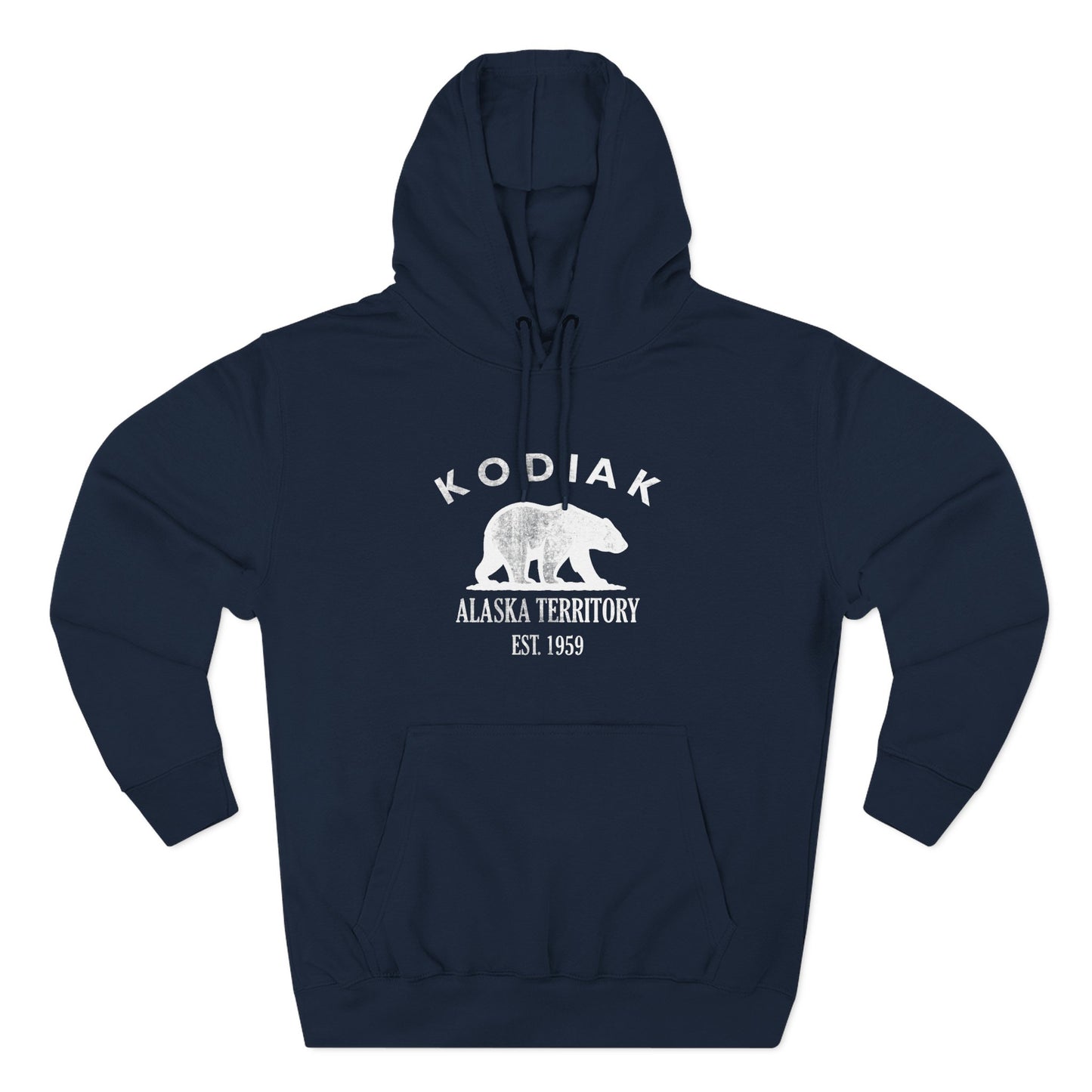
Our Kodiak retro logo features Alaska's bear motif, distressed and bold. The bear symbolizes wilderness, strength, and survival, while "1959" anchors it in Alaska's statehood. Its black-and-white styling is rugged, resembling crate stamps or outfitter logos. This motif bridges Kodiak's dual heritage: Indigenous reverence for wildlife and mid-century resilience after disasters. On merchandise, it conveys authenticity and toughness, designed for endurance rather than polish. It represents Alaska's wilderness spirit and Kodiak's pride as a frontier community. The design is retro vintage, built for heritage and resilience in one of America's harshest environments.
Why People Visit Kodiak Island Alaska
Kodiak Island offers the deepest Russian-Alaska heritage stack of any city in the state — the 1792 Baranov founding, the Baranov Museum's c. 1808 walls, the 1794 Holy Resurrection parish, the Saint Herman relics, the Alutiiq Museum's 7,000-year archive. It offers the only habitat of the Kodiak brown bear, the second-largest island in the United States, the 1.9-million-acre Kodiak National Wildlife Refuge, Fort Abercrombie's WWII landscape, the largest U.S. Coast Guard installation by area, the working St. Paul Harbor of one of the top U.S. fishing ports, the 1912 Novarupta and 1964 Good Friday Earthquake history under the green spruce and rain, and a sister Russian-Alaska heritage in Sitka 240 miles east across the Gulf of Alaska — Kodiak and Sitka together carry the Russian-American Company story from its founding to its end. This is the Emerald Isle. Working town. Working harbor. Walking-bear country.
