


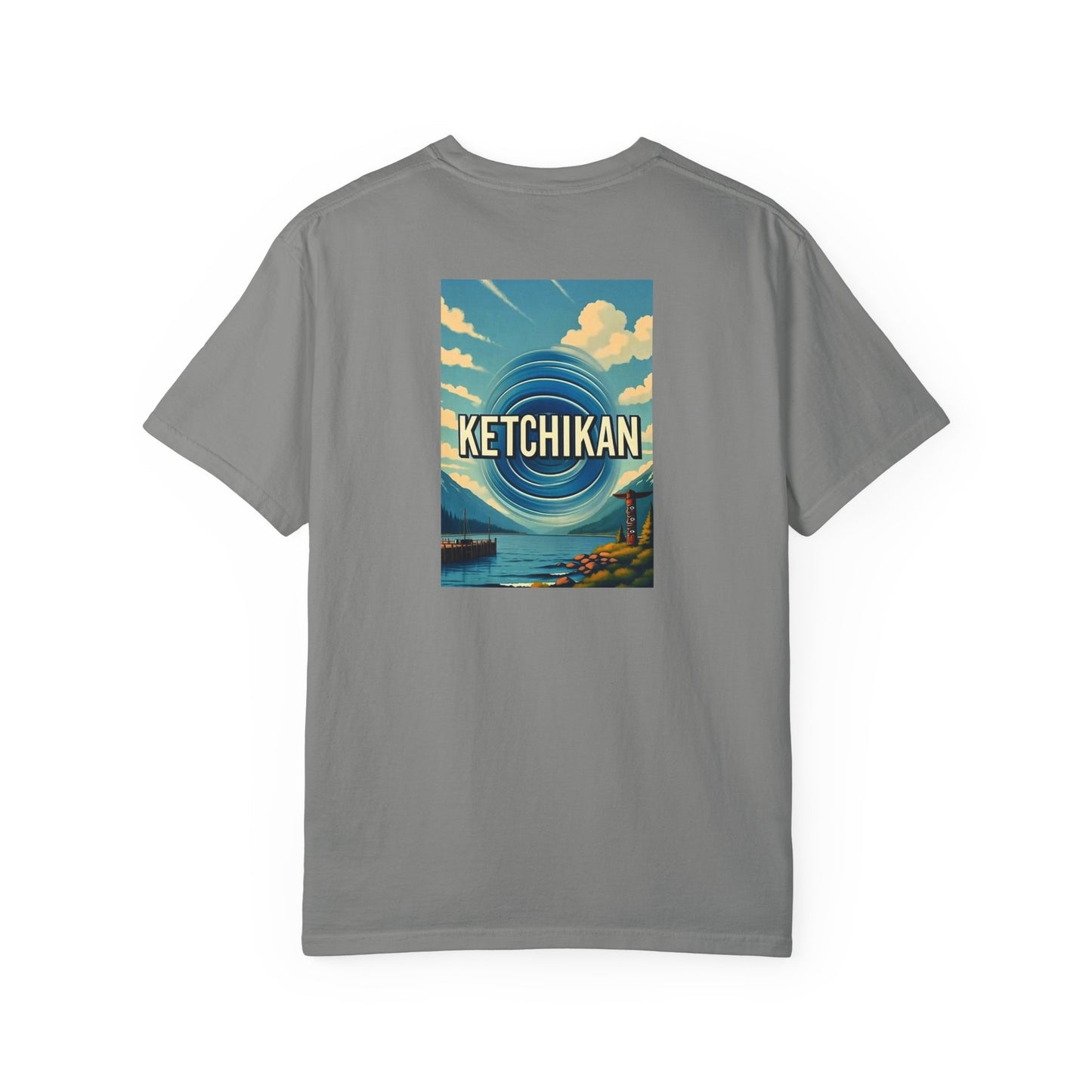
What's with Ketchikan? Ketchikan is Alaska's First City — its earliest extant incorporated city, the Salmon Capital of the World, and the first Inside Passage port of call. It clings to the shore of Revillagigedo Island where the Tongass rainforest meets Tongass Narrows — a town built on pilings and boardwalks, stitched together by salmon, cedar, and rain. The Tlingit fished this creek for centuries; the canneries turned it into a boomtown; the totem poles made it a world capital of Northwest Coast art. Every version of Alaska starts here.
Timber built the second economy. Sitka spruce from the surrounding Tongass — the largest national forest in the country, its regional headquarters right in town — fed sawmills and, in 1954, the big pulp mill at Ward Cove that anchored the town for four decades until its 1997 closing. Logging's showman legacy survives downtown, where the Great Alaskan Lumberjack Show still runs axe throws and log-rolls for the summer crowds.
Why People Visit Ketchikan Alaska
- Creek Street — the boardwalk on pilings, Dolly's House Museum, the salmon ladder, and Married Man's Trail over the hill.
- The totem circuit — Saxman Totem Park, Totem Bight State Park, Potlatch Totem Park, and the Totem Heritage Center's unrestored 19th-century poles.
- Misty Fjords National Monument — granite fjords, waterfalls, and New Eddystone Rock by floatplane or boat up Behm Canal.
- The Tongass — rainforest trails from Rainbird to the Deer Mountain climb; bears at Herring Cove in late summer; eagles everywhere.
- Town life — the Great Alaskan Lumberjack Show, waterfront seafood, Cape Fox Lodge above downtown, and the summer salmon derby.
