


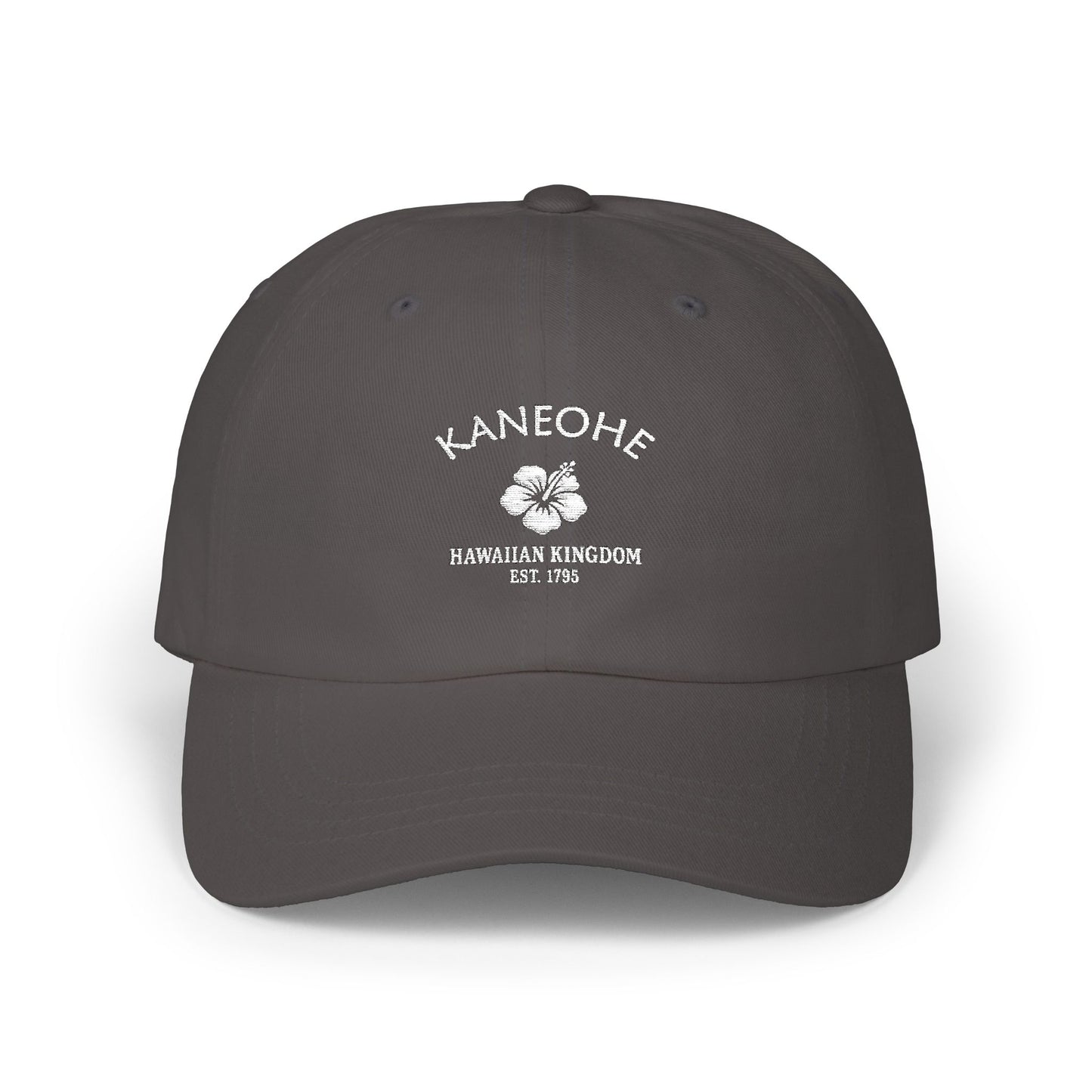
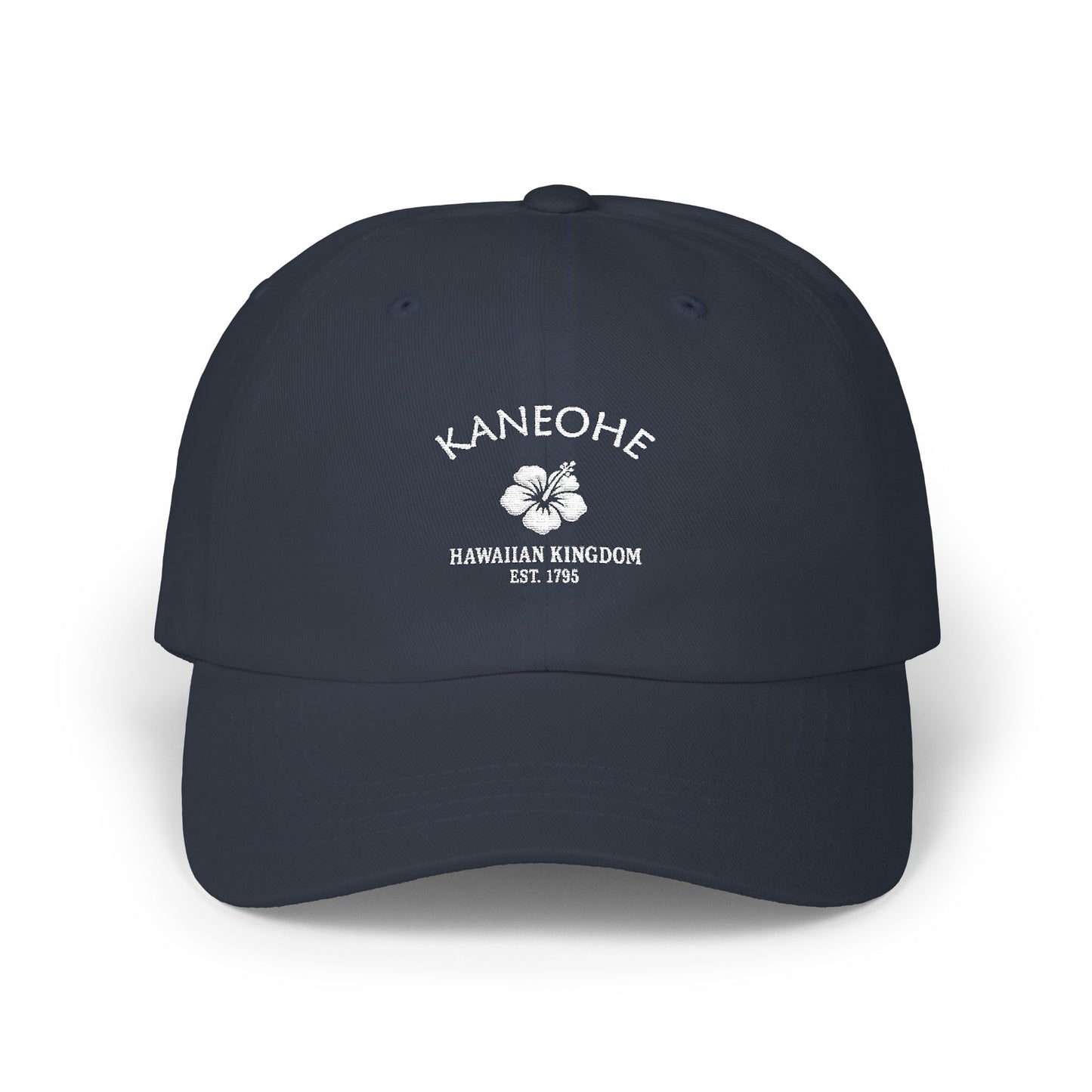
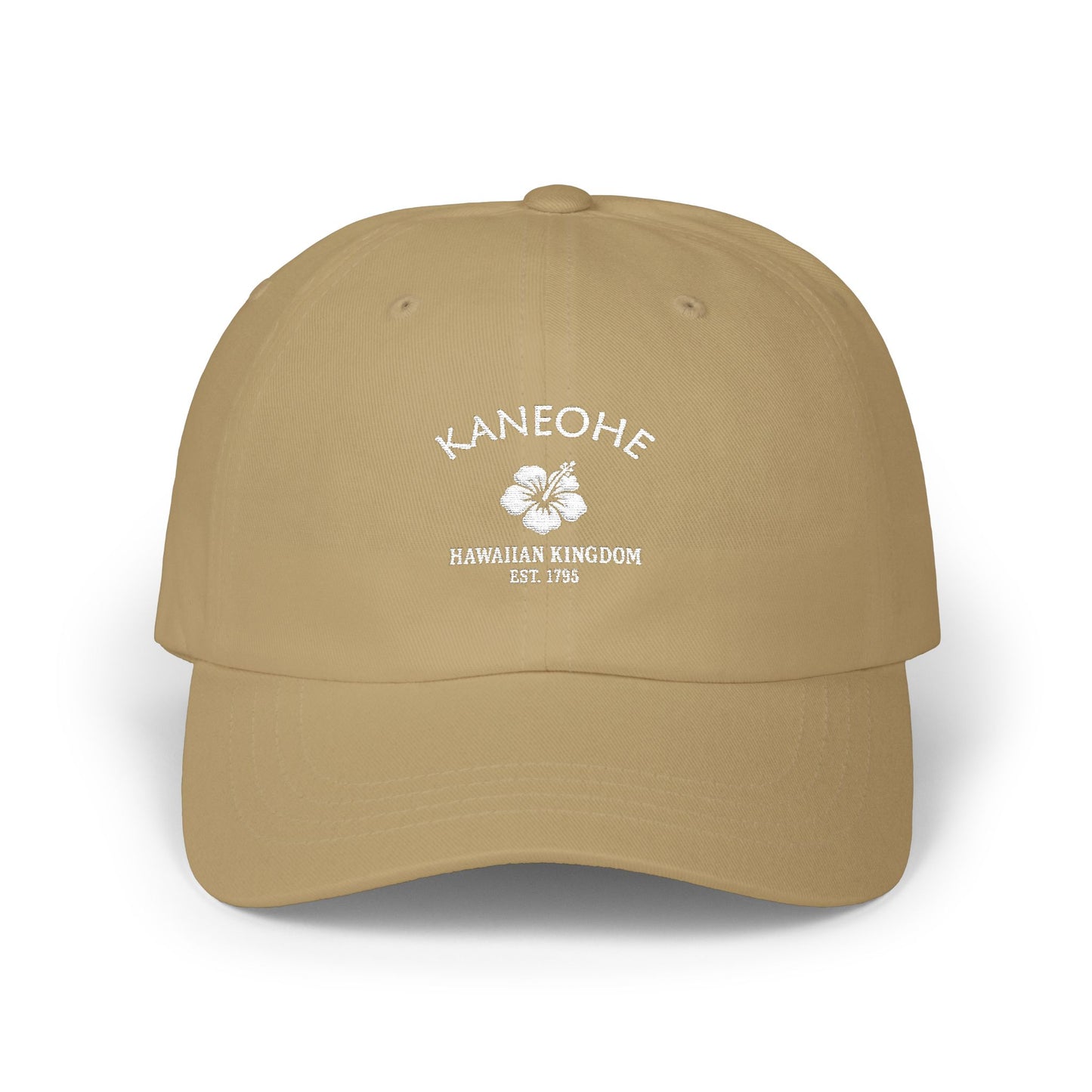
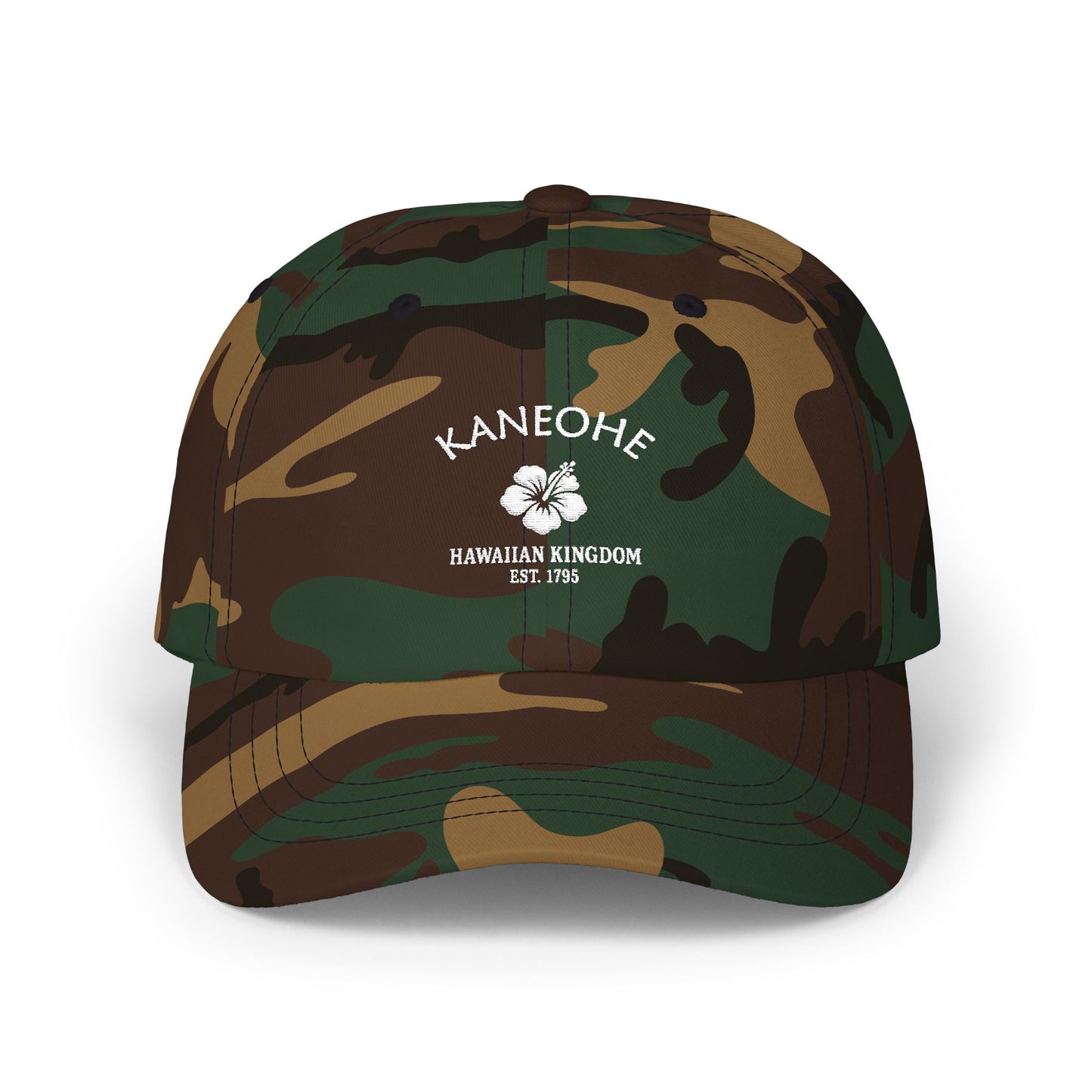
Today Kāneʻohe blends suburban neighborhoods with strong Hawaiian heritage. Its residents celebrate culture through festivals, chants, and family traditions. Our Kāneʻohe designs reflect this dual identity, pairing the hibiscus motif with retro styling that honors Hawaiian pride. They invite you to explore the Kāneʻohe collection and carry forward a reminder of resilience and culture. Retro in tone, the motif reflects authenticity, history, and endurance. Kāneʻohe's logo is a vintage emblem of a community where Hawaiian culture thrives alongside suburban growth, preserving its strength and beauty for future generations.
Kāneʻohe remained primarily agricultural into the twentieth century. Sugar and pineapple plantations shaped its economy, alongside taro and fishing. The 1950s and 1960s brought suburban growth as highways connected Kāneʻohe to Honolulu — the Likelike Highway through the Wilson Tunnel, and eventually Interstate H-3 through the Tetsuo Harano Tunnels in 1997. Families built neighborhoods, while traditions remained strong in churches, hula, and festivals. Tourism stayed limited compared to Waikīkī, leaving Kāneʻohe more residential. Its timeline reflects Hawaiʻi's story of resilience: traditional practices carried forward amid modern expansion, with heritage and modern life tied together in mid-century decades.
Why People Visit Kāneʻohe Hawaiʻi
Kāneʻohe offers windward Oʻahu's most distinctive water destination at the Kāneʻohe Sandbar (Ahu o Laka), the only barrier-reef-protected bay on Oʻahu, the 1968 Byōdō-In Temple at Valley of the Temples as a windward-side cultural landmark commemorating the centennial of the first Japanese immigrants to Hawaiʻi, the 400-acre Hoʻomaluhia Botanical Garden, the green pleated cliffs of the Koʻolau Range as the dramatic backdrop of the town, the December 7, 1941 historical landscape of Mokapu Peninsula and NAS Kāneʻohe Bay as the first U.S. position struck in the Pacific Theater, the active Heʻeia Fishpond restoration as living Native Hawaiian cultural heritage, and the long Kāneʻohe ahupuaʻa heritage of the Koʻolaupoko district that has carried these shores for centuries. It is the windward side — the side the rain reaches first, and the side that remembers.
