


The fish chapter is the one almost nobody remembers. In 1927, Atlantic Coast Fisheries bought the old Groton Iron Works yard and turned its cavernous steel sheds into something startlingly modern: a plant that filleted haddock, froze each fillet solid on aluminum plates, and wrapped it in crisp new Cellophane — individually quick-frozen seafood a full generation before it reached the average American grocer. Fortune magazine marveled at an operation built for ten million fillets a year, its lines run in part by rows of women at automatic wrapping machines. It was ahead of its time in the most literal sense: the fish were landed up in Boston, too far to stay competitive, and the Depression left shoppers wanting the cheapest food, not the finest. Barely four years after it opened, the plant went quiet. The future had arrived too early to survive.
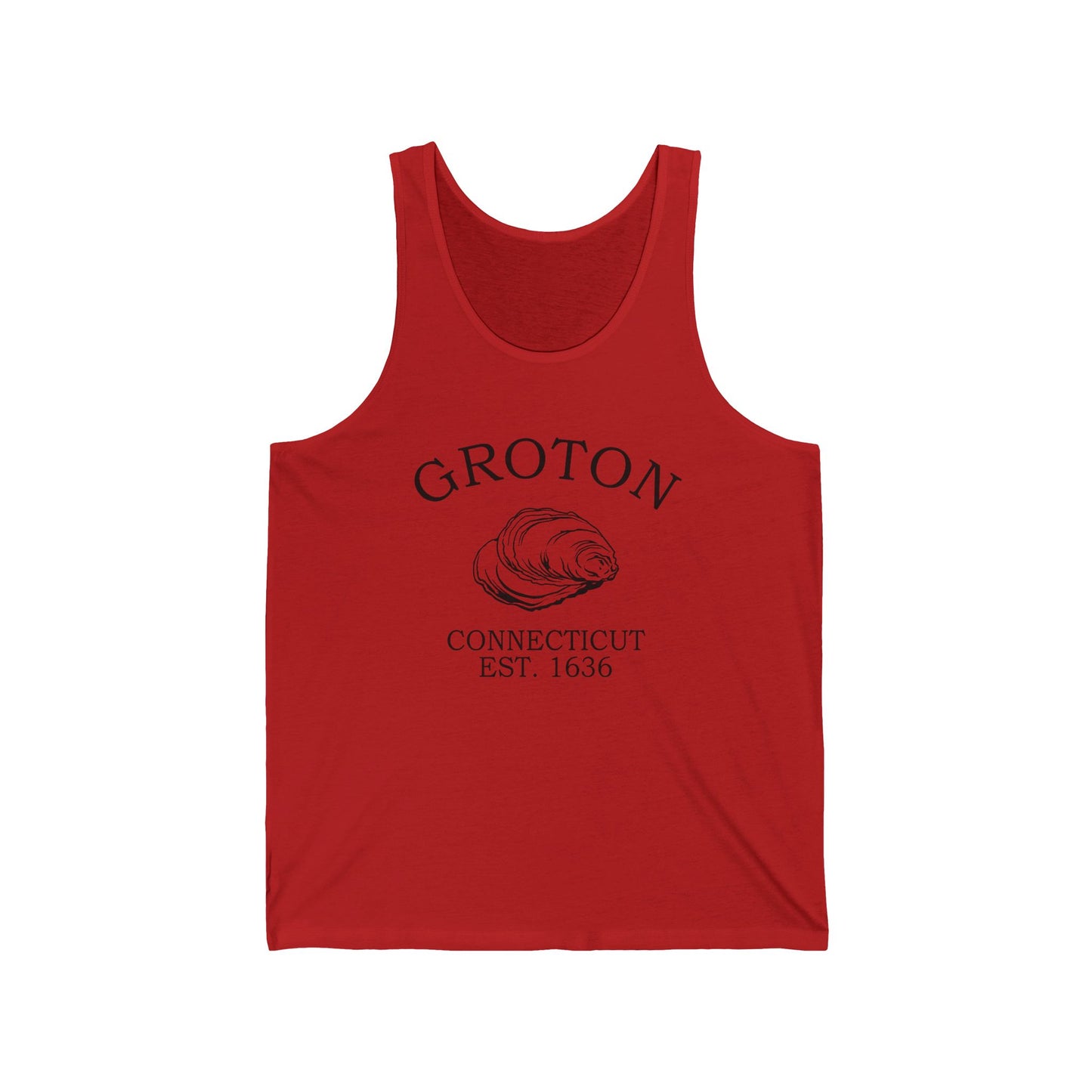
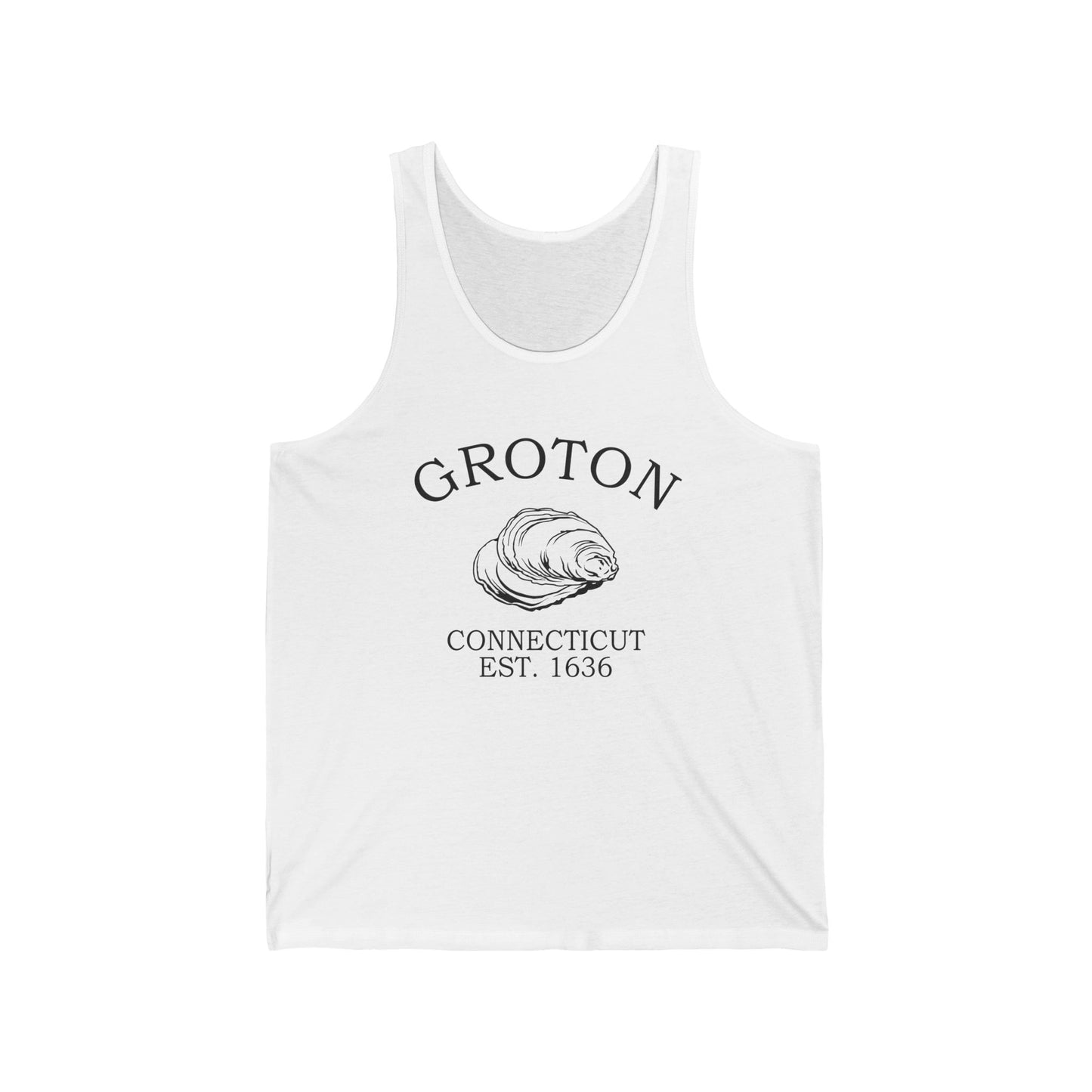
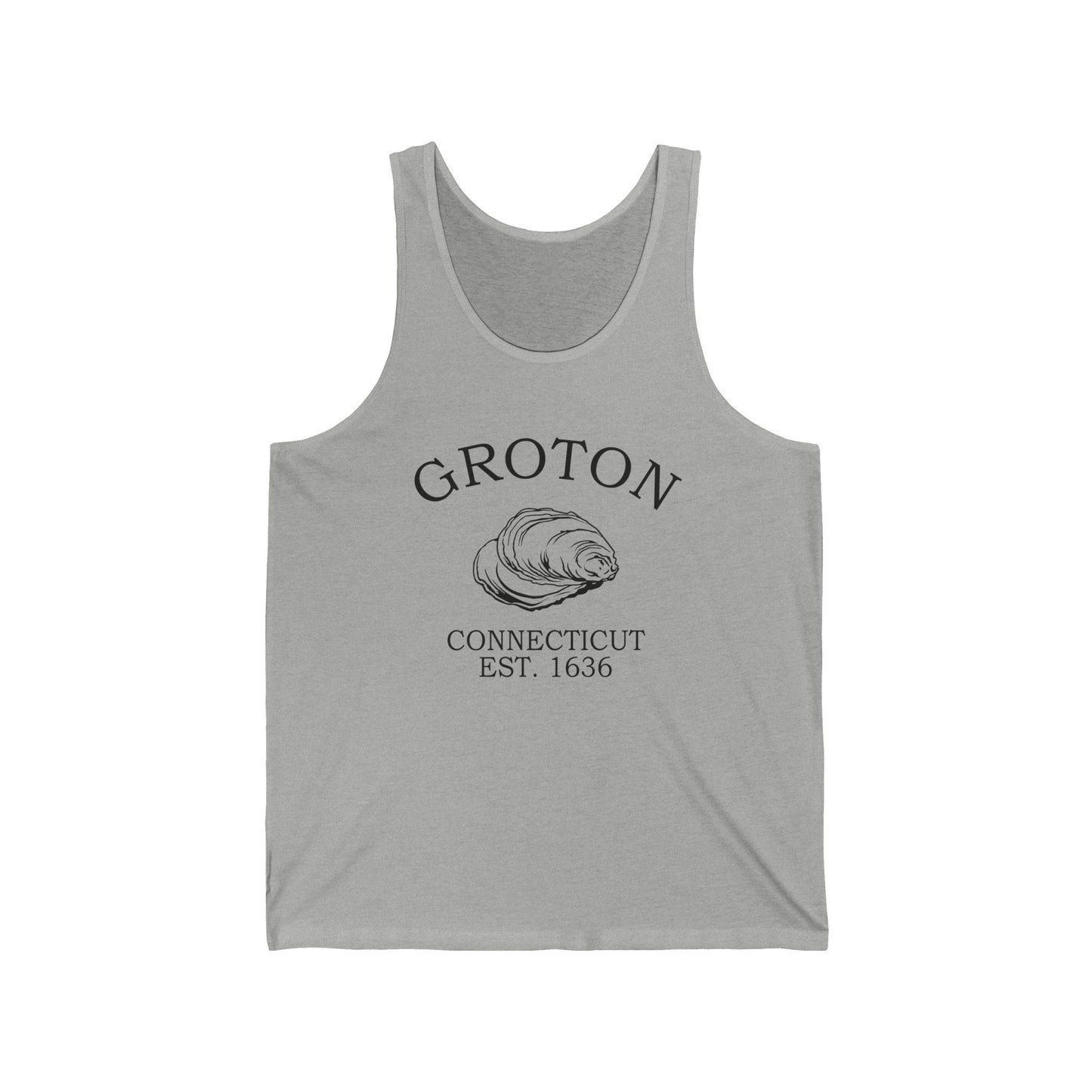
Our Groton logo carries the same emblem every Merlin Classics Connecticut town wears — an oyster above "Connecticut, Est. 1636," the colony's founding year, rendered in hand-printed black and white with a worn, vintage feel. The oyster is the shoreline state's mark, the through-line that ties Groton to every other Connecticut town we make. What makes this one Groton is everything around it: the submarine harbor, the monument on the heights, the deep Thames water. On a tee or a cap it reads less like a souvenir and more like a small piece of the Connecticut coast — Est. 1636, worn plain.
Why People Visit Groton Connecticut
- Tour the free Submarine Force Museum and step aboard the Historic Ship Nautilus, the world's first nuclear submarine, berthed on the Thames.
- Walk the ramparts of Fort Griswold Battlefield State Park and climb the 135-foot Groton Monument for views over the harbor.
- Hike or bike the wooded trails of Bluff Point State Park out to its tidal coves and rocky point.
- Visit Avery Point — the Branford House mansion, the University of Connecticut campus lawns, and Avery Point Light, the last lighthouse built in Connecticut.
- Relax at Eastern Point Beach, a small family cove with breakwater views across the river mouth.
- Take a guided tour of the Gungywamp State Archaeological Preserve to see its colonial stone chambers and double stone circle.
