


The Royal Palm Hotel opened in 1898, the railroad reached town in 1904, and Fort Myers grew into the seat of Lee County. Downtown filled in along First Street — the brick storefronts, the 1908 Arcade Theatre, the old bank buildings — the district now revived and known as the River District. The royal palms Edison started spread up McGregor and through the historic neighborhoods of Edison Park and Dean Park, and the City of Palms settled into its place on the Southwest Florida coast. By the 1920s the Tamiami Trail had bridged the river and opened the road south, and the winter crowds kept coming for the climate Edison had advertised to the world.
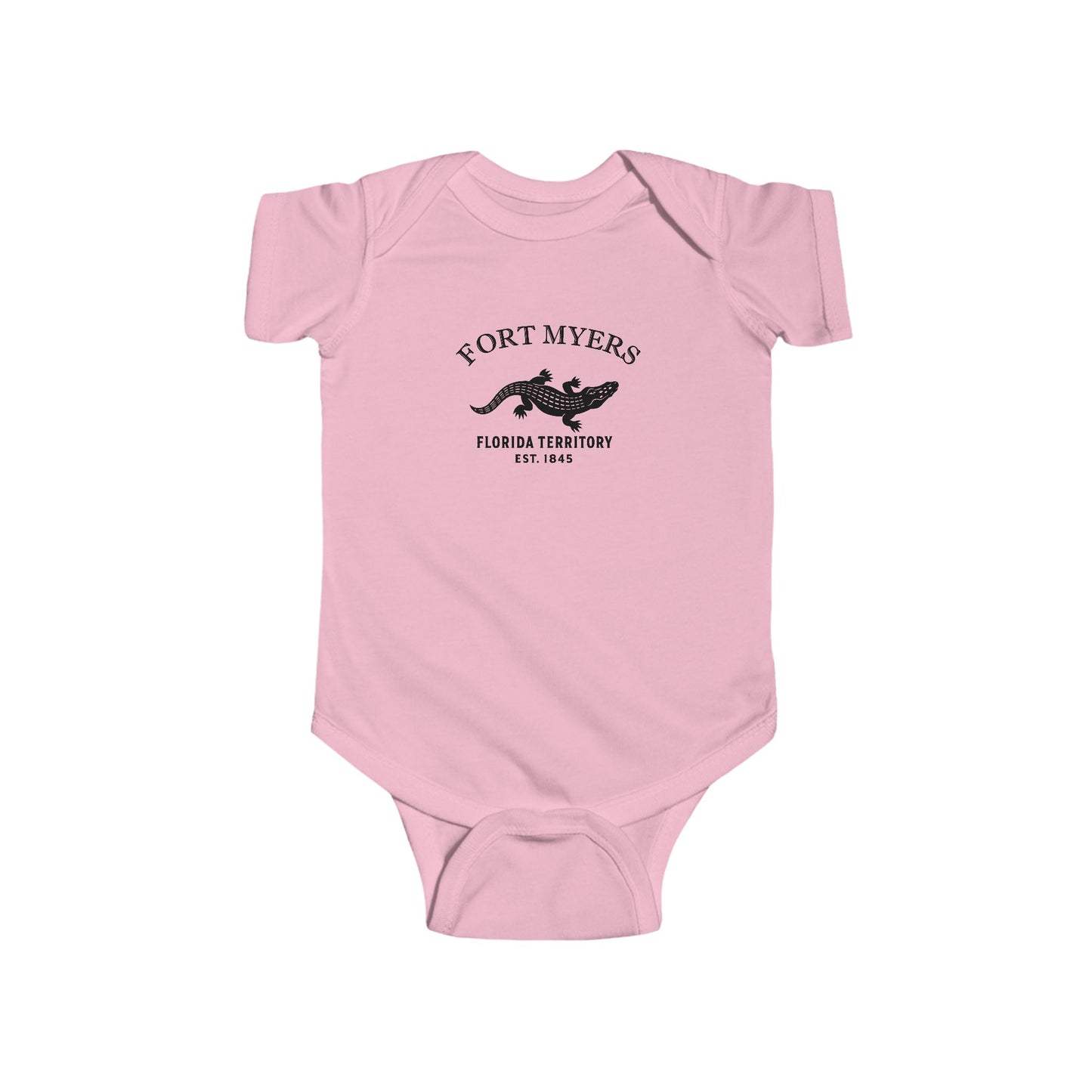
Our Fort Myers logo carries the Florida alligator above “Florida Territory — Est. 1845,” the shared retro emblem of our Florida towns, drawn in worn black-and-white like an old woodcut crate label. The 1845 date marks Florida statehood, and the alligator is the through-line that links Fort Myers to every other Florida town we make. The detail that makes this one Fort Myers is the City of Palms — the royal-palm boulevard, the Caloosahatchee riverfront, and the winter-colony downtown that grew up between them.
Why People Visit Fort Myers
Fort Myers rewards travelers who want history, gardens, and the river rather than only a beach — the inventors' winter estates, the royal-palm boulevard, and a revived downtown on the Caloosahatchee. People come for the Edison and Ford estates and the City-of-Palms streetscape, for the manatees and cypress boardwalks, and for an easygoing Southwest Florida day where Gilded-Age history and subtropical nature sit side by side.
