


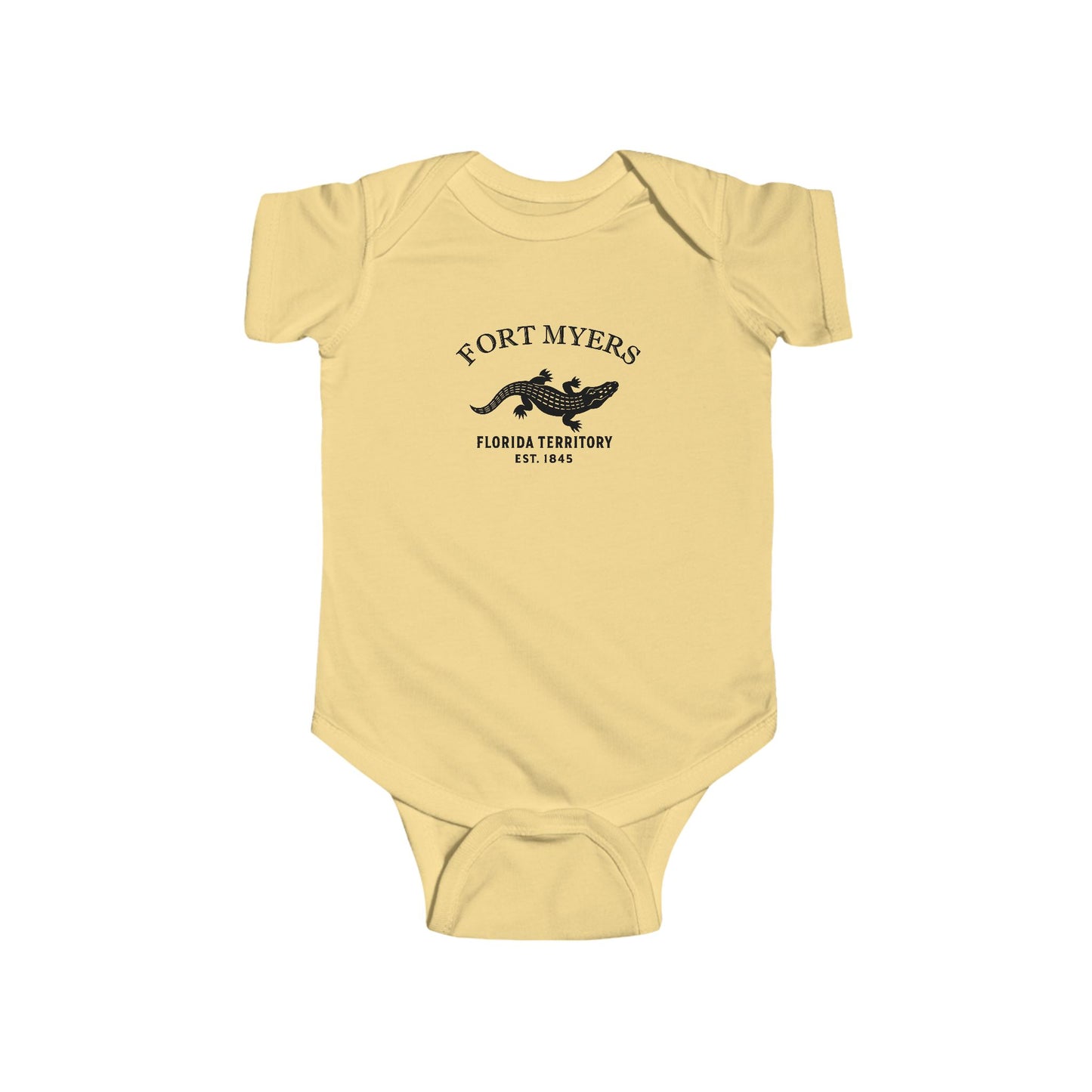
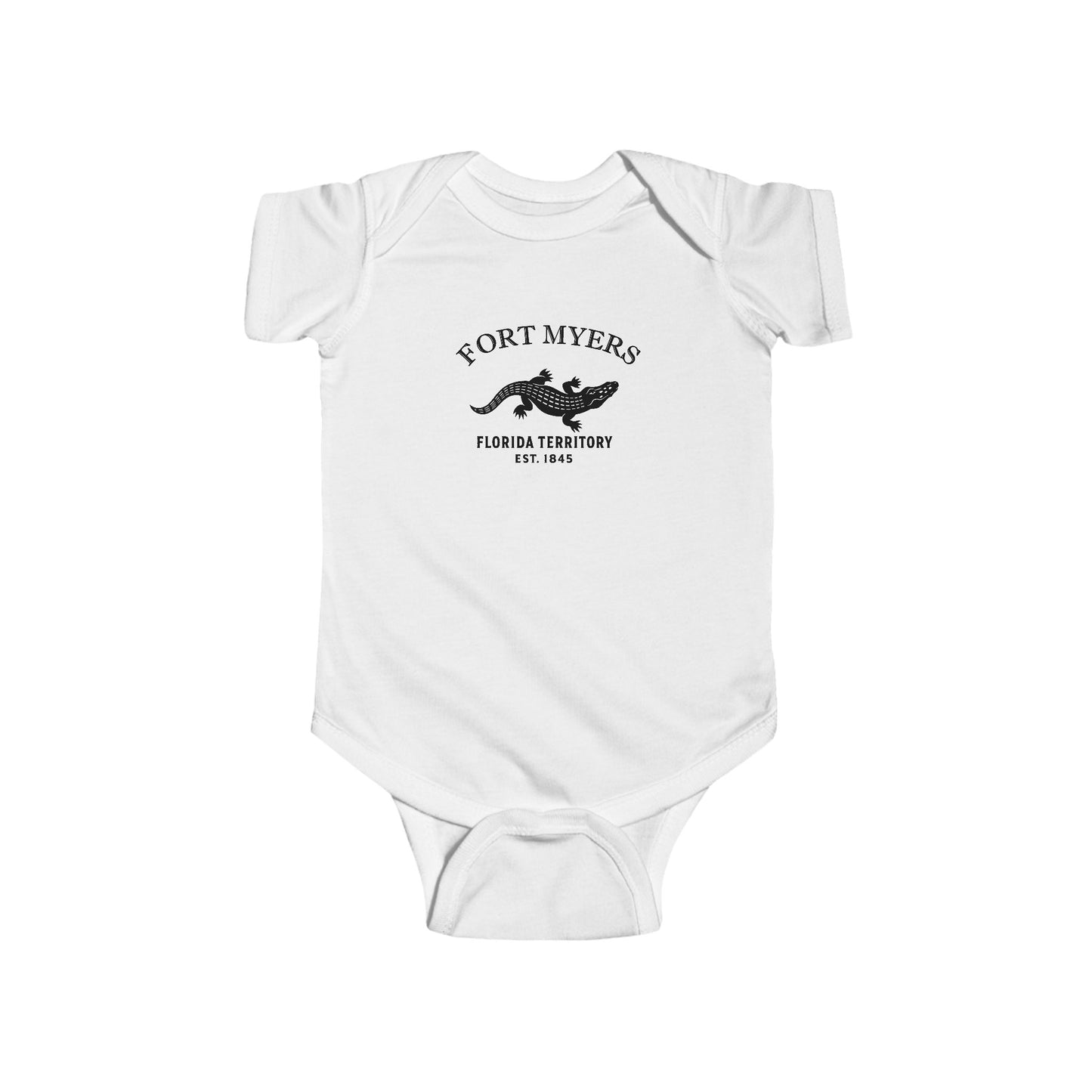
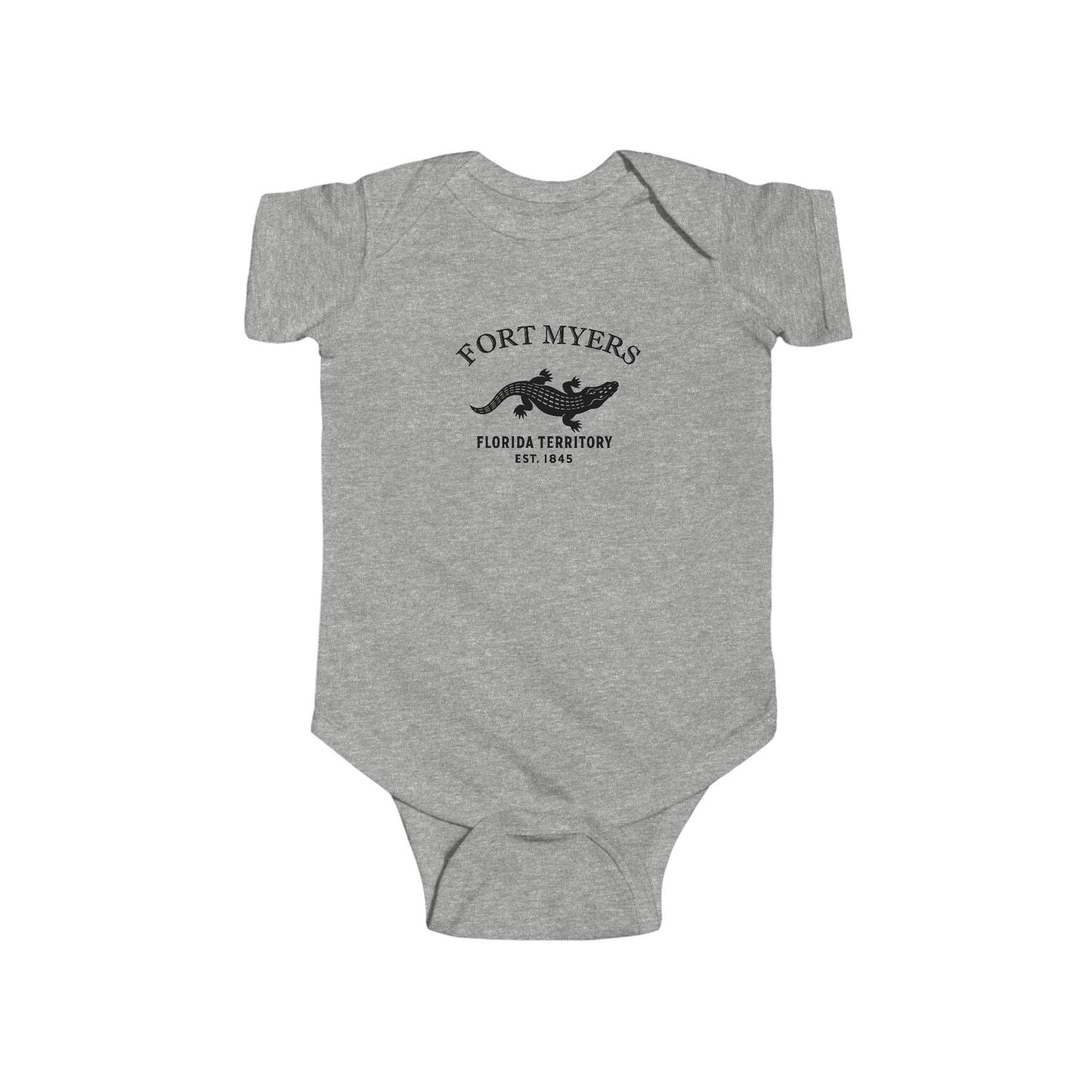
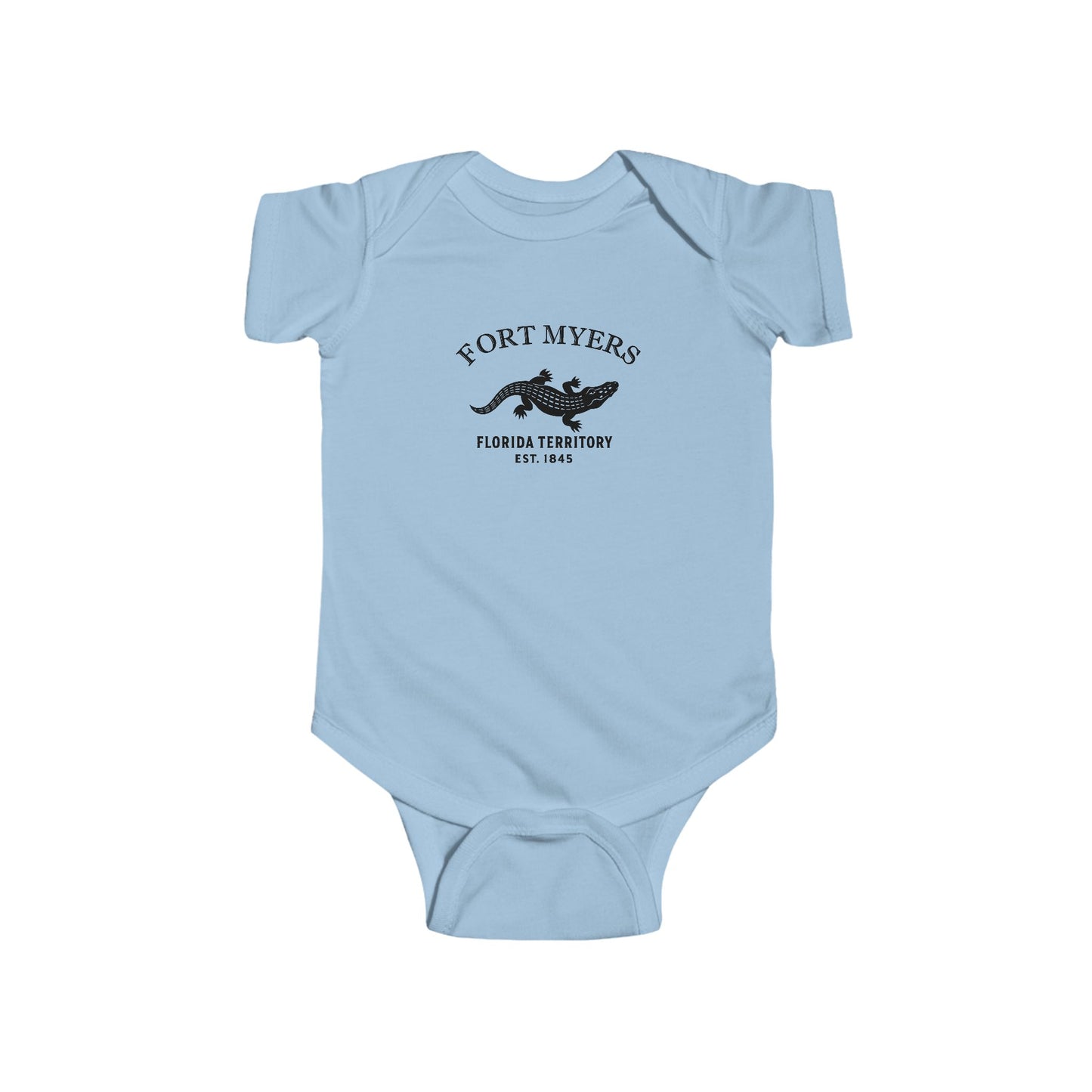
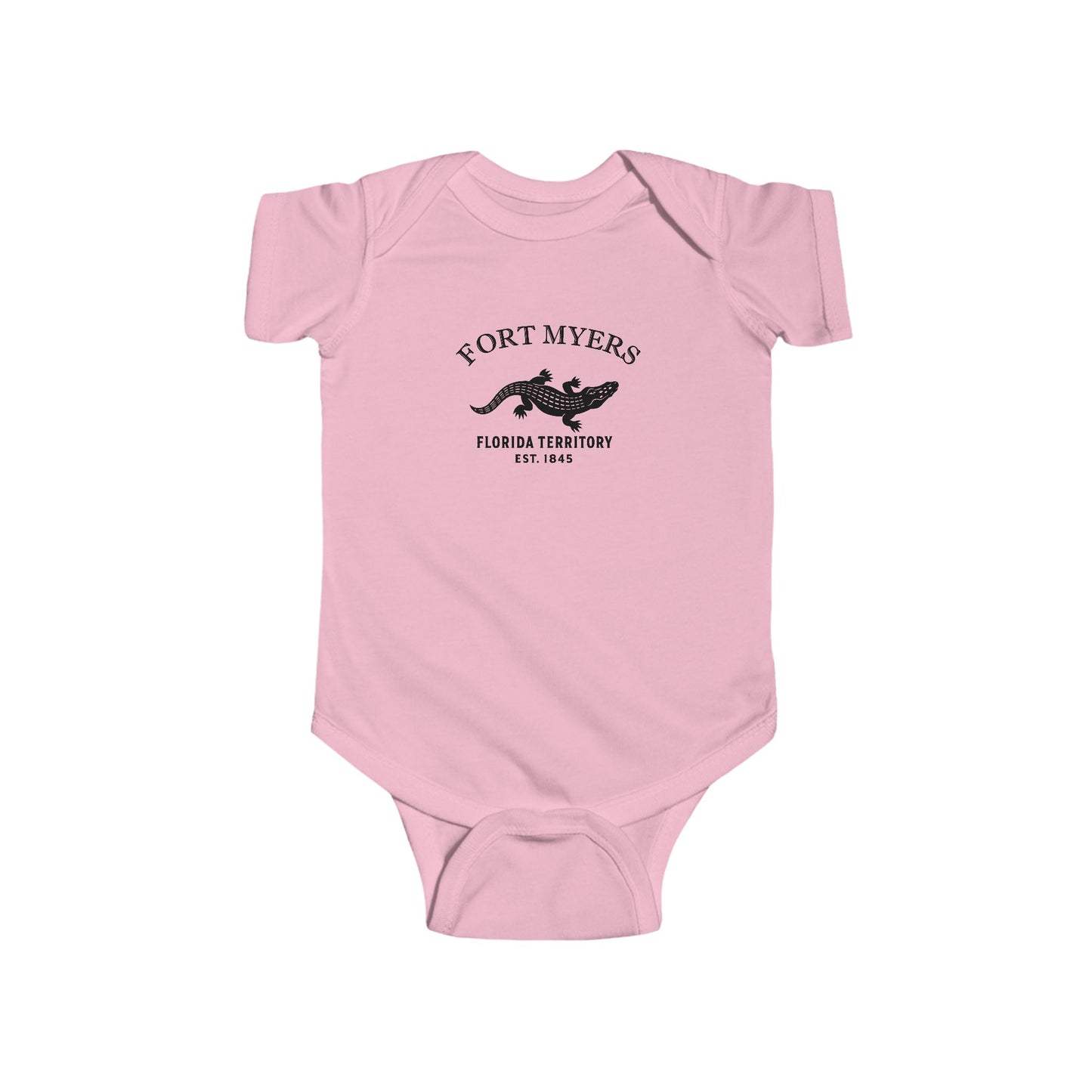
Our Fort Myers logo carries the Florida alligator above “Florida Territory — Est. 1845,” the shared retro emblem of our Florida towns, drawn in worn black-and-white like an old woodcut crate label. The 1845 date marks Florida statehood, and the alligator is the through-line that links Fort Myers to every other Florida town we make. The detail that makes this one Fort Myers is the City of Palms — the royal-palm boulevard, the Caloosahatchee riverfront, and the winter-colony downtown that grew up between them.
It stayed small and agricultural — cattle and citrus — until the winter of 1885, when Thomas Edison sailed up the Caloosahatchee, liked what he saw, and built a winter home he called Seminole Lodge. He spent decades wintering there, experimenting with plants and rubber in a riverside laboratory, and eventually talked his friend Henry Ford into buying the bungalow next door, The Mangoes. Their side-by-side estates on McGregor Boulevard turned a quiet river town into one of America's most famous winter colonies, and the Edison and Ford Winter Estates remain Southwest Florida's premier historic attraction — twenty-one acres of gardens and one of the largest banyan trees in the country.
Why People Visit Fort Myers
Fort Myers rewards travelers who want history, gardens, and the river rather than only a beach — the inventors' winter estates, the royal-palm boulevard, and a revived downtown on the Caloosahatchee. People come for the Edison and Ford estates and the City-of-Palms streetscape, for the manatees and cypress boardwalks, and for an easygoing Southwest Florida day where Gilded-Age history and subtropical nature sit side by side.
