


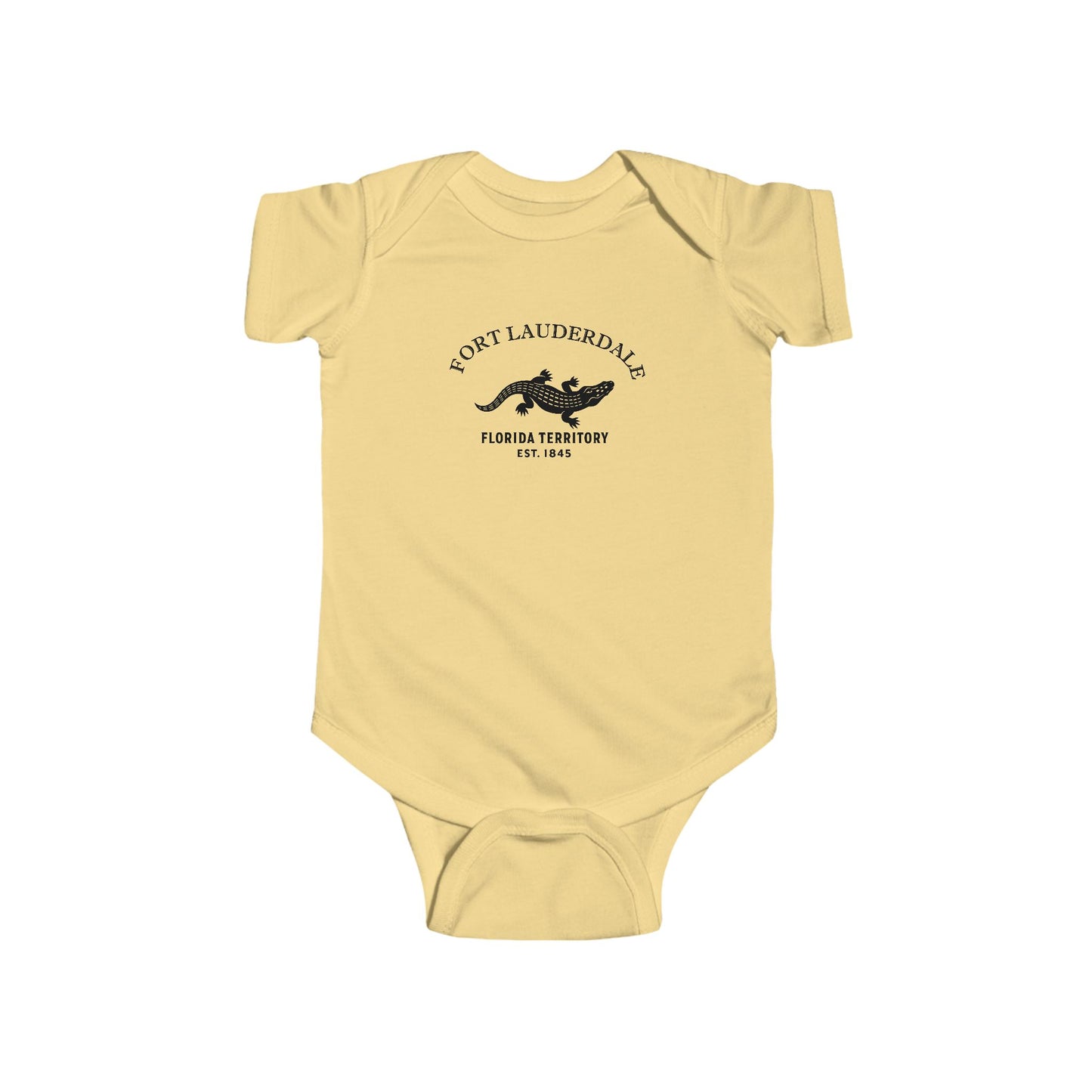
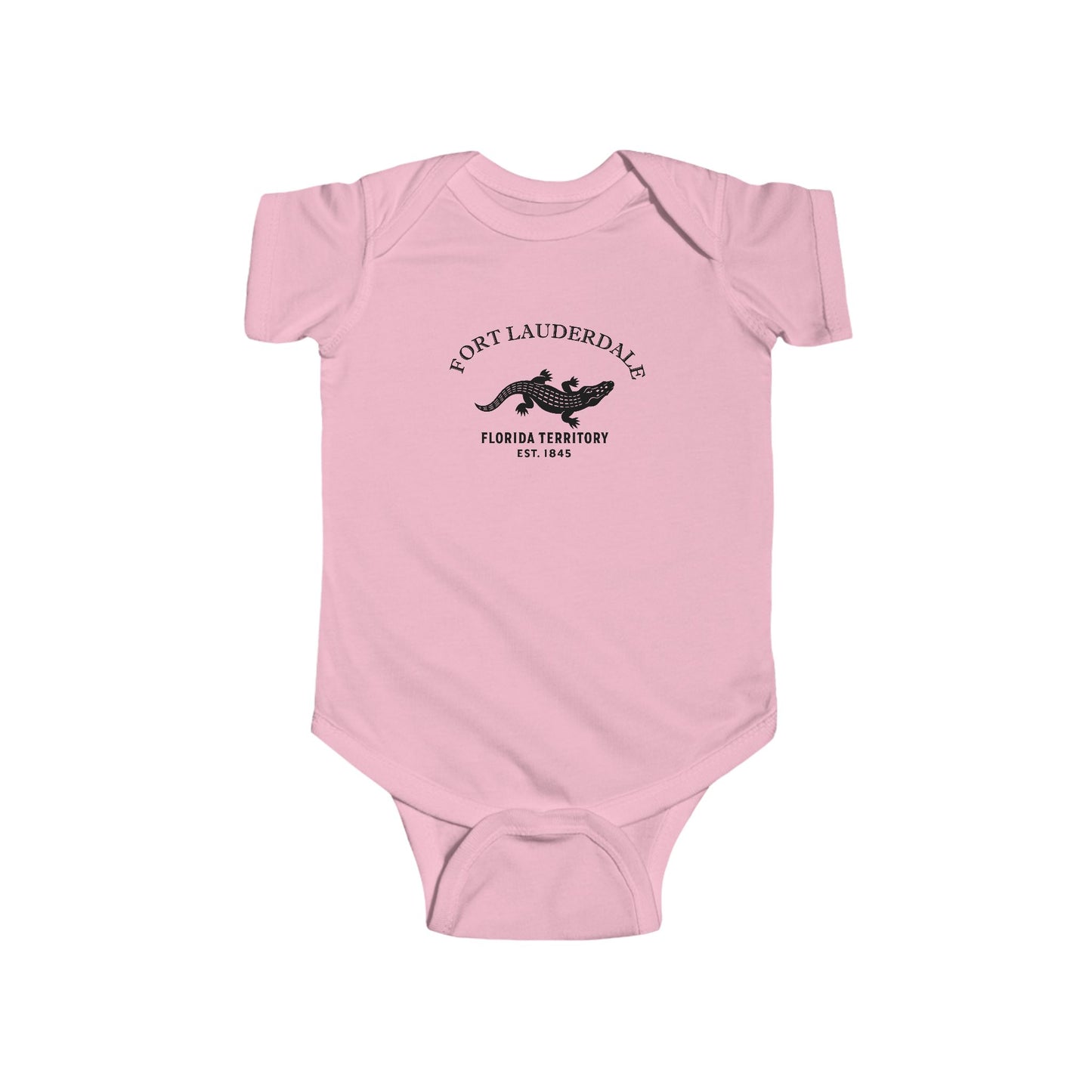
Our Fort Lauderdale logo carries Florida's alligator, above “Est. 1845,” the year of Florida statehood — the shared emblem of every Merlin Classics Florida place. Printed in a worn black-and-white that recalls an old crate stamp, the alligator is Florida in shorthand: tough, native, and at home in the water. The alligator is the through-line that links Fort Lauderdale to every other Florida town we make. What makes this one Fort Lauderdale is everything around it — the New River, the 165 miles of canals, Las Olas, and the Venice of America.
The modern city begins with a trading post. In 1893 Frank Stranahan arrived at the New River, ran a ferry across it, and opened a trading post that did business with the Seminole and served as post office and community hall for the handful of settlers nearby. When the Florida East Coast Railway reached the river in 1896, the settlement had a future. In 1901 Stranahan built the house that still stands on the river at Las Olas — the Stranahan House, the oldest surviving building in Broward County. His wife, Ivy Cromartie Stranahan, had become the area's first schoolteacher in 1899 and spent her long life as an advocate for the Seminole; she is remembered as the “Mother of Fort Lauderdale.”
Why People Visit Fort Lauderdale
Fort Lauderdale offers South Florida at its most nautical — a real beach city laced with canals, with a historic river downtown, a great cruise port, and the yachting world's calendar built around it. Visitors come for the water, the beaches, and the Venice-of-America canals, and stay for Las Olas, the Riverwalk, and the easy coastal pace. From the New River to the sand, it rewards a day or a week. It is bright, nautical, and genuinely South Florida.
