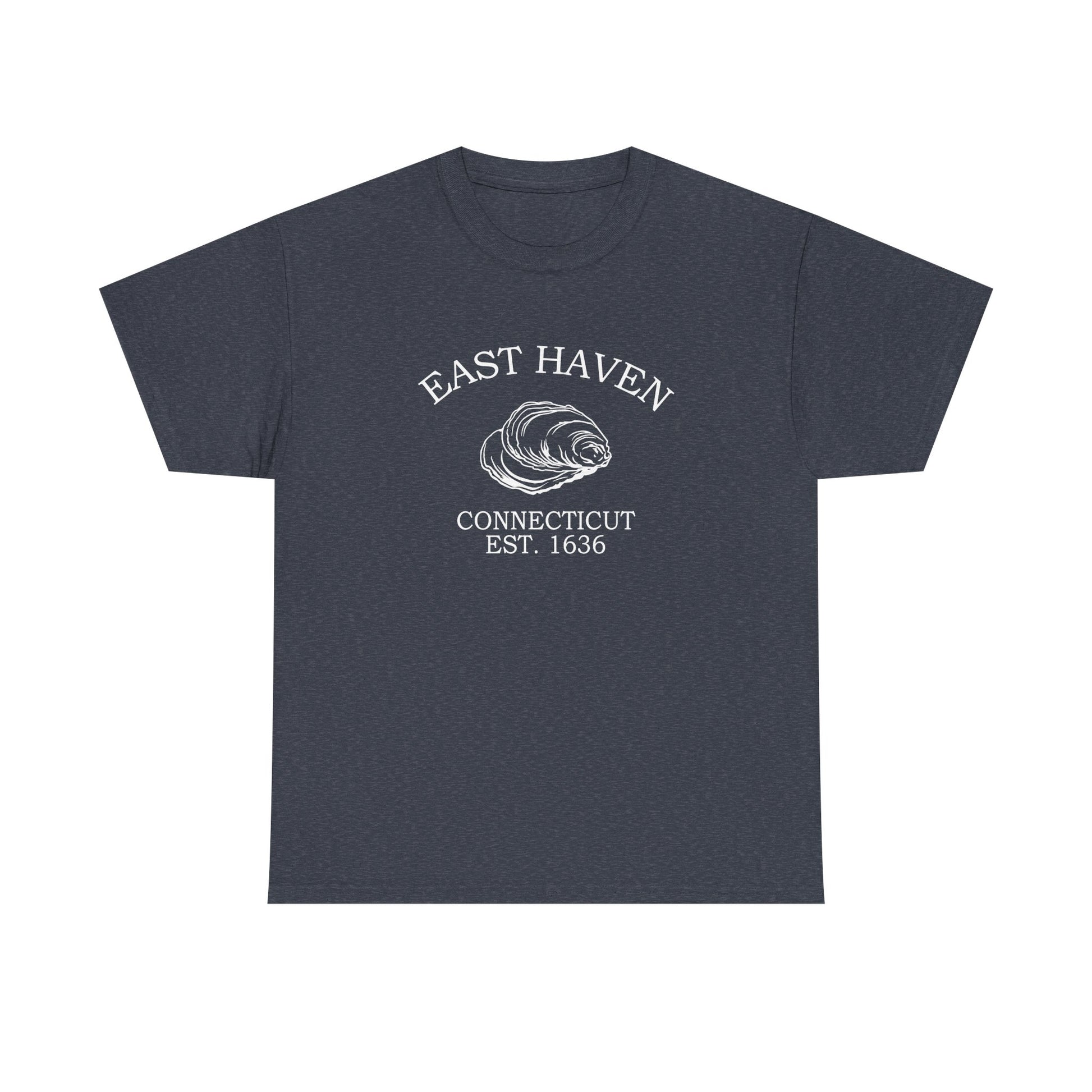
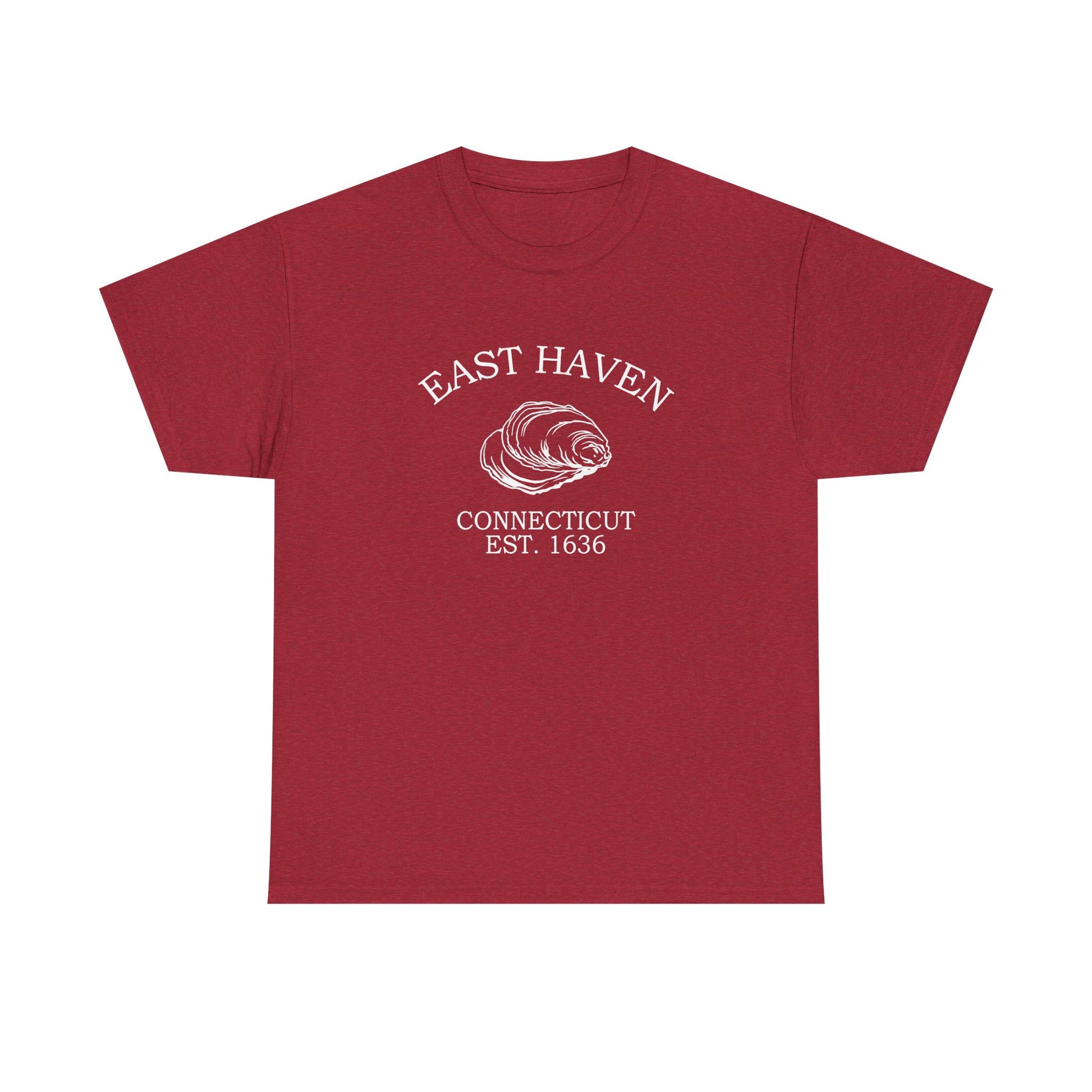
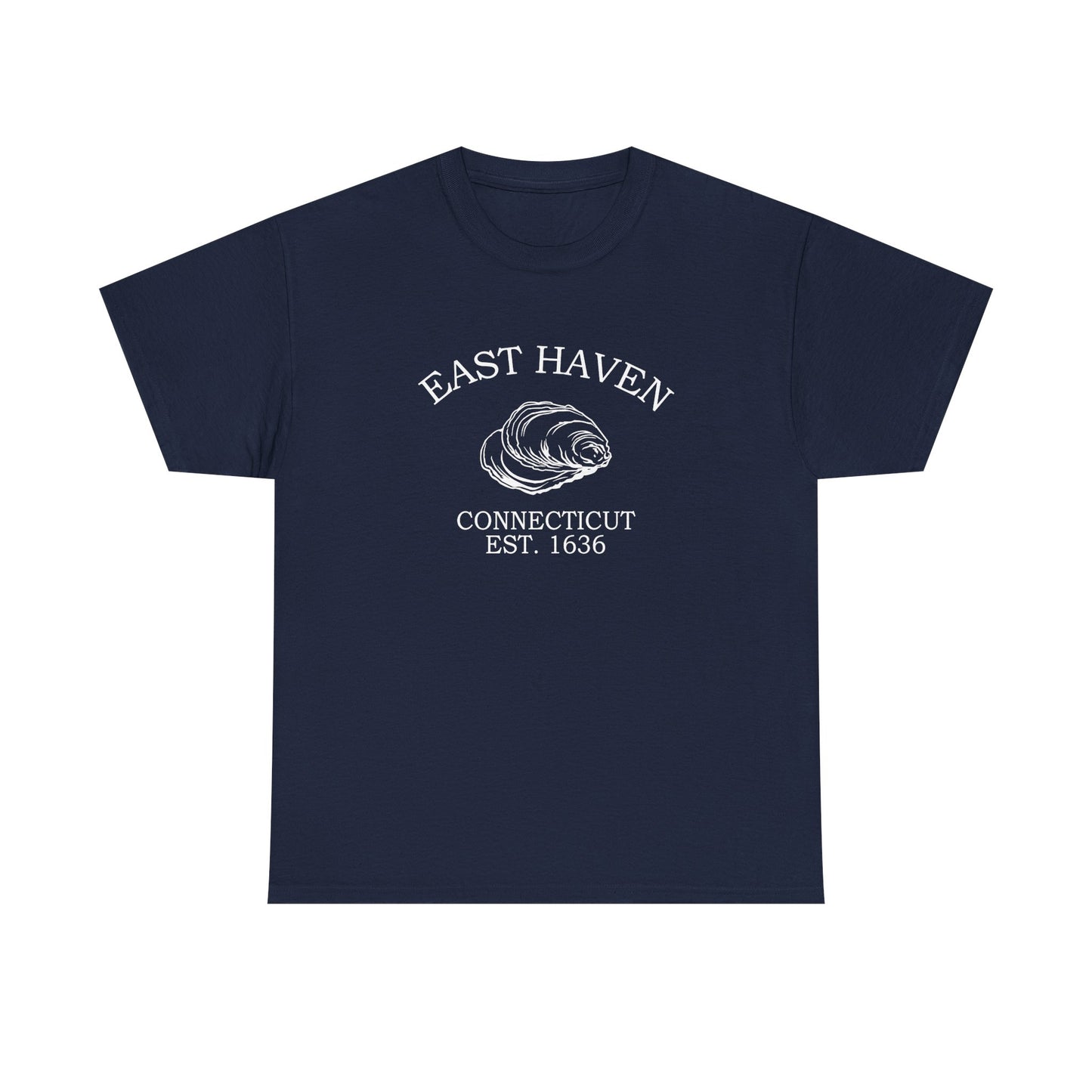
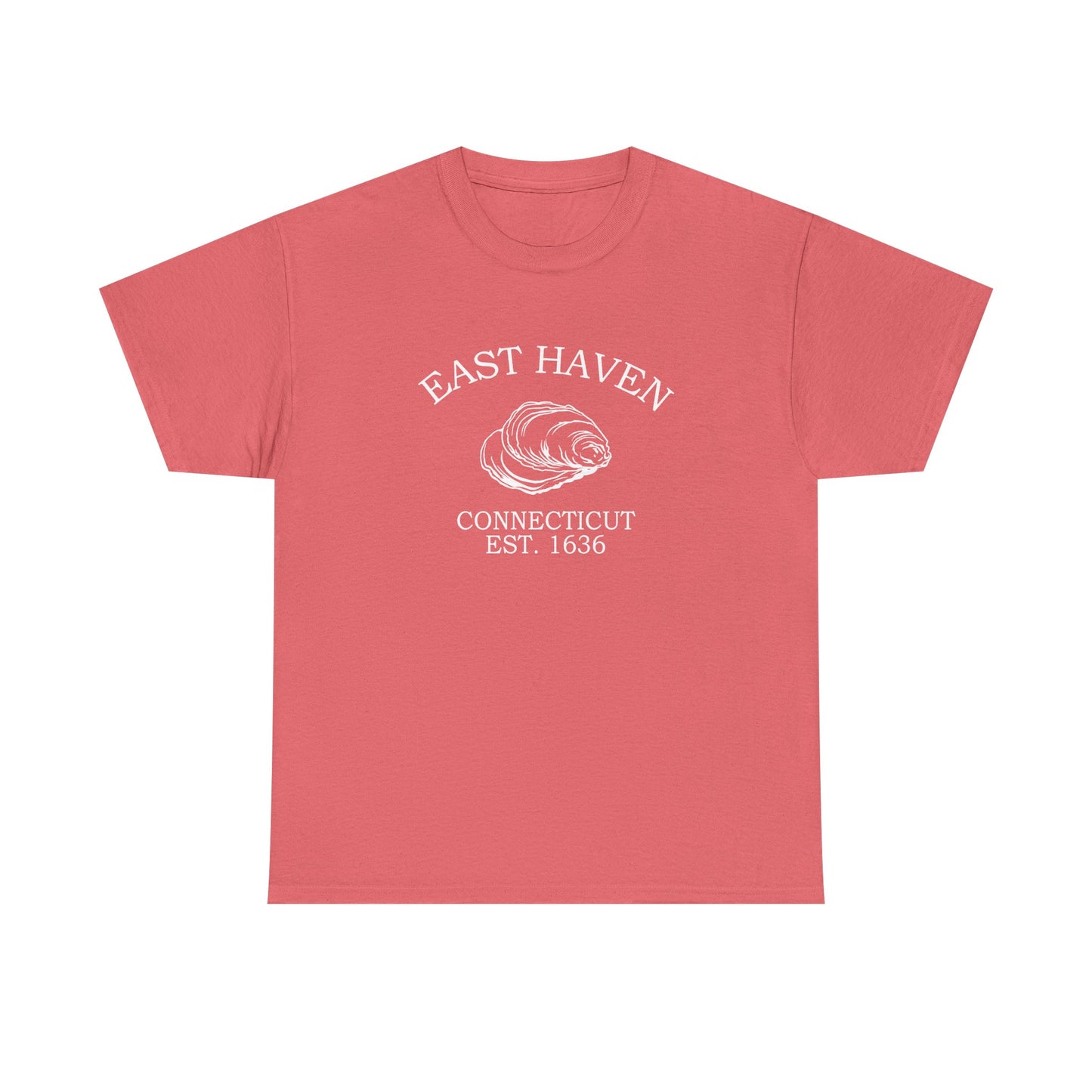
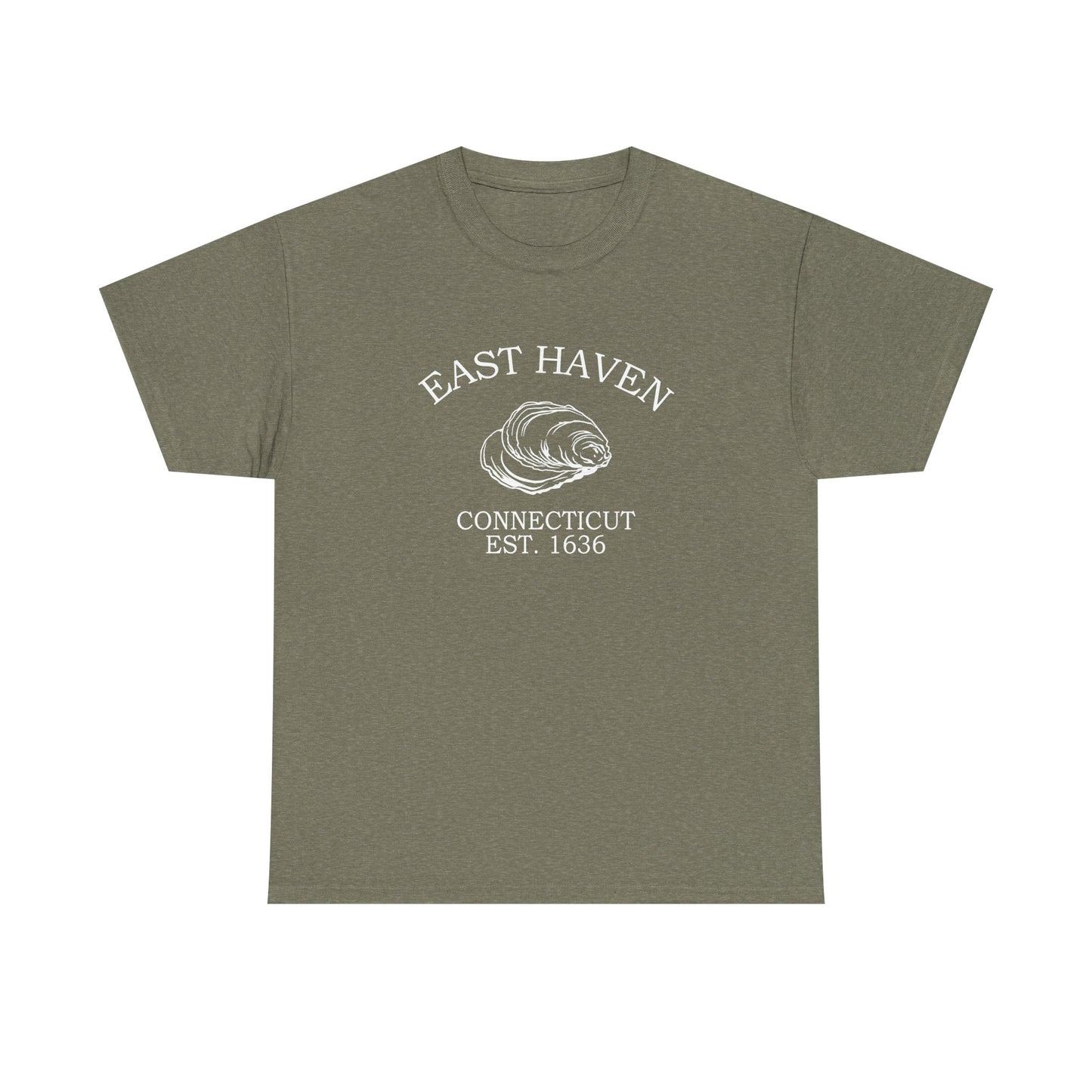
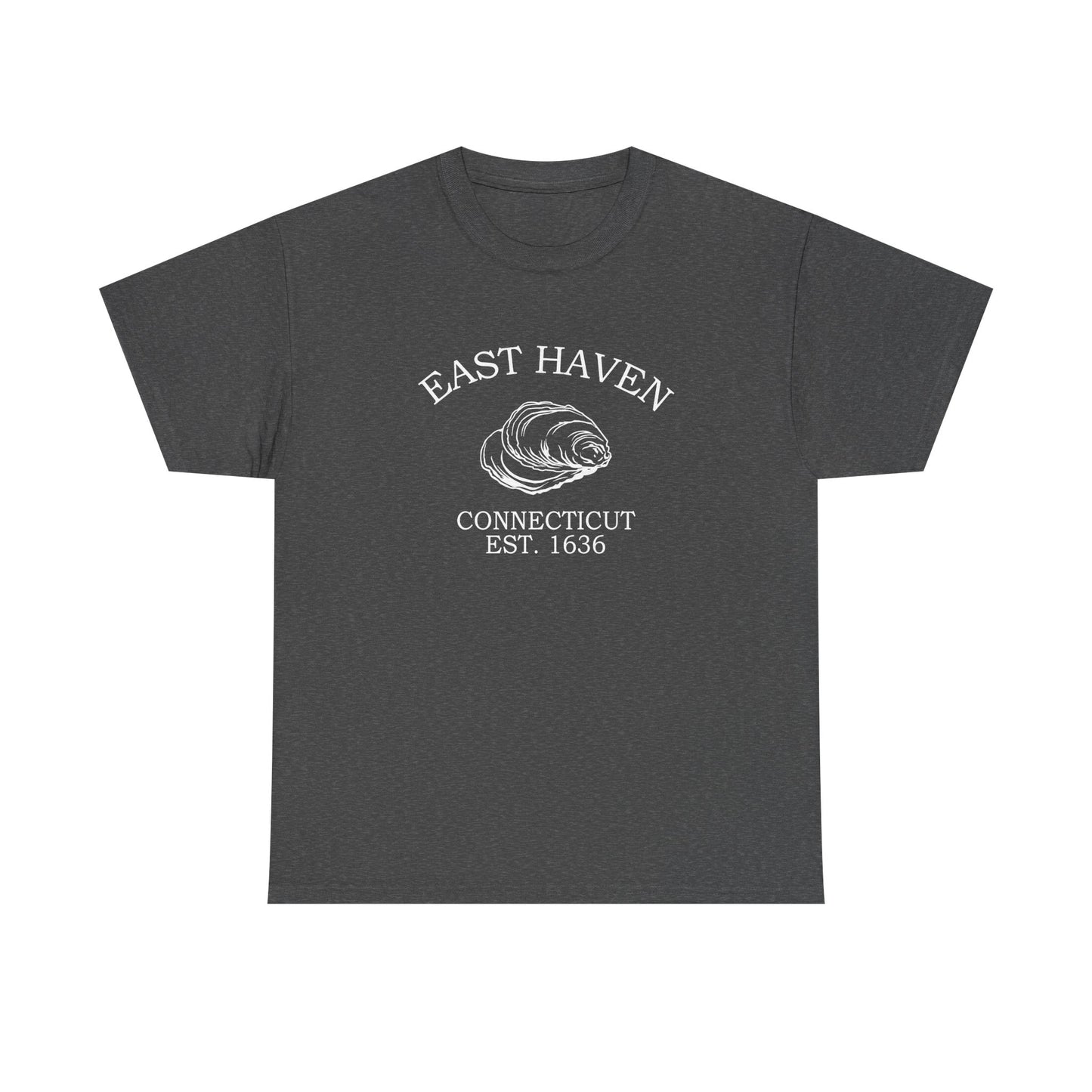
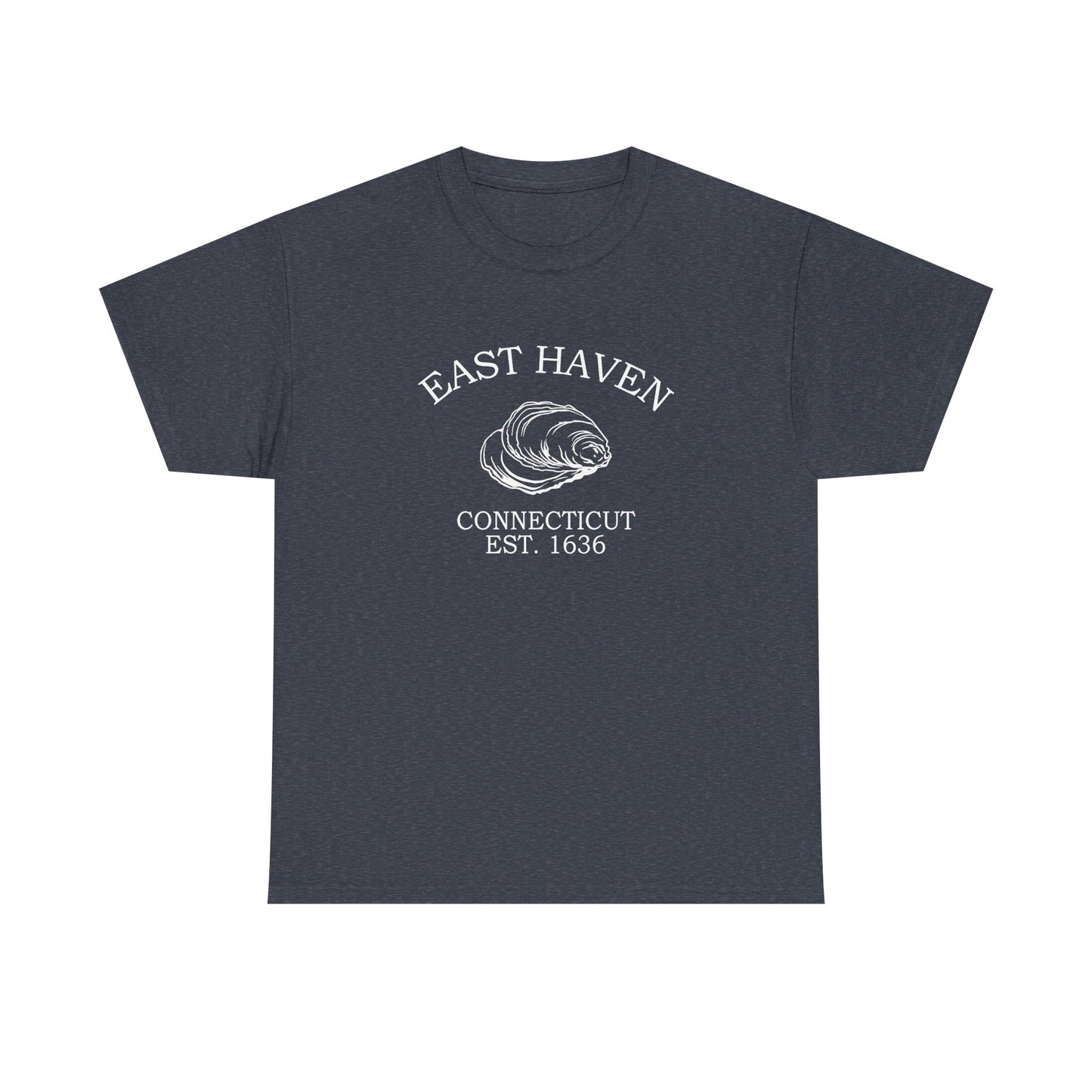
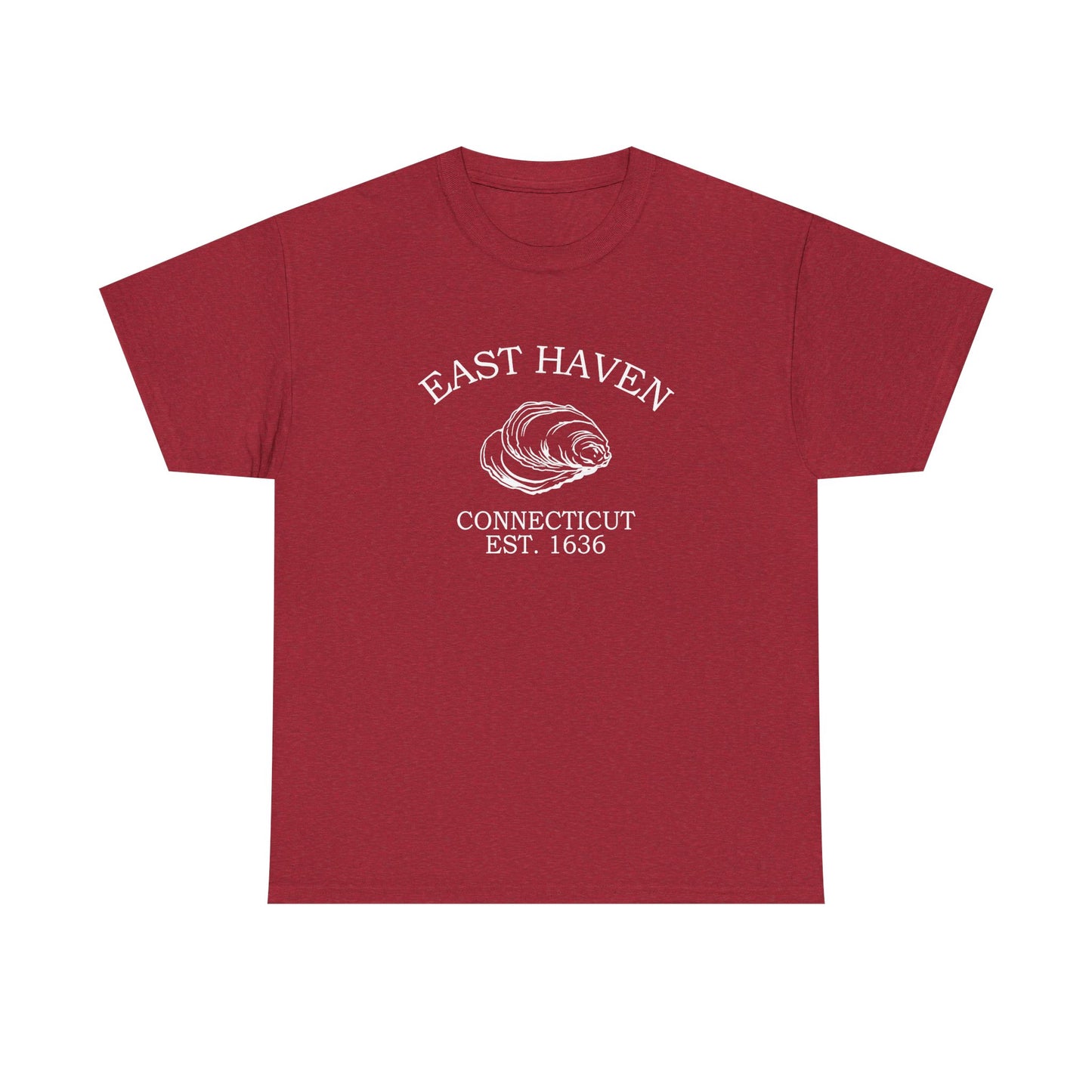
So East Haven gathers colonial iron, a fieldstone church, and the country's oldest trolley line onto a narrow shore of Long Island Sound. Our East Haven designs gather that into wearable form. Wear the history. East Haven, Connecticut — where colonial iron, a stone church, and the country's oldest trolley line meet the Sound.
That trolley line is East Haven's quiet claim to fame. Today the Shore Line Trolley Museum keeps the Branford Electric Railway running — the oldest continuously operating suburban trolley line in the United States — carrying riders on century-old streetcars along the same shoreline route, past Farm River and its tidal marshes. The town itself has long since become a New Haven-area shoreline suburb, with its beaches on Long Island Sound, its greens and ball fields, and the easy rhythm of a coastal town. But the trolley still clangs along the marsh, a living thread back to the iron-works village that started it all.
Why People Visit East Haven
Visitors come to East Haven for an unhurried slice of the Connecticut shore: a ride on a hundred-year-old trolley, a stroll past one of New England's oldest stone churches, and an afternoon on a quiet Sound-side beach. Salt marshes and shoreline trails sit a few minutes from the Town Green, and New Haven's museums and harbor are right next door. Equal parts colonial heritage and easy coastal living, East Haven rewards anyone drawn to the working shoreline of Long Island Sound.
