


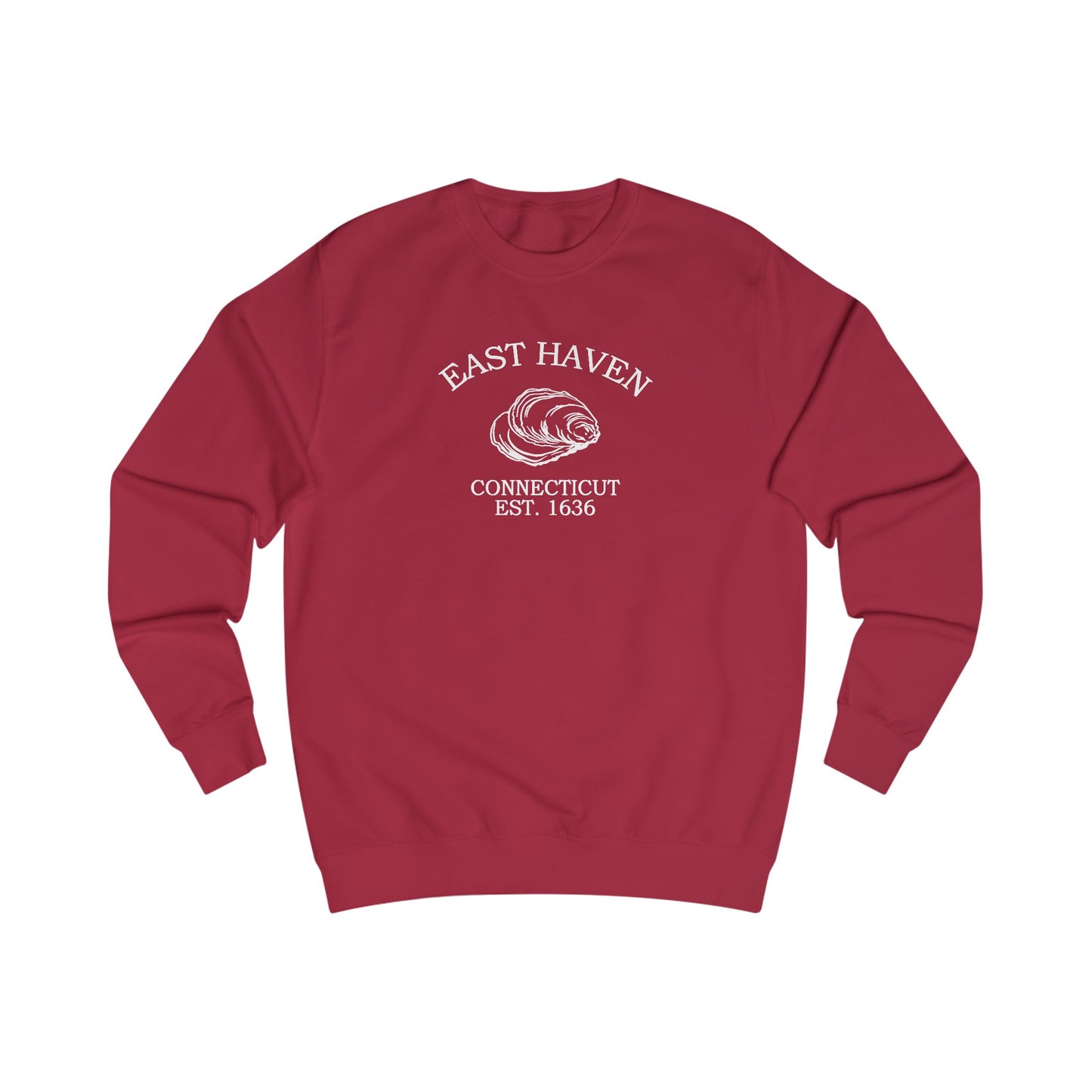
Our East Haven logo carries the Connecticut shoreline shell above "Connecticut — Est. 1636," the shared retro emblem of our Connecticut towns; the shell stands for the oystering and salt-marsh coast East Haven grew up on, and 1636 marks the founding of the Connecticut Colony itself, not the town — East Haven's own story runs from East Farms in 1638 to its own town charter in 1785. Rendered in worn black-and-white, like a stamp on an oyster crate or a coastal sign, it ties East Haven to every other Connecticut town we make. What makes this one East Haven is the story behind it — the first iron, the stone church, and the oldest trolley line in America.
East Haven came of age during the Revolution. In July 1779 a British force under General William Tryon landed along the shore and struck at Black Rock Fort in Morris Cove before marching on New Haven — the war reaching right onto East Haven's beaches. The town remembers the other side of that year too: the Marquis de Lafayette and his troops encamped on the Green, and Lafayette thought enough of the place to return and visit it again decades later, in 1824. Salt for the army, men for the cause, and a French general on the common — the Revolution left its mark on the little shoreline parish.
Why People Visit East Haven
Visitors come to East Haven for an unhurried slice of the Connecticut shore: a ride on a hundred-year-old trolley, a stroll past one of New England's oldest stone churches, and an afternoon on a quiet Sound-side beach. Salt marshes and shoreline trails sit a few minutes from the Town Green, and New Haven's museums and harbor are right next door. Equal parts colonial heritage and easy coastal living, East Haven rewards anyone drawn to the working shoreline of Long Island Sound.
