


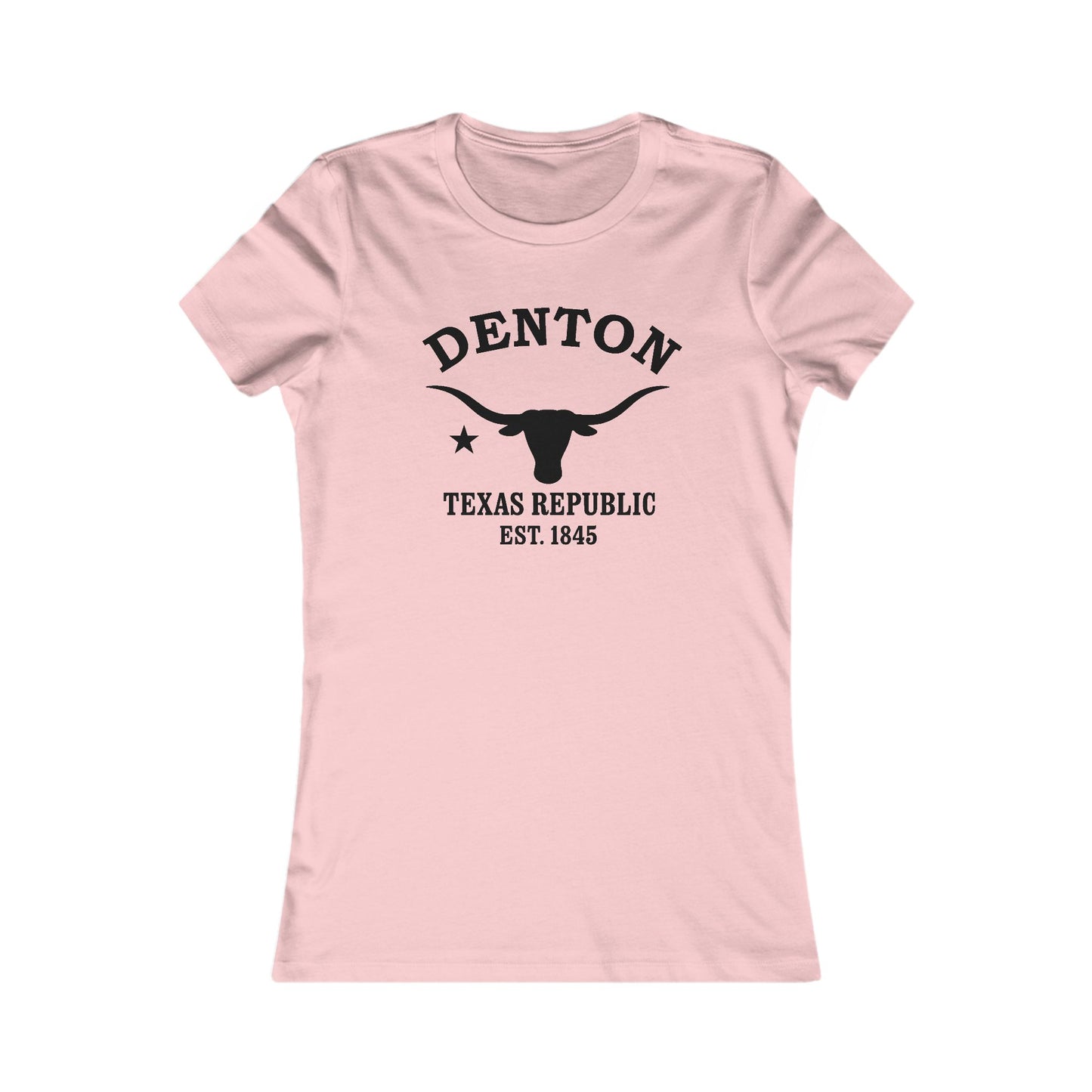
Our Denton logo carries the Texas longhorn and Lone Star over “Texas Republic · Est. 1845,” the year Texas joined the Union — the shared emblem of every Merlin Classics Texas place. Printed in a distressed black-and-white that reads like an old brand iron or a rodeo poster, the longhorn is Texas in shorthand: ranch country, independence, the Lone Star. What makes this one Denton is the town behind it — the courthouse square, the two universities, and the music that turned a North Texas county seat into “Little Austin.”
The music that UNT seeded spilled off campus long ago. By the late 2000s Denton's scene had a national reputation — its own festival on and around the square, a dense club circuit, and a stream of bands that drew comparisons to Austin in its scruffier days; in 2008 Paste magazine named it the best music scene in the United States. The Denton Arts & Jazz Festival fills the park with hundreds of thousands of people each spring, and on an ordinary weekend you can hear a One O'Clock-caliber big band, an experimental act, and a singer-songwriter within a few blocks of the courthouse. For a town this size, the range is the whole point; more than two dozen venues sit within walking distance of the square.
Why People Visit Denton
Denton offers the energy of a music town and the ease of a small Texas city — a beautiful courthouse square, a deep live-music calendar, two universities, and a creative streak that earned it the nickname “Little Austin.” It's walkable, friendly, and unmistakably North Texas.
