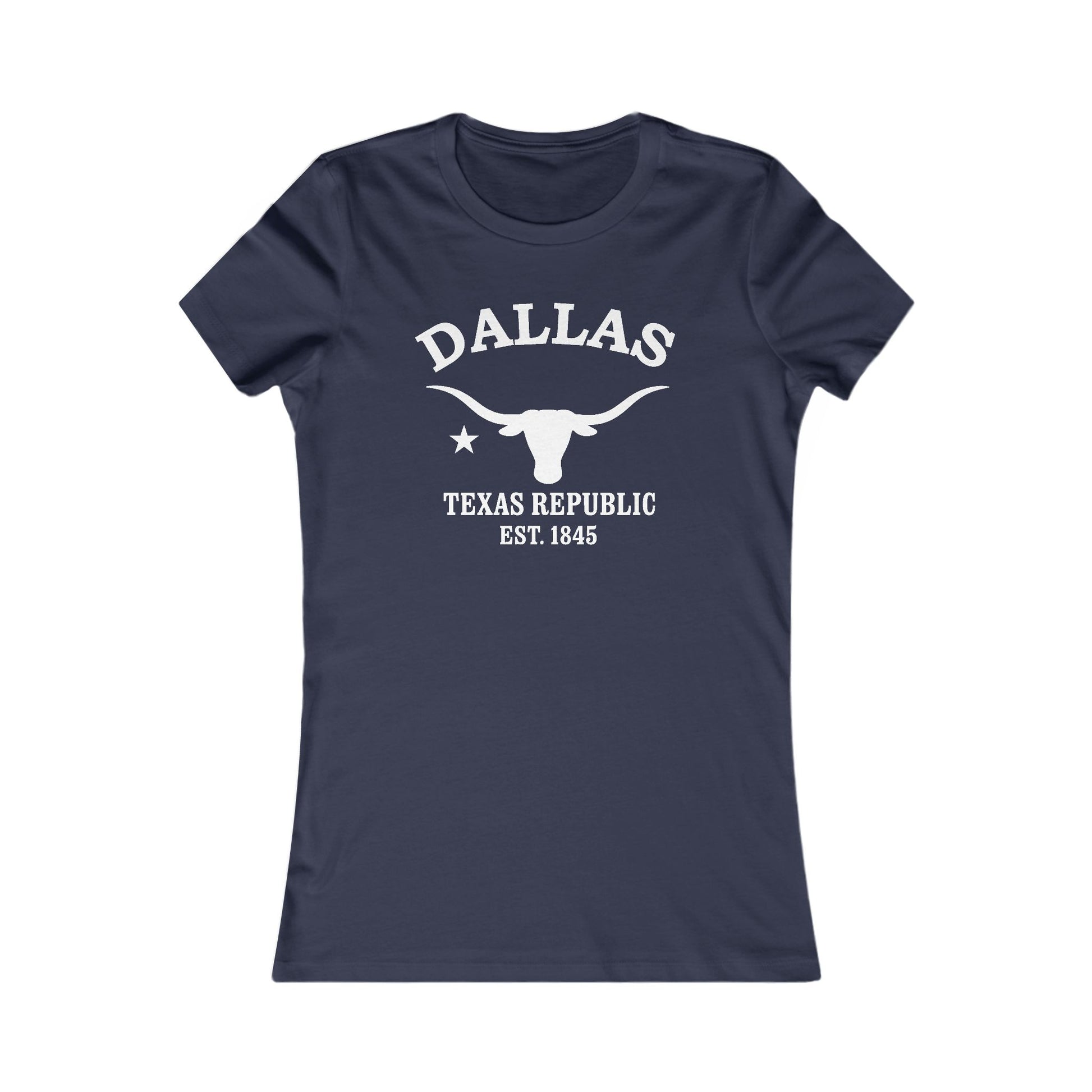
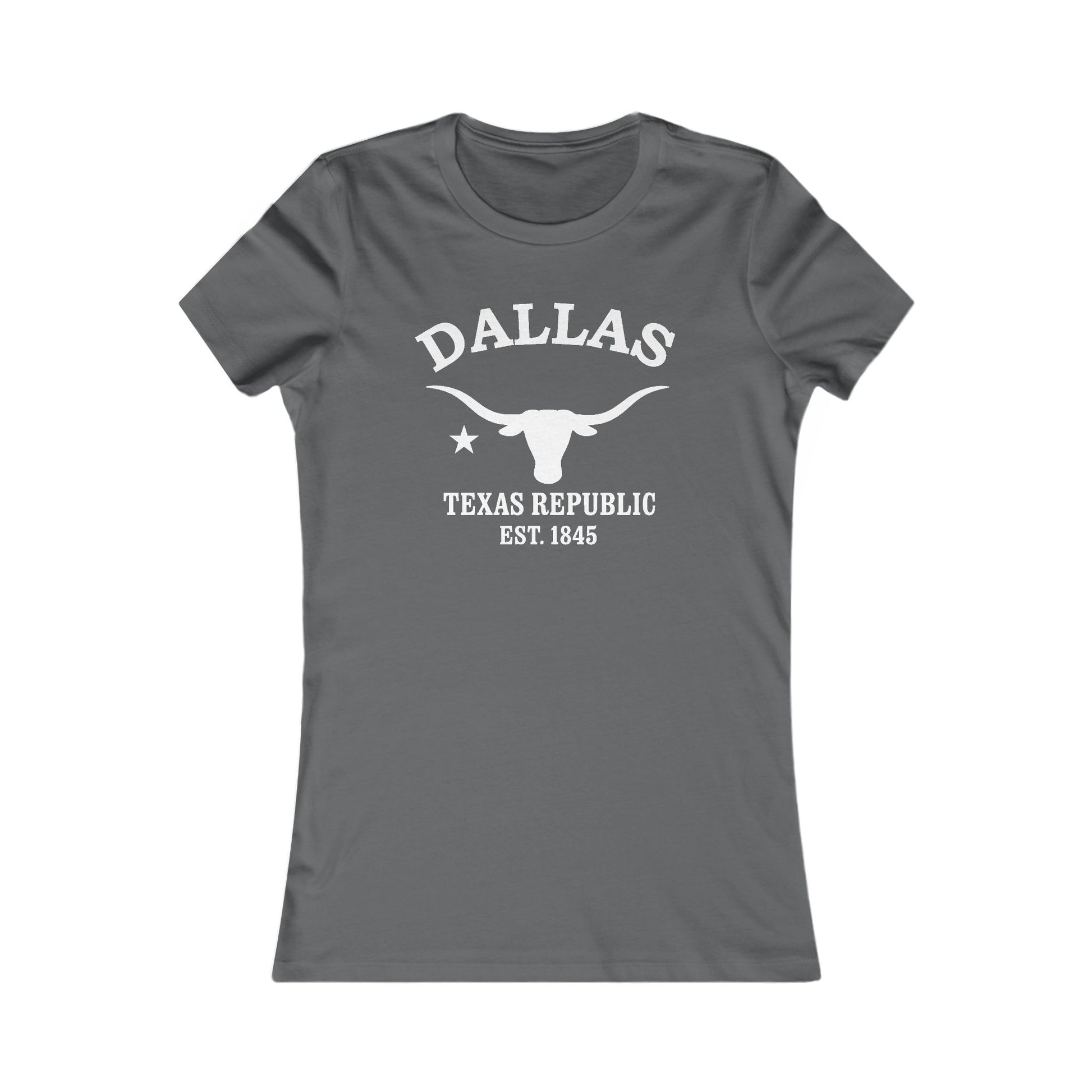
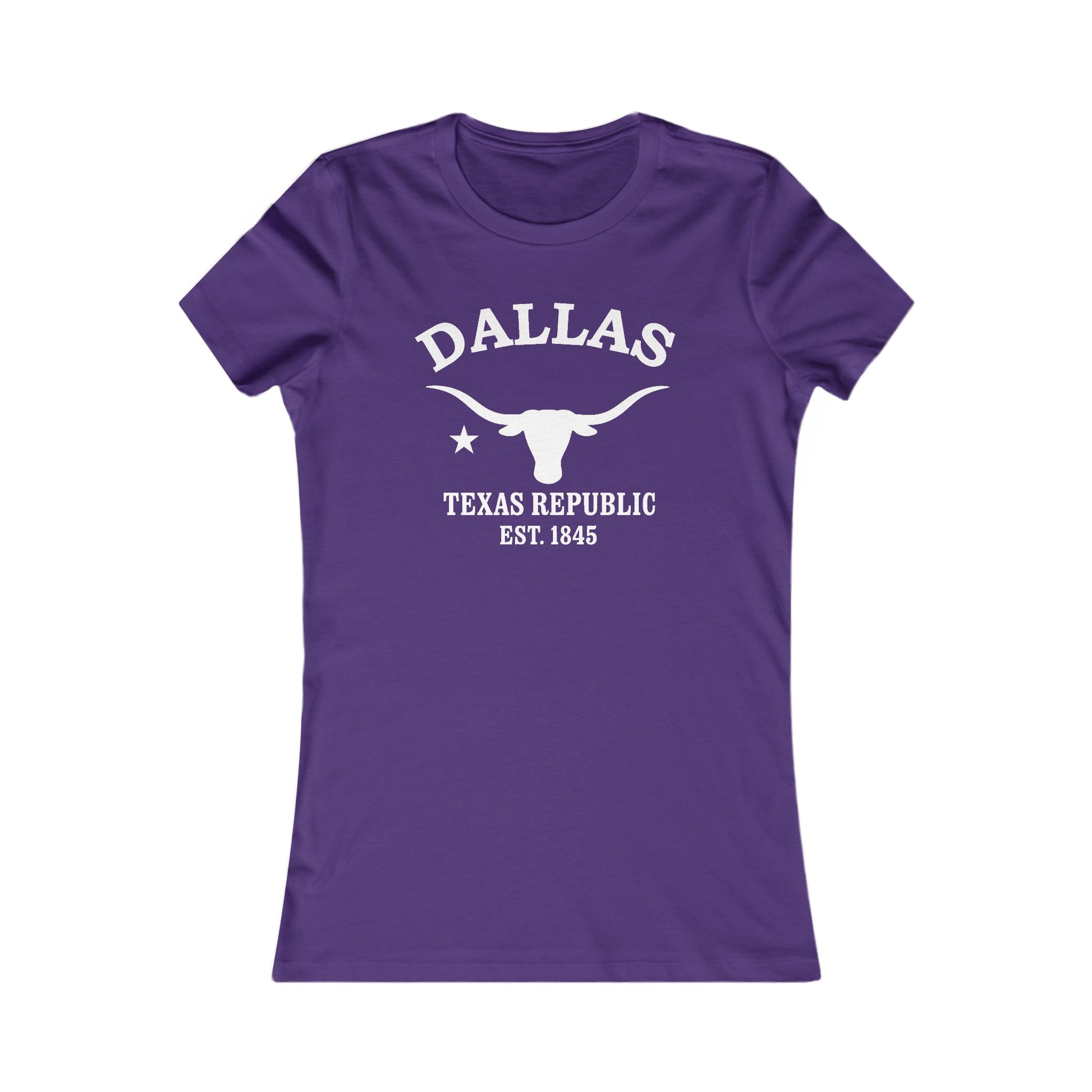
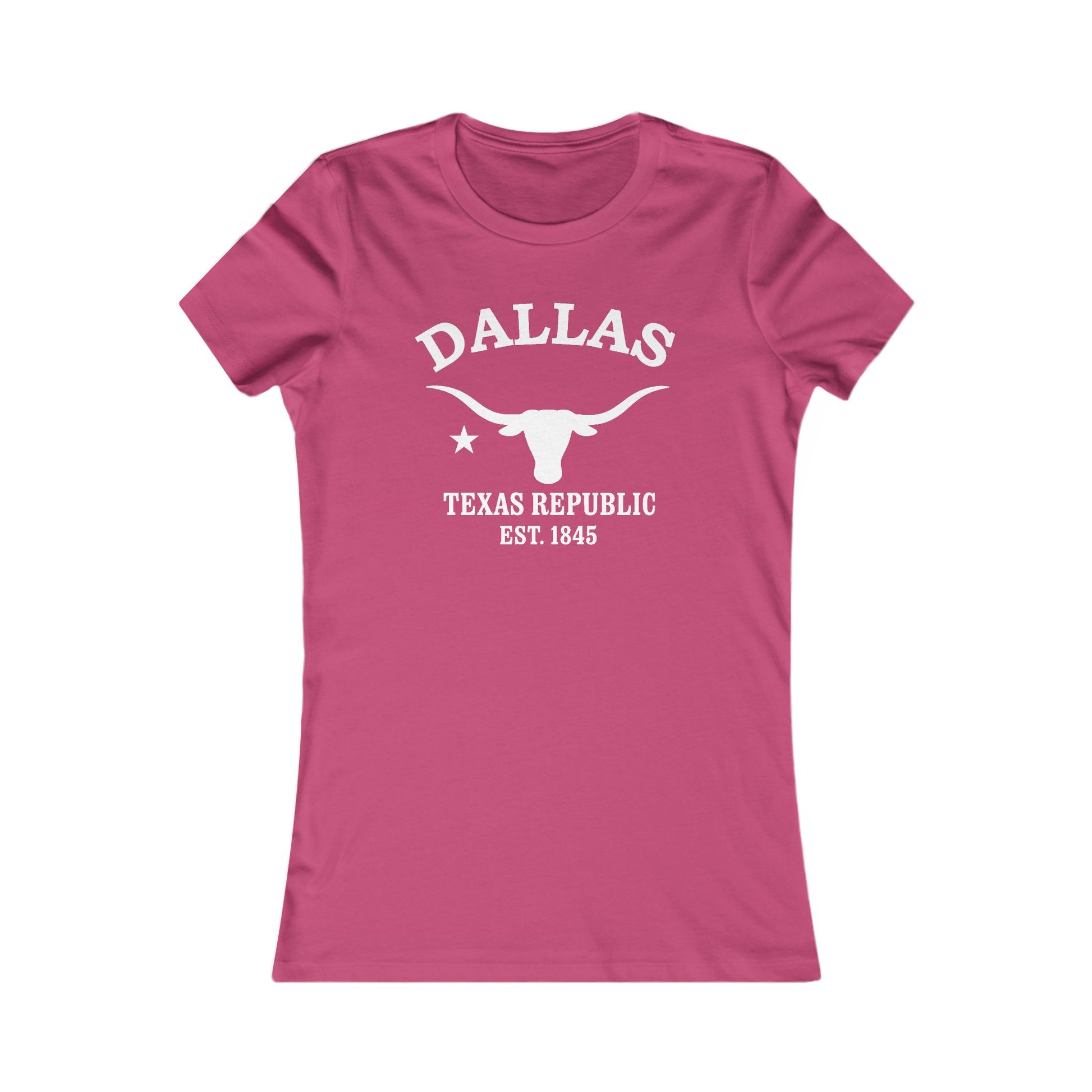
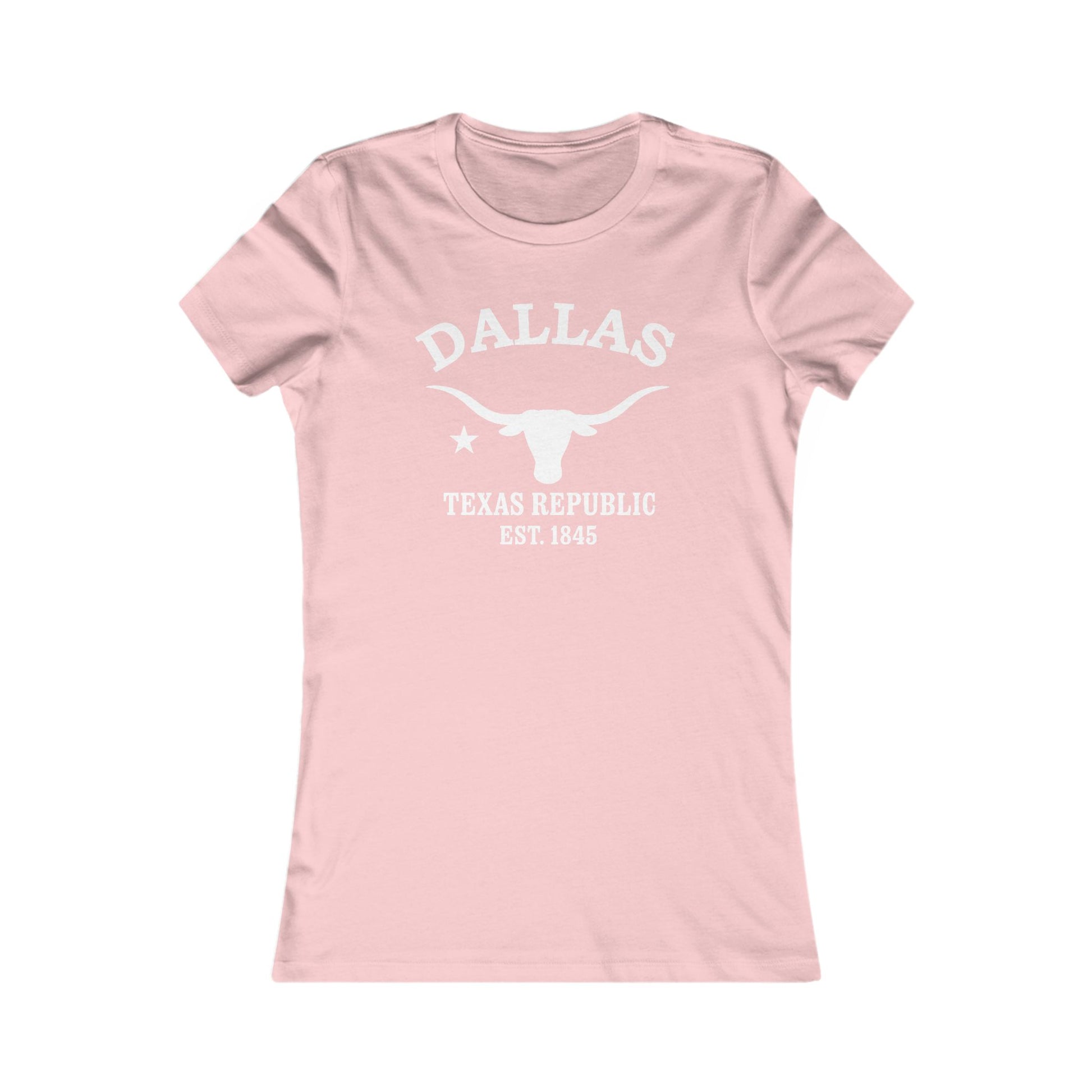
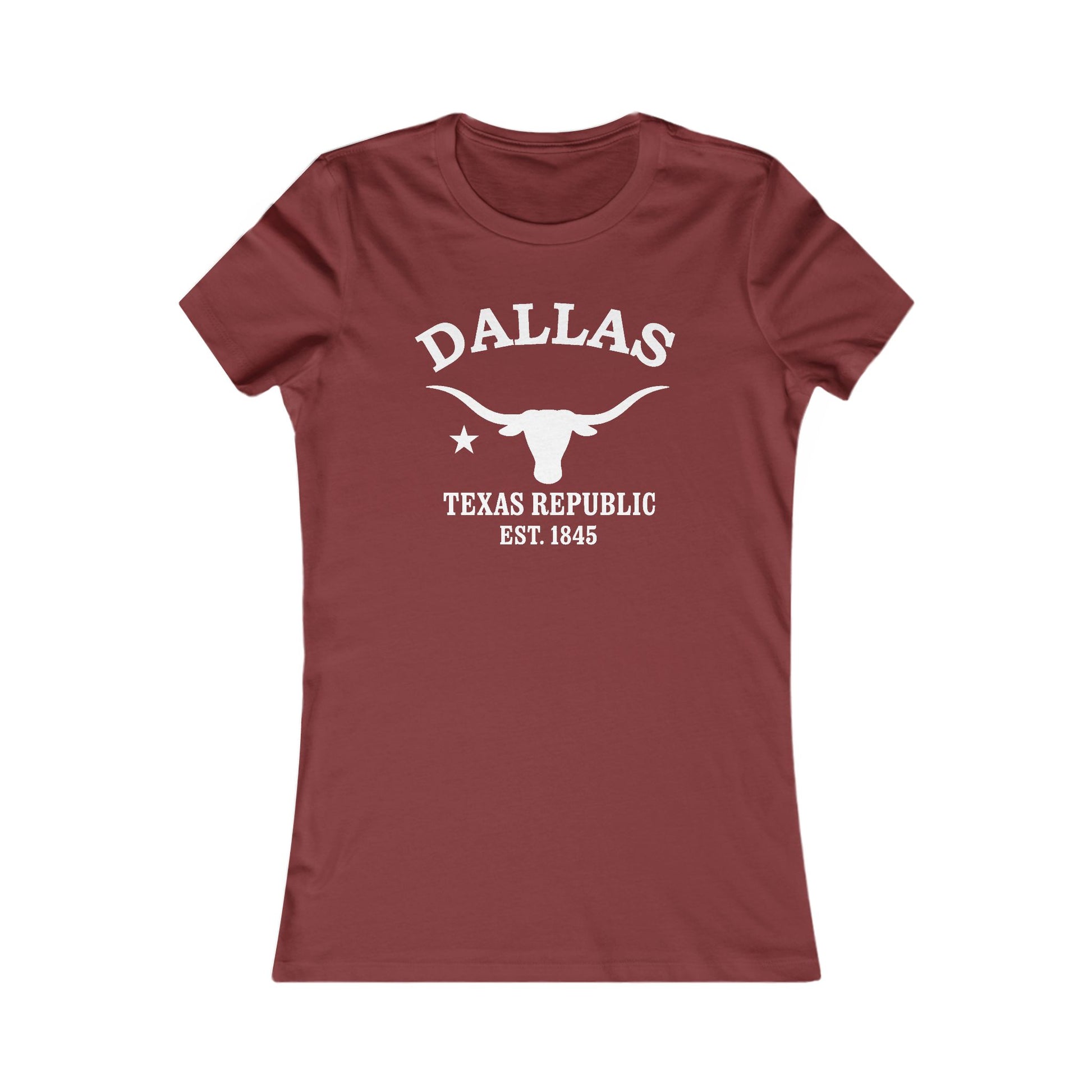
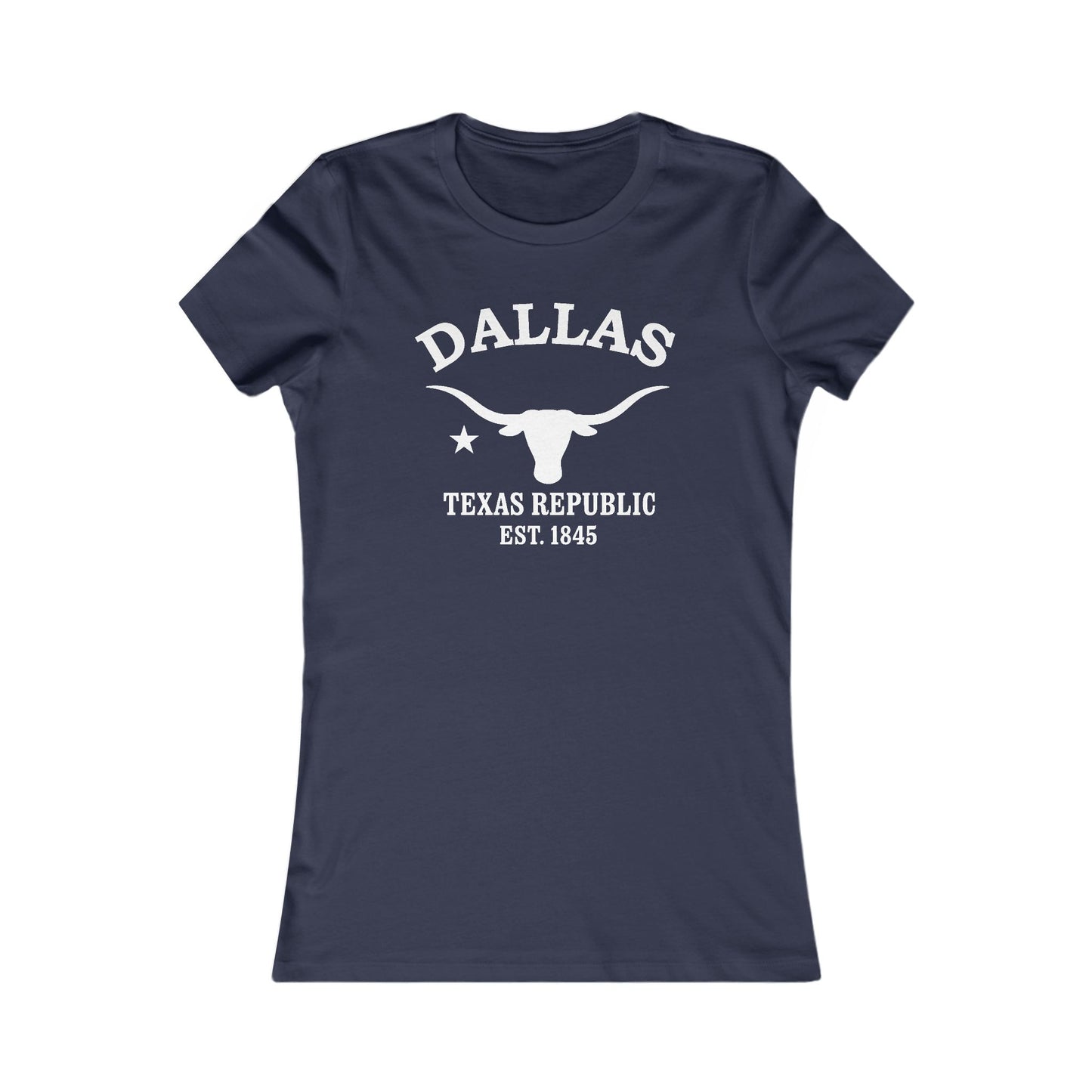
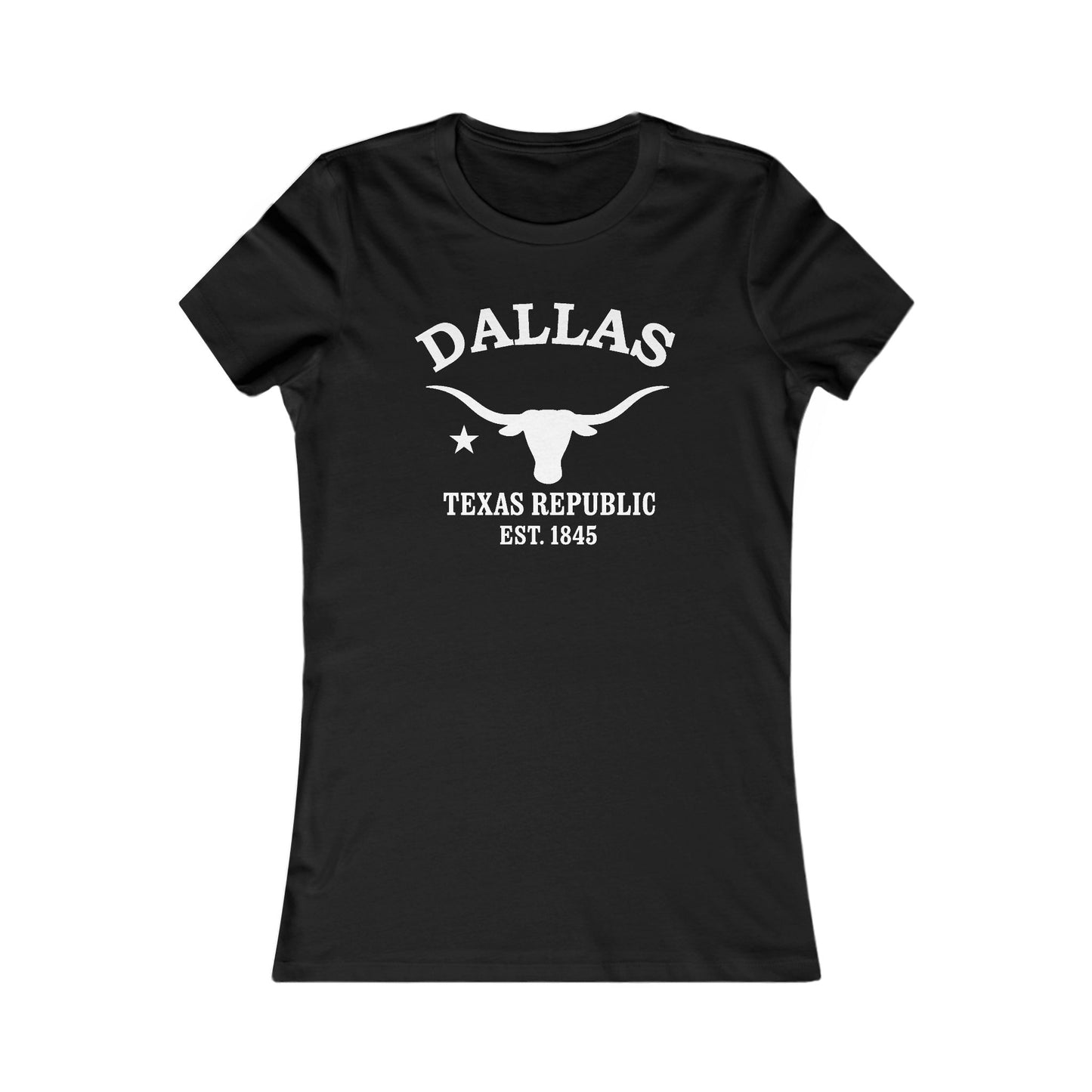
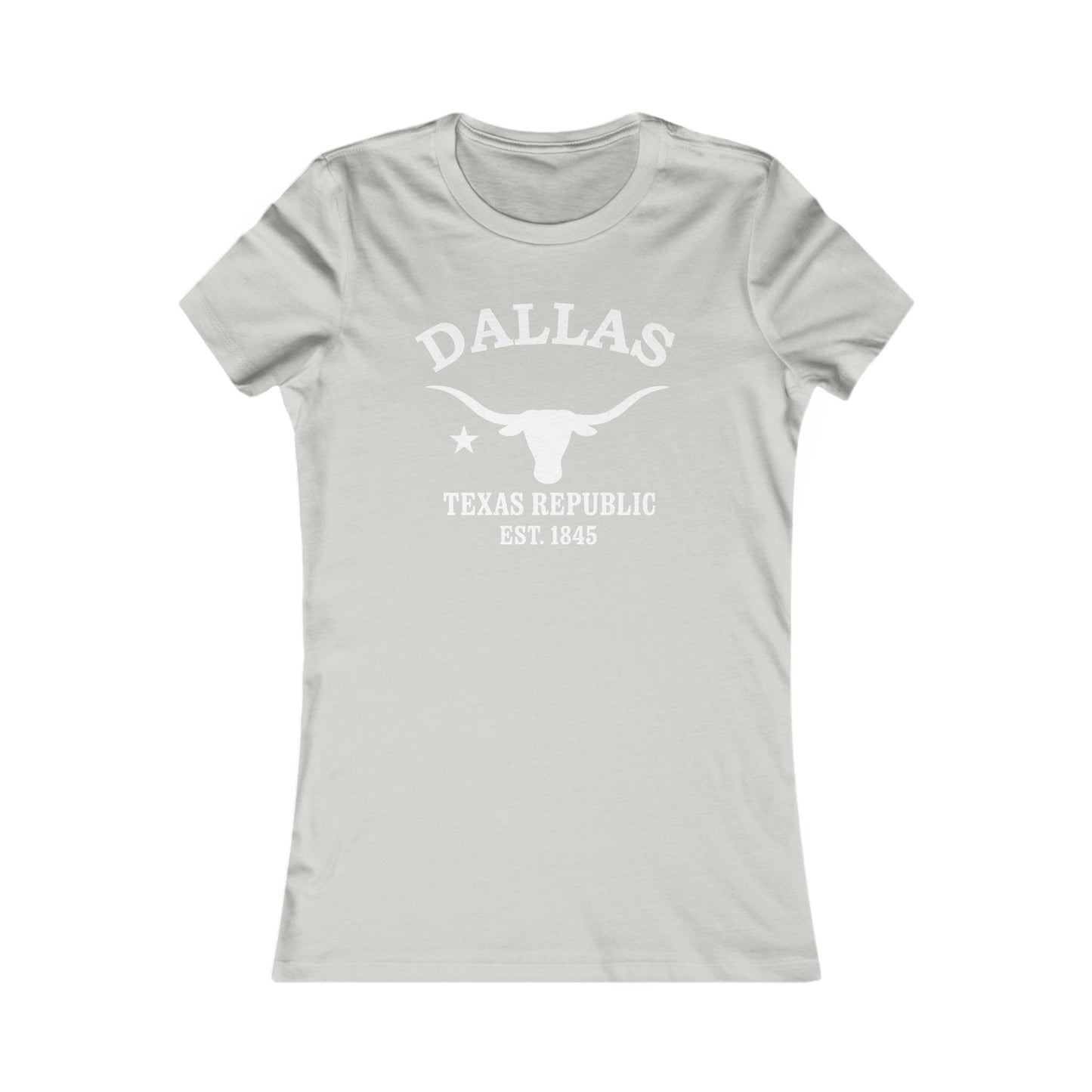
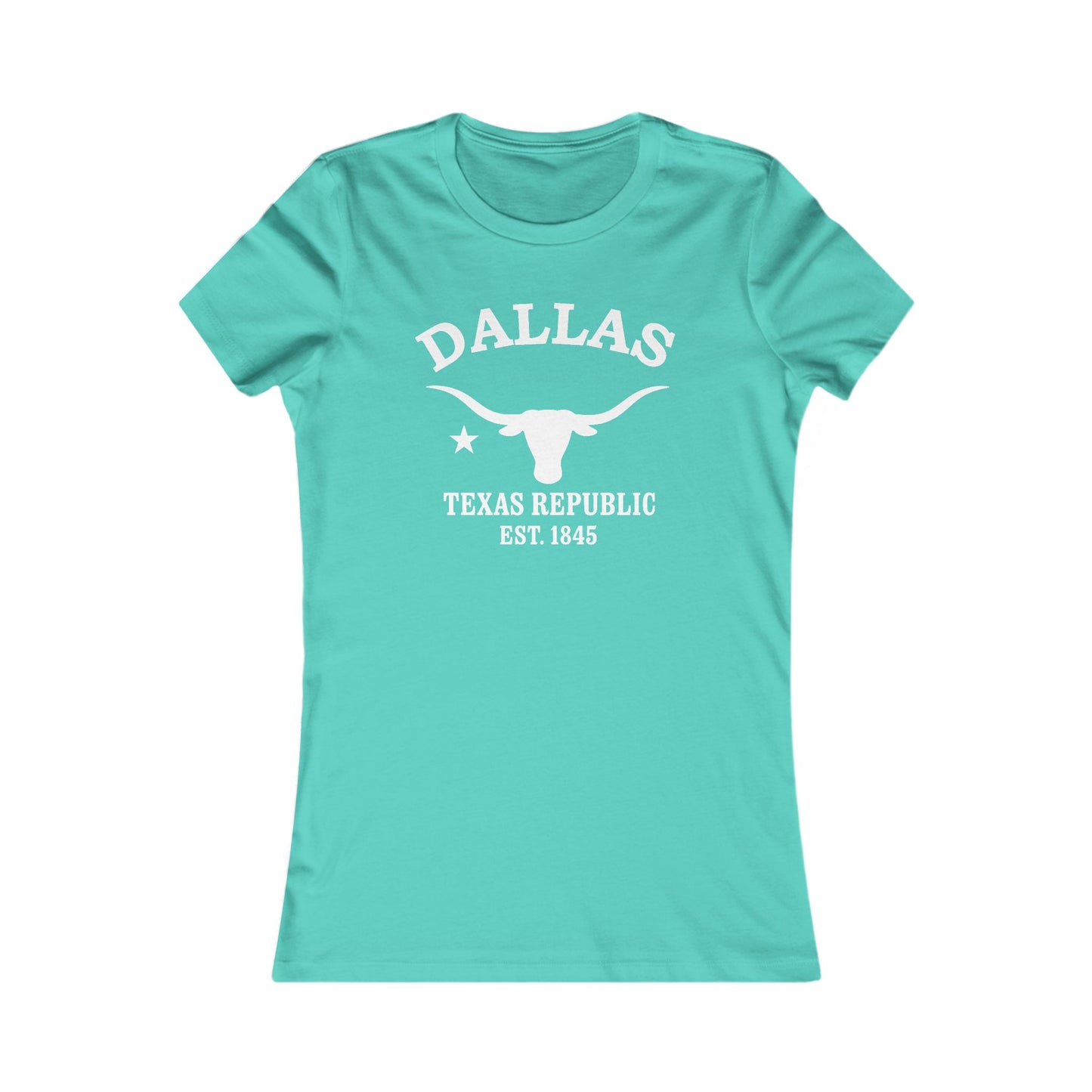
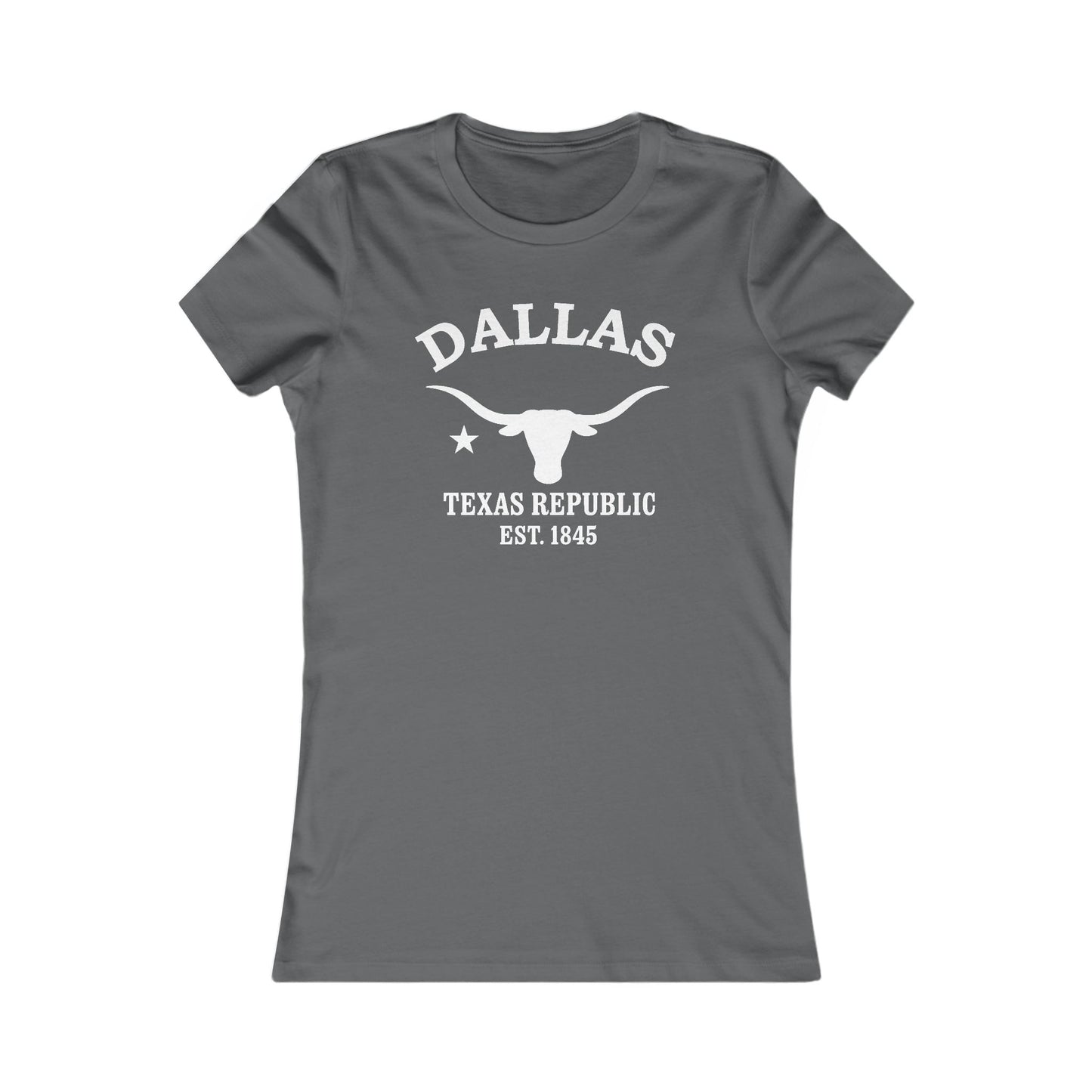
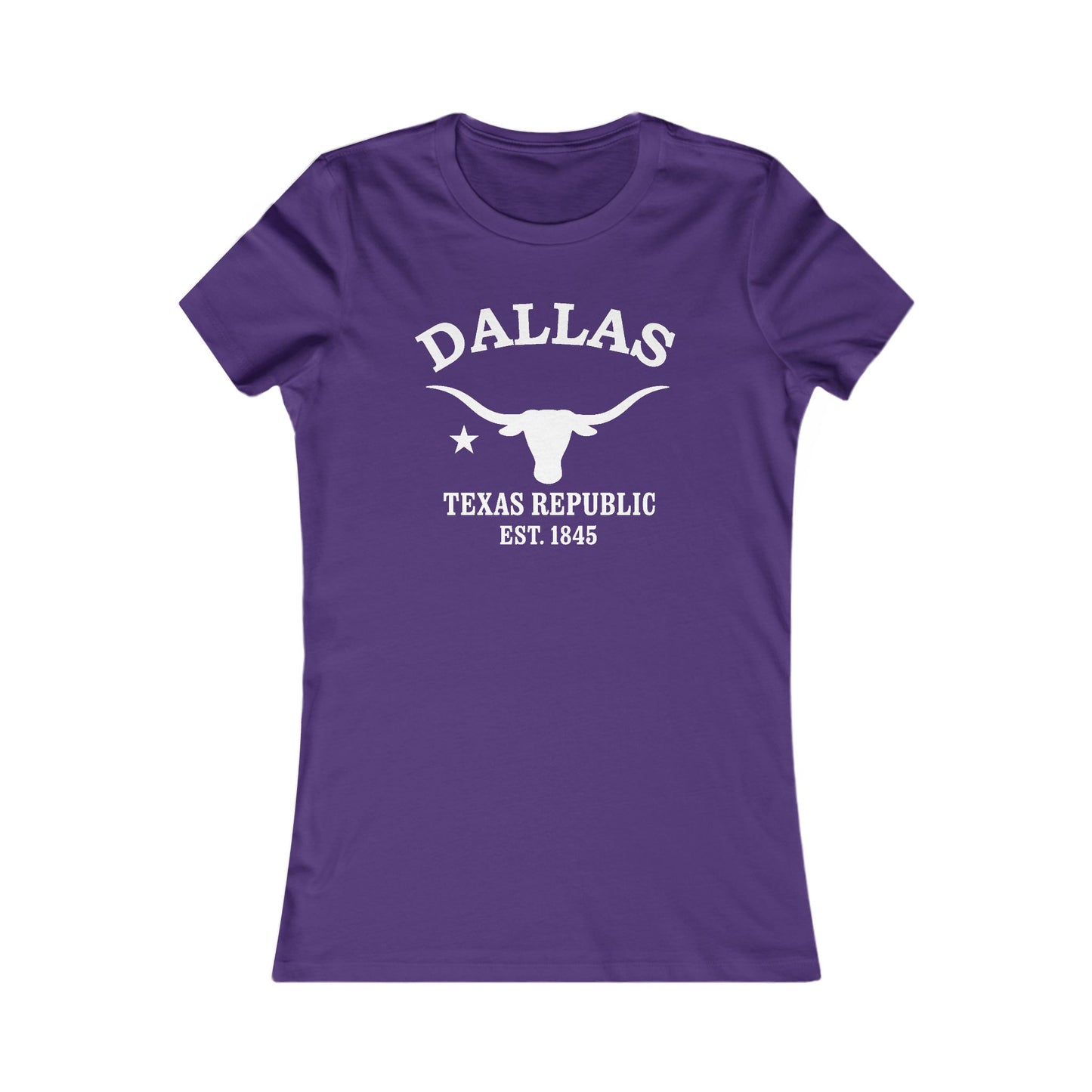
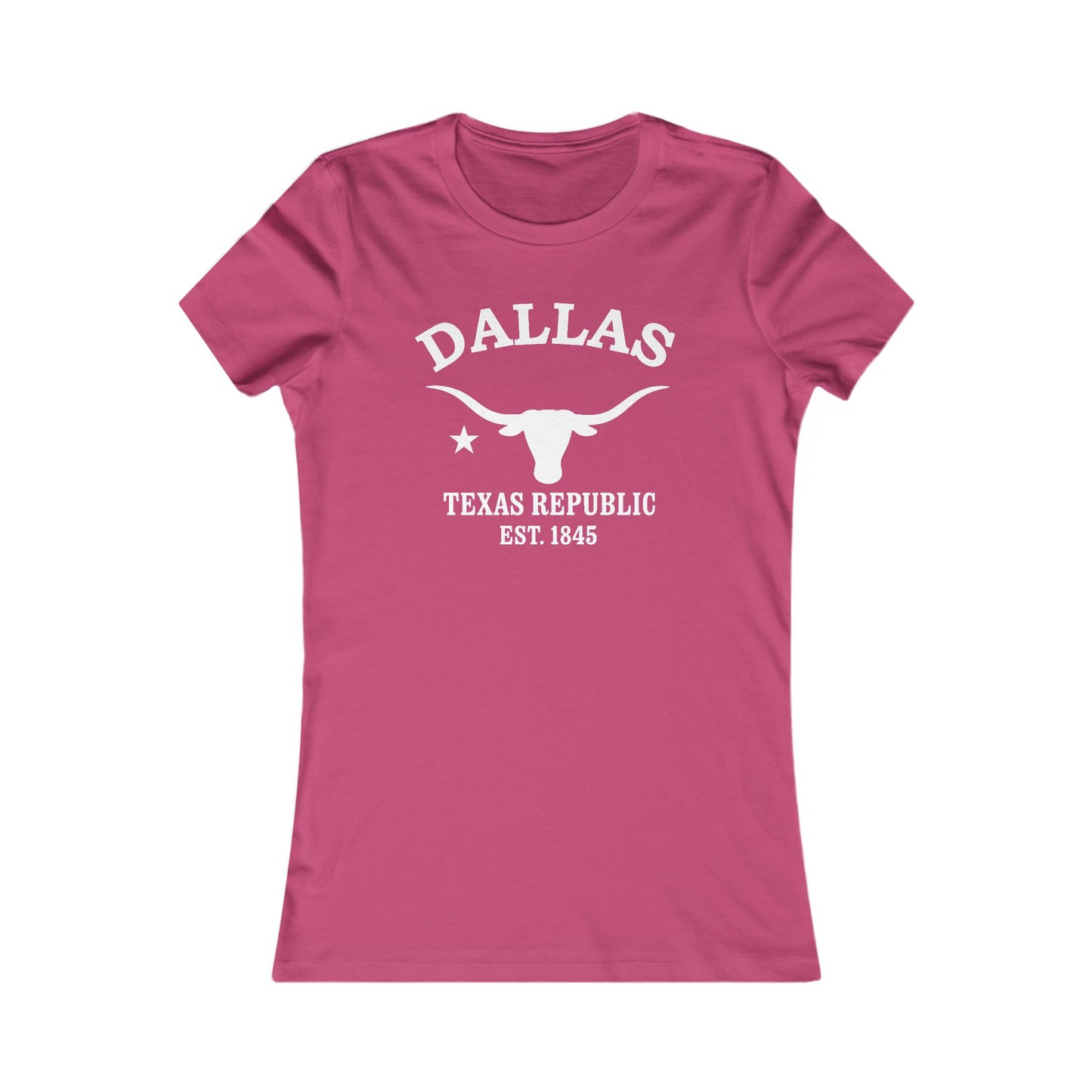
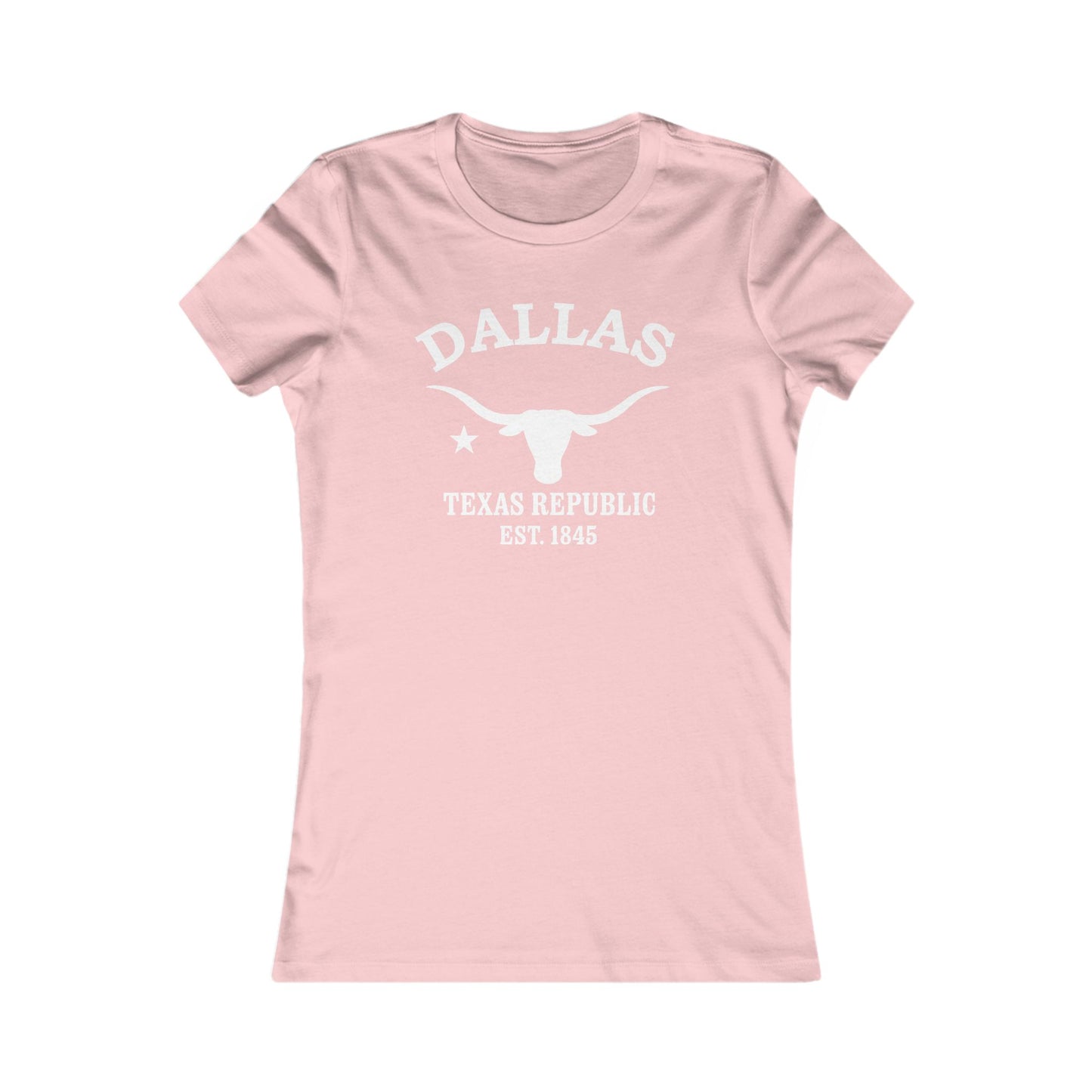
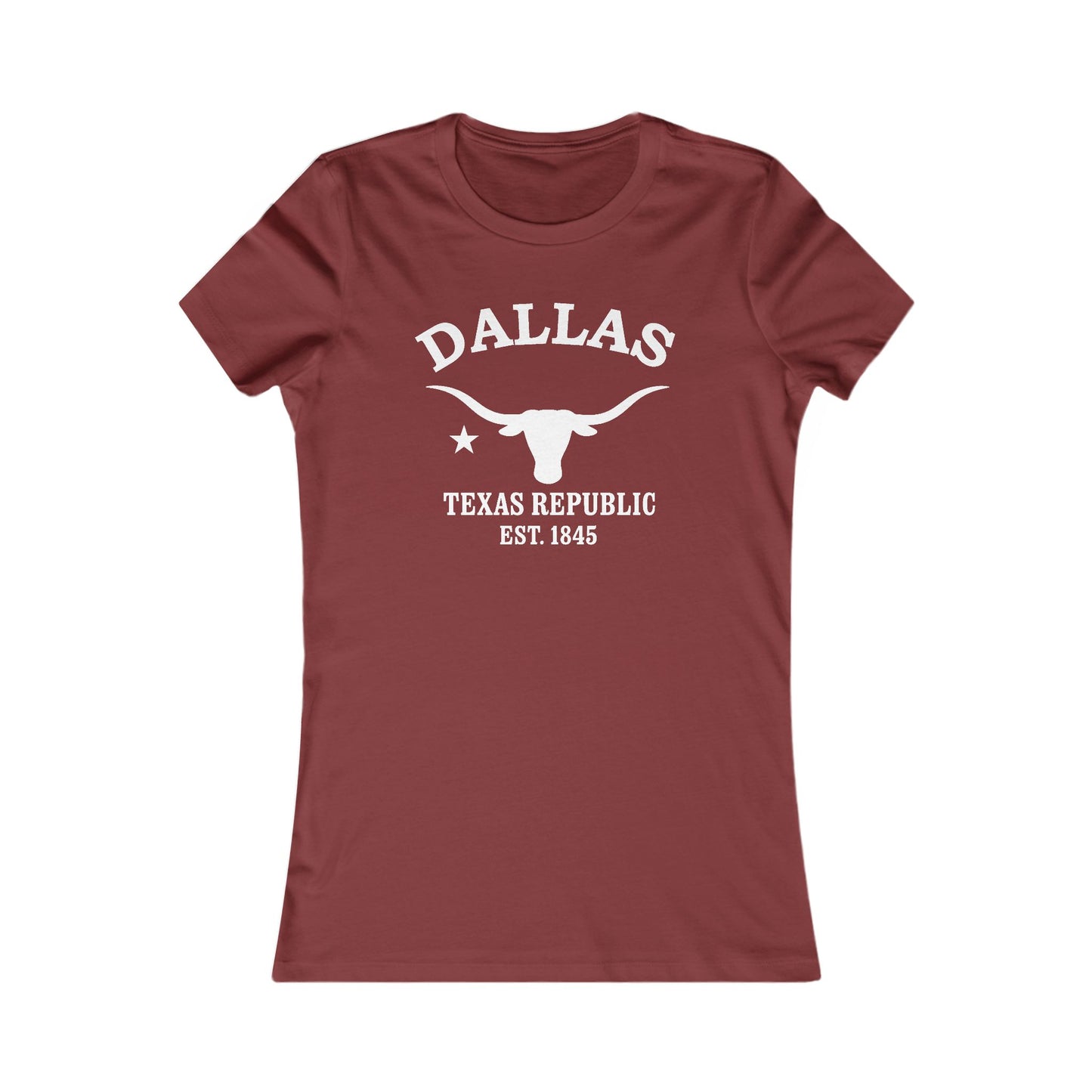
Our Dallas logo carries the Texas longhorn over “Texas Republic · Est. 1845,” the year Texas joined the Union — the shared emblem of every Merlin Classics Texas town. Printed in clean retro black-and-white that reads like an old rodeo poster or a brand burned into a fence rail, the longhorn and Lone Star stand for Texas as a whole; what makes this one Dallas is everything behind it — the flying red Pegasus, the lit-up Ball on the skyline, the Art Deco grandeur of Fair Park, and a prairie trading post that willed itself into Big D.
Today Dallas is skyline and prairie light, museums and neon, a flying red horse over a downtown that never stops building. Our Dallas designs gather that identity — the longhorn emblem, Big D confidence, the Pegasus and the skyline — into wearable form. It is a Texas city that made itself out of almost nothing and has been proud of it ever since. Dallas, Texas — Big D, where the red Pegasus still flies over a skyline a frontier trader started by a river ford.
Why People Visit Dallas
Dallas rewards visitors who like a city with confidence: a skyline you can read like a history book, a world-class arts district, museums of real weight, and food worth crossing town for. Add the flying red Pegasus, the Art Deco of Fair Park, and Texas hospitality scaled up, and Big D makes a strong case for itself.
