


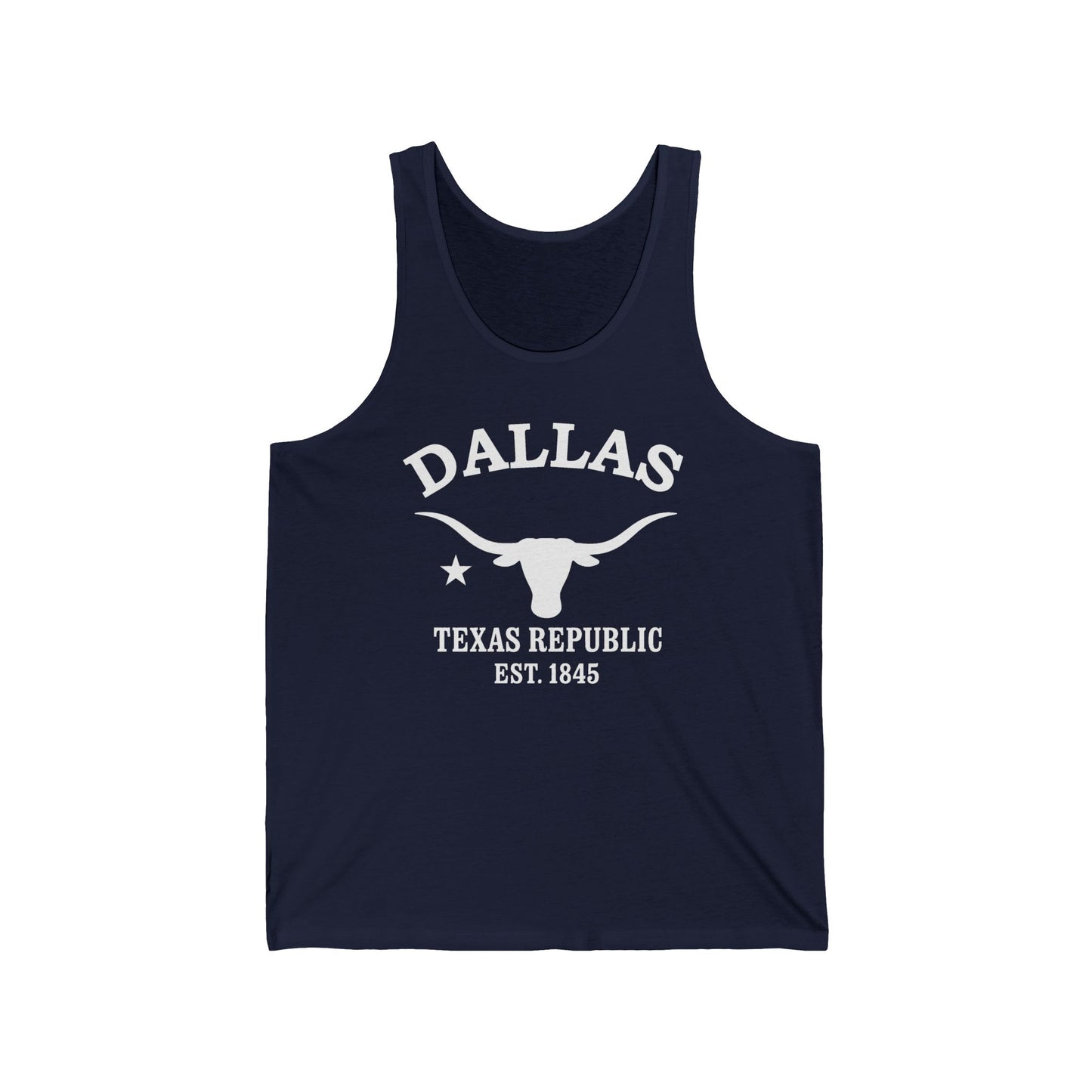
Today Dallas is skyline and prairie light, museums and neon, a flying red horse over a downtown that never stops building. Our Dallas designs gather that identity — the longhorn emblem, Big D confidence, the Pegasus and the skyline — into wearable form. It is a Texas city that made itself out of almost nothing and has been proud of it ever since. Dallas, Texas — Big D, where the red Pegasus still flies over a skyline a frontier trader started by a river ford.
Here is a small Dallas mystery: nobody is entirely sure who the city is named for. The usual answer is George Mifflin Dallas, the U.S. vice president of the 1840s, and it may well be him — but John Neely Bryan, who did the naming, never pinned it down, and historians have floated a half-dozen other Dallases over the years. The city has worn the uncertainty lightly. Long ago Dallasites shortened the whole question to two letters that settle nothing and say everything: Big D.
Why People Visit Dallas
Dallas rewards visitors who like a city with confidence: a skyline you can read like a history book, a world-class arts district, museums of real weight, and food worth crossing town for. Add the flying red Pegasus, the Art Deco of Fair Park, and Texas hospitality scaled up, and Big D makes a strong case for itself.
