


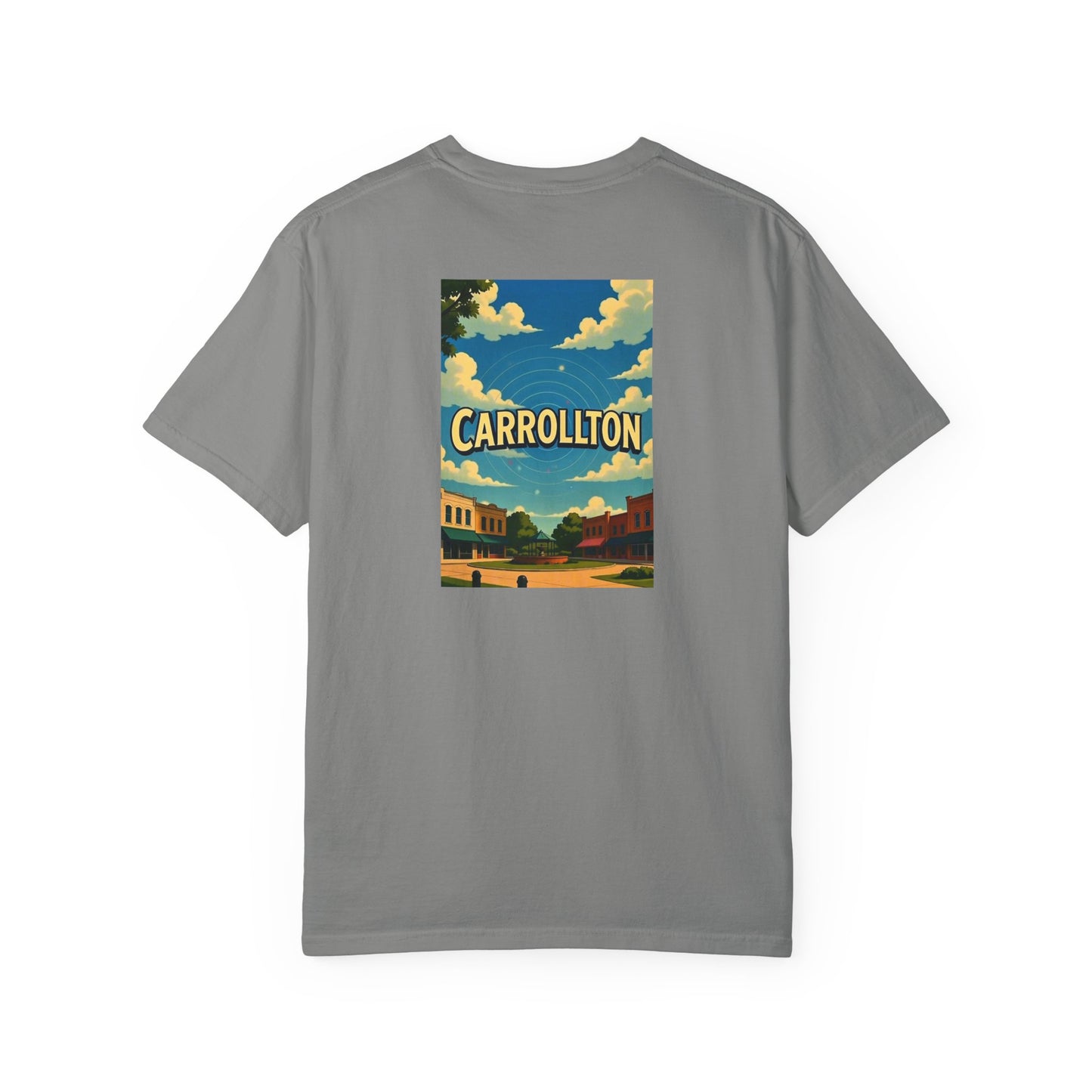
The most Carrollton thing on the skyline came with that shipping trade: the tall concrete grain-elevator silos that still ring the east side of the Square. Built to hold the grain the trains hauled in and out, the cylindrical complex outlasted the farms it served and became the town's accidental monument — a piece of industrial Texas standing over a square of vintage storefronts. In recent years the city has begun turning the silos into public art and a gateway for rail riders, so the structure that once measured the harvest now greets the commuter. Few suburbs keep a landmark so plainly honest about where their money first came from.
What turned a farm district into a town was the railroad — three of them, really. The Dallas & Wichita line reached Carrollton and a post office opened in 1878; Jay Gould bought the unfinished road and pushed it to Denton in 1880, and it became the Missouri, Kansas & Texas — the 'Katy.' Then, in 1888, the Cotton Belt line crossed the Katy right at Carrollton, and that crossing made the place. A town that shipped its neighbors' cotton, cottonseed, grain, and livestock grew up in the angle of the rails, soon outpacing the older mill settlement of Trinity Mills to the north. The Historic Downtown Square took shape along Belt Line Road, and it is still the heart of the old town.
Why People Visit Carrollton
Visitors come to Carrollton for the old railroad town inside the modern suburb — the Square, the silos, and the Switchyard — and stay for the food, the parks, and the easy reach of the whole Dallas-Fort Worth Metroplex. It is equal parts Texas heritage and present-day diversity, with vintage storefronts on one block and Korean bakeries on the next. Welcoming and well-connected, Carrollton rewards anyone curious about how a North Texas farm town became a three-county suburb without losing its center.
