


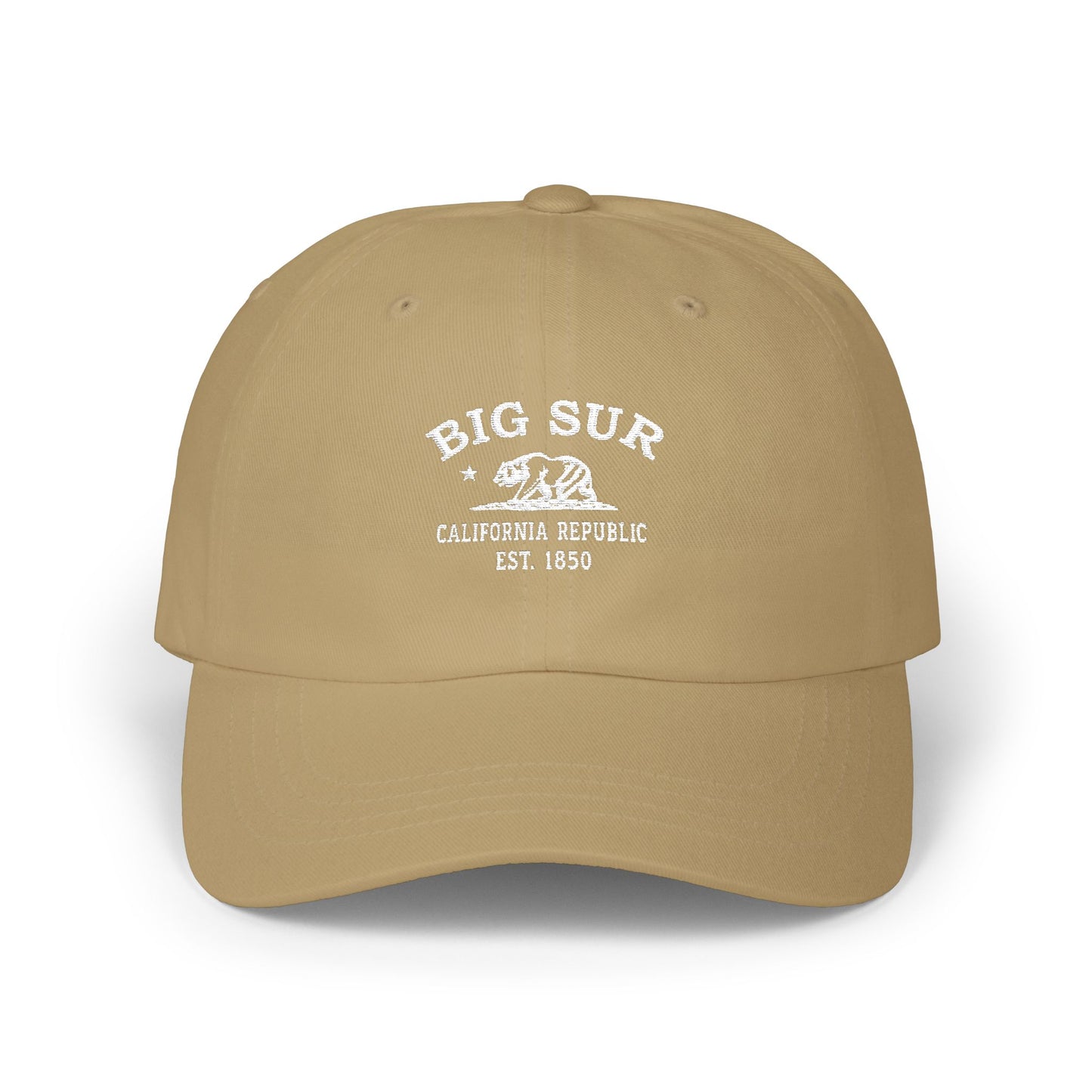
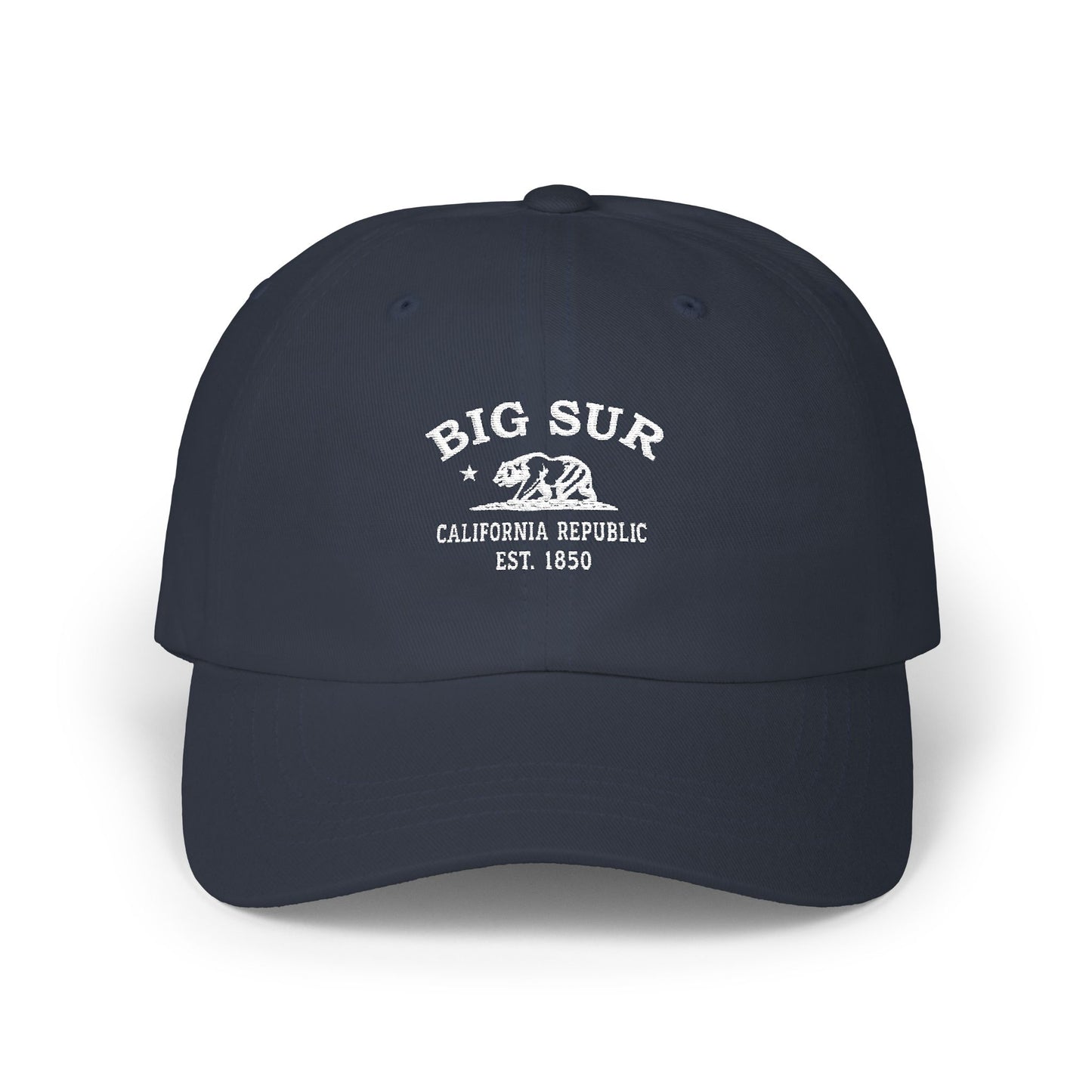
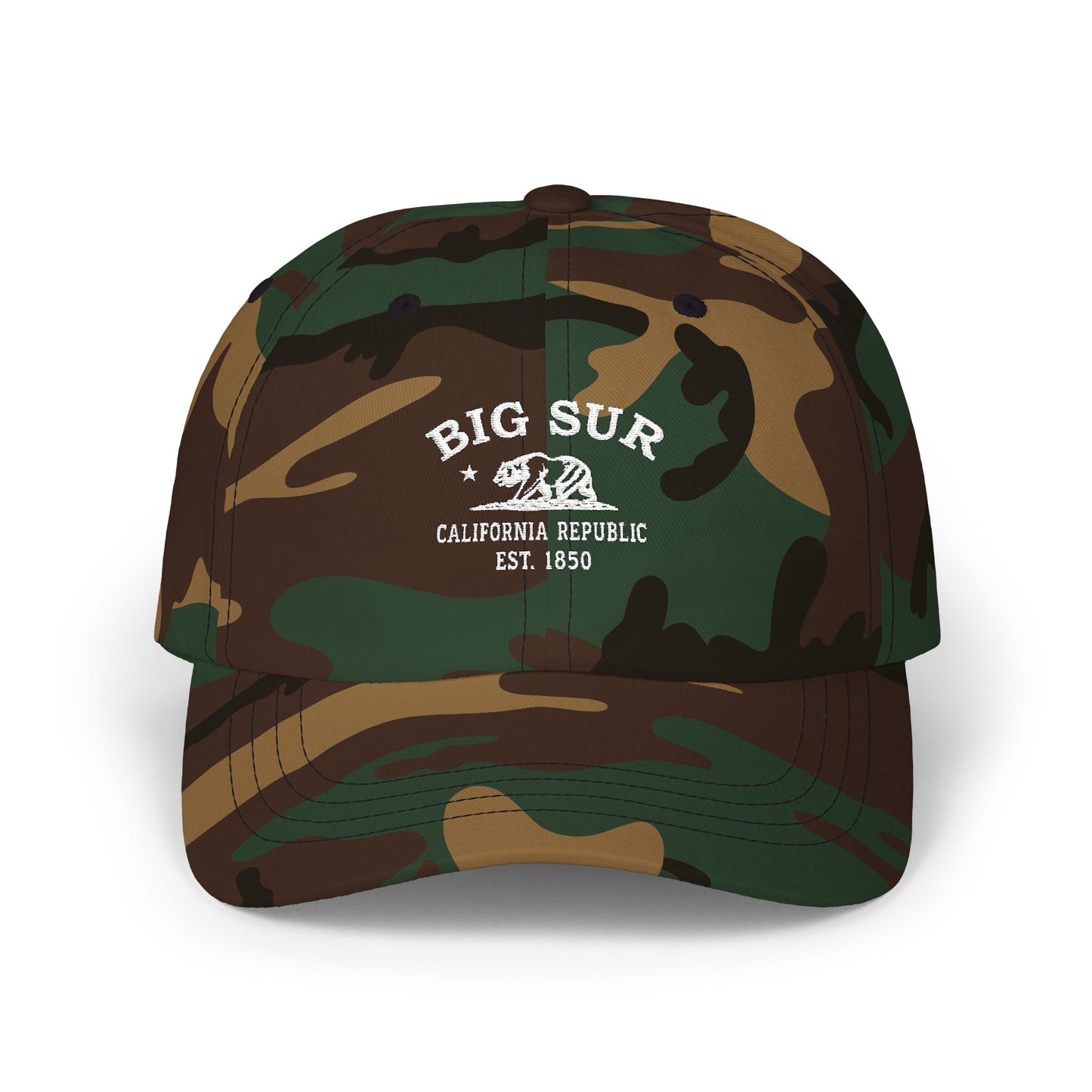
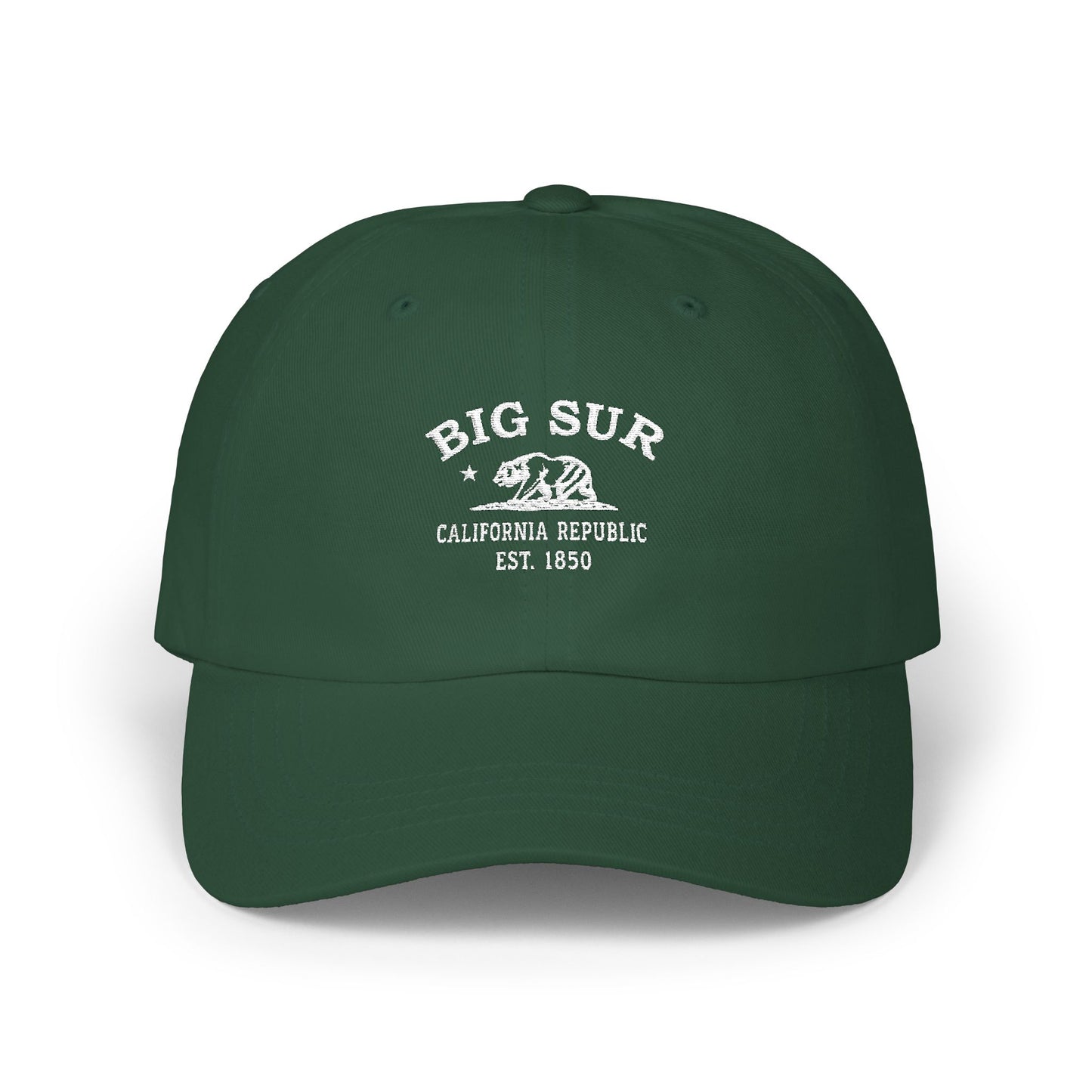
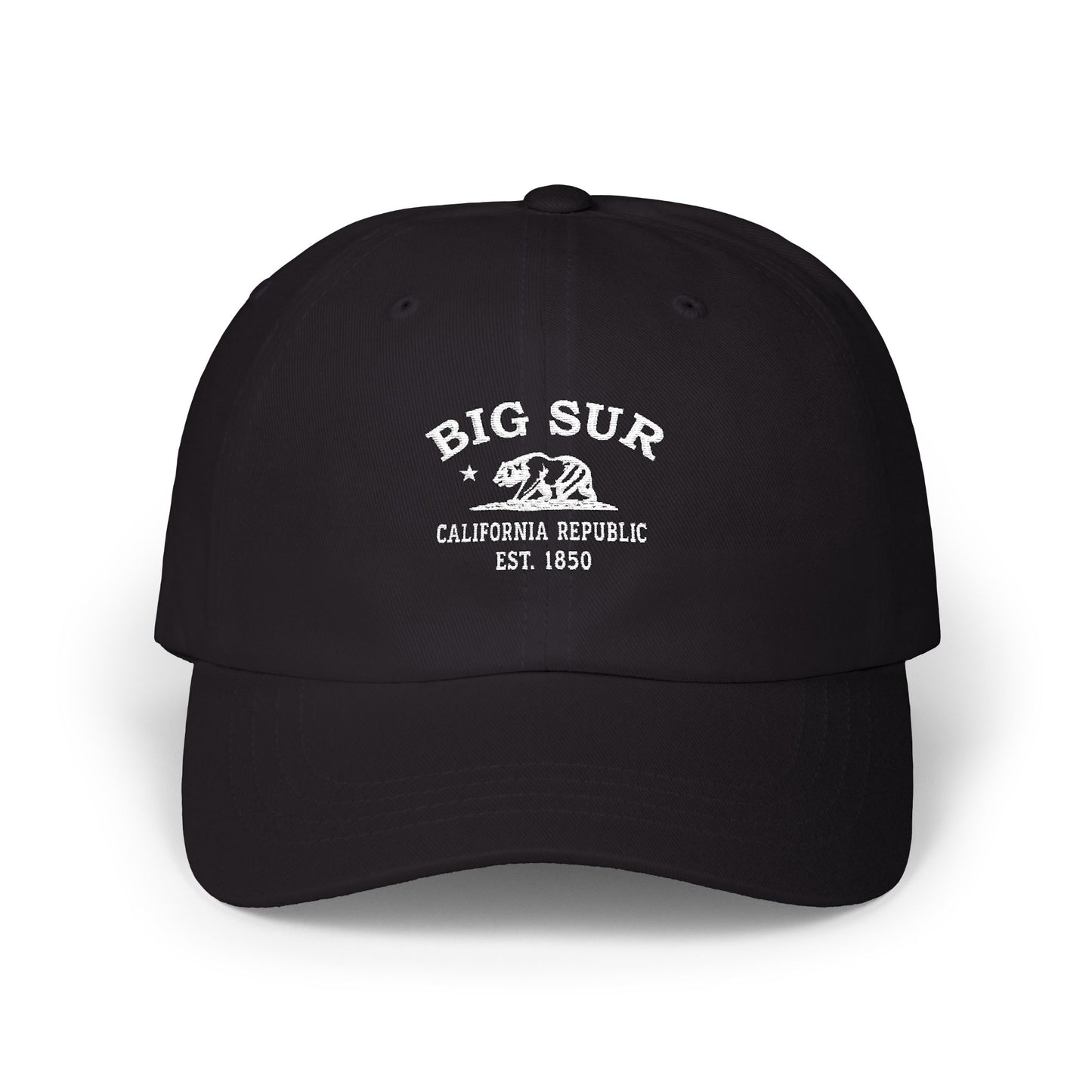

Our Big Sur logo carries the same emblem every Merlin Classics town wears — the California grizzly and star above an "Est. 1850" statehood mark, rendered in hand-printed black and white with a worn, vintage feel. It is the through-line of the whole collection, the mark that ties Big Sur to every other California town we make, from the wine country to the desert. What makes one Big Sur, and another Sonoma, is everything around the emblem: here, the coast road and the bridge, the redwoods and the condor coast. On a tee or a cap it reads less like a souvenir and more like a license plate for a place that never incorporated — California's wildest hundred miles, worn plain.
Once the road opened, the coast that had hidden the homesteaders began to draw the writers. A mid-century artists' and writers' colony took root in the canyons — Henry Miller settled here in the 1940s — and in 1962 the Esalen Institute opened on the cliffs above the hot springs, at the heart of the human-potential movement. The rest of Big Sur stayed wild on purpose: a string of state parks backed by the Ventana Wilderness and Los Padres National Forest, McWay Falls dropping eighty feet onto a hidden cove beach, the purple sand at Pfeiffer Beach, sea otters in the kelp, gray whales offshore, and California condors brought back from the edge of extinction riding the updrafts overhead. Big Sur is the California you can't move to — only drive through, slowly, with the windows down.
Why People Visit Big Sur California
Big Sur is the rare place whose entire identity is its landscape. There is no historic plaza, no downtown — there is the road, the bridge, and one of the most dramatic meetings of mountain and ocean anywhere on earth. Visitors come to drive the coast, to photograph the Bixby Bridge, to stand above McWay Falls, and to watch condors over a shoreline that was nearly impossible to reach a century ago. They come because Big Sur is California with almost nothing built on it — only revealed, mile by mile, from a two-lane road.
