


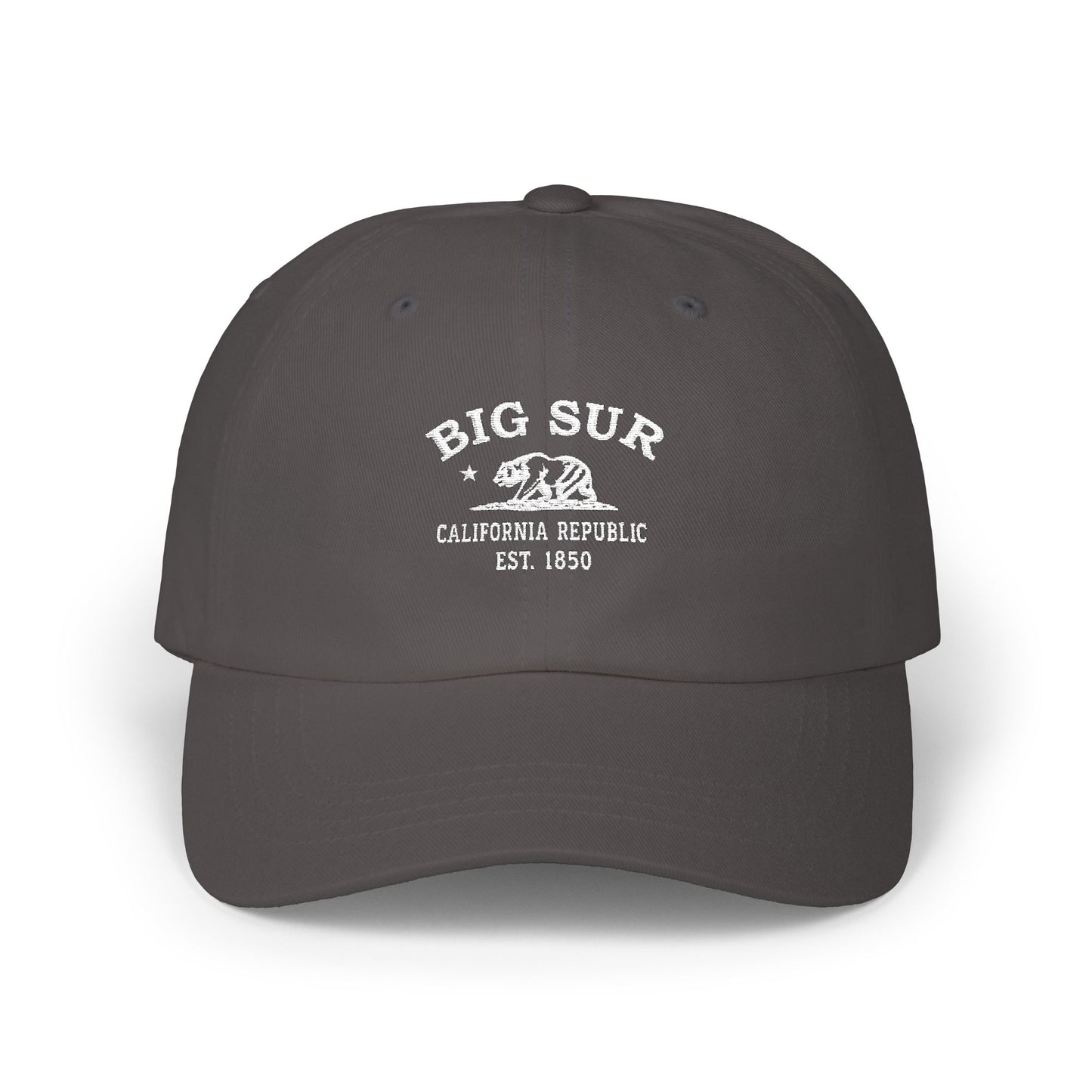
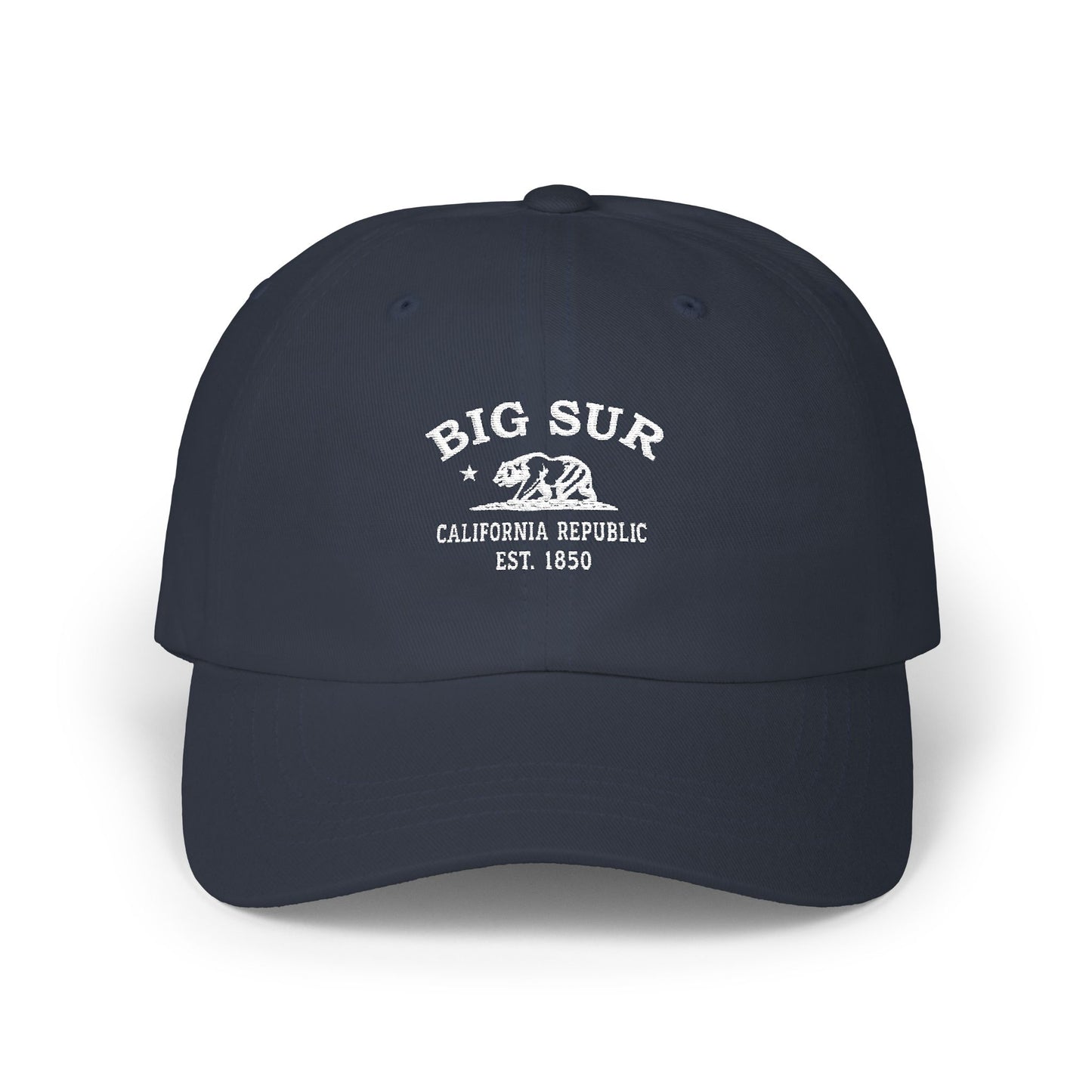
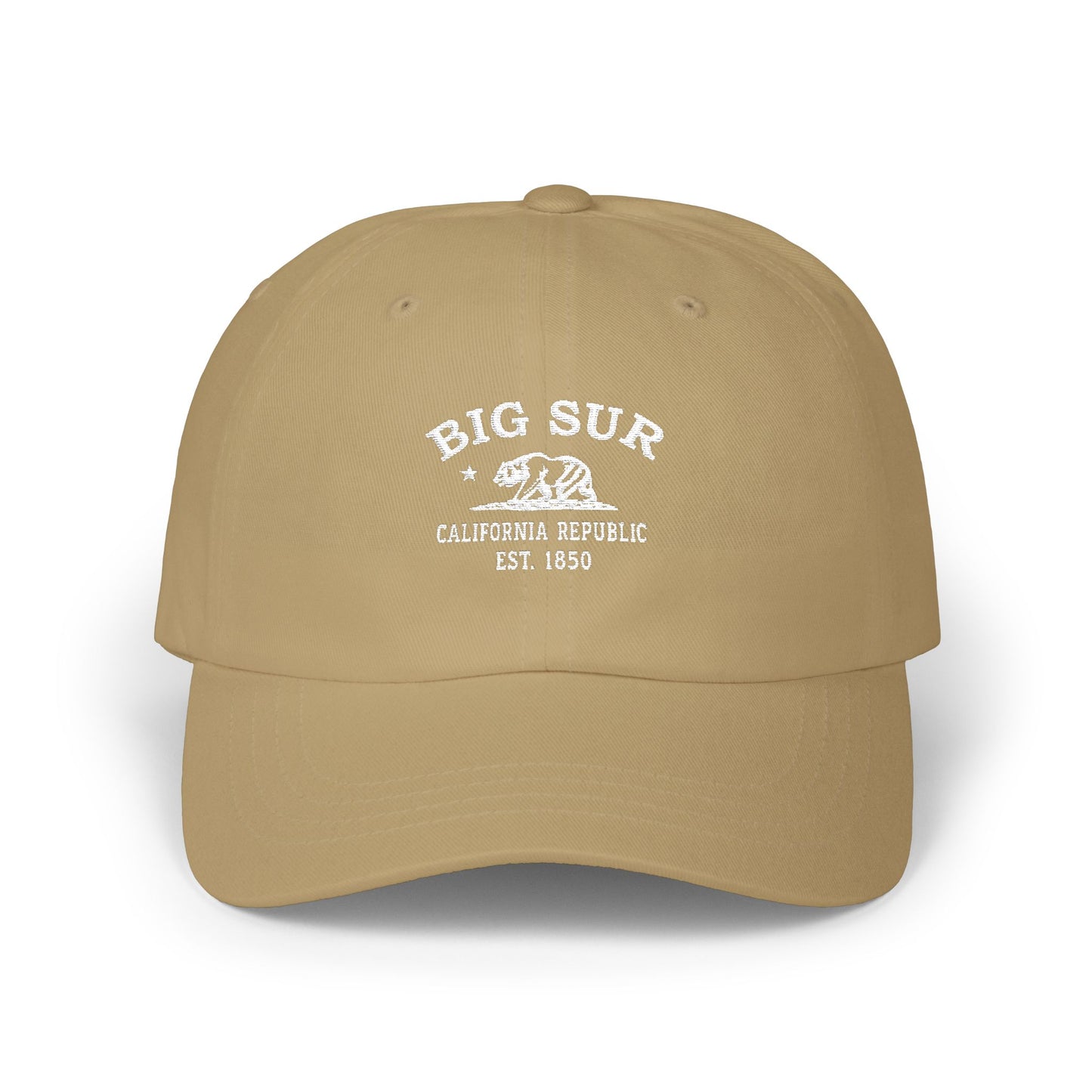
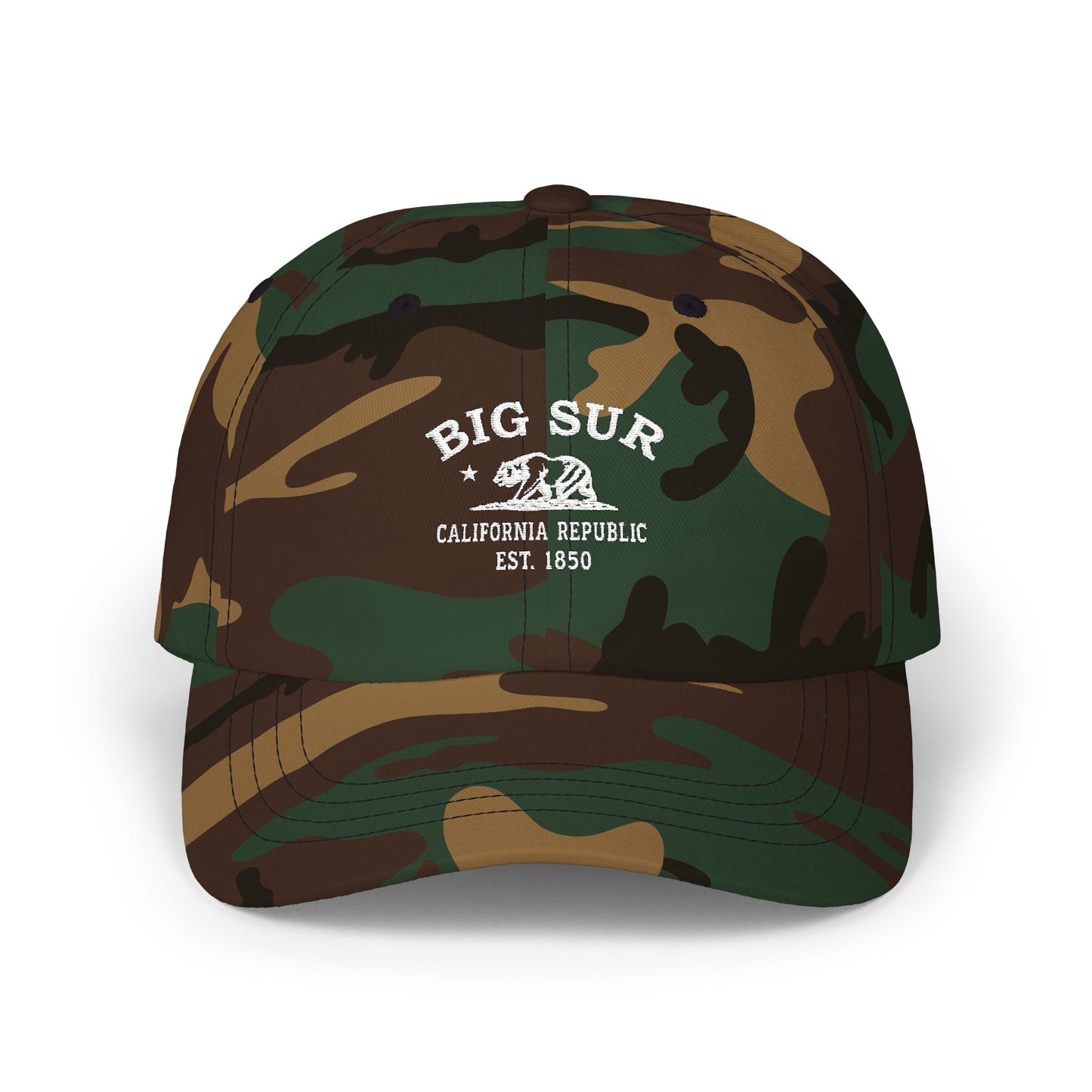

Today Big Sur is one of the most celebrated coastlines on earth, and a protected one — most of it state park, national forest, and wilderness, with a handful of lodges and the road threaded between. People come for the drive: the Bixby Bridge, the overlooks, McWay Falls, the redwood groves at Pfeiffer, the lighthouse at Point Sur, and the long blue gaps where there is nothing but cliff and water. Our Big Sur designs gather that coast into wearable form — the bridge, the highway, the mountains meeting the sea. Explore the collection and carry a little of California's wild coast with you.
Once the road opened, the coast that had hidden the homesteaders began to draw the writers. A mid-century artists' and writers' colony took root in the canyons — Henry Miller settled here in the 1940s — and in 1962 the Esalen Institute opened on the cliffs above the hot springs, at the heart of the human-potential movement. The rest of Big Sur stayed wild on purpose: a string of state parks backed by the Ventana Wilderness and Los Padres National Forest, McWay Falls dropping eighty feet onto a hidden cove beach, the purple sand at Pfeiffer Beach, sea otters in the kelp, gray whales offshore, and California condors brought back from the edge of extinction riding the updrafts overhead. Big Sur is the California you can't move to — only drive through, slowly, with the windows down.
Why People Visit Big Sur California
Big Sur is the rare place whose entire identity is its landscape. There is no historic plaza, no downtown — there is the road, the bridge, and one of the most dramatic meetings of mountain and ocean anywhere on earth. Visitors come to drive the coast, to photograph the Bixby Bridge, to stand above McWay Falls, and to watch condors over a shoreline that was nearly impossible to reach a century ago. They come because Big Sur is California with almost nothing built on it — only revealed, mile by mile, from a two-lane road.
