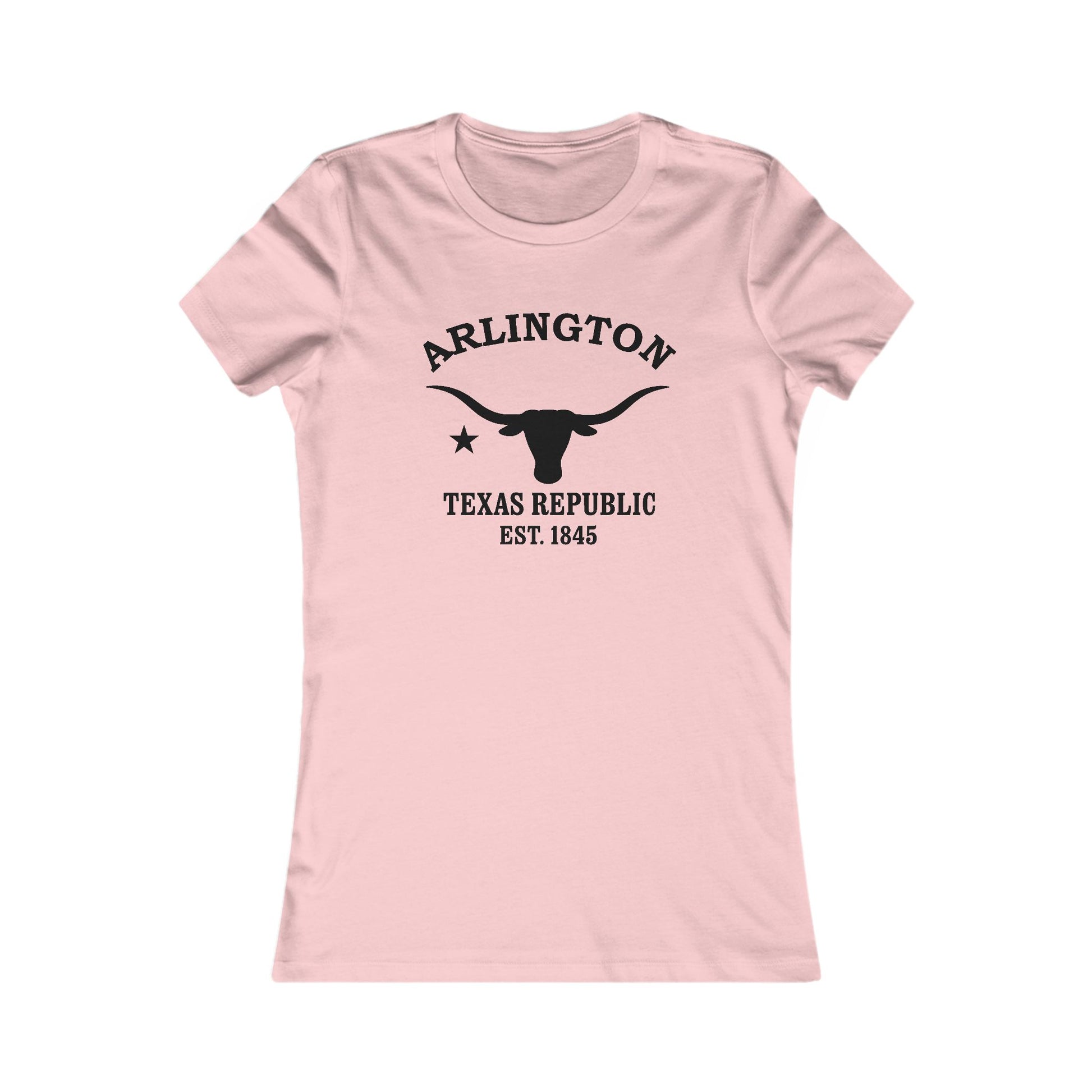
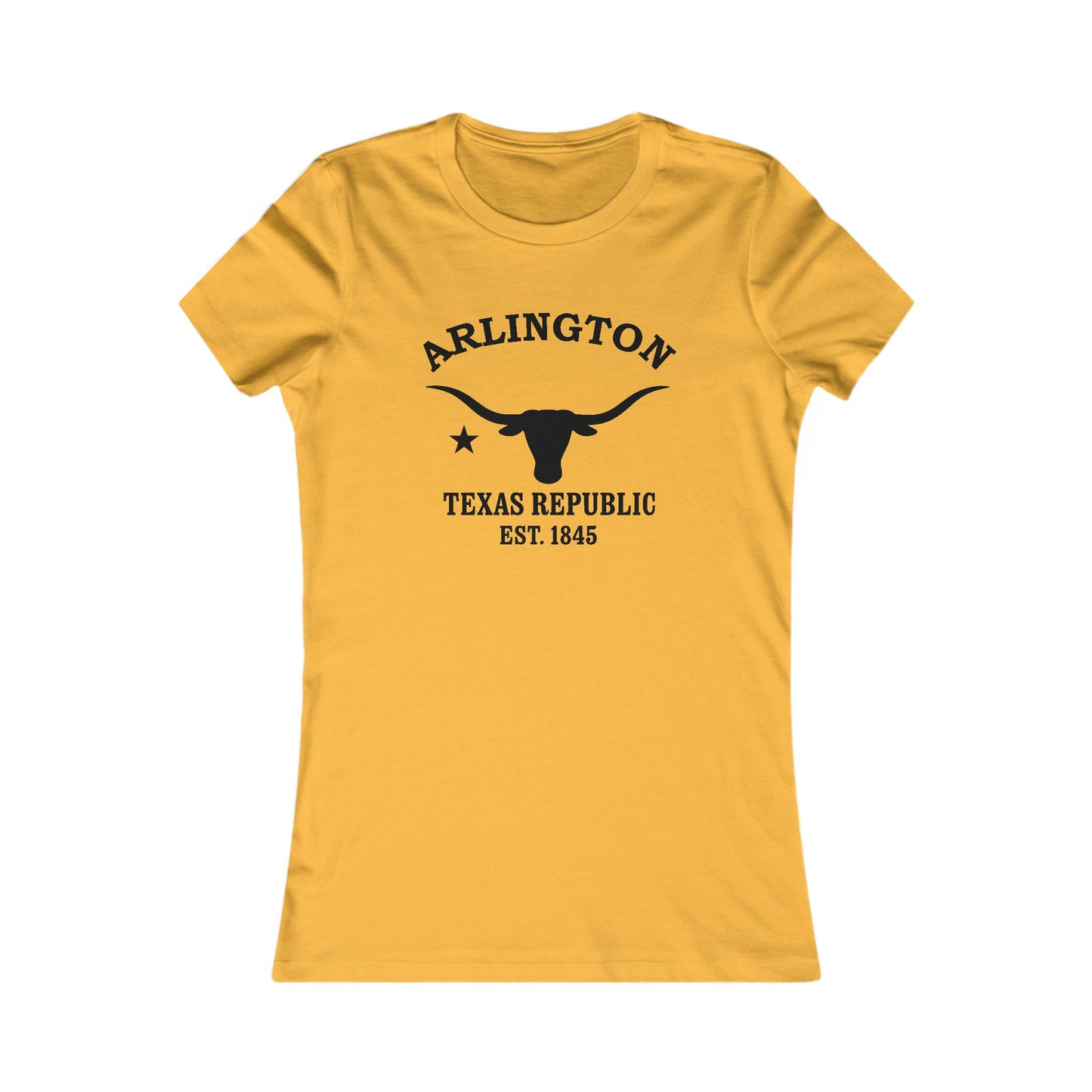
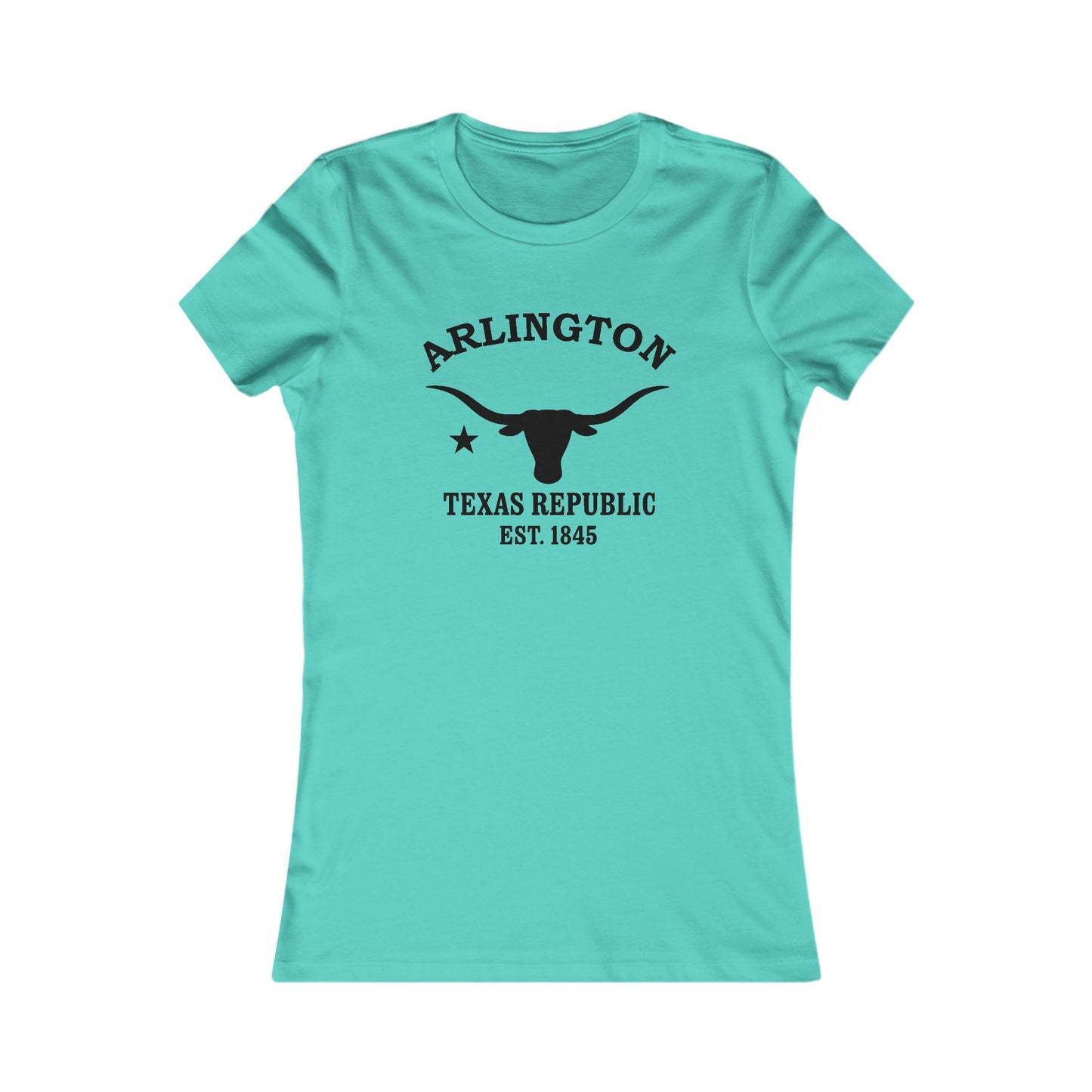
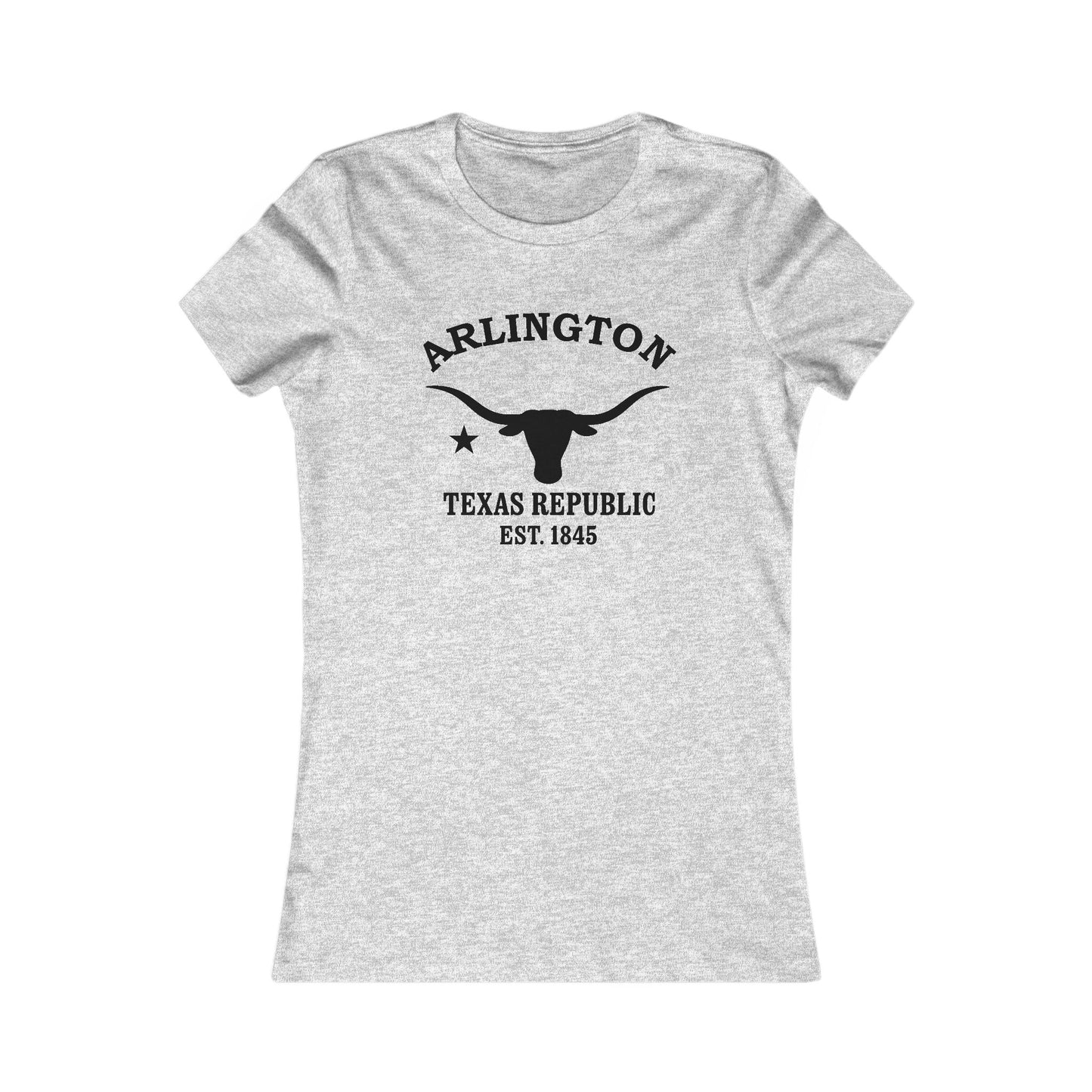
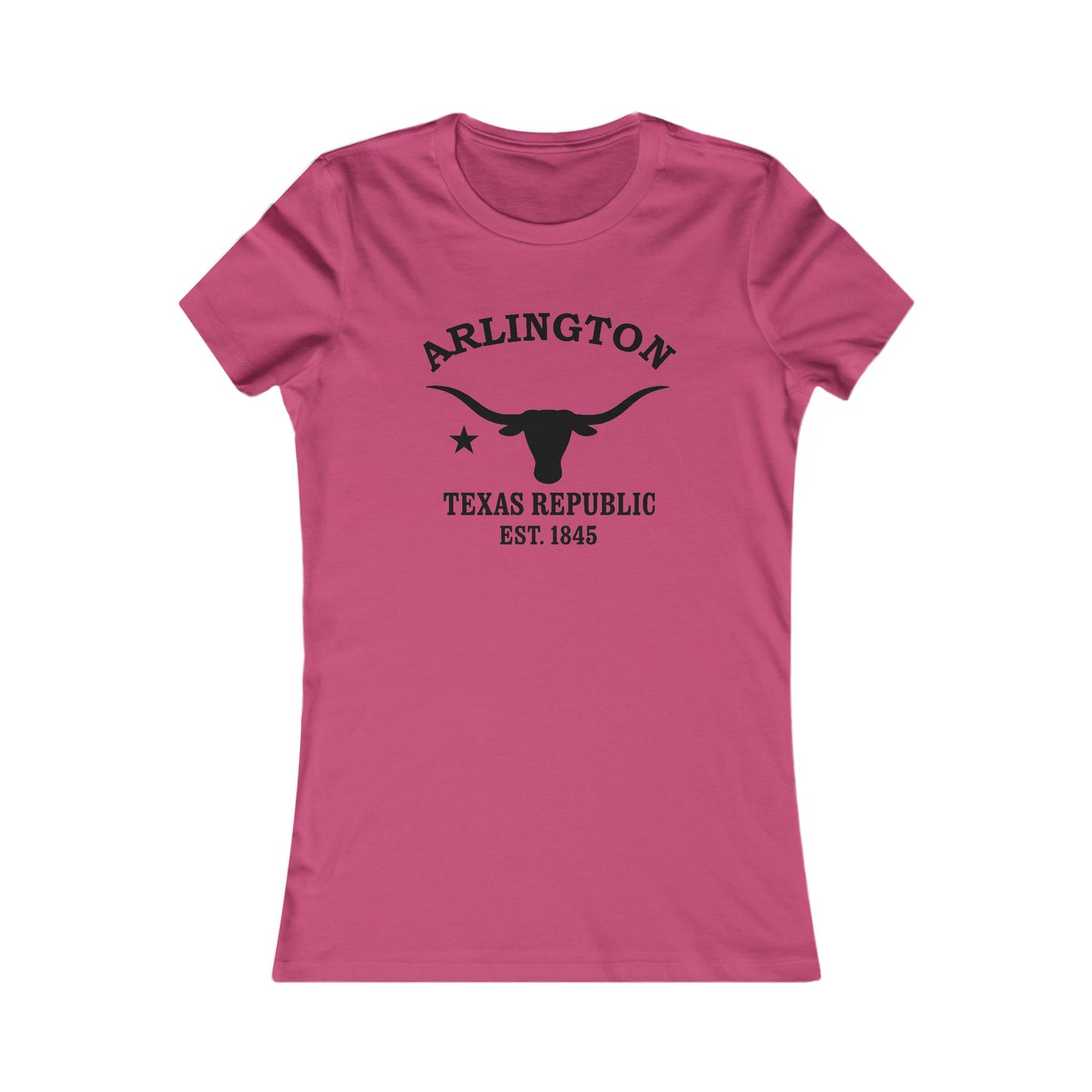
Our Arlington logo carries the Texas longhorn and a lone star above "Texas Republic — Est. 1845," the shared retro emblem of our Texas towns, drawn in worn black-and-white like an old woodcut crate label. The 1845 date marks Texas statehood, and the longhorn is the through-line that links Arlington to every other Texas town we make. The detail that makes this one Arlington is the American Dream City itself — the railway market town, the old mineral well, the Vegas-before-Vegas hill, and the entertainment capital it grew into between Dallas and Fort Worth.
The modern city is largely the work of one long-serving mayor, Tom Vandergriff, who set out at mid-century to turn a town of a few thousand into something far bigger. The pivotal stroke came in 1961, when the first of the regional theme parks in the United States opened in Arlington — the idea, as the story goes, of dropping a roller coaster in a cotton field and calling it the future. It worked. Major-league baseball followed, then professional football, and the stretch of ground between the old farm town and the highway became a national entertainment district. Arlington had reinvented itself as a place people drove to for a big weekend.
Why People Visit Arlington
Arlington rewards travelers who want big-event energy with Texas convenience — the stadiums and theme parks of the Entertainment District, set between Dallas and Fort Worth and easy to reach from either. People come for the games, the coasters, and the concerts, and stay for the river-and-lake parks and the offbeat heritage of a prairie town that talked itself into becoming the American Dream City.
