West Haven Connecticut — Retro Vintage History
What's with Savin Rock? For nearly a century it was the brightest place on Long Island Sound. Savin Rock was West Haven's seaside amusement park — ‘Connecticut's Coney Island,’ the ‘playground of New England’ — a waterfront packed with wooden roller coasters, a carousel, a midway, and a long lighted pier reaching out over the water. In its early-1900s heyday they called it the ‘White City’ for the thousands of electric bulbs that turned night into day, and at its peak more than a million people a year came to ride, to stroll the boardwalk, and to eat fried clams by the Sound. The rides are gone now — the park closed in 1966 — but the boardwalk still runs, and the name still carries the whole summer with it.
Wear the HistoryWest Haven is older than its amusement park by three hundred years. The shoreline belonged to the Quinnipiac people long before English settlers from the New Haven Colony laid out farms here in 1648 and called the place ‘West Farms.’ For generations it was a quiet district of oystermen and farmers on the west side of New Haven Harbor. It joined with North Milford to form the town of Orange in 1822, then set off on its own in 1921 to become the Town of West Haven — Connecticut's youngest — and was chartered as a city in 1961. One of the state's oldest settlements wears the title of its newest city.

The shore has not always been peaceful. In July 1779 a British and Hessian force landed on the West Haven beaches on its way to raid New Haven, and the local militia fought a running skirmish across the flats. The raid is remembered today for a British officer, Adjutant William Campbell, who was killed after sparing the life of an elderly minister — ‘the humane Briton,’ local memory calls him. He is believed to be the only foreign soldier buried on American soil with military honors, and Campbell Avenue, West Haven's main street, still carries his name.
The Savin Rock story proper begins with the railroad and the trolley. A shore hotel opened at the rocky point as early as 1838, but it was George Kelsey, a Civil War veteran and trolley magnate, who made it a resort — extending the trolley lines and building a 1,500-foot pier out over the Sound in 1870. The crowds followed. By the turn of the century the point had filled with coasters, dance halls, shooting galleries, and shore-dinner houses, and the electric-lit ‘White City’ — inspired by Chicago's 1893 World's Fair — drew visitors from all over New York and New England. The shore dinner became its own institution; Jimmies of Savin Rock has been frying clams here since 1925.
Like every wooden seaside park, Savin Rock lived close to its end. Fires, the great 1938 hurricane, and finally the bulldozers of urban renewal took the rides down piece by piece, and the last of the park closed in 1966. What replaced it is, in its quiet way, just as West Haven: the rides gave way to Savin Rock Park and a long shorefront boardwalk, the heart of the longest publicly accessible shoreline in Connecticut — some three and a half miles of beach running west to Bradley Point and the Sandy Point bird sanctuary. The coasters are memory; the walk by the water is still here, and a revived Savin Rock Festival keeps the old name alive each summer.
There is more to West Haven than the Rock. The old West Haven Green still anchors the town with its churches and Revolutionary monuments; nineteenth-century buckle shops and, later, the Armstrong Rubber works gave it an industrial backbone; and the University of New Haven — which sits, confusingly, in West Haven rather than New Haven — brings students to the western shore. The city keeps its own identity beside its larger neighbor: not New Haven, but the shore town just to its west, with the longer beach and the older memory of summer.
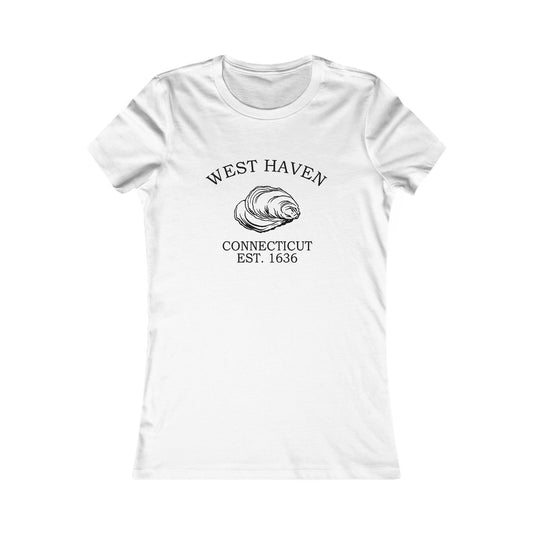
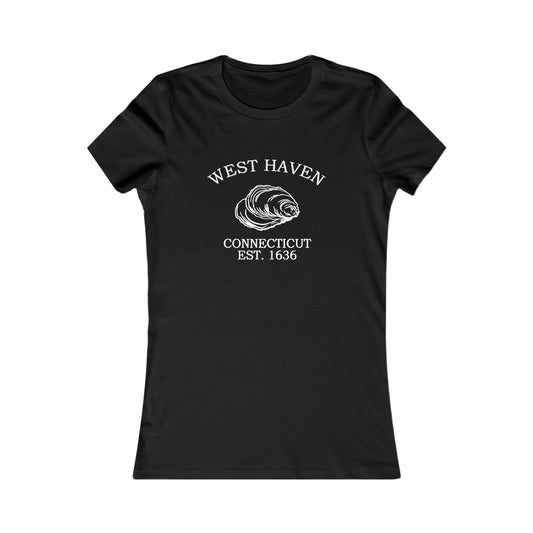
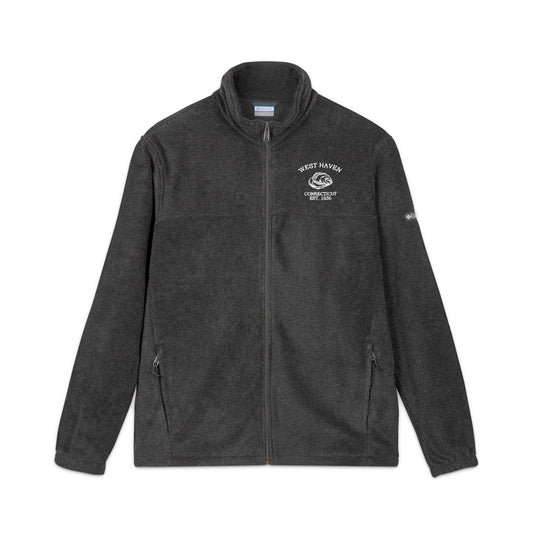
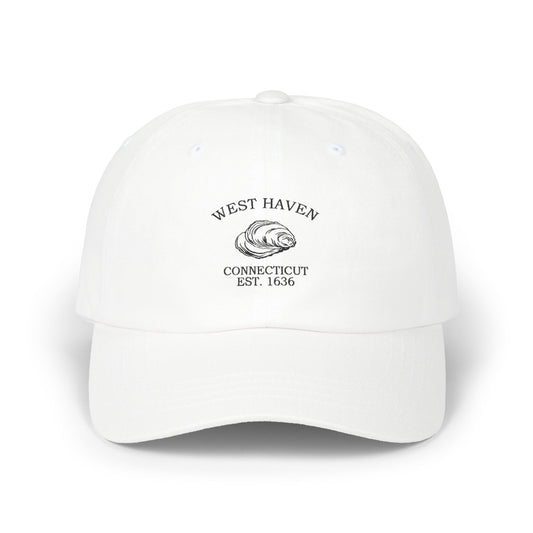
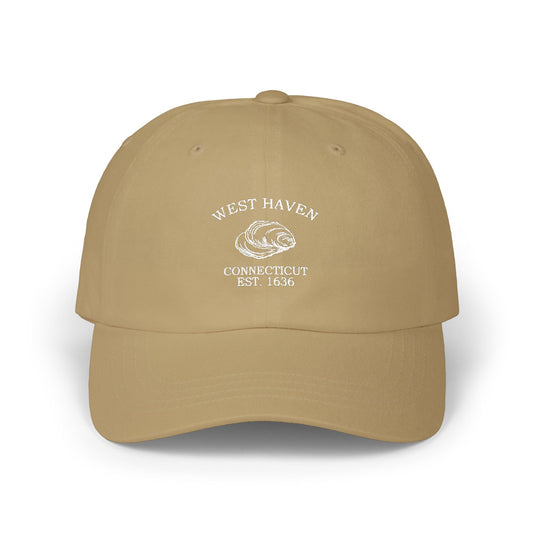
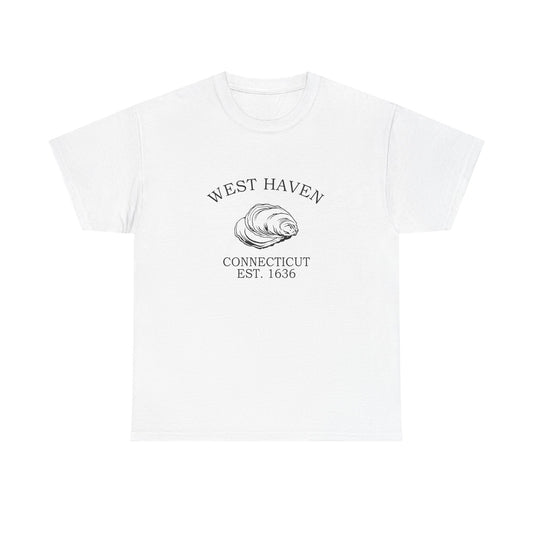
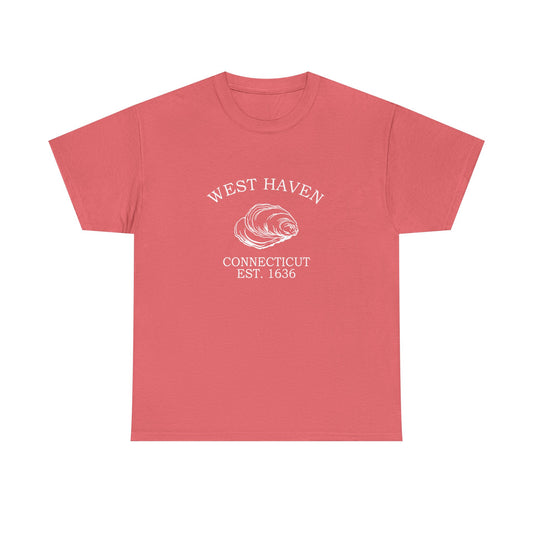
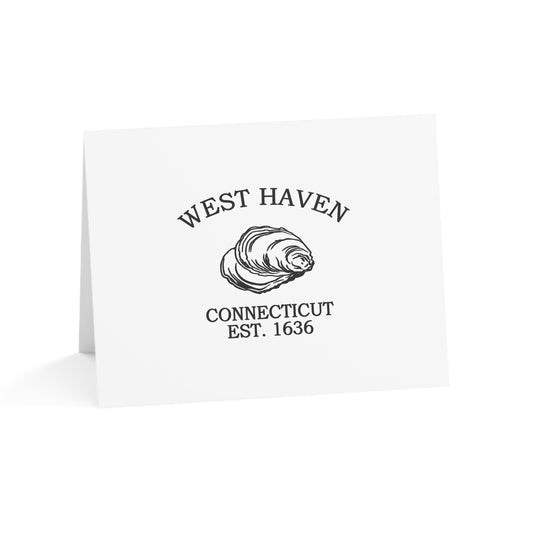
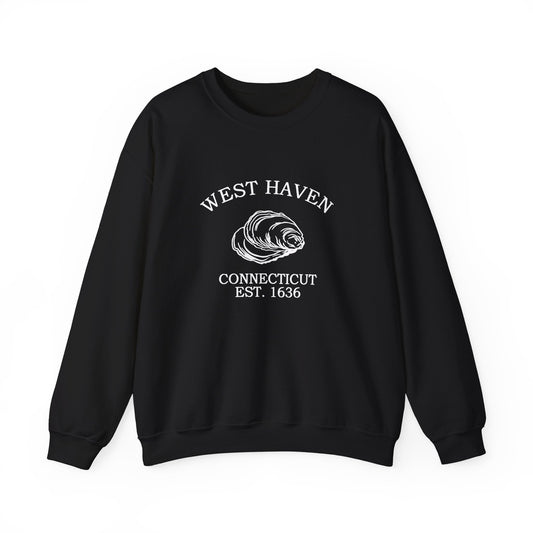
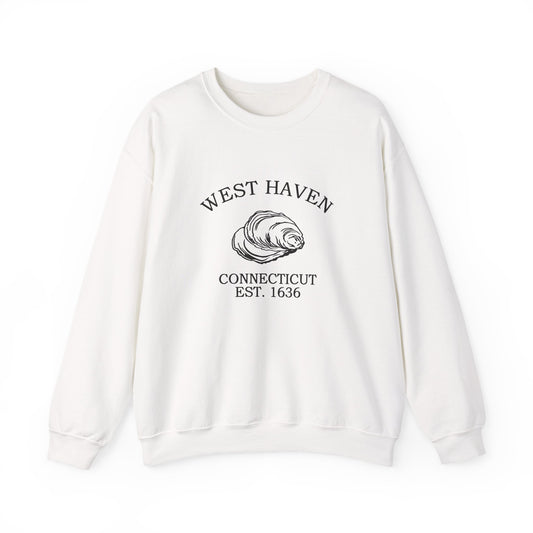
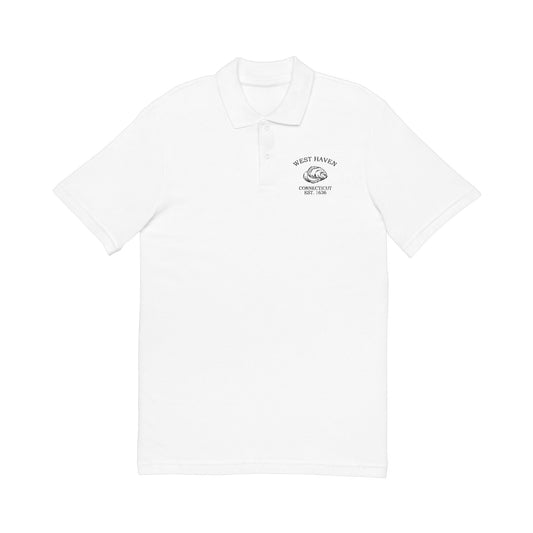
Our West Haven logo carries Connecticut's oyster above ‘Connecticut — Est. 1636,’ the shared retro emblem of our Connecticut towns. The oyster is the state shellfish, a nod to the shoreline beds the Quinnipiac and the early settlers worked, and 1636 marks the founding of the Connecticut Colony; the emblem is the through-line that links West Haven to every other Connecticut town we make. It fits a place that grew up on the water — oyster beds, shore dinners, and a boardwalk — rendered in the black-and-white style of an old crate label. What makes this one West Haven is Savin Rock underneath: a town that turned its shore into a holiday.
Today West Haven is a working shoreline city of about fifty-five thousand, proud of its beaches, its boardwalk, and the memory of ‘the Rock.’ Its story runs from Quinnipiac oyster beds to colonial farms to the brightest summers New England ever lit, and out to the long quiet beach that remains. Our West Haven designs gather that into wearable form. Wear the history. This is the playground of New England — and the longest shoreline in the state.

West Haven, Connecticut — Travel Guide
Visiting West Haven Today
West Haven runs along Long Island Sound just west of New Haven, with the longest publicly accessible shoreline in Connecticut — roughly three and a half miles of beach, boardwalk, and shore park. Savin Rock Park sits on the footprint of the old amusement park, with the historic Green and small museums inland.
The Shoreline, Savin Rock & the Green
For visitors looking for things to do in West Haven, Connecticut:
- Walk the Savin Rock boardwalk and Savin Rock Park along the Sound, on the footprint of the old amusement park.
- Stop at the Savin Rock Museum on Rock Street for postcards, ride relics, and the story of 'Connecticut's Coney Island.'
- Stand at Bradley Point Park for wide water views and the 1779 raid memorial.
- Visit Sandy Point Bird Sanctuary, a tidal sandbar and major shorebird nesting site.
- Tour the Ward-Heitmann House Museum on Elm Street, West Haven's oldest house, dating to the late 1600s.
- Stroll the historic West Haven Green, ringed by churches and Revolutionary-era monuments.
- Catch the revived Savin Rock Festival in summer, heir to the old shore-resort crowds.
Why People Visit West Haven
West Haven appeals with simple shoreline beauty and strong local pride. Visitors pair long beach and boardwalk walks with small museums, the historic Green, and the nostalgia of Savin Rock. It is relaxed, local, and close to the water, with year-round appeal in its parks, paths, and public spaces. The vintage-summer feeling of the old amusement park is evergreen, and history and everyday shoreline life sit side by side in a welcoming way.
Wear the History
Kindred Cities
Welcome to visitors from Brighton, England and Deauville, France (bienvenue) — kindred seaside resorts of the boardwalk and the surf.
West Haven keeps the longest public boardwalk in Connecticut, and Brighton and Deauville share its love of a day at the shore. Brighton is the great British seaside resort, all pier and promenade and Regency flourish; Deauville brings Norman elegance to its planks, casino and beach; West Haven runs its boardwalk and beaches along Long Island Sound, heir to the old Savin Rock resort that once drew crowds for its rides and shore dinners. Three coasts that turned the seaside into a holiday.
West Haven favours the seaside stroller: miles of boardwalk along the Sound, easy beaches and sunset views, the memory of the old Savin Rock amusement park, and the fried clams and shore suppers that go with a day by the water. Come and visit us soon.
When you plan the trip, the City of West Haven and the Connecticut Office of Tourism are the place to start.
Wear the History

For deeper reading on the West Haven history described here — the Quinnipiac shoreline, the 1648 settlement of West Farms, the colonial oystering and shore-dinner trades, the 1779 raid and Adjutant Campbell, the rise and fall of the Savin Rock resort from George Kelsey's 1870 pier through its 1966 close, the boardwalk that replaced the rides, and the town's 1921 incorporation — it may be useful to consult (1) the West Haven Historical Society, (2) the Ward-Heitmann House Museum, (3) the Savin Rock Museum, (4) the West Haven Public Library local-history collection, and (5) the Connecticut State Library and State Historic Preservation Office. For travel and visitor information, it may be useful to contact (1) the City of West Haven, (2) the Connecticut Office of Tourism (CTvisit), (3) the West Haven Department of Parks & Recreation, (4) the Savin Rock Festival and Conference Center, and (5) Visit New Haven, the greater-New-Haven regional tourism office.
Shop the West Haven Connecticut collection
View full collection-
West Haven Connecticut Vintage Retro Premium Crewneck Sweatshirt - Black Logo
Regular price $48.00 USDRegular price -
West Haven Connecticut Vintage Retro Premium Crewneck Sweatshirt - White Logo
Regular price $48.00 USDRegular price -
West Haven Connecticut Vintage Retro Unisex Heavy Cotton Hoodie - Black Logo
Regular price $56.00 USDRegular price -
West Haven Connecticut Vintage Retro Unisex Heavy Cotton Hoodie - White Logo
Regular price $56.00 USDRegular price -
West Haven Connecticut Vintage Retro Womens Fitted Ringspun Cotton Tee - Black Logo
Regular price $28.00 USDRegular price -
-
West Haven Connecticut Vintage Retro Unisex Embroidered Fleece Jacket - White Logo
Regular price $98.00 USDRegular price -
West Haven Connecticut Vintage Retro Embroidered Cotton Cap - Black Logo
Regular price $32.00 USDRegular price -
West Haven Connecticut Vintage Retro Embroidered Cotton Cap - White Logo
Regular price $32.00 USDRegular price -
West Haven Connecticut Vintage Retro Vinyl Sticker - Black Logo
Regular price From $6.00 USDRegular price -
West Haven Connecticut Vintage Retro Unisex Heavy Cotton Tee - Black Logo
Regular price $22.00 USDRegular price -
West Haven Connecticut Vintage Retro Unisex Heavy Cotton Tee - White Logo
Regular price $22.00 USDRegular price -
West Haven Connecticut Vintage Retro Ceramic Mug - Black Logo
Regular price From $16.00 USDRegular price -
West Haven Connecticut Vintage Retro Cotton Canvas Tote Bag - White Logo
Regular price $25.00 USDRegular price -
West Haven Connecticut Vintage Retro Cotton Canvas Tote Bag - Black Logo
Regular price $25.00 USDRegular price -
West Haven Connecticut Vintage Retro Thank You Card Set - Black Logo
Regular price From $25.00 USDRegular price -
West Haven Connecticut Vintage Retro Cotton Jersey Baby Bodysuit - Black Logo
Regular price $26.00 USDRegular price -
West Haven Connecticut Vintage Retro Unisex Cotton Jersey Tank Top - White Logo
Regular price $28.00 USDRegular price -
West Haven Connecticut Vintage Retro Unisex Cotton Jersey Tank Top - Black Logo
Regular price $28.00 USDRegular price -
West Haven Connecticut Vintage Retro Back Printed Art Series Cotton Tee - Black Logo
Regular price $32.00 USDRegular price -
West Haven Connecticut Vintage Retro Giclée Print Art Series Poster
Regular price From $38.00 USDRegular price -
West Haven Connecticut Vintage Retro Unisex Heavy Crewneck Sweatshirt - White Logo
Regular price $44.00 USDRegular price -
West Haven Connecticut Vintage Retro Unisex Heavy Crewneck Sweatshirt - Black Logo
Regular price $44.00 USDRegular price -
West Haven Connecticut Vintage Retro Unisex Embroidered Cotton Polo - Black Logo
Regular price $48.00 USDRegular price